
Category: Conflicts / Occupied Territories
-
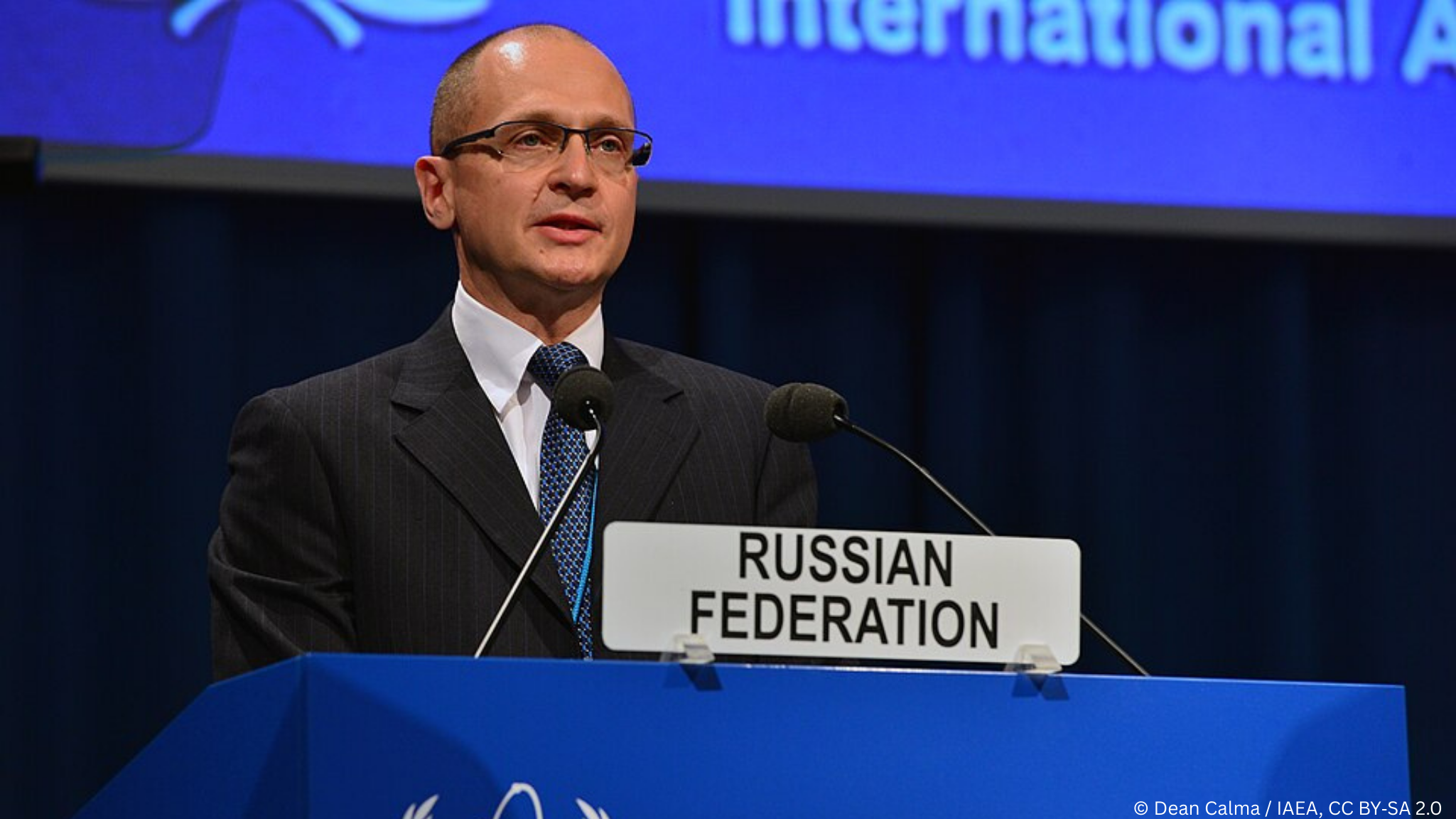
In 2025, the Russian government made significant changes to its oversight of the Georgian regions occupied by Russia. Early in the year, the Chief Curator of the Occupied Regions was replaced within the Russian Presidential Administration. Later, additional structural and personnel adjustments were made. As a result, Sergey Kiriyenko, the First Deputy Head of the…
-
Occupied Abkhazia Summarising Event of 2025 Military Exercises On December 30, the de facto Ministry of Defence of occupied Abkhazia held a summarising event to review the military exercises and activities conducted in 2025. The meeting was chaired by the de facto Minister of Defence, Vladimir Anua. Participants included the so-called Chief of the General…
-
Post-Soviet Conflicts Watch examines ongoing conflicts and post-conflict developments in the post-Soviet space. This document analyzes key events and trends in the Russian-occupied regions of Georgia, including Abkhazia and the Tskhinvali region, as well as the breakaway region of Transnistria and other areas. It also addresses the Armenian-Azerbaijani peace negotiations following the Second Nagorno-Karabakh War.…
-
The article focuses on the major military formations of the 49th Army—brigades, their locations, and affiliated military facilities. Majority of the relevant publicly accessible satellite images are dated circa 2022-2023. The military equipment found on these military bases have been actively utilized in a full-scale war waged by Russia in Ukraine. It has been frequently…
-
After the 2008 Russo-Georgian War, a military base of the Armed Forces of the Russian Federation was deployed on the territory of the Russian-occupied Abkhazia. The 7th Military Base subordinates the 49th Army of the Southern Military District of the Armed Forces of the Russian Federation. Russian military infrastructure present on the territory of occupied…
-
On December 7, 2025, reports emerged indicating that the construction of a transit and logistics hub, also known as a cargo terminal, at the so-called “Enguri checkpoint” in the Gali district of Russian-occupied Abkhazia had reached its final stages. While Abkhazian and Georgian media had periodically reported on new infrastructure developments at the Enguri Bridge,…
-
Post-Soviet Conflicts Watch provides an overview of ongoing conflicts and post-conflict processes throughout the post-Soviet space. The document analyzes key events and trends in the Russian-occupied regions of Georgia—specifically, Abkhazia and the Tskhinvali region; as well as in the breakaway region of Transnistria and the autonomous entity of Gagauzia. It also covers other areas within…
-
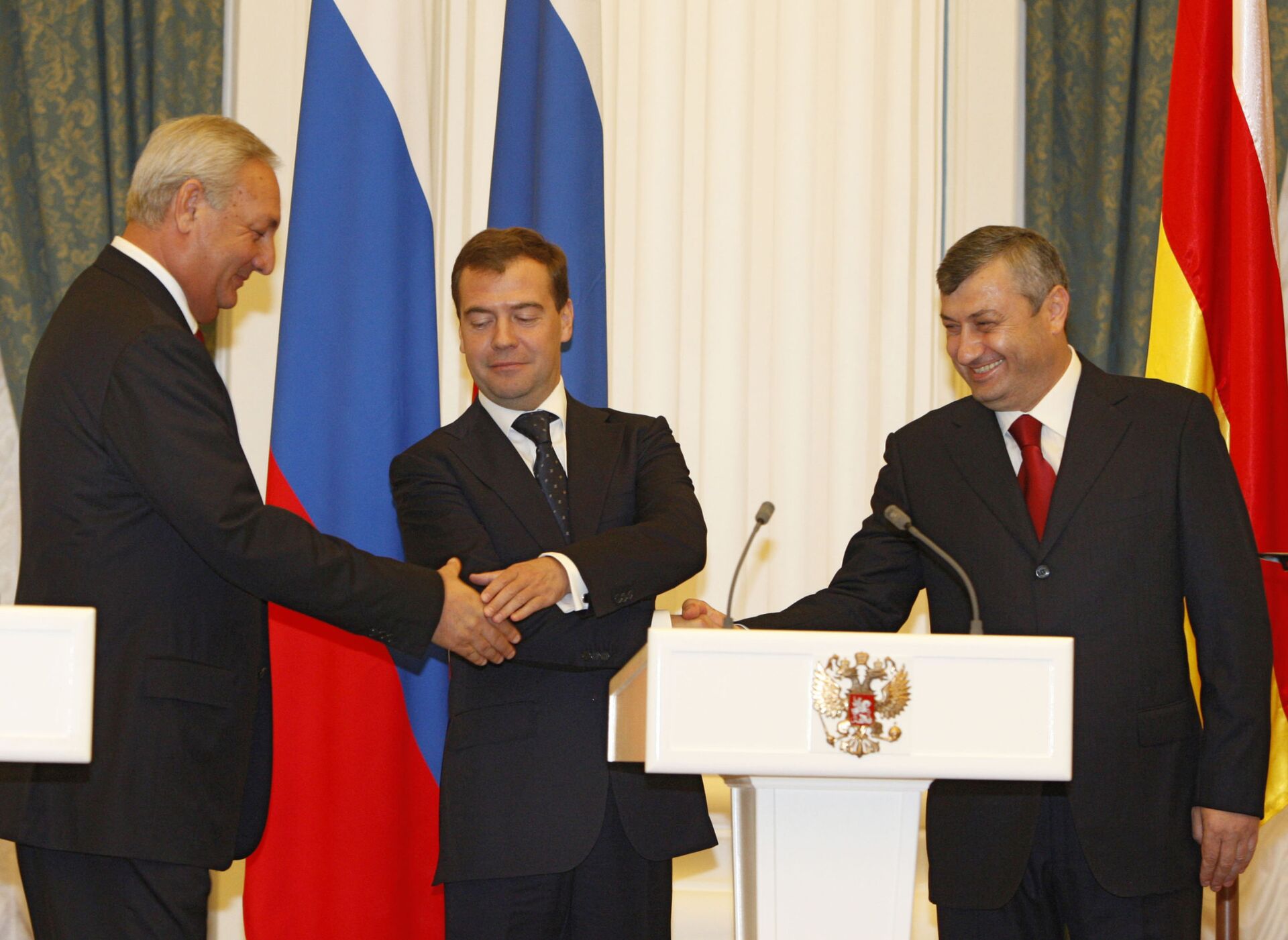
Russia recognized the independence of Georgia’s separatist regions of Abkhazia and so-called South Ossetia shortly after the 2008 Russo-Georgian War, and established diplomatic relations with them. As of 2025, the Russian Federation has concluded over 200 agreements with occupied Abkhazia and over 100 agreements with the occupied Tskhinvali region (so-called Republic of South Ossetia), covering…
-
Occupied Abkhazia Reconstruction of the Kodori Tunnel As of 2025, construction works have been underway on a tunnel linking Abkhazia to the Kodori Gorge. The tunnel sits on the only road leading to the village of Lata that is accessible to vehicles. Until 2008, the contact line between separatist and Georgian central government forces ran…
-
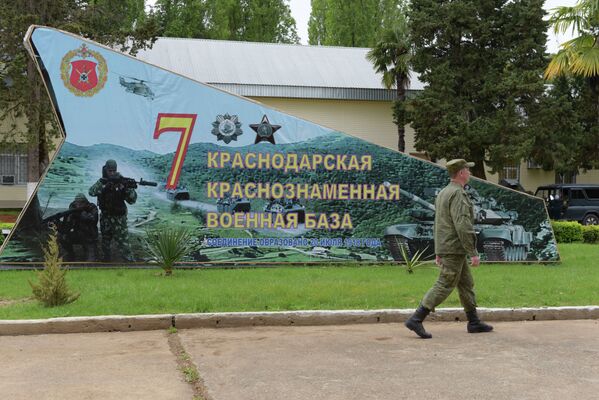
Introduction Russia assumed complete de jure control over the defence and security of occupied Abkhazia following the 2008 Russo-Georgian War. On 17 February 2010, Dmitry Medvedev, the then-President of the Russian Federation, and Abkhazian de facto President Sergey Bagapsh, signed an agreement “On the Russian Joint Military Base.” Unlike in the occupied Tskhinvali region, the…