
Domestic Politics of Armenia
Parliamentary elections were held in Armenia on June 7, 2026, resulting in a victory for the ruling party, Civil Contract.
According to the final results, Civil Contract received 49.85% of the vote and secured the right to form a government.
The pro-Russian billionaire Samvel Karapetyan’s Strong Armenia Alliance received 23.31% of the vote, while former President Robert Kocharyan’s Armenia Alliance came in third with 9.95%. Billionaire Gagik Tsarukyan’s Prosperous Armenia party did not enter parliament, receiving just 58,287 votes (3.9893%), situating the party below the 4% threshold.
Based on the votes received, parliamentary seats were distributed as follows:
- Civil Contract party – 64 seats;
- Strong Armenia Alliance – 29 seats;
- Armenia Alliance – 12 seats.
Despite its victory, Civil Contract failed to secure a constitutional majority. This is particularly relevant to the adoption of a new constitution, which the government has been considering for some time. To proceed with a new constitution and referendum, the ruling party will thus need opposition support.
As it stands, the government’s options are significantly limited.
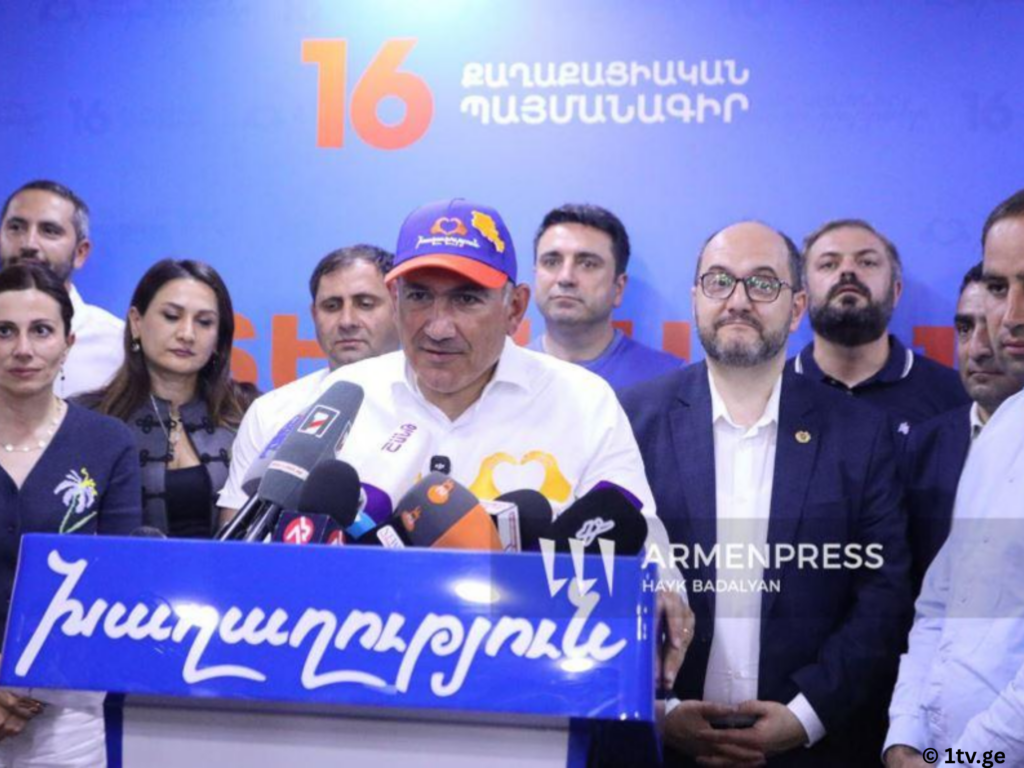
Armenia Prime Minister Nikol Pashinyan
Following the elections, Nikol Pashinyan, Armenia’s prime minister and chairman of the ruling Civil Contract party, once again criticized his main political opponents, whom he has long referred to as the “three-headed party of war.”
This term refers to the leaders of the Strong Armenia Alliance, Armenia Alliance, and Prosperous Armenia, who, according to Pashinyan, support revising the peace process with Azerbaijan, a stance he believes may lead to renewed military conflict.
“The priority of the Armenian government for the next five years has been, and will remain, fulfilling the citizens’ demand for the complete elimination of the criminal-oligarchic system in the Republic of Armenia,” Pashinyan said.
When asked about the possibility of cooperating with Samvel Karapetyan, Robert Kocharyan, and Gagik Tsarukyan, Pashinyan responded:
“My position and my plan have not changed. The leaders of these forces, Samvel Karapetyan, leader of the Strong Armenia Alliance; Robert Kocharyan, leader of the Armenia Alliance; and Gagik Tsarukyan, chairman of the Prosperous Armenia party, must be held accountable in accordance with the law. They must face justice in the cases already known to the public, and the confiscation of assets from the criminal-oligarchic system must proceed swiftly through the mechanisms of illicit-asset forfeiture, criminal proceedings, and the protection of state and public interests.
“Ultimately, these political forces, which in reality represent the criminal-oligarchic system, should have no place in Armenia’s political life. The three-headed party of war and espionage must be eradicated from Armenia. This is our task in the political arena.”
On June 12, the opposition Strong Armenia Alliance appealed to the Central Electoral Commission to annul the parliamentary election results, citing alleged violations.
After his parliamentary election victory, Prime Minister Nikol Pashinyan received congratulations from U.S. Secretary of State Marco Rubio and leaders of about two dozen European Union countries. However, Russia, which Yerevan officially regards as a strategic partner, has not yet extended its congratulations.
Dmitry Peskov, the Russian president’s press secretary, stated that the Kremlin was “awaiting the final election results.”
“There were many ambiguous moments. We received significant information about violations during the elections. Therefore, we prefer to wait for the official conclusions,” he said.
Russian Foreign Ministry spokeswoman Maria Zakharova claimed the elections were held “under conditions of unprecedented pressure on the opposition, and with interference from the West, primarily the European Union.”
She said that “the preliminary results announced by the Central Electoral Commission of the Republic of Armenia indicate that the Civil Contract party, which declared victory, failed to secure a monopoly on power.”
Zakharova further claimed there had been a decline in support for Pashinyan’s party compared to the previous election cycle. However, official data shows the party received 727,827 votes in these elections, exceeding the 688,761 it received in the 2021 snap elections.
In Zakharova’s assessment, “the latest elections clearly show that Armenian society is extremely polarized. In such conditions, making unilateral decisions regarding the country’s development path without taking into account the opinions of all segments of the population will lead to further division in Armenia, and socio-economic upheavals.”
Moscow also stated that “democratic principles and procedures for holding free elections” had been violated in Armenia. According to the Russian Foreign Ministry, pressure from the Armenian authorities was directed mainly against political forces that support:
- Strengthening the strategic alliance with Russia;
- Continued participation in Eurasian integration processes, including membership in the Eurasian Economic Union and the Collective Security Treaty Organization, and;
- Rejecting the course toward accession to the European Union.
The Kremlin’s assessment is shared by pro-Russian political forces that participated in the elections, including Samvel Karapetyan’s Strong Armenia Alliance, the Armenia Alliance led by former President Robert Kocharyan, and Gagik Tsarukyan’s Prosperous Armenia Party.
During the election campaign and on election day, Armenia’s Anti-Corruption Committee regularly reported alleged cases of voter bribery linked to these political forces. The Kremlin claims that domestic and international observation missions did not report violations that could have significantly affected the election results.
On June 14, 2026, Robert Kocharyan, former President of Armenia and leader of the pro-Russian Armenia Alliance, was reportedly barred from leaving the country. He learned of the restriction at Yerevan’s Zvartnots International Airport while preparing to board a flight to Russia.
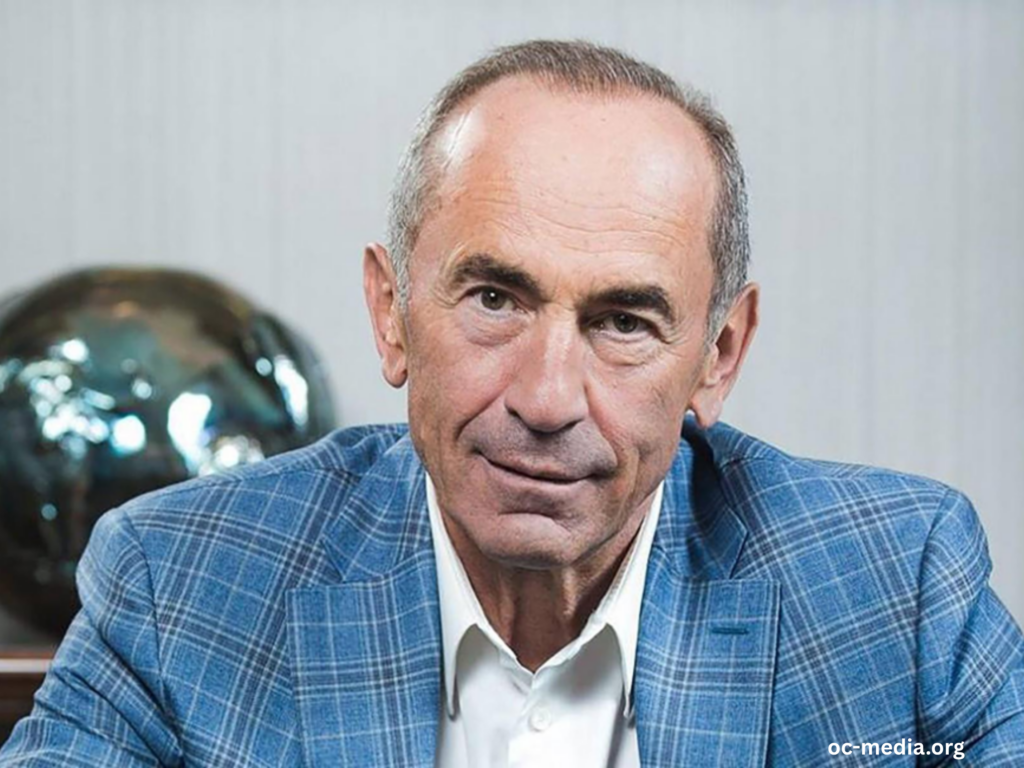
Robert Kocharyan
Earlier, Armenian authorities had also imposed travel restrictions on pro-Russian politicians Gagik Tsarukyan and Narek Karapetyan, Samvel Karapetyan’s nephew and the lead candidate of the Strong Armenia Alliance.
US-Azerbaijani Relations
On June 1, U.S. President Donald Trump nominated Alexander Alden as Ambassador Extraordinary and Plenipotentiary of the United States of America to the Republic of Azerbaijan, and submitted his nomination to the Senate for confirmation.
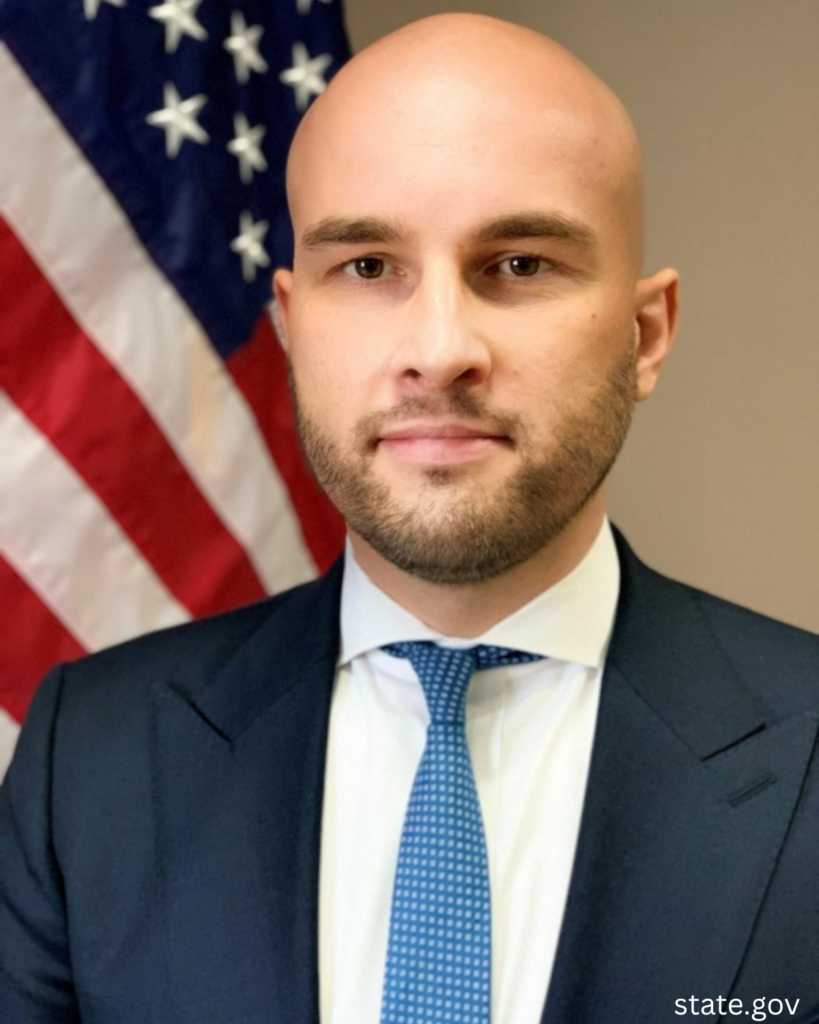
Alexander Alden
Chargé d’Affaires Amy Carlon currently leads the U.S. Embassy in Baku. Former Ambassador Mark Libby departed at the end of 2024.
Alexander Alden is not a traditional career Foreign Service officer; his background is primarily in security, defense, and geopolitics.
During the first Trump administration, he served as Deputy Assistant Secretary of State in the State Department’s Bureau of European and Eurasian Affairs, overseeing relations with U.S. partner countries and efforts to counter China’s regional influence. He later became Acting Assistant Secretary of State in the Bureau of Conflict and Stabilization Operations.
He has also worked at the National Security Council as Senior Director for Emerging Technologies and Director for Defense Policy and Strategy, and served as a special assistant for policy at the Pentagon.
Alden holds a master’s degree from Johns Hopkins University and a bachelor’s degree from Southern Illinois University. He speaks Italian, Serbian, Croatian, and Bosnian.
Alden’s nomination is pending before the U.S. Senate Foreign Relations Committee. No hearing date has been scheduled, though this does not necessarily signal a delay or affect the outcome.
If confirmed, Alden is expected to serve in Baku as both a diplomatic representative and an ambassador focused on political and strategic priorities. He may support the post-peace agreement phase, coordinate TRIPP-related projects, deepen cooperation in technology and energy, and address regional security issues involving Russia and Iran.
His appointment could strengthen U.S. engagement in the South Caucasus, expand economic ties, and support the establishment of new institutional mechanisms to maintain regional peace.