
Armenia’s Foreign Policy
On the 34th anniversary of the formation of the Armenian Armed Forces, Prime Minister Nikol Pashinyan stated, “We are not preparing for war, because there will be no war. Peace has been established between the Republic of Armenia and the Republic of Azerbaijan, and there is no more reliable guarantee of security than peace. We will continue to strengthen this most reliable guarantee of security.”
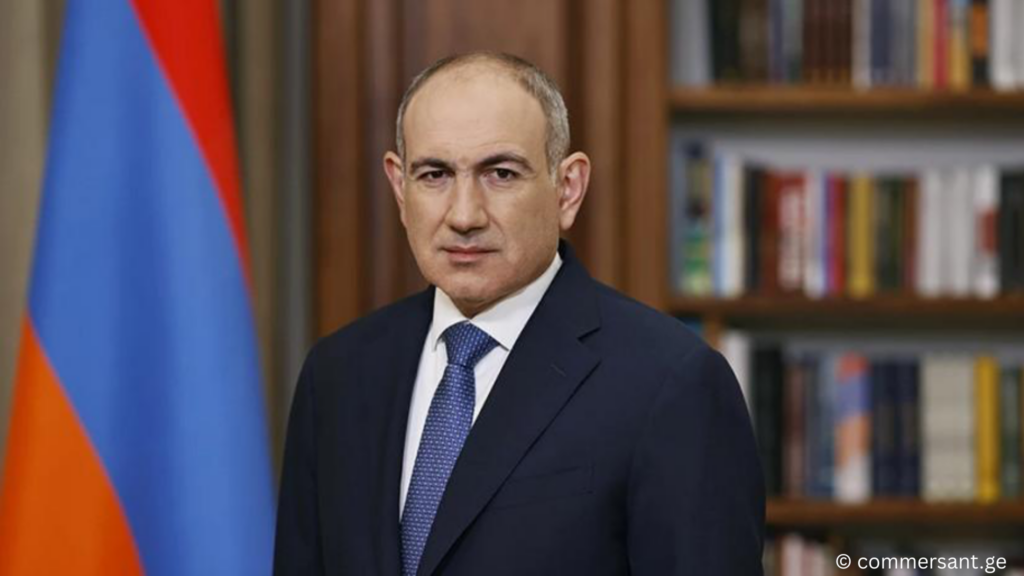
Prime Minister of Armenia Nikol Pashinyan
According to Pashinyan, the Armenian army will continue to develop, as it remains one of the state’s most important institutions.
“It is extremely important to have a strong, self-reliant army to confront potential future threats in cases where diplomacy may not be enough. A country without a strong army is vulnerable and can become a target of aggression. The Republic of Armenia should never be such a country,” Pashinyan noted.
He stated that, in recent years, the Armenian army has acquired modern weapons and military equipment of a quality and specification it had not previously possessed— purchases made possible by substantial financial investment.
“A very important question must be answered: why was the same not done in 2018, 2019, 2020, 2021, and 2022? Almost all of our international partners who could have sold us weapons and military equipment politely refused, citing two main reasons. First, because they were not confident that the weapons would remain within the internationally recognized territory of the Republic of Armenia. Second, because they were uncertain that the classified specifications of these weapons would be protected from the Collective Security Treaty Organization, of which Armenia was a member. This concern itself was an obstacle to concluding such deals.
“In turn, from September 2022 onward, partners within the Collective Security Treaty Organization began refusing to fulfill their contractual obligations to ensure the Republic of Armenia’s security and territorial integrity. They also refused to supply hundreds of millions of dollars’ worth of weapons and military equipment that Armenia had already paid for. This posed an existential threat to the Republic of Armenia, making it clear that a decision had effectively been made to abolish our statehood and reduce our sovereignty to zero,” Pashinyan noted.
He attributed the overcoming of this existential threat to two key developments: the political agreement reached in Prague on October 6, 2022, under which Armenia and Azerbaijan recognized each other’s territorial integrity and sovereignty, and the suspension of Armenia’s membership in the Collective Security Treaty Organization.
In his address to the Parliamentary Assembly of the Council of Europe, Armenia’s Minister of Foreign Affairs, Ararat Mirzoyan, stated that the “Trump Route” would enable Armenia and Azerbaijan to become a transit hub, and would transform the South Caucasus into a transit region, thus facilitating both people-to-people connections and the movement of goods.
Mirzoyan stated: “At this stage, peace has been established between Armenia and Azerbaijan. We are confident we can maintain and strengthen it through ongoing attention and cooperation. Since the August 8 agreements, our region has made significant progress: Azerbaijan has lifted its import ban on Armenia, and bilateral trade has resumed. Agencies are now exploring further trade opportunities, particularly in transit. This is a major achievement.”
Mirzoyan highlighted a key outcome of the Washington Peace Summit: the leaders agreed to fully reopen regional communication routes, grounded in the fundamental principles of territorial integrity, sovereignty, and jurisdiction. After years of differing interpretations, these principles have now been officially adopted. On January 14, in coordination with their U.S. partners, Armenia and Azerbaijan also agreed on infrastructure principles and defined the “Trump Route,” which will operate within Armenia’s sovereign territory under its laws and jurisdiction.
Mirzoyan stated that the “Trump Route” will be a key driver of peace and cooperation. “Peace depends on several components, including a formal agreement we hope to sign and ratify soon, and the reopening of communication routes. We are taking concrete steps to guide this process toward a more stable and prosperous future,” he said.
On January 22, 2026, in Davos, Prime Minister Nikol Pashinyan signed the Charter of the Peace Council at the invitation of U.S. President Donald Trump.
Earlier, the U.S. president invited Pashinyan to join the Peace Council as a founding member, which he accepted. He attended the signing ceremony alongside Argentine President Javier Milei, with Armenian President Vahagn Khachaturyan and Foreign Minister Ararat Mirzoyan also present.
The ceremony brought together heads of delegations from Armenia, the United States, Argentina, Azerbaijan, Bahrain, Bulgaria, Egypt, Hungary, Indonesia, Jordan, Kazakhstan, Kosovo, Morocco, Pakistan, Qatar, Paraguay, Saudi Arabia, Turkey, the United Arab Emirates, and Uzbekistan.
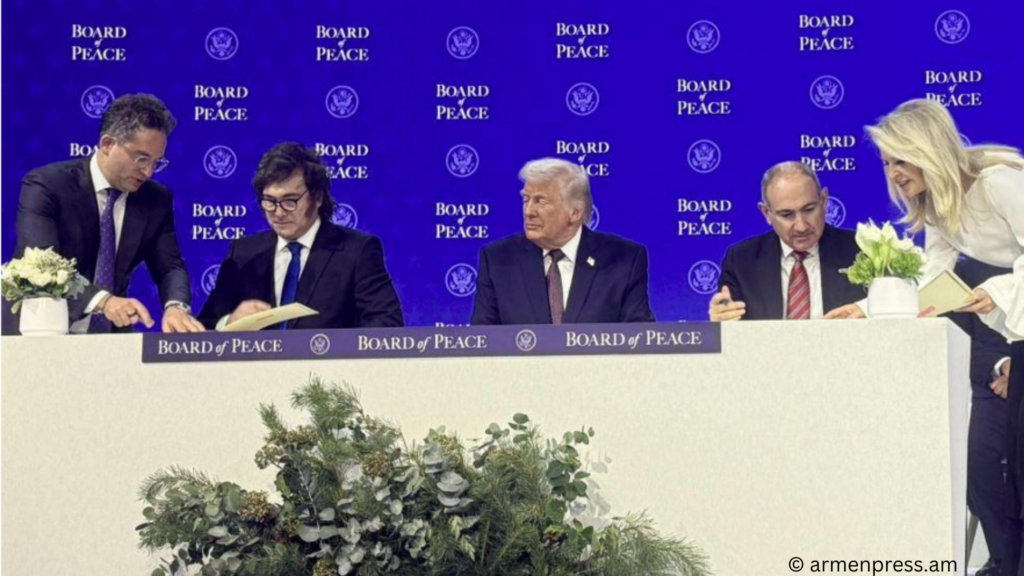
Signing the Charter of the Peace Council in Davos on January 22, 2026
Azerbaijani Foreign Policy and the Normalization of Armenian-Azerbaijani Relations
During a panel discussion at the World Economic Forum in Davos, Azerbaijan’s President Ilham Aliyev announced that cargo transportation currently routed through Georgia will soon be redirected through Armenia.
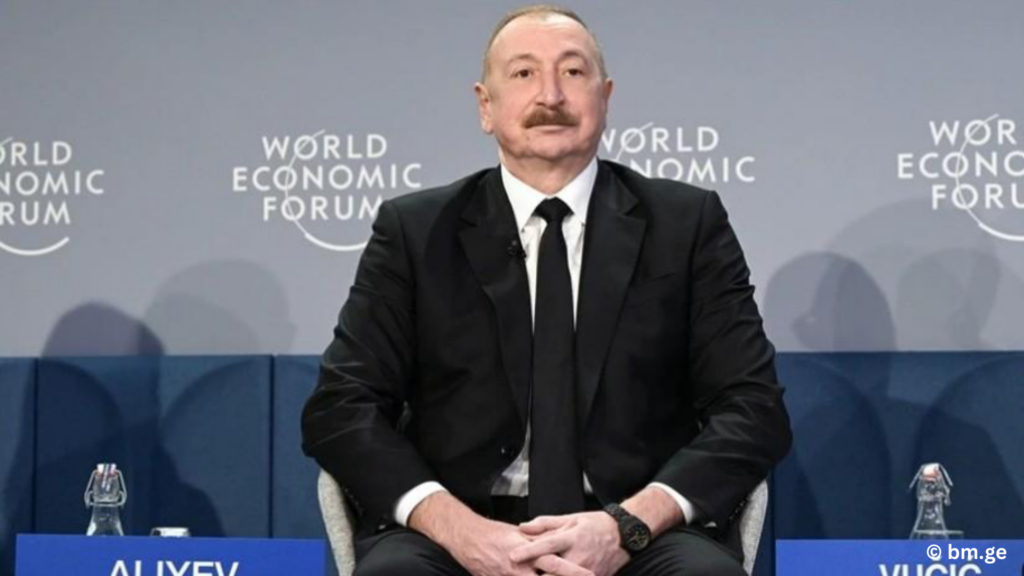
President of Azerbaijan Ilham Aliyev
Aliyev noted that Armenia has requested the transit of cargo through Azerbaijan to Russia. He highlighted that Azerbaijan has already lifted restrictions on cargo from Kazakhstan and Russia to Armenia.
“We have received a request from Armenia to enable transit to Russia. As a result, we have unilaterally opened our corridor. While shipments currently travel through Georgia, I believe the day is near when cargo will move via Armenia, and Armenia will have direct access through Azerbaijan,” Aliyev said.
He emphasized that Azerbaijan’s priority is regional cooperation. “We have built strong working relations with all our neighbors, except Armenia, for obvious reasons. However, since establishing peace, we have also started economic cooperation and exports with Armenia,” he added.
At the same panel, Armenian President Vahagn Khachaturyan noted that oil products have already been imported from Azerbaijan into Armenia via Georgia, and expressed hope that direct cargo transit between the two countries would soon be established.
“We must forget the past and begin implementing concrete projects,” he said. “We believe we will succeed. Our agreements are based on very clear principles: respect for each other’s territorial integrity, sovereignty, and jurisdiction. And yes, the day will come when our borders will open. Just a few years ago, the political will was not at this level. Ordinary working visits will take place, and our citizens will be able to cross borders and establish ties freely. We will use these opportunities, and as a result of this cooperation, the South Caucasus will become a very attractive region for the entire world,” Khachaturyan said.
The Normalization of Turkish-Armenian Relations
During a visit to the Margara border checkpoint, Deputy Chairman of Armenia’s State Revenue Committee Rafael Gevorgyan stated that the facility is fully equipped to serve both passengers and cargo.
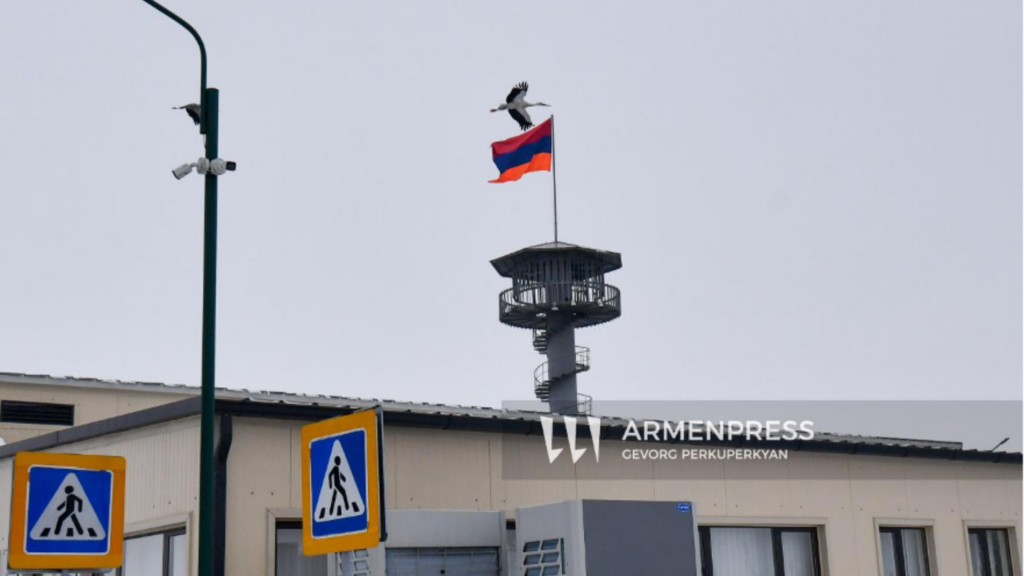
The Margara Border Checkpoint
“All necessary equipment is in place to serve both passengers and cargo. The State Revenue Committee has assigned customs staff to the checkpoint and is prepared to provide services as soon as the border opens,” said the deputy head of Armenia’s State Revenue Committee.