
“Trump’s Route”
The United States has been actively engaged in implementing the “Trump Route” project (the Trump Route for International Peace and Prosperity – TRIPP), which was agreed upon as part of the peace agreement signed between Armenia and Azerbaijan at the White House on August 8, 2025.
To facilitate this effort, Brendan Hanrahan, a representative of the U.S. Department of State’s Bureau of European and Eurasian Affairs, conducted a regional tour of Turkey, Azerbaijan, and Armenia, from September 9 – 11, 2025.
On September 9, Hanrahan met with Turkish Deputy Foreign Minister Levent Gumrukcu in Ankara. The following day, he held talks in Baku with Azerbaijani Foreign Minister Jeyhun Bayramov.
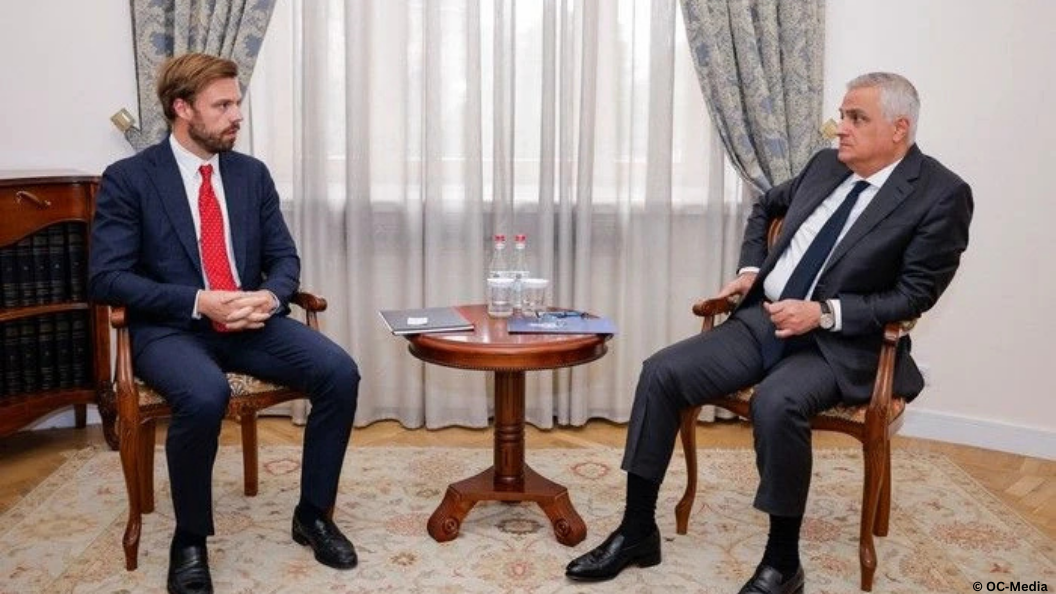
After visiting Baku, Hanrahan traveled to Yerevan to meet with Armenian Deputy Prime Minister Mher Grigoryan.
Following the meeting, Hanrahan tweeted: “Here in Yerevan, I am thrilled to announce that, working with Congress, we plan to provide $145 million in assistance for Armenia, which marks the first major step toward making TRIPP a reality.”
The senior U.S. official also noted that these meetings were beneficial for strengthening regional ties and promoting economic investment.
Yet, many aspects of the project remain unclear. Further, Hanrahan visited Yerevan for two days, but it is unknown whether he met with any other senior Armenian officials.
An important meeting had taken place prior to this. On September 5, the deputy prime ministers of Azerbaijan and Armenia met at a location on the Armenian-Azerbaijani border, near the frontier with Iran, where “Trump’s Route” is expected to be established. Since the deputy prime ministers are responsible for border demarcation, it can be inferred that both parties are looking to agree on the boundary before transport routes are developed in the area.
The Normalization of Azerbaijani-Armenian Relations
Azerbaijan and Armenia are in ongoing communication to finalize a peace agreement and normalize relations.
On September 22, Azerbaijani Foreign Minister Jeyhun Bayramov and Armenian Foreign Minister Ararat Mirzoyan met during the 77th session of the UN General Assembly in New York. There, they discussed the implementation of the agreements made on August 8, as well as potential steps toward signing a peace agreement.
The ministers agreed to continue their dialogue in the future.
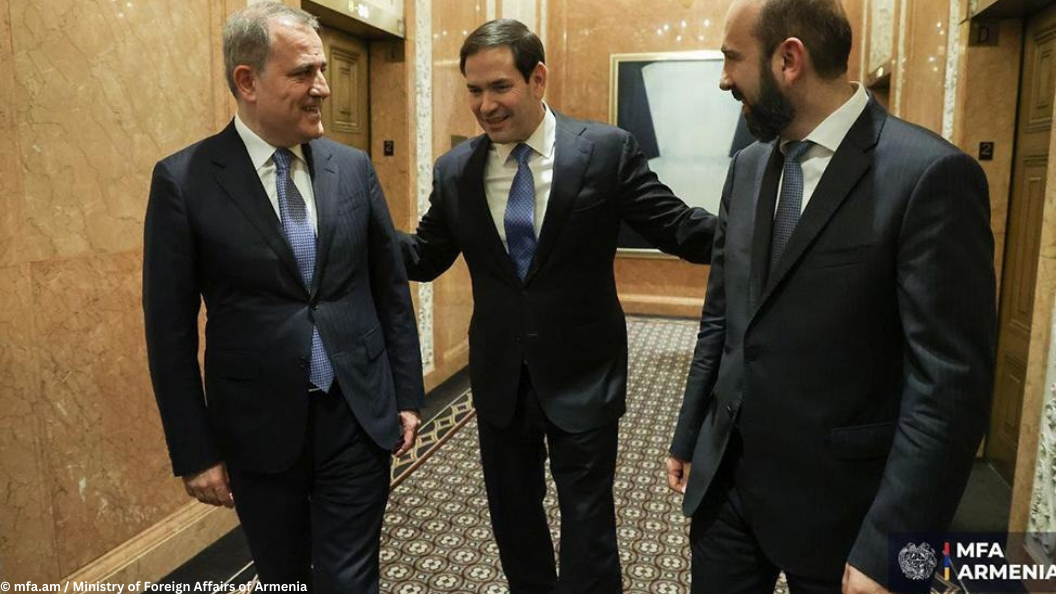
On September 26, U.S. Secretary of State Marco Rubio met with Azerbaijani Foreign Minister Jeyhun Bayramov and Armenian Foreign Minister Ararat Mirzoyan during the 2025 Transatlantic Dinner to discuss the ongoing normalization of relations between their countries.
Another significant visit took place from September 19 to 21, when Andranik Simonyan, the head of Armenia’s National Security Service, traveled to Baku to participate in a security forum, marking the first such visit in history.
The visit raised hopes among the families of Armenian prisoners regarding the possible release of their relatives, though no prisoners were released from Baku at that time.
Reports from Armenian media indicate that Simonyan provided Azerbaijan with a list of individuals whose release Armenia is seeking. Notably, the leaders of “Nagorno-Karabakh” were absent from this list.
The Normalization of Turkey-Armenia Relations
Ankara and Yerevan continue to engage in negotiations aimed at normalizing relations. However, meaningful progress largely hinges on the conclusion of a peace agreement between Armenia and Azerbaijan.
On September 13, Turkish Foreign Minister Hakan Fidan announced that Ankara anticipates that a peace agreement between Baku and Yerevan will be signed early next year. He also mentioned that once this agreement is finalized, relations between Armenia and Turkey will be normalized shortly thereafter.
In the meantime, the parties are engaged in bilateral discussions to establish a foundation for normalization. On September 12, 2025, the sixth meeting of the Special Representatives for the Normalization of Relations between Turkey and Armenia took place in Yerevan. The meeting was led by Ambassador Extraordinary and Plenipotentiary Serdar Kilic, representing Turkey, and Deputy Speaker of the National Assembly Ruben Rubinyan, representing Armenia.
In a statement released after the meeting, the Ministry of Foreign Affairs of the Republic of Turkey highlighted that the parties had discussed several key issues, including the operation of checkpoints at the state border, the rehabilitation of the Kars-Gyumri railway, the potential provision of scholarships for university students, and the introduction of new air flights between the two countries, set to begin in the summer of 2026.
The ministry’s statement emphasized that the parties will continue the normalization process without any preconditions.
To facilitate normalization with Turkey, the Armenian government announced that, starting November 1, Mount Ararat would not be featured on the stamps used for border crossing confirmation.
The Armenian opposition criticized the government’s decision to remove Mount Ararat from the border-crossing stamps. Edmon Marukyan, leader of the Educated Armenia party, called the move “part of an effort to alter the country’s identity.”
In response to criticism from the opposition, Armenian Minister of Labor and Social Affairs Arsen Torosyan stated on September 14 that the decision aligns with modern border-crossing requirements and the “ideology of a true Armenia.”
Torosyan shared images of the new border-crossing stamps on his official Facebook page. He pointed out that many countries no longer use passport stamps when crossing borders. For example, in neighboring Georgia, Armenian citizens can cross the border using identification cards, and their entries are recorded electronically without the need for stamps.
Armenia’s Domestic Politics
With Armenia preparing for critical parliamentary elections in June next year, pro-Russian forces are looking to regain power, making domestic political debates increasingly relevant.
On September 24, Prime Minister Nikol Pashinyan invited Armenia’s former presidents, often seen as pro-Russian politicians, to engage in public debates on societal issues.
There is widespread consensus in Armenia that the main pre-election issues will focus primarily on relations with neighboring countries, especially Azerbaijan, Russia, and Turkey.
Interestingly, the former presidents have not directly addressed Pashinyan’s proposal. Their indirect remarks indicate a reluctance to engage in such discussions. As a result, many in the public view Pashinyan as holding the upper hand on this issue. Still, with considerable time remaining before the elections, evolving circumstances could sway public opinion and reshape the domestic political landscape.
Armenia-Russia Relations
Despite the tense relations between Armenia and Russia, both sides continue to maintain their established contacts.
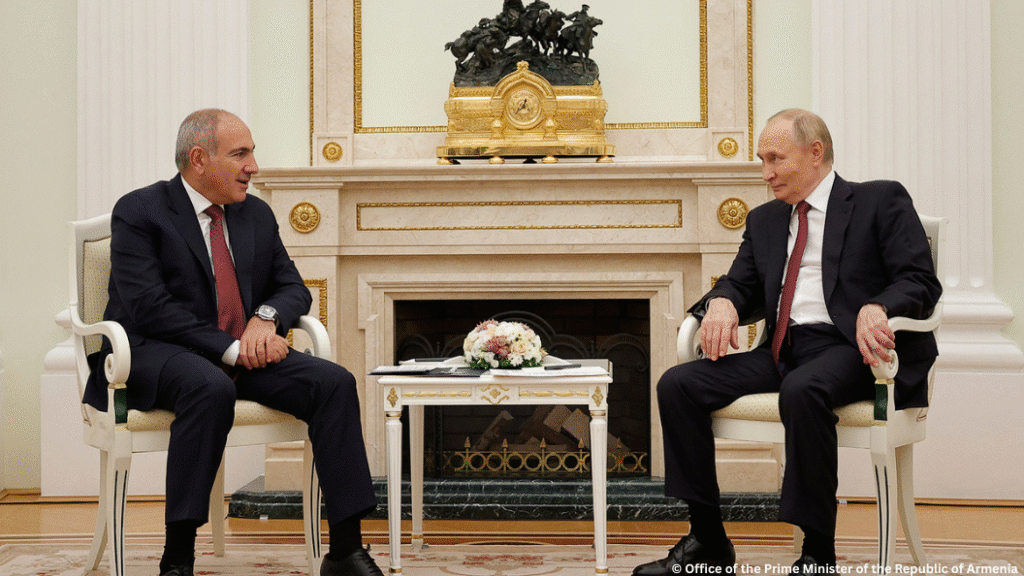
On August 31, the leaders of the two countries met in China during the Shanghai Cooperation Organization summit. Later, on September 25, Armenian Prime Minister Nikol Pashinyan visited Moscow to hold talks with Russian President Vladimir Putin.
According to a press release from the Kremlin, the parties discussed their bilateral economic relations and cooperation in the nuclear energy sector.
An interesting detail highlighted in the Kremlin press release was the emphasis on trade between Russia and Armenia, which has reached $11 billion. This amount accounts for 34% of Armenia’s foreign trade, marking a significant increase. The way it was presented appears aimed at underscoring Armenia’s economic dependence on Russia.