
Armenia’s Domestic Policy
Armenia’s Civil Contract party has nominated incumbent Prime Minister Nikol Pashinyan as its candidate for the June 7, 2026, parliamentary elections.
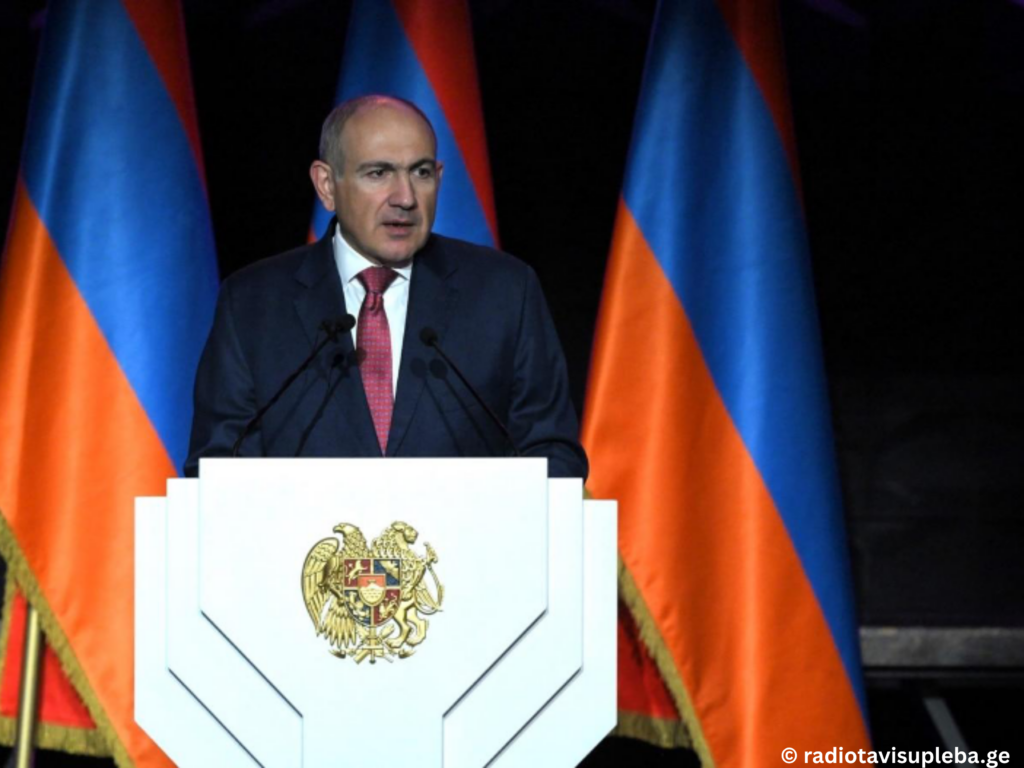
Prime Minister of Armenia Nikol Pashinyan
Nikol Pashinyan announced that the Civil Contract party held two rounds of internal voting, which resulted in his nomination as a candidate.
According to information released by the party, Pashinyan received 898 votes. In this largely symbolic process, other candidates received significantly fewer votes:
- Ararat Mirzoyan, the Foreign Minister, received 12 votes.
- Suren Papikyan, the Defense Minister, received 8 votes.
As a result, Nikol Pashinyan will serve as the leading candidate on the ruling party’s electoral list.
Nikol Pashinyan asserted that Armenia has achieved peace with Azerbaijan for the first time since gaining independence. He emphasized that genuine peace did not exist before August 2025.
“The ‘three-headed’ party of war, Robert Kocharyan, Karen Karapetyan, and Gagik Tsarukyan, seeks to convince the public that peace existed until 2024–2025 and prior to 2018,” the Prime Minister said. “This claim is a cynical lie, as, since independence, and even after the 1994 ceasefire, Armenia experienced deaths and injuries every year due to mutual shootings with Azerbaijan. The number of casualties is in the hundreds, with an even greater number of injuries. This is their definition of ‘peace’: annual sacrifices. Our [party’s] vision is fundamentally different. Peace signifies the absence of casualties and injuries; peace requires the elimination of all tension.”
“Daily exchanges of fire were once routine, as was sniper activity and occasional ‘mini-wars.’ To understand this period, it must be viewed in the broader context of an ongoing conflict. In reality, there was no peace, only a postponement of war,” Pashinyan explained.
He emphasized that delaying war came at a significant cost.
“Armenia has paid the price for that postponement. It meant the erosion of independence, sovereignty, and statehood, as well as setbacks to citizens’ well-being and economic development. By 2016, during the Four-Day War, this resource had been exhausted. Not only did hostilities resume, but the negotiating dynamic shifted fundamentally, dispelling long-held Armenian assumptions about resolving the Karabakh issue. Those who dispute this should refer to Serzh Sargsyan’s well-known letter of August 2016,” the Prime Minister stated.
According to Pashinyan, the assertion that peace has now been established is supported by the fact that 2025 marked the first calendar year in which Armenia did not experience any casualties resulting from mutual fire with Azerbaijan.
He noted, “In fact, we have not recorded any deaths or injuries since February 2024. That is, the last such case occurred at the beginning of 2024.”
The Prime Minister emphasized that, although the peace agreement has only been initialed and not signed, the peace between Armenia and Azerbaijan already has a legal basis.
“The de jure basis lies in the Regulation on Joint Activities signed by the delimitation commissions of the two countries in 2024. Following the relevant procedures, this document was ratified and granted the highest legal force. It enshrines the Alma-Ata Declaration as the guiding principle for border delimitation between the two states. This is of critical importance for both countries. It means that Armenia and Azerbaijan have recognized de jure that independent Armenia corresponds territorially to Soviet Armenia, and that independent Azerbaijan corresponds territorially to Soviet Azerbaijan. This constitutes the foundation for peace. Any deviation from this logic, toward which the ‘three-headed’ party of war is pushing us, unequivocally and unconditionally leads to war, with all its consequences.”
According to Pashinyan, the current government has, at great cost, achieved not merely a postponement of war, but peace itself.
“We bow our heads to our fallen brothers. A free, democratic, developing, and sovereign Armenia is the highest tribute to their memory. Their sacrifice cannot be overstated. Peace has already been established de jure, and the citizens of Armenia must become the guardians of that peace, because it is theirs; they created it.”
Pashinyan concluded: “The government has made the establishment of peace a priority, based on the mandate received from the people in the 2021 snap elections. The time is approaching, June 7, 2026, when the citizens of Armenia must protect their peace. I have no doubt they will do so.”
Armenia’s Foreign Policy
On March 20, 2026, the Prime Minister of the Republic of Armenia, Nikol Pashinyan, met with European Commissioner for Enlargement Marta Cos and her delegation in Yerevan.
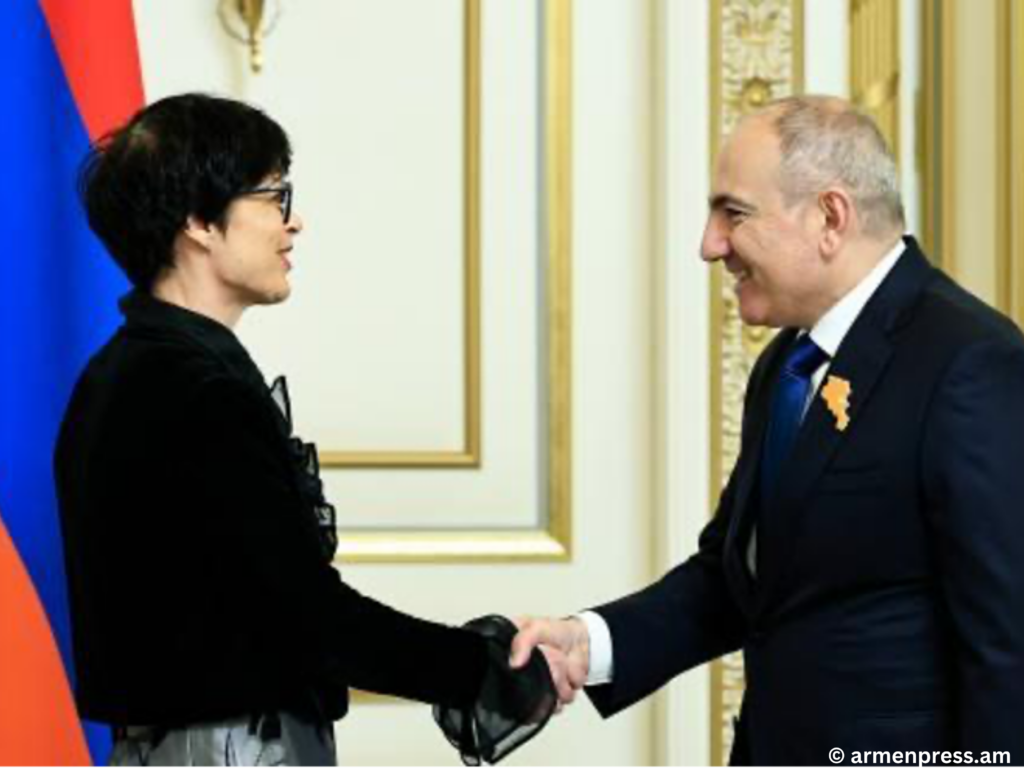
Meeting between Martha Kos and Nikol Pashinyan
The Armenian Prime Minister’s Office announced that Nikol Pashinyan welcomed Martha Kos’s visit, describing it as a valuable opportunity to discuss the expanding Armenia-EU cooperation agenda.
Pashinyan expressed interest in Ms. Kos’s perspectives on bilateral relations, and reaffirmed the government’s commitment to democratic reforms, the rule of law, and institutional development.
Martha Kos thanked Pashinyan for the reception and stated that the European Union values Armenia’s reforms and the political will behind them. She confirmed the EU’s continued support for Armenia, particularly in reform, civil society, and media development.
The meeting addressed progress in Armenia-EU cooperation, opportunities to expand economic and investment programs, and matters concerning visa liberalization.
The discussion included regional developments and peace initiatives, with Kos reaffirming the EU’s full support for Armenia’s peace efforts.
Both sides emphasized the importance of ongoing high-level dialogue and consistent joint efforts to further deepen cooperation.
The Process of Normalizing Armenian-Azerbaijani Relations
On March 27, 2026, Ararat Mirzoyan, Minister of Foreign Affairs of the Republic of Armenia, held a telephone conversation with Jeyhun Bayramov, Minister of Foreign Affairs of the Republic of Azerbaijan.
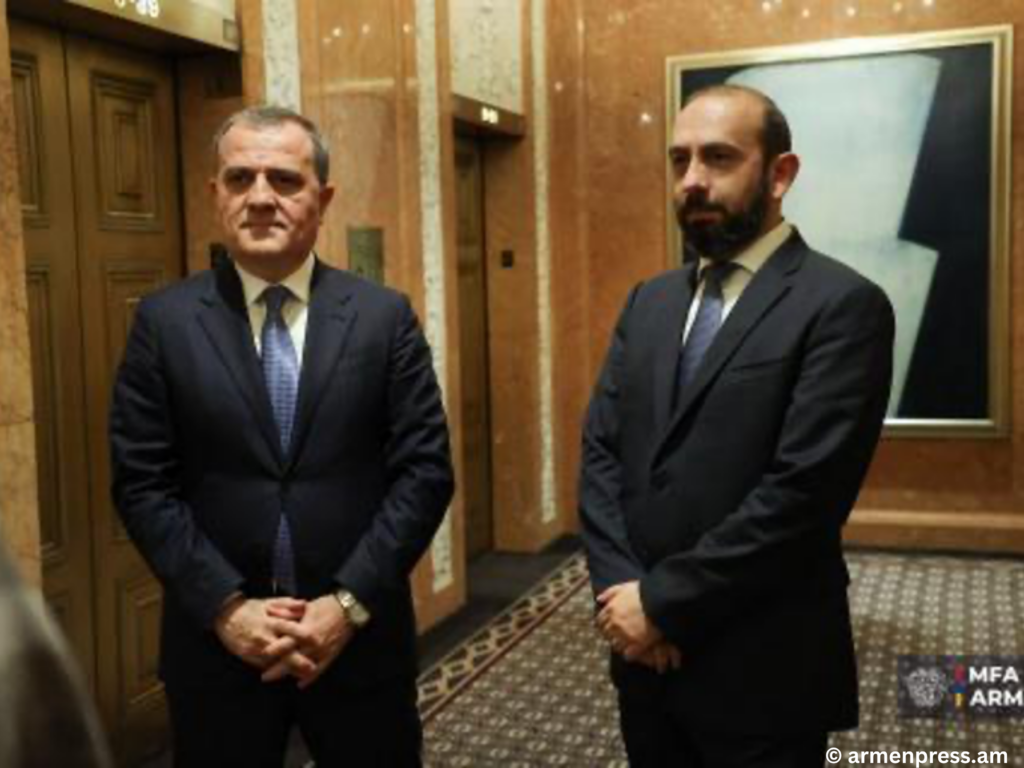
Azerbaijani and Armenian Foreign Ministers Jeyhun Bayramov and Ararat Mirzoyan
The Ministry of Foreign Affairs of Armenia reported that, during the bilateral meeting, the ministers expressed satisfaction with the progress made in normalization between Armenia and Azerbaijan.
Mirzoyan and Bayramov also addressed matters related to cooperation on regional and multilateral platforms.
At the end of March 2026, an additional shipment of 350 tons of grain was transported to Armenia via transit through the territory of Azerbaijan.
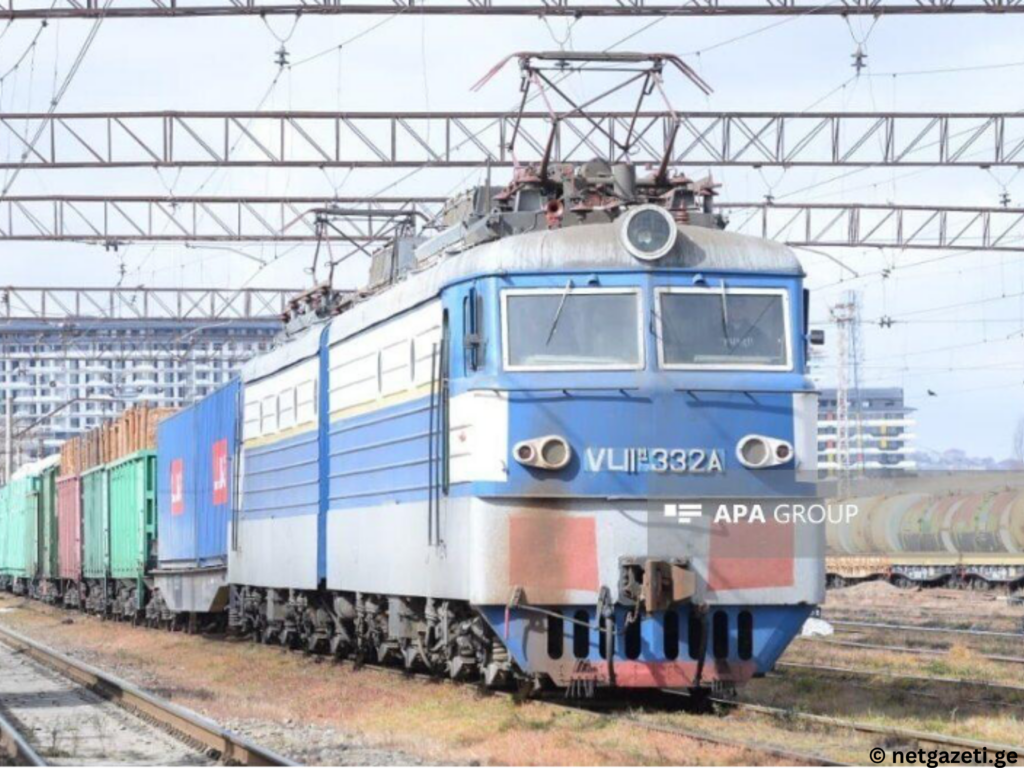
Reports indicate that five railway wagons departed from Baku’s Bilajary station on March 25, en route to Boyuk-Kesik. The cargo comprised an additional shipment of grain delivered to Armenia from Russia via Azerbaijan.
On March 24, four wagons with 271 tons of fertilizer and one wagon with 68 tons of buckwheat were sent from Baku to Armenia. To date, over 23,000 tons of Russian grain have transited through Azerbaijan to Armenia. Shipments are routed from Azerbaijan to Georgia before reaching Armenia. The process accelerated after Ilham Aliyev announced the lifting of transit restrictions to Armenia in October 2025. Armenian authorities called this a significant step toward opening regional communications.
In addition, within the framework of economic cooperation, Azerbaijan has also started supplying fuel to Armenia. The first gasoline export was carried out in December 2025, with a second batch sent in January 2026. In March, 4,500 tons of diesel fuel were reported to have been sent to Armenia.
Experts note that this volume of energy resources is not economically significant, and view it primarily as a political gesture supporting normalization between the two countries.