
Armenia’s Foreign Policy
On August 25, 2026, Mikael Agasandyan, Director of the Russian Foreign Ministry’s First Department for CIS Countries, stated that the Collective Security Treaty Organisation (CSTO) is not cooperating with Armenia in the military, military-technical, or any other sphere.
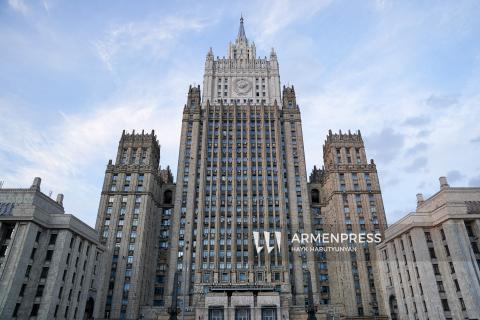
“Currently, there is no cooperation with Armenia in the military, military-technical, or any other sphere within the CSTO framework,” Agasandyan stated, responding to a question about whether Yerevan benefits from the CSTO’s preferential terms for military-technical supplies.
He added, however, that cooperation with Yerevan does continue bilaterally.
“The necessary legal framework is in place, including provisions for supplying military products on preferential terms,” he explained.
Earlier, during discussions in Armenia’s National Assembly on the government’s 2026-2031 program, Prime Minister Nikol Pashinyan announced that Armenia would not resume active participation in the CSTO, saying that Yerevan’s interest in the organisation had been exhausted, and that he would welcome Armenia’s expulsion from it.
In response, Russian presidential press secretary Dmitry Peskov stated that Armenia could withdraw from the Collective Security Treaty Organisation if Yerevan no longer considered membership necessary.
Armenia suspended its participation in CSTO activities in February 2024. Prime Minister Nikol Pashinyan announced the decision in an interview with France 24, emphasizing that the CSTO had failed to fulfill its security obligations towards Armenia.
Armenia’s Domestic Politics
On August 27, 2026, Armenia’s second president, Robert Kocharyan, was arrested.
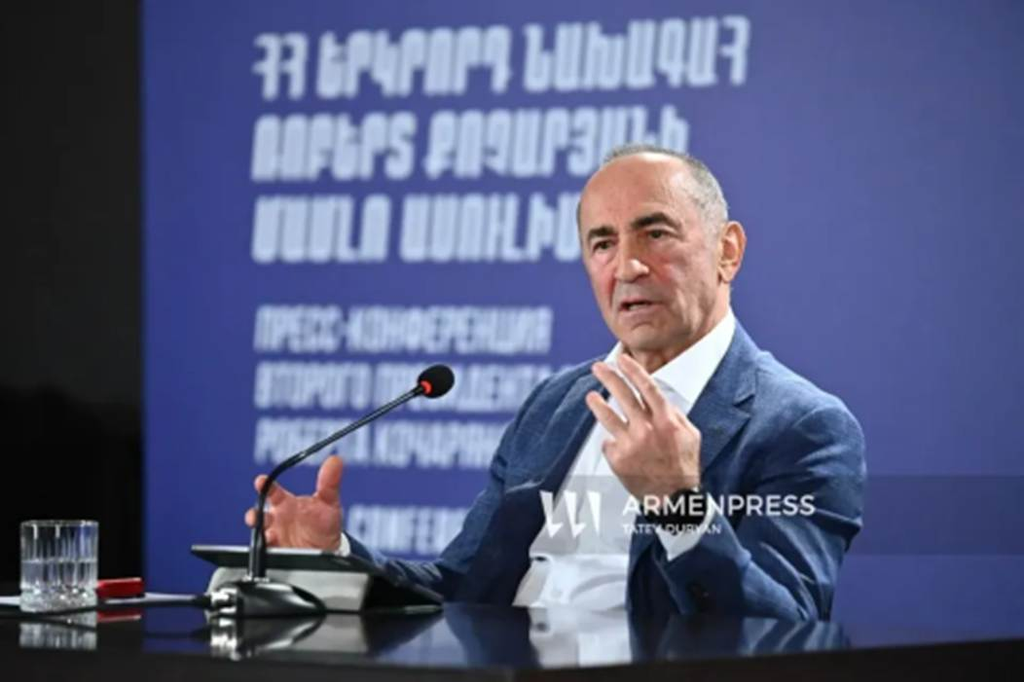
Robert Kocharyan, the second President of Armenia
“The Anti-Corruption Court of Armenia, presided over by Judge S. Dadoyan, fully granted the investigator’s motion and ordered that R.K. be held in pretrial detention,” the Anti-Corruption Committee reported.
Robert Kocharyan was charged with abuse of power, large-scale money laundering, and accepting a substantial bribe.
His eldest son, Sedrak Kocharyan, was also arrested, in connection with the same case.
The Normalisation of Armenia-Azerbaijan Relations
On August 31, 2026, Armenian Prime Minister Nikol Pashinyan and Azerbaijani President Ilham Aliyev met in Bishkek during the Shanghai Cooperation Organisation Summit.
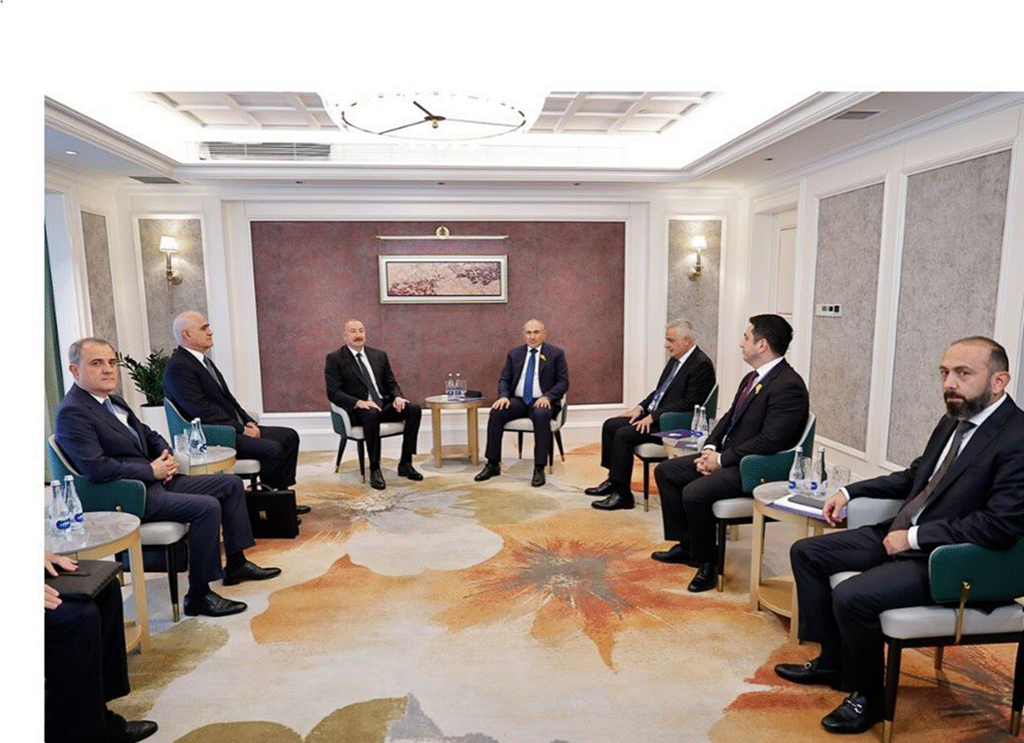
Meeting of the leaders of Azerbaijan and Armenia in Bishkek,
August 31, 2026
The leaders highlighted the historic significance of the August 8, 2025, Peace Summit in Washington, the Joint Declaration signed by Prime Minister Nikol Pashinyan and President Ilham Aliyev under the mediation of U.S. President Donald Trump, and the initialling of the Agreement on the Establishment of Peace and Interstate Relations between Armenia and Azerbaijan.
The discussions also addressed the export of Azerbaijani petroleum products to Armenia, as well as the transit through Azerbaijan of grain and other goods from third countries to Armenia. The leaders underscored that the establishment of trade relations represents a tangible step towards consolidating peace. They welcomed growing contacts between the two countries’ business communities, and explored opportunities to further expand mutually beneficial economic, trade, and energy cooperation.
The parties also discussed the delimitation of the Armenia-Azerbaijan state border, reviewed the role of their respective state commissions, and stressed the importance of maintaining momentum in the ongoing process.
The leaders considered practical steps towards implementing the Trump Route for International Peace and Prosperity (TRIPP), a key outcome of the Washington Peace Summit. They also emphasised the importance of TRIPP connectivity projects.
The leaders welcomed confidence-building contacts between parliamentarians and civil society representatives, highlighting their role in strengthening mutual trust and supporting the broader peace agenda.
Prime Minister Nikol Pashinyan and President Ilham Aliyev agreed to continue direct bilateral engagement to consolidate lasting peace, normalise interstate relations, and enhance connectivity.
TRIPP
On August 25, 2026, representatives from the Azerbaijani and Armenian energy ministries convened in Lachin to discuss bilateral electricity imports and exports, as well as potential connections between the two countries’ energy infrastructures at their shared border.
A day earlier, Armenian Prime Minister Nikol Pashinyan indicated that a power transmission line might become the first infrastructure project under TRIPP. Two weeks before that, Ilham Aliyev announced Nakhchivan’s preparations to export significant volumes of electricity.
The sequence of these developments suggests that energy cooperation is progressing beyond political statements. However, the parties have yet to announce any agreements regarding the project’s route, capacity, financing, or implementation timeline.
The meeting in Lachin brought together representatives of Azerbaijan’s Ministry of Energy and AzerEnerji, as well as officials from Armenia’s Ministry of Territorial Administration and Infrastructure and the country’s electricity system operator.
The official statement was brief: the parties discussed electricity trade and possible options for connecting their power systems at the state border.
The significance of the announcement lies largely in the composition of the delegations. They included not only diplomats, but also representatives directly responsible for operating the countries’ energy networks. This signals a shift from political declarations towards assessing the project’s technical and commercial feasibility.
The issue itself is not new. In January 2026, Pashinyan said the two countries’ energy systems would be connected on the basis of equality and reciprocity. In October 2025, Pashinyan and Aliyev discussed the construction of power transmission lines and a gas pipeline along the TRIPP route during a meeting in Copenhagen. However, no technical details were disclosed in the months that followed.
During the Soviet era, Azerbaijani and Armenian energy systems were interconnected, with Armenia supplying electricity and gas to Nakhchivan. These links were severed in the 1990s after the outbreak of the Karabakh conflict.
On August 24, 2026, while presenting the government’s program to the Armenian parliament, Pashinyan said TRIPP, which is to connect Azerbaijan with Nakhchivan through southern Armenia, would include not only railways and roads, but also pipelines, cables, and power transmission lines. He noted that a power transmission line could be the project’s first operational component, as it would be technically simpler to construct.
Azerbaijan’s Foreign Policy
In Russia, where independent political demonstrations are rare, a group of radical nationalists staged a protest outside Azerbaijan’s diplomatic mission in Moscow on August 27, 2026. The participants displayed three placards, filmed the protest, and posted the footage on a Telegram channel with tens of thousands of subscribers.
There is no direct evidence that the Russian authorities organised the protest. However, the fact that this was the group’s second protest against Azerbaijan, combined with the Russian authorities’ uneven treatment of public expressions of differing political views, raises questions about whether such groups receive preferential treatment from the state.
According to Azerbaijan’s Ministry of Foreign Affairs, the placards were displayed not outside the embassy’s main building, but near its guesthouse.
The Telegram channel “Direct Action Z” publicised the protest, describing itself as an information resource for Eduard Limonov’s “Other Russia” party.
The placards accused Azerbaijan’s State Security Service of torture, and President Ilham Aliyev of concealing it. They also featured the slogans “Russian blood is on your hands” and “Hands off Russian citizens.”
The organisers’ statement presented the detention of eight Russian citizens in Azerbaijan, the criminal proceedings initiated against Ivan Knyazev, Semyon Uralov, and Alexei Chadayev, Baku’s position on Ukraine, and the deaths of Russian peacekeepers in Karabakh in 2023 as manifestations of a broader “anti-Russian policy.”
The statement also referred to the Azerbaijani diaspora, which the organisers accused of engaging in “shady business.”
Azerbaijan’s Ministry of Foreign Affairs described the incident as an “unacceptable provocation” and said it could be part of an ongoing campaign against Azerbaijan that, according to the ministry, is being waged by several Russian media outlets. Baku called on Moscow to investigate the incident and ensure the security of Azerbaijan’s diplomatic mission.