
Armenia’s Foreign Policy
On August 12, 2026, Armenian Prime Minister Nikol Pashinyan and Ukrainian President Volodymyr Zelensky spoke by phone.
“I spoke with Armenian Prime Minister Nikol Pashinyan. Relations between Ukraine and Armenia are becoming increasingly constructive, and it is important that we maintain an ongoing dialogue,” Zelensky wrote on X.
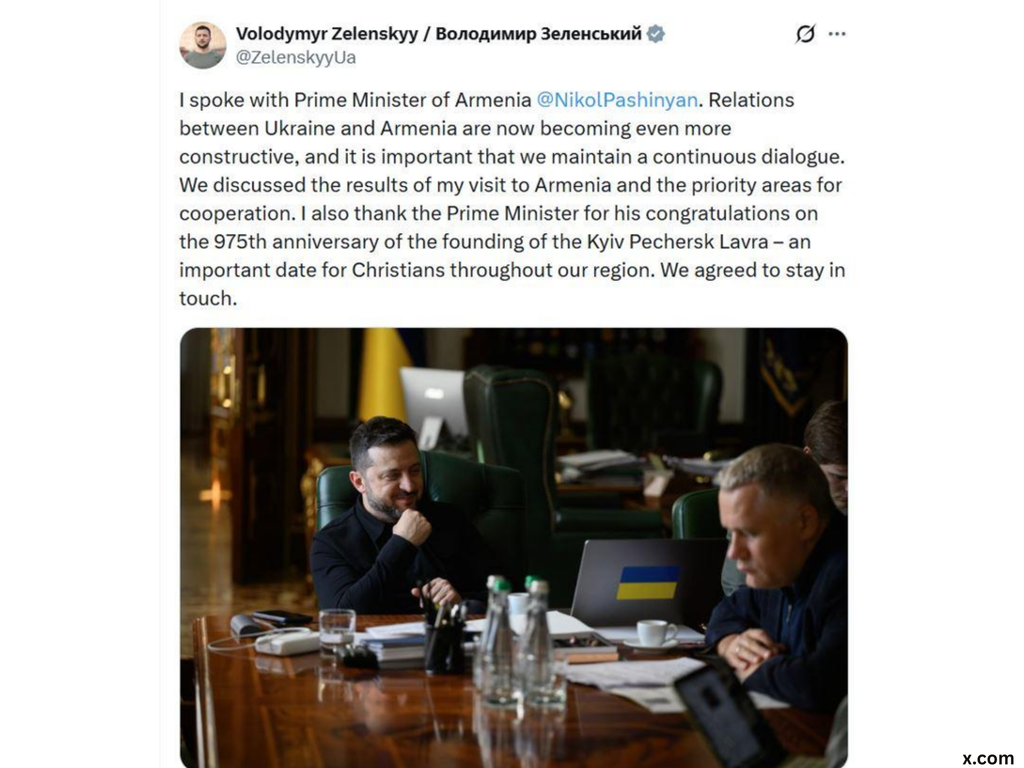
Zelensky’s Post on X
According to Zelensky, the two leaders discussed the results of the Ukrainian president’s visit to Armenia and “priority areas for cooperation.”
“I thank the prime minister for his congratulations on the 975th anniversary of the founding of the Kyiv-Pechersk Lavra, an important date for Christians across our region. We agreed to remain in close contact,” the Ukrainian president wrote.
Moscow has criticised the growing relationship between Armenia and Ukraine.
It has also questioned whether Armenia, traditionally an ally, remains a “genuine ally” as its government signals closer ties with the West, and criticised what it calls Yerevan’s “flirtation with Kyiv.”
On August 6, 2026, Alexei Fadeev, deputy director of the Information and Press Department of the Russian Ministry of Foreign Affairs, stated: “[Armenia’s pro-Western] course and its unmistakably demonstrative flirtation with the Kyiv regime raise serious doubts about the Armenian leadership’s readiness to engage in genuinely allied cooperation with Russia.”
Two days after the call between Prime Minister Nikol Pashinyan and President Volodymyr Zelensky, Armenia’s deputy foreign minister visited Kyiv.
On August 14, Armenian Deputy Foreign Minister Vahan Kostanyan and Ukrainian Deputy Foreign Minister Oleksandr Mishchenko met in Kyiv to discuss enhancing political dialogue and expanding economic cooperation.
“In the context of the successful parliamentary elections in Armenia and the formation of the country’s new government, Oleksandr Mishchenko expressed hope that Yerevan would continue pursuing its pro-European course,” the Ukrainian Ministry of Foreign Affairs stated.
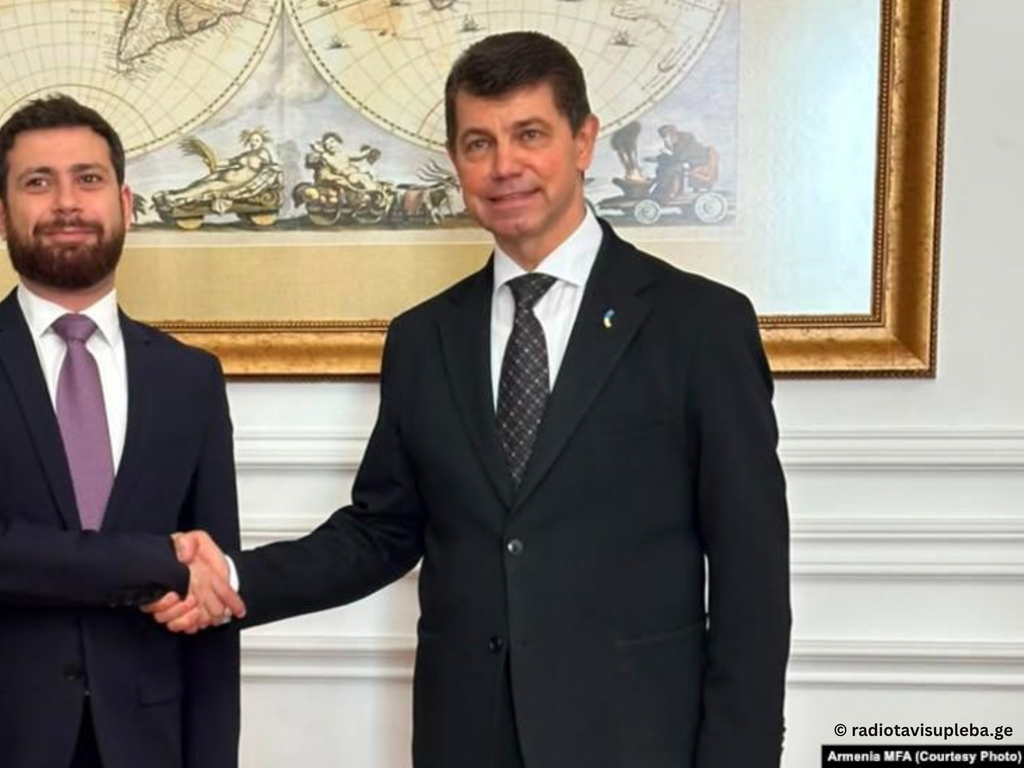
Armenian and Ukrainian Deputy Foreign Ministers Vahan Kostanyan and Olexandr Mischenko
The Armenian delegation received an update on Ukraine’s European integration efforts and future prospects. Kyiv also expressed its willingness to share relevant experience with Armenia.
The Armenian Ministry of Foreign Affairs reported that the two sides welcomed the recent growth in bilateral trade, and discussed strengthening cooperation within multilateral frameworks.
The discussions also covered humanitarian issues and the need to implement programs that strengthen people-to-people ties.
The Ukrainian Ministry of Foreign Affairs stated that both sides had agreed to intensify bilateral engagement, including political and sector-specific cooperation. The Ukrainian delegation emphasised regional security in light of Russia’s ongoing war against Ukraine.
Armenia’s Domestic Politics
Although Armenia’s Civil Contract party does not have enough parliamentary seats to amend the constitution, the party has confirmed that the new constitution will omit references to the Declaration of Independence. Azerbaijan has set this change as a precondition for a peace agreement. The opposition claims that Civil Contract is revising Armenia’s foundational document under pressure from Baku.
The preamble of Armenia’s current constitution cites the Declaration of Independence, which was “based on” a joint resolution by the Supreme Council of Soviet Armenia and the National Council of Nagorno-Karabakh regarding the “reunification” of Armenia and Nagorno-Karabakh. Azerbaijan has repeatedly demanded the removal of this reference, stating that a peace agreement depends on this change.
However, Civil Contract does not hold enough seats in parliament to initiate a constitutional referendum.
During a parliamentary session on August 12, 2026, Civil Contract MP Arusyak Julhakyan, who also serves on the Constitutional Council, confirmed that the reference to the Declaration of Independence would be removed from the constitution.
She did not specify whether the council had discussed or voted on the issue. Pashinyan established the council in 2025 to draft the new constitution. Other council members declined to comment, stating they had not seen the draft. The government plans to publish the full text by year-end.
Kristine Vardanyan, an opposition MP from the Armenia Alliance, criticised the initiative, claiming the process is intended to create a constitution aligned with Aliyev’s interests.
“Pashinyan accused every previous government of tailoring the constitution to its own interests. Now, he has begun tailoring it to Aliyev’s liking and wants to make you his accomplices,” Vardanyan told lawmakers from the parliamentary majority.
Anna Grigoryan, head of the Armenia Alliance parliamentary faction, reiterated that Civil Contract did not have enough seats to pass the proposed change.
Civil Contract holds 64 seats in parliament. Constitutional amendments require the support of a two-thirds majority, or 70 lawmakers, to be submitted to a referendum. According to Grigoryan, voters did not give the government a mandate for constitutional changes in the June elections.
Narek Karapetyan, leader of the Strong Armenia faction, likened the initiative by Pashinyan’s party to “destroying the country’s birth certificate.”
Responding to criticism and claims that the party lacks a public mandate for the move, Civil Contract MP Eduard Aghajanyan defended the party’s position. He argued that Civil Contract had campaigned on ending the “Karabakh movement,” and that its electoral victory shows public support for the proposed change.
The Normalisation of Armenian-Azerbaijani Relations
On August 13, 2026, Armenian Prime Minister Nikol Pashinyan announced that Armenia would begin exporting goods to Azerbaijan in the near future.
According to Armenpress, Pashinyan made this statement during a press briefing following a government meeting. He responded to a question from the news agency, which observed that trade currently flows primarily from Azerbaijan to Armenia, with no exports yet moving in the opposite direction, and asked whether Armenian goods could soon be exported to Azerbaijan.
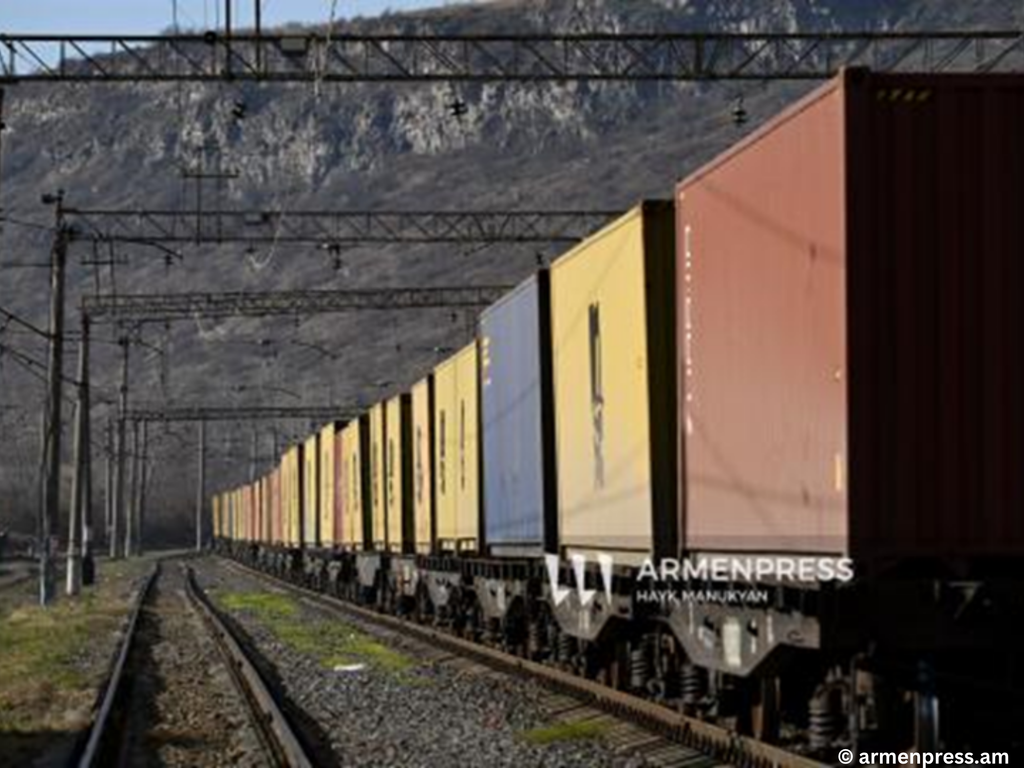
“Plans are in place to establish bilateral trade in goods with Azerbaijan, and Armenia will begin exporting goods to Azerbaijan in the near future,” Prime Minister Nikol Pashinyan announced. He did not specify which products would be exported.
In January 2026, Pashinyan announced that Armenia and Azerbaijan had exchanged lists of goods they were interested in purchasing from each other. Since then, Azerbaijan has primarily exported gasoline and diesel fuel to Armenia.
TRIPP
On August 8, 2026, Armenian Prime Minister Nikol Pashinyan and Azerbaijani President Ilham Aliyev held a phone call to discuss expanding bilateral trade and economic ties, as well as the implemention of the “Trump Route,” known as TRIPP.
The call marked the first anniversary of the agreements reached in Washington on August 8, 2025. At the time, Pashinyan and Aliyev signed a joint declaration in the presence of U.S. President Donald Trump, while the two countries’ foreign ministers initialed the agreed text of a peace agreement.
Over the past year, Armenia and Azerbaijan have gradually resumed economic relations, including direct trade, with Azerbaijan supplying petroleum products to Armenia. Grain and other goods from third countries have also been transported to Armenia via Azerbaijani territory.
TRIPP, the Trump Route for International Peace and Prosperity, is a transportation project designed to connect mainland Azerbaijan with the Nakhchivan Autonomous Republic through Armenia. The 2025 agreement requires that the project fully respect Armenia’s sovereignty, territorial integrity, and jurisdiction.
The project could create new trade and transportation routes across the South Caucasus, strengthen links between Europe and Asia, and increase the region’s economic significance. In July, the Azerbaijani presidential administration reported receiving “serious and positive signals” from the United States about the project launch, with construction potentially starting as early as autumn 2026.
Azerbaijan’s Foreign Policy
On August 4, 2026, Azerbaijani Foreign Minister Jeyhun Bayramov met in Baku with Swiss Foreign Minister and OSCE Chairperson-in-Office Ignazio Cassis.
Bayramov stated: “We believe that a peace agreement with Armenia can be signed once the provision containing territorial claims against Azerbaijan is removed from the Armenian constitution.”
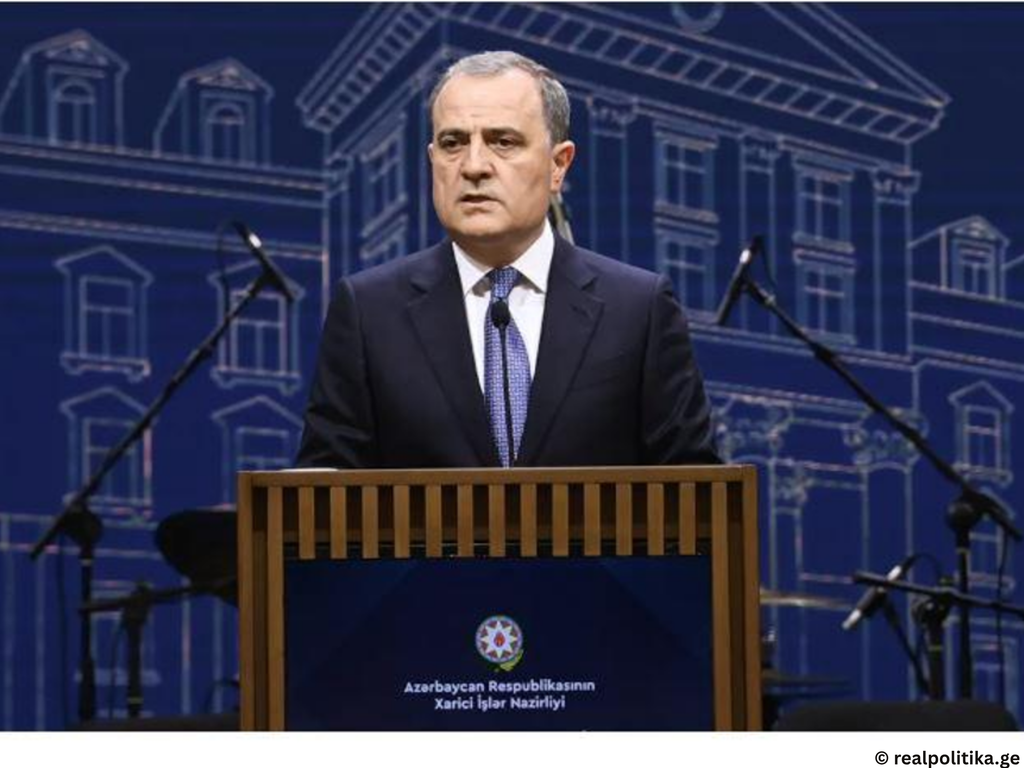
Azerbaijani Foreign Minister Jeyhun Bayramov
The Azerbaijani foreign minister’s remarks echoed those of presidential aide Hikmet Hajiyev, who told Haber Global that signing a peace agreement with Armenia depends on amendments to the Armenian constitution.
Azerbaijan contends that Armenia’s Declaration of Independence, referenced in the preamble to the country’s constitution, contains territorial claims against Azerbaijan, specifically referring to the unification of Karabakh with Armenia. Baku insists that a peace agreement cannot be signed while these provisions remain in place.
Bayramov said establishing “de facto peace” is the key to normalising relations between Armenia and Azerbaijan, while stressing the need to maintain a bilateral format for negotiations.
“This format has proven effective, and Azerbaijan is ready to continue the process within it,” Bayramov said.