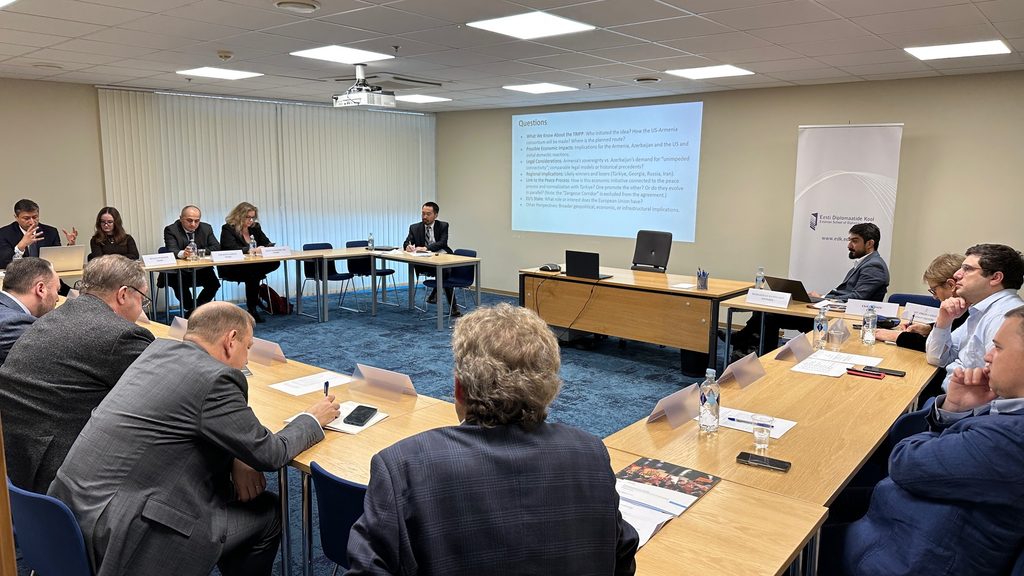
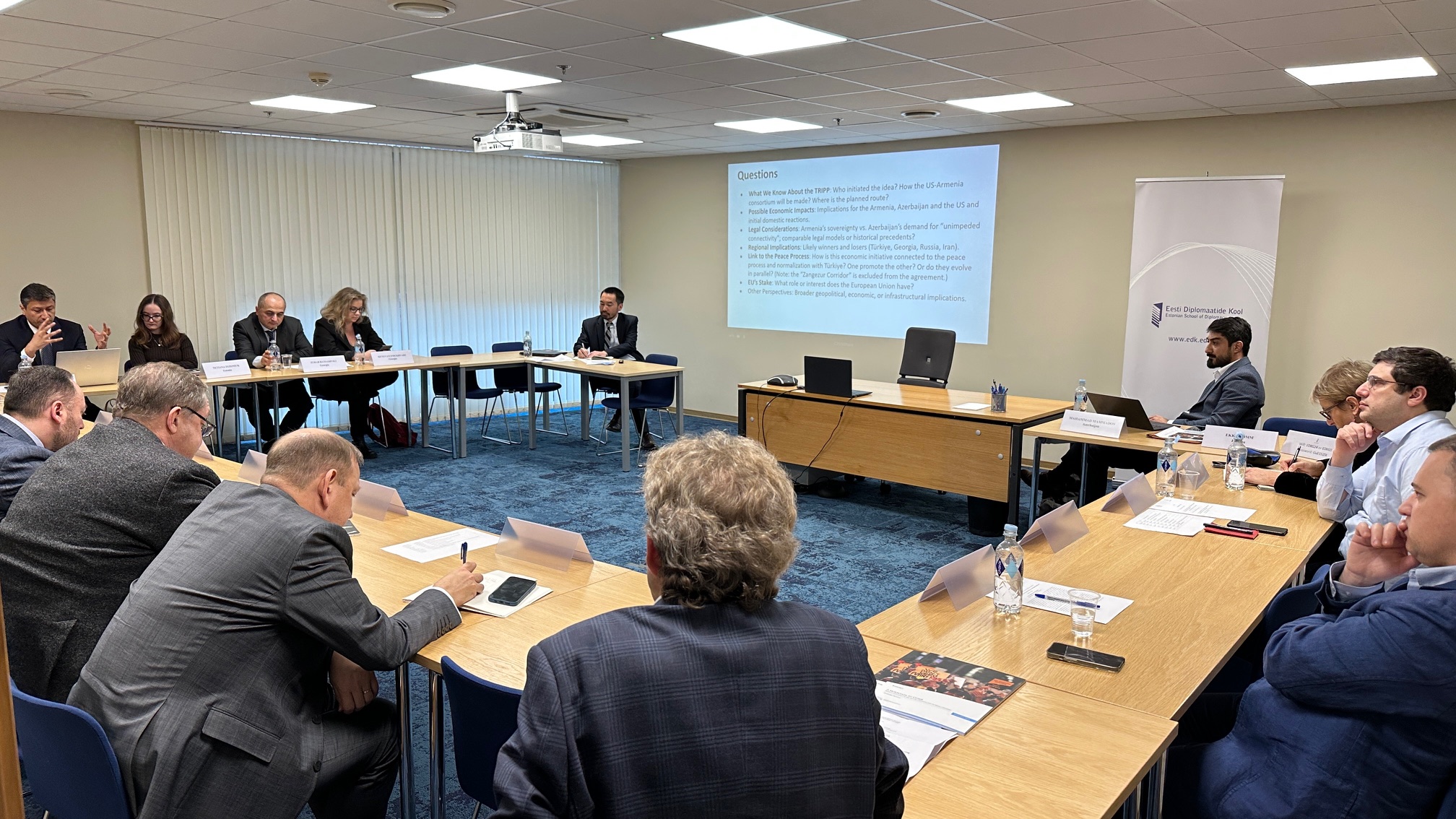
On November 14 2025, GFSIS-E, in partnership with the Estonian School of Diplomacy, hosted a workshop in Tallinn, Estonia, exploring the prospects and key challenges related to finalizing the Armenia-Azerbaijan peace agreement.
A recent diplomatic breakthrough facilitated by the U.S. has created a significant opportunity for rapprochement between Armenia and Azerbaijan. The August 8, 2025, Armenia-Azerbaijan Joint Declaration, the initialing of the peace agreement, and the announcement of the Trump Route for International Peace and Prosperity (TRIPP) – which connects Azerbaijan to its Nakhchivan exclave across Armenian territory – pave the way for accelerated normalization between the two countries and improved regional connectivity. The involvement of the U.S. in the peace process indicates Washington’s intention to shape the regional security architecture of the South Caucasus and reduce the reliance of local countries on any single outside power. Furthermore, the development of TRIPP can transform political normalization into tangible economic benefits not only for Armenia and Azerbaijan, but also for Turkey, fostering mutual interests in maintaining regional stability. This initiative also enhances the role of the South Caucasus in the Middle Corridor that links Asia with Europe. Georgia stands to gain from expanded transit and investment opportunities; however, it may also encounter increased competition.
The workshop explored the prospects and key challenges related to finalizing the Armenia-Azerbaijan peace agreement. This includes examining domestic and international political processes, legal and constitutional hurdles, as well as potential negative interference from third parties. The discussion will also address the expected outcomes of implementing TRIPP, including economic gains and trade-offs for Armenia, Azerbaijan, Georgia and Turkey, the increasing role of the U.S., and the possible decline of Russia’s traditional influence in the South Caucasus. Lastly, the workshop will analyze how the evolving relationship between Armenia and Azerbaijan, along with the TRIPP initiative, might impact the strategic interests of China and Iran in the South Caucasus.
Experts from Armenia, Azerbaijan, Georgia, Turkey, and Estonia participated in this forward-looking discussion.