
Occupied Abkhazia
Air-Raid Alerts
In July 2026, the de facto authorities of the Russian-occupied Abkhazia declared at least three separate air-raid alerts following months of incidents involving Ukrainian UAVs entering Abkhazian airspace. Ukraine has been regularly utilising Abkhazia as a route for its long-range UAVs to engage military targets in Sochi, Russia. Following numerous failed attempts to shoot down these drones before they reached Sochi, Russian Armed Forces transferred more small anti-aircraft equipment and weapons to the Abkhazian de facto authorities in June. However, these transfers did not include the more sophisticated air-defence units in Russia’s arsenal. As such, Russian and Abkhazian military have been forced to engage the Ukrainian UAVs with mobile vehicle-mounted machineguns and soviet-made anti-aircraft guns ZU-23-2.
Reports on Breach of NATO Airspace from Abkhazia
The 2026 NATO Summit, held in Ankara, Türkiye, was followed by a report on an incident involving a Russian missile. Der Spiegel reported that on July 7, at 7am, the NATO air alarm was triggered by what turned out to be a Russian missile launched from the Russian-occupied Georgian region of Abkhazia. Initially, it was thought to be a ballistic missile, however, it was later identified as a Russian ground-to-air missile. The object did not reach Turkish airspace and crashed into the Black Sea. While further details were not revealed, it was noted as one among a series of NATO airspace violations by Russia.
NATO protects Türkiye’s airspace, which includes its Black Sea territory covering almost the entire lower half of the Sea. According to the report, the July 7 missile threat violated Turkish airspace and originated from Georgia’s Russian-occupied Abkhazia region. The shortest direct distance between Abkhazian and Turkish airspace is at least 100 kilometers.
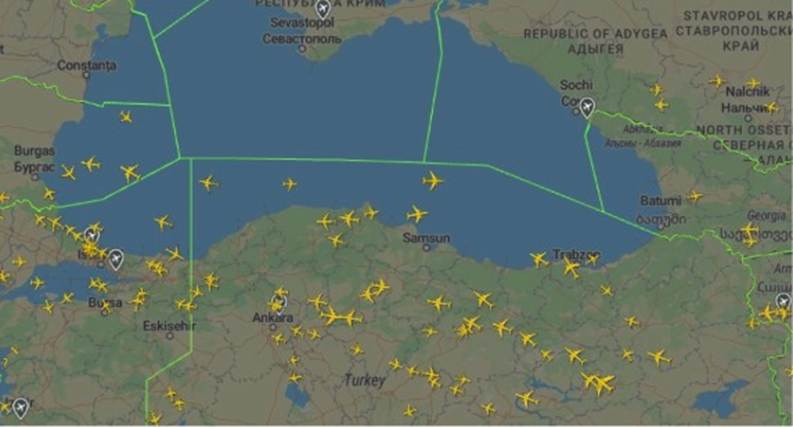
Source: Airlive
While it has been confirmed that Russia’s 7th Military Base in Abkhazia has various air-defence systems, the latest escalation between Ukraine and Russia over Abkhazian airspace has revealed that the Russian military base and its facilities lack sufficient anti-aircraft capabilities. The majority of Ukrainian UAVs flying over Abkhazian airspace have been shot down using Soviet-Russian MANPADs, vehicle-mounted machine-guns, and Soviet-made ZU anti-aircraft guns. No reports or media announcements from Abkhazia suggest that the Russian forces there have utilized BUK or TOR air-defence systems for this purpose, since its inventory of such equipment has been fully deployed in Ukraine.
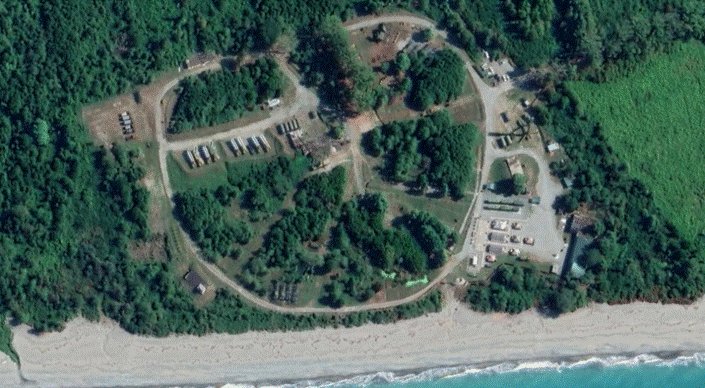
Missiles launched from both BUK and TOR systems, including their latest variants, are incapable of travelling further than 70 kilometers. Since the shortest distance between Abkhazia and Turkish airspace is over 100 kilometers, the only ground-to-air missile capable of travelling such distances and available to the Russian Armed Forces in Abkhazia is the S-300.
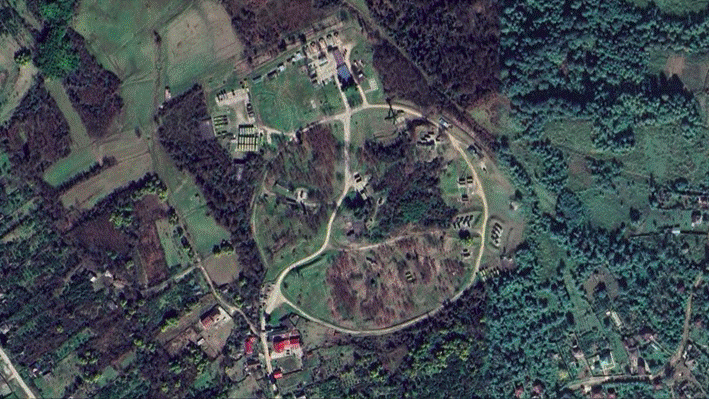
The 7th Military Base has been operating two separate air-defence squadrons in occupied Abkhazia since the 2008 Russo-Georgian War.
- S-300 Air-Defence Unit near Gulripshi, Abkhazia (coordinates: 42°56’15.4″N 41°05’07.4″E)
- S-300 Air-Defence Unit in the village of Adzghapsha, located between Primorskoe and New Athos (Akhali Atoni), in the Gudauta municipality, Abkhazia (coordinates: 43°05’31.2″N 40°44’20.9″E)
If the missile launched on July 7 originated from one of the abovementioned S-300 unit sites, then it may be considered a deliberate hostile provocation, since the Russian occupation forces have not used these missiles against Ukrainian UAVs or other aerial threats over Abkhazian airspace.
Military Training
The Abkhazian de facto authorities did not report on any combat exercises in July 2026. Instead, the de facto defence ministry focused on staff training. The staff-related training activities have been ongoing for months as the de facto armed bodies of Abkhazia look to improve their management, organisation, and mobilisation capabilities. The ministry reported that every single activity was held “strictly according to plan.”
The Occupied Tskhinvali Region (“South Ossetia”)
New Appointments
On July 3, 2026, the new Acting de facto President of the Russian-occupied Tskhinvali Region (“South Ossetia”), Marat Kambolov, appointed a new cabinet of ministers. The de facto defence ministry continued operating as usual, with Yuri Yarovitsky, a Russian officer, believed to have kept his position as de facto Minister of Defence. However, the de facto authority began publishing articles mid-July referring to Yarovitsky’s first deputy, Inal Sabanov, as the “Acting Defence Minister” of so-called South Ossetia. So far, there have been no official reports on possible replacements in the de facto cabinet.
The position of “South Ossetian Minister of Defence” has been almost exclusively held by ethnic Russians since 2004. Only two ethnic Ossetians have held this position: Ibragim Gasseev (2016-2022) and Vladimir Pukhaev (2022). In July, Marat Kambolov appointed Pukhaev as a de facto Minister of Emergency Situations, another armed body of the so-called Ossetian government.
“War and the Bible”
The so-called Armed Forces of “South Ossetia” kicked off July with a “spiritual-enlightening” event called “War and the Bible,” led by the “Minister’s Assistant for Cooperation with Religious Servicemen,” Alan Tigiev. According to the official report, Tigiev analysed “important spiritual-philosophical and moral-ethical aspects of military duty, the interrelation of Christianity, and the protection of the fatherland, as well as the inner world of Man.”
Military Exercises
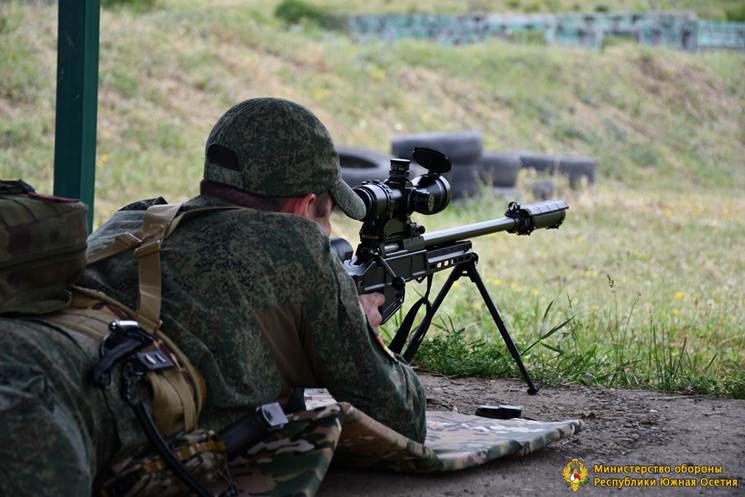
The “South Ossetian Armed Forces” were significantly more active than their Abkhazian counterparts in terms of field exercises. The “Honor Guard” servicemen participated in live-fire drills on July 2 and 8, while the engineering unit ran a field practice exercise on July 2. Officers of the armed body joined the live-fire drills the following day.
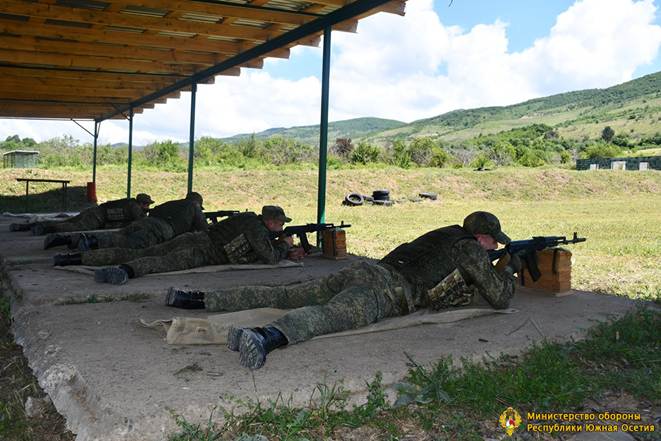
Source: alaniamil.org
On July 4, the “ministry” reported that it had carried out joint staff exercises with the Russian 4th Military Base in Tskhinvali. The Russian FSB Border Force also participated. The event aimed to improve coordination and operational cooperation between Russian and Ossetian personnel.
The “Special Operations Unit” practiced live-fire drills on July 7. This unit is claimed by the “South Ossetian” authority to be the elite of its military force. Their training was joined by the logistics unit. The so-called Special Operations Unit held another drill on July 15.
Source: alaniamil.org
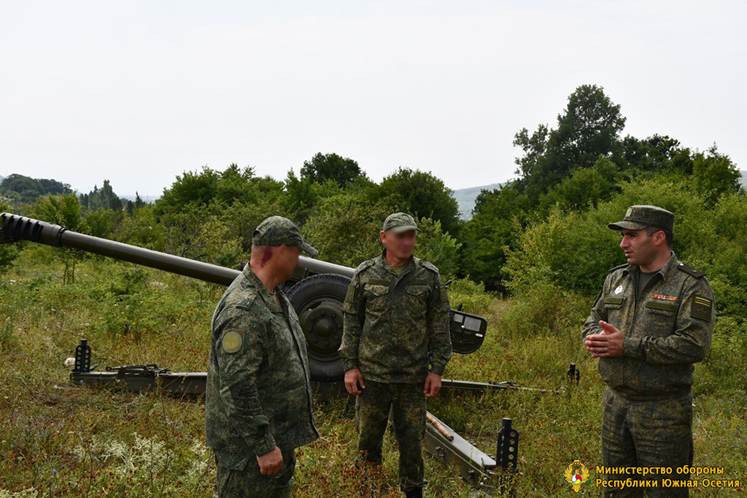
The artillery units held exercises on three separate occasions in July. On the 9th, they practiced firing from mortars. On the 29th and 31st of July, the Ossetian military authority published photographs of their units training on D30 towed howitzers and self-propelled howitzers.
Source: alaniamil.org