
Post-Soviet Conflicts Watch provides an overview of ongoing conflicts and post-conflict processes throughout the post-Soviet space. The document analyzes key events and trends in the Russian-occupied regions of Georgia—specifically, Abkhazia and the Tskhinvali region; as well as in the breakaway region of Transnistria and the autonomous entity of Gagauzia. It also covers other areas within the post-Soviet space, and discusses developments in the peace process between Armenia and Azerbaijan following the Second Nagorno-Karabakh War.
Note: This review does not cover issues related to Russia’s military aggression against Ukraine.
Armenia and Azerbaijan
Reciprocal Visit to Baku
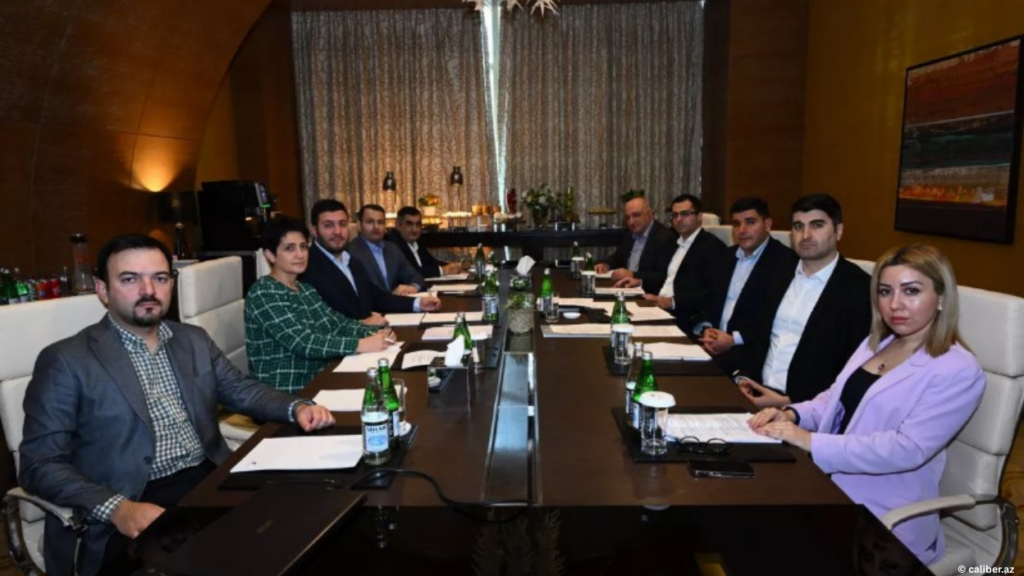
On November 21–22, 2025, the second round table was held in Baku as part of the “Bridge of Peace” initiative, bringing together representatives from the civil sectors of Armenia and Azerbaijan. The meeting focused on normalizing relations between the two countries and advancing the peace process. Participants agreed to establish direct contact among experts across various fields. They also discussed mechanisms to inform civil society and encourage its involvement in the process, as well as to organize mutual visits under the “Bridge of Peace” initiative. Additionally, the round table participants met with Hikmet Hajiyev, the Head of the Foreign Policy Department of the Presidential Administration of Azerbaijan.
The Armenian delegation included Boris Navasardyan, Chairman of the Yerevan Press Club; political scientists Areg Kochinyan, Narek Minasyan, and Samvel Meliksetyan; and human rights activist Naira Sultanyan.
The visit of Armenian experts to Baku followed a similar meeting that took place in Yerevan on October 21-22, 2025. This meeting included five representatives, who also met with the Secretary of the Security Council of Armenia, Armen Grigoryan.
The round tables are organized to promote the peace agenda outlined in the Joint Declaration adopted in Washington on August 8, 2025. These discussions focus on the prospects for the peace process, humanitarian issues, and additional measures to enhance economic and logistical cooperation, while building confidence in the context of normalizing relations.
The organization of the meeting among civil society representatives was made possible by the ongoing peace talks between Armenia and Azerbaijan and the agreements reached in Washington. In addition to fostering communication between political leaders, the development of relationships among civil society representatives broadens the scope of the peace process and contributes to positive dynamics in Armenian–Azerbaijani relations. This development may also play a significant role in helping them overcome other challenges in their bilateral relations.
Washington Representative in Yerevan and Baku
On November 17, 2025, Armenian Prime Minister Nikol Pashinyan met with U.S. Deputy Secretary of State for Political Affairs Allison Hooker. Hooker noted that her visit to Armenia was a continuation of the agreements reached between former President Donald Trump and Pashinyan. The discussions focused on deepening trade, investment, and security cooperation between the two countries. Pashinyan emphasized the significance of the agreements reached at the August 8 Peace Summit, and highlighted the need to fulfill the obligations set out in them. These agreements also grant the United States the exclusive right to develop a strategic transit corridor in the South Caucasus. One of the main topics of their meeting was the implementation of the Trump Route project (TRIPP).
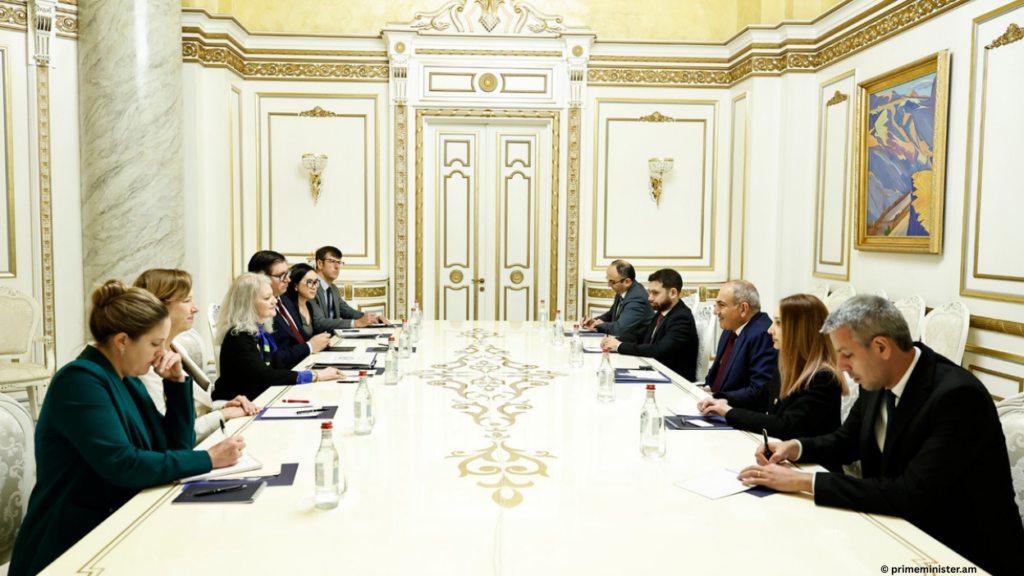
After she visited Yerevan, Allison Hooker traveled to Baku, where she met with Jeyhun Bayramov, the Azerbaijani Foreign Minister, and Hikmet Hajiyev, Head of the Foreign Policy Department in the Azerbaijani Presidential Administration.
On November 18, Jonathan Askonas, a Senior Advisor to the U.S. Department of State, visited Georgia to explore ways in which the country could assist with President Trump’s itinerary. During his visit, Askonas toured the Sadakhlo checkpoint and held meetings with officials from the Georgian Ministry of Foreign Affairs and the government administration.
Armenian Prime Minister Nikol Pashinyan visited Kazakhstan on November 21, where he discussed the prospects for future trade and economic relations. In November, Armenia received a shipment of Kazakh wheat through Azerbaijan. Pashinyan’s meeting with Kazakh President Kassym-Jomart Tokayev also brought renewed interest in the Trump route.
Following the Washington agreement of August 8, interest in developing new transport routes has increased. Azerbaijan has lifted all restrictions on the transit of goods through Armenia. The opening and expedited implementation of these transport routes is expected to positively impact the peace process and help reduce Armenia’s isolation. While fully realizing these routes will take time, as will the completion of specific infrastructure projects, current statements and meetings indicate that the process has begun, and that the involved parties are prepared to move forward with the development of new transport corridors. This, in turn, is likely to lead to revisions in regional transport routes and the emergence of a new geopolitical reality.
Trial against Former Leaders of Nagorno-Karabakh
On November 14, 2025, the Azerbaijani Prosecutor General’s Office requested life imprisonment for five former leaders of Nagorno-Karabakh. The individuals named include Arayik Harutyunyan, the former president of the self-proclaimed Nagorno-Karabakh Republic; David Ishkhanyan, the former parliamentary speaker; David Babayan, the former foreign minister; Levon Mnatsakanyan, the former commander of the Karabakh armed forces; and his former deputy, David Manukyan. In total, 15 individuals are facing charges. The prosecutor’s office has requested 20-year prison sentences for four of them due to their age, including former presidents Bako Sahakyan and Arkady Ghukasyan.
The indictment includes charges of terrorism, genocide, waging a war of aggression, torture, and premeditated murder, along with numerous other offenses. A separate case involves Ruben Vardanyan, a billionaire and the former head of the Nagorno-Karabakh government, whose trial is progressing independently.
While peace talks between Armenia and Azerbaijan are ongoing, Azerbaijan is trying to establish a precedent by prosecuting the former leaders of the separatist entity in Nagorno-Karabakh. These leaders were arrested in 2023, after Azerbaijan regained complete control over the territory.
Mercenaries from Central Asia
According to Ukrainian sources, at least 481 citizens of Uzbekistan have been killed while participating in Russia’s military aggression against Ukraine. Data from the Ukrainian project “I Want to Live” indicates that Uzbekistan is one of the primary sources of foreign mercenaries for the Russian armed forces. The project estimates that approximately 2,700 Uzbek nationals have fought or are currently fighting on the Russian side, including around 1,300 who signed contracts in 2025. Many of these individuals are labor migrants working in Russia who have been coerced or deceived into military service. As the war in Ukraine continues, Russia faces an increasing demand for manpower, and migrant populations are increasingly being used to fill these gaps. Millions of migrants from Central Asian countries reside in Russia, and some have been pressured to sign military contracts with the hope of legalizing their status or obtaining citizenship. Unfortunately, despite expectations of lower-risk assignments, they often end up on the front lines. Similar patterns are evident in other Central Asian states that maintain a largely neutral stance on the war, as they attempt to prevent their citizens from being drawn into Russia’s military operations. In these countries, participating in mercenary activities is classified as a criminal offense.
Transnistria
On November 11, 2025, Alexander Vatamani, who serves as the plenipotentiary representative of Russian-occupied Abkhazia in the separatist region of Transnistria, met with Victoria Ilady, a member of Transnistria’s Central Election Commission, at the representation of Abkhazia in Transnistria. Three days later, on November 14, Vatamani met with Vadim Doni, the chairman of the Tiraspol City Council of People’s Deputies.
Alexander Vatamani has held the position of plenipotentiary representative of occupied Abkhazia in Transnistria since 2007. The representation of Abkhazia in Transnistria was established in March 2008. Since 1998, Vatamani has been involved with the Office of the Secretary of State of Transnistria and the de facto ministry of foreign affairs. He actively uses his connections in Transnistria and frequently meets with representatives of the separatist administration, which helps create the illusion of diplomatic activity and bilateral relations.
The Occupied Abkhazia and the Tskhinvali Region
65th Round of the Geneva International Discussions
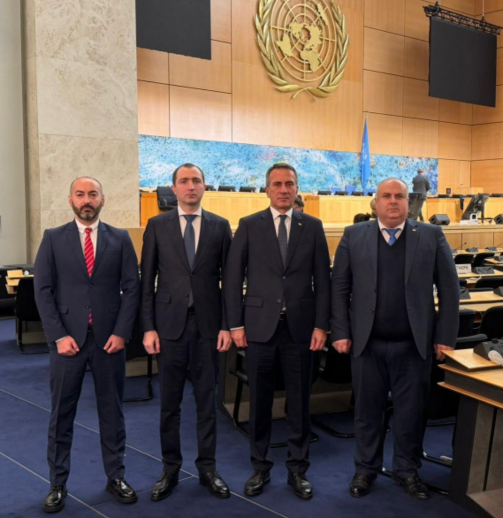
The 65th round of the Geneva International Discussions was held on November 11–12, 2025. During the talks, the Georgian delegation emphasized the need for Russia to fully comply with its international obligations under the ceasefire agreement brokered by the European Union on August 12, 2008. They also highlighted the importance of the safe and dignified return of internally displaced persons and refugees from the occupied territories to their homes. The Georgian Ministry of Foreign Affairs stated that the delegation had again underscored the need to restore the Incident Prevention and Response Mechanism (IPRM) in Gali without any preconditions, and to ensure its regular functioning in both Gali and Ergneti. Meetings in Gali have not taken place since 2018, despite calls from Sokhumi for their restoration. Tbilisi has expressed its support for resuming IPRM meetings in Gali during recent rounds of discussions.
The Ministry of Foreign Affairs of Russia has reiterated the significance of Tbilisi signing a non-use-of-force agreement with Sokhumi and Tskhinvali. Russia emphasized that resuming meetings in Gali and initiating the process of delimiting and demarcating state borders, often referred to as the occupation line, are also crucial for further stabilization in the region. Moscow has also called for negotiations to be relocated from Geneva, arguing that Switzerland has forfeited its claimed neutral status by participating in what Russia describes as illegal anti-Russian sanctions imposed by the European Union.
The delegation from the occupied region of Abkhazia was led by Oleg Bartsits, the de facto foreign minister. In earlier rounds of discussions, the Abkhaz delegation was typically headed by the de facto deputy minister. After the meeting, Bartsits recorded a video address.
The delegation from the occupied Tskhinvali region highlighted the importance of initiating the process of “state border delimitation and demarcation.” They also emphasized the need to sign a non-use-of-force agreement, increase efforts to search for missing persons, and grant ethnic Ossetians the right to relocate to the Kazbegi Municipality.
The next round of the Geneva International Discussions is scheduled for March 2026. A total of three rounds were held in 2025.
Illegal Local Elections and the Case of the Russian Political Technologists
On November 8, 2025, local “self-government elections” were held in occupied Abkhazia. A total of 161 “deputies” were elected to regional assemblies. In total, 288 candidates, both affiliated with political parties and independent, campaigned for the deputy positions. According to media reports, supporters of the de facto authorities secured over 75 percent of the mandates.
The de facto authorities participated in the recent “elections” under the banner of the “Abkhazian Team,” accompanied by an unprecedented information campaign. Posters stating “Abkhazian Team – The President’s Team” were displayed throughout the region, clearly indicating that the candidates running under this banner had the support of the de facto president, Badra Gunba. As was the case in previous “presidential elections,” Russian political and technological interference was again obvious to see, and it sparked public controversy. Kan Kvarchia, an opposition member of parliament and leader of the “Aidgilara” movement, who had had his Russian citizenship revoked in 2024, reported the presence of three Russian political technologists—Ivan Reva, Pavel Timofeev, and Dmitry Budikin—in a building in Sokhumi. They were affiliated with the pro-government newspaper “Abkhazskiy Vestnik,” and had campaigned for pro-government candidates. One of them was reportedly seen inside the “Election Commission” building. The Russian political technologists were later interrogated, and a video recording was released in which they confessed to working on behalf of the de facto president’s administration. Shortly after this, they left the territory of Abkhazia, alleging that they had been physically assaulted and threatened with weapons.
The scandal prompted a strong response in Russia. On November 24, the Sochi Department of the Main Directorate of the Ministry of Internal Affairs of the Krasnodar Territory initiated a criminal case against Kan Kvarchia, the former so-called deputy prosecutor general, Eshsou Kakalia, and Khina Duma, a member of the Supreme Council of the veterans’ organization “Aruaa.” They face charges related to an armed attack on Russian citizens. The three individuals have been placed on Russia’s federal wanted list, with estimated damages of up to 2 million rubles being claimed. According to a representative from the so-called Prosecutor General of Abkhazia, the extradition of Abkhazian citizens to Russia is prohibited under Abkhazian law. The de facto president has also confirmed this position.
Russian Financial Assistance
On November 13, 2025, Sergei Nazarov, the Deputy Minister of Economic Development of Russia, visited Sokhumi. During a meeting with Vladimir Delba, the de facto prime minister, Nazarov discussed socio-economic cooperation, including a new investment program planned for 2026–2028.
In 2026, Russia will continue to provide financial assistance to Abkhazia. According to the de facto minister of finance, a significant portion of this funding will be allocated to the region’s socio-economic development. The total expected financial assistance will amount to 5.4 billion rubles. This includes 4.2 billion rubles for the social sector, 1 billion rubles for implementing the investment program, and 255 million rubles for a new funding initiative to support various economic activities.
Sokhumi Airport, Winter Season
On November 1, Sokhumi Airport began its winter-season flight operations with an arrival from Vnukovo Airport in Moscow. The summer season at the airport concluded on October 25, having served approximately 118,000 passengers. With the end of the tourist season, regular flights have been suspended, and flight frequency has been reduced for the winter period. The Russian airline RusLine will operate flights from Moscow using a 50-seat Canadian Bombardier CRJ100/200 aircraft. At this time, only the Moscow–Sokhumi route will remain available.
The airport currently operates flights exclusively from Russia, as the International Civil Aviation Organization (ICAO) does not recognize Sokhumi Airport as an international airport. ICAO revoked the airport’s international code in 2006.
128th Meeting in Ergneti
On November 18, 2025, the 128th meeting of the Incident Prevention and Response Mechanism (IPRM) took place in Ergneti. According to the State Security Service of Georgia (SSS), the meeting addressed all significant incidents that had occurred in the occupied region and along the occupation line since the previous session. As in previous meetings, SSSG representatives emphasized the need to hold the members of the Russian occupation forces accountable for the killing of Georgian citizen Tamaz Ginturi, and firmly demanded the adoption of appropriate measures regarding this matter. Additionally, the SSSG highlighted the issue of individuals held in illegal detention, calling for their immediate release, and condemned the ongoing illegal activities, known as “borderization,” which are being carried out near the occupation line.
The authorities in the occupied Tskhinvali region reported that the situation along the occupation line is currently “quite calm.” They reiterated their demand for the dismantling of the Chorchana–Tsnelisi police checkpoint. According to a local news agency, the so-called South Ossetian authorities stated that if the Georgian leadership acknowledges the error in establishing the checkpoint, the logical course of action would be to remove it from the territory of the “Republic of South Ossetia.” Egor Kochiev, the head of the Tskhinvali delegation, mentioned that there have been no recorded violations of the so-called “airspace” recently. He also noted that there have been no violations by Georgian police forces, nor have any provocative actions by Georgian citizens been observed.
After the meeting, Irakli Antadze, a representative of the State Security Service of Georgia, told journalists, “A standard police post does not pose any threat. In this regard, the threats have been neutralized. It was a threat at the time, to install it for criminal purposes. Regarding the statements from representatives of the occupying regime about the immediate seizure of the post, the central government has a clearly stated position on this, which has been reiterated once again.”
The shift in Tbilisi’s stance on the placement of the Georgian police checkpoint in the village of Chorchana is linked to the investigation launched against Giorgi Gakharia, the former Minister of Internal Affairs and ex-Prime Minister of Georgia, concerning the establishment of said police post.
The next IPRM meeting will be held on December 22.
Abolition of the South Ossetian Administration – Tskhinvali’s Response
On November 17, Shalva Papuashvili, the Speaker of the Parliament of Georgia, stated that unconstitutional elections were held in the Tskhinvali region in November 2006. These elections were organized by the then-government led by the National Movement. As a result of those elections, a so-called “president of South Ossetia” was declared, and an alternative government was formed. Papuashvili stated, “With this step, the previous government indirectly legitimized the separatist processes, which constituted a clear and grave betrayal of Georgia’s state interests.” He also mentioned that a few months later, an administration for a temporary administrative-territorial unit was created, again in violation of the constitution, based on this unconstitutional “alternative government.”
“This decision artificially reinstated the administrative borders of the South Ossetian Autonomous Region, which had been abolished in 1990,” Papuashvili noted. “This action later contributed to Russia’s military aggression in 2008 and the occupation of the historic Georgian region of Samachablo. From today’s perspective, it is evident that these decisions were part of a geopolitical strategy involving external forces, with Georgia being treated as a ‘sacrificial pawn.’ The policies implemented by Saakashvili increased tensions in the region and ultimately led the country to war.
“There is no recognized entity called ‘South Ossetia’ within the legal or political framework of Georgia. After consultations with the government, we have decided to abolish the administration of the former South Ossetian Autonomous Region,” Papuashvili stated. “However, the municipalities of Akhalgori, Kurta, Tighvi, and Eredvi, which were elected in full compliance with the Constitution in 2006, will continue to operate. These municipalities represent the only legitimately elected authorities in the Tskhinvali region, and are the sole legal continuation of Georgia’s constitutional and legal framework.”
A temporary administrative-territorial unit was created in 2007 in the former South Ossetian Autonomous Region, and continued to operate under the Georgian Dream government.
The de facto authorities of the occupied Tskhinvali region were quick to react to the Georgian Dream government’s decision to abolish the temporary administrative-territorial unit established in the former South Ossetian Autonomous Region. In a statement, the so-called ministry of foreign affairs remarked that “despite the somewhat conciliatory tone coming from Tbilisi, we once again notice the use of destructive terminology and evaluative reasoning in the official agenda, which dates back to the times of Gamsakhurdia and Saakashvili. This includes accusations of ‘Russian occupation’ and similar rhetoric.” The de facto authorities asserted that this situation reflects a significant internal political conflict in Georgia. “Nevertheless, we again call on the Georgian authorities to acknowledge the political reality that has developed since August 2008,” the statement concluded.