
Armenia’s Foreign Policy
On 24 September 2026, Armenian Prime Minister Nikol Pashinyan met with Turkish President Recep Tayyip Erdogan on the sidelines of the 81st session of the United Nations General Assembly.
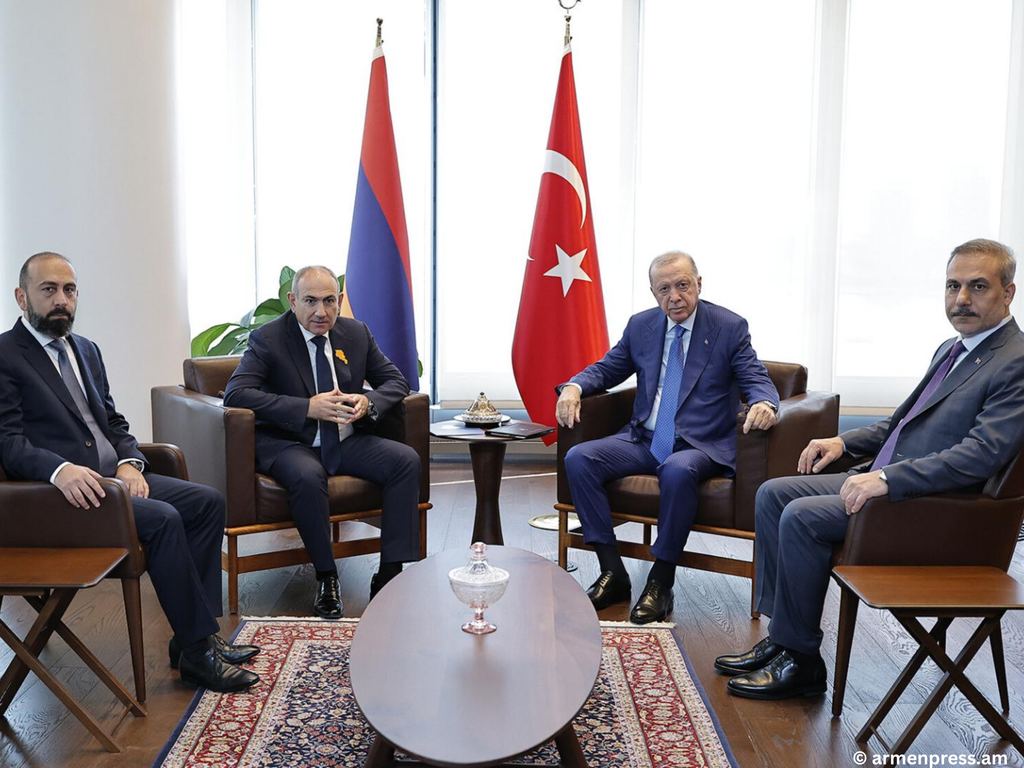
The Erdogan-Pashinyan meeting in New York, 24 September 2026
The two leaders discussed the normalisation of Armenia-Türkiye relations and the implementation of agreements reached to date. They emphasised the importance of the normalisation process and the need to renew momentum in bilateral relations.
They agreed to promote trade and economic ties and to strengthen connections between their business communities. They also discussed ongoing efforts to jointly restore the historic Ani Bridge.
The leaders exchanged views on regional issues. Both Pashinyan and Erdogan highlighted the importance of peace between Armenia and Azerbaijan, and expressed hope that it would substantially boost regional cooperation. They also emphasised the need to implement the TRIPP project and reopen regional transport links.
Prime Minister Nikol Pashinyan described Armenia’s pre-2022 security approach, built around the Collective Security Treaty Organisation (CSTO), as primitive.
He made the remarks at the International Conference on Comprehensive Security and Resilience.

Nikol Pashinyan speaking at the International Conference on Comprehensive Security and Resilience, 17 September 2026
“The events of September 2022 demonstrated that, without a new approach, Armenia risks losing its statehood and sovereignty,” Pashinyan said. “Our previous security strategy was overly simplistic, relying solely on the belief that the CSTO would guarantee our security. This assumption lacked both context and follow-through. A review of press coverage from 1994 to 2022 reveals numerous expert assessments warning that the CSTO might not protect Armenia when needed. The key question is why these warnings did not prompt an appropriate response.”
He noted that Armenia had pursued this course for decades, fully aware of its likely outcome.
The Armenian Prime Minister said that Armenia and Russia are continuing to assess their bilateral relations as part of an ongoing clarification process.
“As agreed with Russia during the Bishkek talks, we are finalising a review of Armenia-Russia relations so as to better understand their complexities,” he said. “Issues such as the railway and gas are central, but the relationship involves many challenges and opportunities. This assessment is ongoing, with discussions continuing or starting as needed.”
The prime minister also stated that negotiations on gas imports and related matters are underway with all potential partner countries.
On 24 September 2026, Alen Simonyan, Secretary of Armenia’s Security Council, said he does not see any threat to Armenian sovereignty from Türkiye. In remarks to journalists, he addressed ongoing discussions about the withdrawal of Russia’s 102nd Military Base from Armenia and the potential risks.
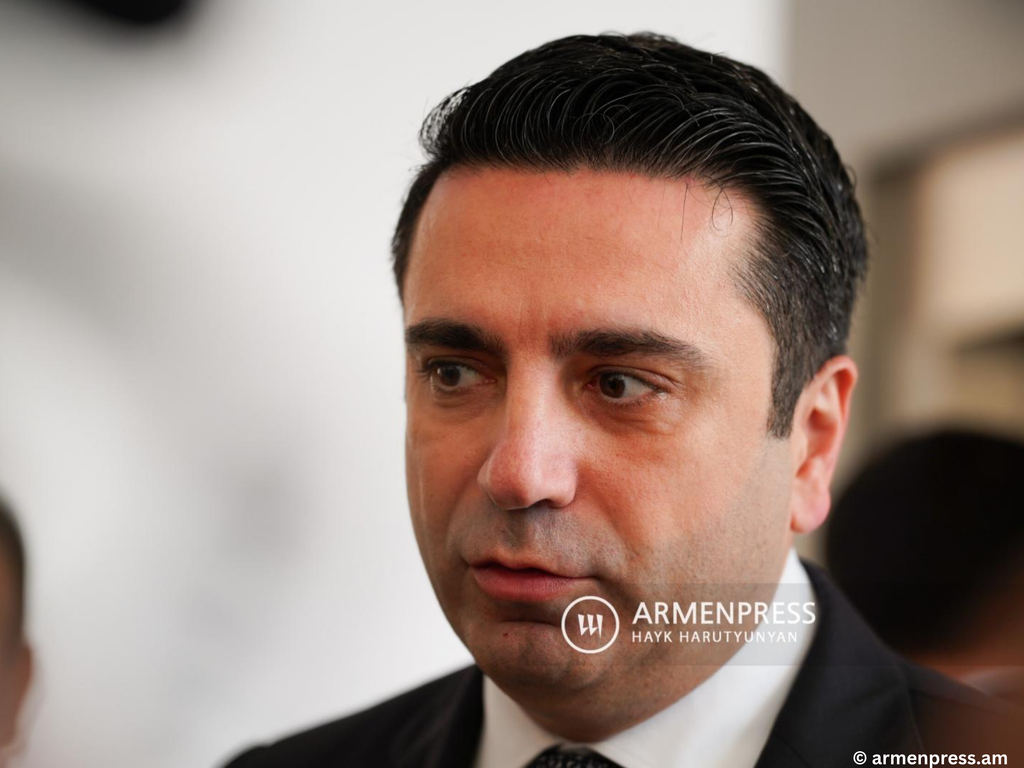
Alen Simonyan
“I see no threat from Türkiye to the sovereignty of the Republic of Armenia. Since 8 August 2025, I have seen no threat at all,” Simonyan said.
The Security Council secretary clarified that Armenia had not proposed the withdrawal of the Russian military base, and that the suggestion had instead come from Russia itself.
“We are not considering this issue and had not done so previously. Russia placed it on the agenda, and we are open to any outcome,” Simonyan said.
Simonyan also addressed the normalisation of Türkiye-Armenia relations and the potential opening of the land border: “Armenia’s border with Türkiye is open. The process has slowed but not stopped. I believe this is mainly linked to ongoing developments between Armenia and Azerbaijan, and on our reaching a decisive stage, which I expect will happen soon. We have already passed the point of no return regarding peace, and the border opening is progressing. There is no reason to believe this issue will remain unresolved or face further delays,” Simonyan said.
He added that infrastructure restoration is also underway on the Turkish side.
“We are holding meetings, and our businesspeople are travelling there. The process is progressing positively,” Simonyan said.
On 22 September, Turkish President Recep Tayyip Erdogan said in his address to the 81st session of the UN General Assembly in New York that Türkiye and Armenia had “made progress” in normalising bilateral relations.
Armenia-Azerbaijan Relations
On 25 September 2026, Armenia’s Minister of Foreign Affairs and International Trade, Ararat Mirzoyan, met with Azerbaijan’s Foreign Minister, Jeyhun Bayramov, on the sidelines of the UN General Assembly in New York.
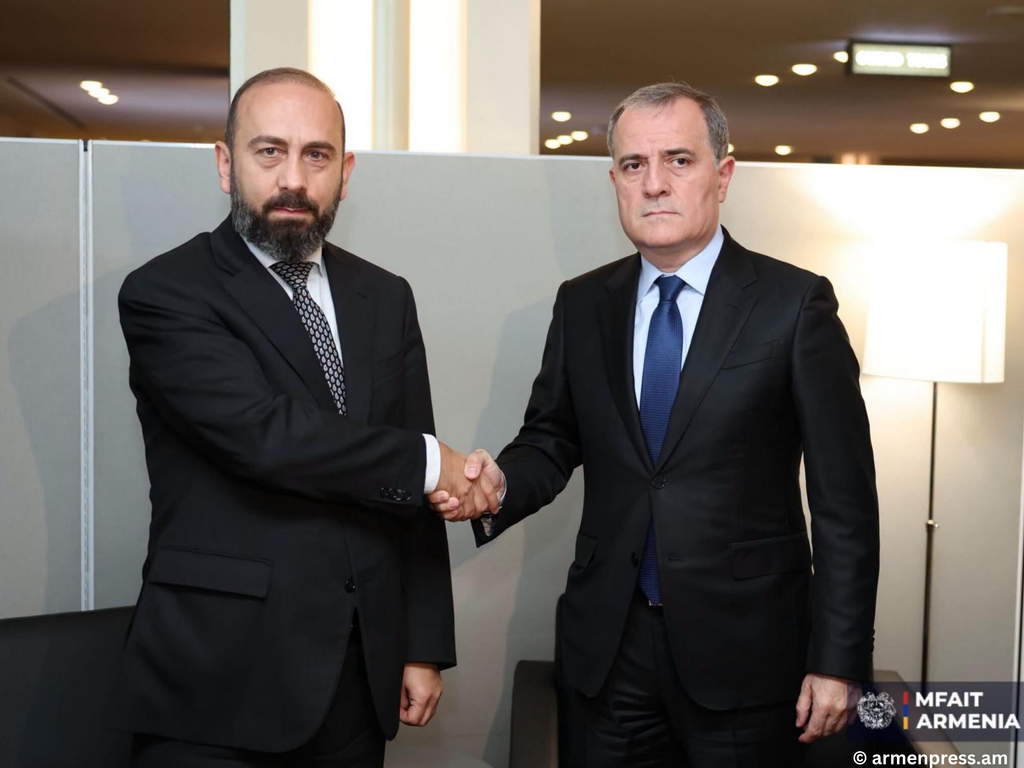
The Mirzoyan-Bayramov meeting in New York, 25 September 2026
According to Armenia’s Ministry of Foreign Affairs and International Trade, the ministers emphasised the importance of peace between Armenia and Azerbaijan, and discussed progress following the agreements reached at the 2025 Washington Peace Summit.
The ministers focused on removing barriers to economic and transport connectivity between Armenia and Azerbaijan, spotlighting bilateral trade and transit cooperation as practical examples of peace.
The ministers also discussed expanding opportunities to promote a positive agenda in multilateral forums.
They agreed to continue direct dialogue.
On 30 September 2026, Armenia denied claims circulating on social media that five military positions in the north of the country had been handed over to Azerbaijan as part of the border demarcation process.
Armenia’s Ministry of Defence described reports that four or five Armenian positions near the village of Berdavan in Tavush Province had come under Azerbaijani control as “another fabrication.” Local officials in Noyemberyan also denied the reports.
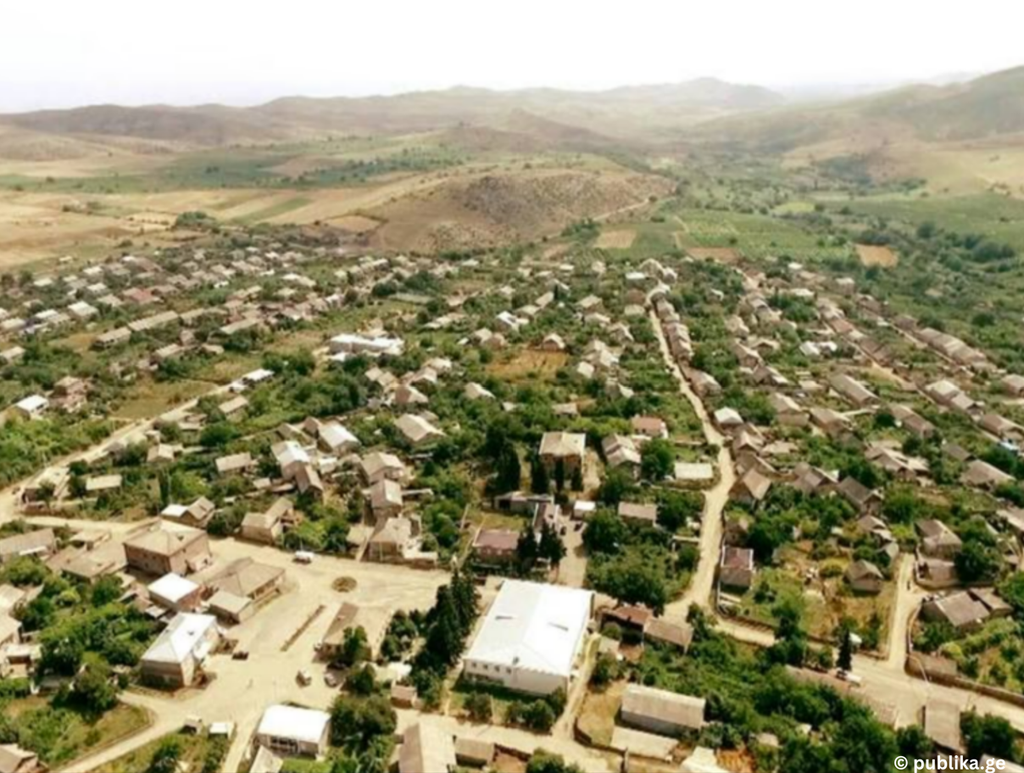
View of Berdavan village in Tavush Province
The office of Deputy Prime Minister Mher Grigoryan also issued a statement denying that Armenia had ceded territory, and claimed that the reports were untrue.
The two countries established their border delimitation commissions in 2022. Armenia’s commission is chaired by Grigoryan, while Azerbaijan’s is headed by Deputy Prime Minister Shahin Mustafayev.
In 2024, an agreement on delimiting sections of the Armenia-Azerbaijan border, which included the potential transfer of four disputed villages, sparked protests in Tavush. These demonstrations evolved into the broader “Tavush for the Homeland” movement, led by Archbishop Bagrat Galstanyan. Residents expressed security concerns and accused the government of unilateral concessions.
On 5 September 2025, the heads of the two border delimitation commissions made reciprocal visits across the Armenia-Azerbaijan border. This marked the first confirmed instance of these officials visiting each other’s territory.
Earlier this year, the Armenian Ministry of Defence denied a separate claim that positions near Jermuk had been transferred to Azerbaijan.
In early September, controversy arose in Armenia after a newspaper quoted a local official claiming that Azerbaijan had attempted to advance towards the Hakari Bridge, which connected Armenia with Nagorno-Karabakh. Local authorities denied these reports.