
Giorgi Bidzinashvili
The incorporation of Ossetian military personnel into the 4th Military Base of the Russian Ministry of Defence, stationed in the occupied Tskhinvali region since the 2008 Russo-Georgian War, entered an active phase in 2017. The move was seen as effectively dissolving the so-called “Ossetian army” in the occupied territory. Russia’s objective – to establish itself as the sole military authority in the region – has, however, not received wide support among the Ossetian population.
The article reviews the chronology of key events related to the integration of Ossetian military personnel into the Russian Armed Forces, alongside the enabling factors and agreements facilitating this process between the Russian Federation and the so-called Republic of South Ossetia. Given the controversy surrounding the issue, which has generated both support and opposition, the article explores perspectives from both sides.
Key Conclusions:
- Russia opposes the existence of an independent military force in the occupied Tskhinvali region. Consequently, Ossetian servicemen have been allowed to serve within Russian military bases. Rather than channeling resources into the de facto defence ministry, Ossetian military personnel are offered “better” conditions within the Russian Armed Forces.
- Many within the military, political, and civilian circles of the occupied Tskhinvali region oppose the complete abolition of the “Ossetian army” and the full integration of Ossetian military personnel into the Russian Armed Forces.
- De facto President Anatoly Bibilov, a prominent advocate for the incorporation of Ossetian military personnel into the Russian Armed Forces, repeatedly assured that Ossetians would not be required to fight beyond the “borders” of “South Ossetia.” Despite these assurances, by 2025, dozens of ethnic Ossetians from the occupied Tskhinvali region had been killed in the Russo-Ukrainian War.
- Pro-integration advocates emphasize the benefits of improved training and financial security for Ossetian military personnel. Opponents argue that full integration and the abolition of the so-called Ossetian army undermine the sovereignty of the so-called Republic of South Ossetia, and weaken the de facto defence ministry’s leverage over the future of its military personnel.
- The influential military circle in the occupied Tskhinvali region, particularly former de facto Defence Minister Ibragim Gasseev, opposes the full integration of the so-called Ossetian army into the Russian Armed Forces.
- Remuneration and financial security remain key concerns for military personnel in the occupied Tskhinvali region. Each de facto defence minister has pledged to address these issues.
- Instead of fulfilling these promises and increasing remuneration for the military, the de facto government has seen Russian monetary transfers misappropriated and diverted to specific individuals. This mismanagement has also driven Ossetian military personnel to migrate into the Russian Armed Forces.
- The exceptionally high number of military exercises conducted in the occupied territories of Georgia in 2019–2020, along with the deployment of a significant portion of the 4th Military Base to Ukraine in 2022, demonstrates that Russia used the occupied Georgian territories as a training ground for its full-scale invasion of Ukraine.
Chronology of Key Events
Shortly after the 2008 Russo-Georgian War, in 2009, Russia established military bases in the occupied Abkhazia and the Tskhinvali region. The 4th Military Base, located in the Tskhinvali and Java area, is part of the Southern Military District of the Russian Federation. This development was preceded by an agreement between the Russian Federation and the so-called Republic of South Ossetia on “Friendship, Cooperation, and Mutual Assistance,” signed on September 17, 2008.
In 2010, a bilateral agreement was concluded between the Russian Federation and the so-called Republic of South Ossetia on the establishment of a joint military base. The agreement entered into force in 2011, and, according to it, only Russian citizens were permitted to serve at the base, while citizens of the so-called Republic of South Ossetia could serve only as technical personnel or contractors.
According to a decree issued by Russian President Vladimir Putin on March 14, 2017, separate Ossetian military units were allowed to join the ranks of the Russian military base in the occupied Tskhinvali region. The agreement on the incorporation of certain units of the “Armed Forces of South Ossetia” into the Russian Armed Forces, co-signed by then-de facto Defence Minister Ibragim Gasseev, forms part of the Treaty on Alliance and Integration of March 18, 2015, concluded between the Russian President and then-de facto President Leonid Tibilov. This agreement also simplified the process for residents of the occupied Tskhinvali region to obtain Russian passports.
Seven years earlier, in October 2010, Putin’s aforementioned decision was informally announced by then-de facto Defence Minister, Russian officer Valery Iakhnovets. He claimed the security of the so-called Republic of South Ossetia was guaranteed by the 4th Military Base of the Russian Defence Ministry, and that “any assault on South Ossetia will be considered an assault on Russia.” He noted that, in the best-case scenario, a separate battalion consisting entirely of Ossetian military personnel would be formed within the 4th Military Base. In doing so, Iakhnovets was announcing a radical shift in Russia’s declared policy toward the occupied region. Two months earlier, in August 2010, he had emphasized the importance of the so-called Republic of South Ossetia having its own army.
According to the aforementioned agreement, Ossetian military personnel were required to leave service at the de facto defence ministry before joining the Russian military base. In return, Russia pledged to increase their remuneration and improve their social security. However, integrating Ossetians into the Russian military base proved to be a complex task.
In 2018, during one stage of incorporating Ossetians into the Russian military base, de facto President Tibilov stated: “Our utmost important achievement is that those who fail to enlist at the Russian military base will remain in service in our (South Ossetian) army, which is secure and will be preserved.”
The “South Ossetian” political elite clearly seeks to prevent the Ossetian soldiers becoming frustrated and, if the Russian military base does not employ them, maintains an alternative. This further highlights the de facto ministry’s largely formal status.
Primary Agreements
Agreement of April 7, 2010, between the Russian Federation and the “Republic of South Ossetia” on the Joint Russian Military Base on the Territory of the “Republic of South Ossetia”
The units of the Russian Army did not withdraw from the occupied territories following the 2008 Russo‑Georgian War. The Agreement of April 7, 2010, formalized the presence of the Russian Armed Forces in these territories, and granted legal status to the Russian military, including their equipment, vehicles, and facilities.
According to Articles 15 and 16 of the agreement, the so-called Republic of South Ossetia recognizes the legality of all documents issued by the Russian Federation for Russian military personnel and their family members. In addition to military personnel, the same provisions apply to legal and natural persons registered in the Russian Federation who cooperate with the 4th Military Base as contractors and/or suppliers.
The agreement grants Russian ground and air equipment and vehicles a special legal status. Russia is legally permitted to use the airspace of the so-called Republic of South Ossetia without restriction, while ground vehicles and heavy equipment are permitted to operate within its territory without restrictions.
The agreement also regulates contractors of the 4th Military Base. A contractor – a provider of services – may be a legal or natural person registered either in Russia or in the so-called Republic of South Ossetia. This definition allows locals in the occupied Tskhinvali region to engage in economic activities with the Russian military base. Military-purpose and medical supplies, however, are provided directly by Russia, and are not included in the agreement.
In addition, the agreement grants Russia ownership of real estate and accompanying legal protections. For instance, if members of the Russian Armed Forces, their personnel, or their family members suffer harm caused by citizens of the so-called Republic of South Ossetia, the latter is obligated to provide compensation.
The following territories were allocated for the deployment of the Russian Armed Forces: 1. Aviation Base – Java; 2. Radiolocation Unit of the Aviation Base – 4 kilometers northwest of Tskhinvali; 3. Joint Airfield – Kurta; 4. Military Town (Barracks, or a military settlement) 12B – Tskhinvali; 5. Military Town 12G – Tskhinvali; 6. Military Town 47/1 – Tskhinvali District; and 7. Military Town 47/2 – Java.
Treaty on Alliance and Integration between the Russian Federation and the “Republic of South Ossetia” of March 18, 2015
The Treaty of March 18, 2015, co-signed by de facto President Leonid Tibilov, was based on the Agreement of 17 September 2008 on “Friendship, Cooperation, and Mutual Assistance,” signed in Moscow. The preamble states that reinforcing the alliance serves the interests of both states, deriving from the “historic and spiritual” ties between the Russian Federation and the so-called Republic of South Ossetia. Both parties also pledge their loyalty to the principles and goals of the United Nations Charter.
According to this agreement, the Russian Federation formally and legally assumed full responsibility for the defence and border security of the occupied Tskhinvali region, making the de facto defense ministry effectively obsolete. Under Article 2 of the agreement, all law enforcement agencies of the so-called Republic of South Ossetia, including the de facto defence ministry, were placed under the structural subordination of the Russian Armed Forces and other Russian law enforcement bodies.
Beyond integration, this agreement also required Russia to amend its related legislation, according to which: 1. The procedures for citizens of the so-called Republic of South Ossetia to obtain Russian passports were simplified. 2. Russian citizens also holding passports of the so-called Republic of South Ossetia and residing there were no longer prohibited from holding governmental positions within Russian Federation agencies.
Based on this agreement, the Russian Federation assumed responsibility for increasing the average remuneration of employees in the state agencies of the so-called Republic of South Ossetia, as well as for raising pensions and social benefits for permanent residents of the occupied Tskhinvali region. These payments were to be aligned with the existing levels in the North Caucasus Federal District of the Russian Federation.
The agreement also addresses cooperation in educational, scientific, and cultural programmes. Russia effectively extended its full jurisdiction over the occupied Tskhinvali region.
Agreement of March 31, 2017, between the Russian Federation and the “Republic of South Ossetia,” on the procedure for the incorporation of certain units of the “Armed Forces of the Republic of South Ossetia” into the Armed Forces of the Russian Federation
The Agreement of March 31, 2017, on the incorporation of certain Ossetian military units into the Russian military base is significant not only for its implications for the “Ossetian army,” but also because it reflects the political processes leading up to the agreement, and highlights the disagreements between Ossetian military and political circles regarding full integration into the Russian Federation. This was the agreement that Tibilov cited as evidence that, following his considerable efforts, the “Ossetian army” would not be entirely abolished.
The agreement defines the term “citizen” exclusively as residents of the so-called Republic of South Ossetia who hold Russian passports. This meant that anyone seeking employment at the Russian 4th Military Base would be required to possess Russian citizenship.
According to Article 3 of the agreement, the Russian Federation would define both the tasks and the structure of the armed forces of the so-called Republic of South Ossetia in times of peace and war.
Further, the agreement states that Russian citizens residing in the Tskhinvali region who wish to serve at the 4th Military Base are required to enlist through the North Ossetia (Russia) Commissariat. Before their transfer to the Russian Army, members of the Ossetian military are obliged to leave the ranks of the de facto defence ministry. Ossetian personnel are permitted to serve at the 4th Military Base in the ranks of junior officers, sergeants, and privates.
Remuneration of Ossetian Military Personnel
Statements made by officials of the de facto defence ministry and by the de facto presidents over the years have clearly demonstrated that remuneration and financial security are among the most critical concerns for the Ossetian military. Every newly appointed de facto defence minister has promised to raise the salaries of Ossetian personnel. The relatively better financial security offered by the Russian Army, compared to the de facto defence ministry, has fueled growing interest within Ossetian military circles in serving at the 4th Military Base.
Precise information on the remuneration of Ossetian military personnel is unavailable. However, drawing on various sources, a general trend can be observed. In a 2010 interview, former de facto Defence Minister Yuri Tanaev provided details on salaries within the armed forces of the so-called Republic of South Ossetia. According to him, at that time, a private earned 5,000 Russian rubles per month, roughly equivalent to 160 US dollars, while a deputy minister received 15,000 rubles, or approximately 480 US dollars. Salaries for Ossetian soldiers remained unchanged until their integration into Russia’s 4th Military Base, despite a 48% decline in the purchasing power of the US dollar over the same period.
Taking inflation into account, base salaries in the Russian Army have remained largely comparable to the 2010 levels. Today, a Russian private receives approximately 17,000 rubles per month, including rank bonuses, roughly equivalent to 200 US dollars, though this amount increases with rank and length of service. For instance, the base salary of a major-general is 27,830 rubles. According to various sources, military personnel deployed in the Ukrainian combat zone receive salaries ranging from 200,000 to 300,000 rubles, however, the risk of a Russian soldier being killed in action, thus being unable to receive payment, is proportional to the amount.
In 2010, the then de facto Defence Minister Valery Iakhnovets stated that the de facto defence ministry employed 1,250 personnel. The exact size of the armed forces of the so-called “Republic of South Ossetia” remains unknown, however, based on various sources, it is estimated to range between 1,250 and 2,000 individuals, including both military and civilian staff.
By 2017, the quota for Ossetian personnel serving at Russian military bases did not exceed 150, although this number subsequently increased. In 2020, de facto Defence Minister Gasseev reported that 400 Ossetians were serving at the 4th Military Base. That same year, a statement, published by the Russian “embassy” in the so-called Republic of South Ossetia, indicated that over 450 ethnic Ossetians were undertaking military service at the Russian base.
The aforementioned figures reflect a growing interest among Ossetian military personnel in serving at Russia’s 4th Military Base. This trend is largely driven by the superior financial security, and the higher remuneration offered by the Russian Army compared to the de facto defence ministry. For instance, personnel serving in the Russian Army are automatically enrolled in the state army mortgage programme, which provides the prospect of housing within the territory of the Russian Federation.
Instead of the de facto government of the occupied Tskhinvali region fulfilling its promises and increasing remuneration for the military, Russian monetary transfers to the region have been misappropriated and diverted to specific individuals. This has also contributed to the migration of Ossetian military personnel into the Russian Armed Forces.
In particular, the then de facto Defence Minister Anatoly Barankevich publicly confronted de facto President Eduard Kokoity and other senior Ossetian officials, accusing them of corruption, and highlighting money-laundering practices in Tskhinvali. He went so far as to claim that Kokoity would soon shift his stance and align with the West, driven by the possibility of greater financial gain from the Western states.
Barankevich’s statements and public remarks are not isolated occurrences. A plethora of media articles have put corruption and the embezzlement of state resources in the occupied Tskhinvali region under the spotlight. For example, in 2012, Aleksandr Ryabchenko, head of the so-called Budget Security Interagency Commission of the Republic of South Ossetia, stated that over 800 million rubles transferred by the Russian Federation had been embezzled through fraudulent schemes. In 2014, Leonid Tibilov fired the entire ministerial cabinet amid claims that approximately 37 billion rubles transferred to Tskhinvali from the Russian Federation since 2008 had been inefficiently appropriated. In 2016, 70 criminal proceedings were initiated concerning the embezzlement of half a billion rubles.
Supporters and Opposition in the Occupied Tskhinvali region
The full-scale war in Ukraine, initiated by Russia in February 2022, has brought the topic of the “Ossetian army” in the occupied Tskhinvali region into the spotlight. By 2025, dozens of Ossetians who went to Ukraine to fight for Russia had been killed, and, evidently, the number of those wounded is much higher.
In 2016, Ibragim Gasseev was appointed de facto minister of defence in the occupied Tskhinvali region by de facto President Tibilov. The appointment of an ethnic Ossetian to this position was a notable departure from previously established practice, as only ethnic Russian officers had held the post since 2004. Gasseev replaced Yuri Iakhnovets, the first de facto minister to state that the so-called Republic of South Ossetia did not require its own army and that this function should be delegated to the Russian Armed Forces. This reflected particular political shifts in the occupied Tskhinvali region. Notably, the agreement on the incorporation of specific Ossetian units in the Russian military bases was signed by Ibragim Gasseev. It also carried symbolic significance. From the Russian perspective, an influential Ossetian military figure needed to be a signatory to such an agreement.
As an ethnic Ossetian, Gasseev is an influential figure within the military circles of the so-called Republic of South Ossetia, and his incumbency in this position symbolised a “statehood” for locals in the occupied region. Gasseev was a prominent advocate for maintaining the “Ossetian army” and opposed its full integration into the Russian Armed Forces. The issue became particularly disputed during de facto President Anatoly Bibilov’s term, who launched an active campaign not only for the complete integration of the “Ossetian army” into the Russian military, but also for the incorporation of the entire occupied Tskhinvali region into the Russian Federation.
The topic of the full annexation of the occupied Tskhinvali region by Russia came under particular focus during de facto President Bibilov’s incumbency. According to him, 95% of the region’s population held Russian passports. A book on “South Ossetia’s” integration into the Russian Federation was published during this period. In 2019, the Russian “ambassador” to the occupied Tskhinvali region, Marat Kulakhmetov, stated that over 100 agreements covering virtually every aspect of bilateral relations had been concluded and put into force between the so-called Republic of South Ossetia and the Russian Federation. The “border” demarcation process with Russia entered an active phase. Bibilov also regularly visited the de facto leaders of Luhansk, Donetsk, and Crimea, signing bilateral agreements and planning joint activities.
These processes have been augmented by a noteworthy chain of events. The 7th (in occupied Abkhazia) and 4th Russian military bases deployed in Georgia were particularly active between 2019 and 2021. According to reports from the State Security Service of Georgia, in just these three years, Russian military formations conducted over 345 combat training exercises in the occupied territories of Georgia. The 7th Military Base, located in occupied Abkhazia, had planned more than 100 combat exercises for the summer of 2021 alone. Following the start of the full-scale invasion of Ukraine, it became evident that Russia had deployed the majority of its Georgia-based army formations to the war. This underscores that Russia effectively used the occupied territories of Georgia as a training ground in preparation for the invasion of Ukraine.
In a 2020 interview with Sputnik, Gasseev stated: “Obviously, the 4th Military Base of the Russian Defence Ministry and the Federal Security Service of the Russian Federation are the guarantors of peace and security in South Ossetia… However, within the entire defence system, the armed forces of the republic (of South Ossetia) hold a vital place.” He also expressed his readiness to ensure that the Ossetian and Russian armed forces would conduct joint combat and other security-related operations in the so-called Republic of South Ossetia. Gasseev had similarly emphasised the importance of the Ossetian “national army” in 2018.
Gasseev’s stance and his unequivocal support for the Ossetian army positioned him not only in opposition to then-de facto President Anatoly Bibilov, but also against Russian policy in the region. His retention of the de facto ministerial post was likely a result of his personal influence and authority within Ossetian military circles. Gasseev was publicly humiliated by Bibilov, who stated that Gasseev “did not have time for the army,” while the army needed “a commander.” In 2022, Gasseev’s presidential candidacy was rejected by the so-called election committee, which claimed that he was not sufficiently fluent in the Ossetian language.
The tension between Gasseev and Bibilov began even before Bibilov assumed the de facto presidency, although Gasseev remained in his de facto ministerial post until the end of Bibilov’s term. One of the key gaslighters of the tensions between the two was the integration of the Ossetian military into the Russian Army. As noted above, Ossetian military personnel were required to relinquish their positions at the de facto defence ministry before applying to serve at the 4th Military Base.
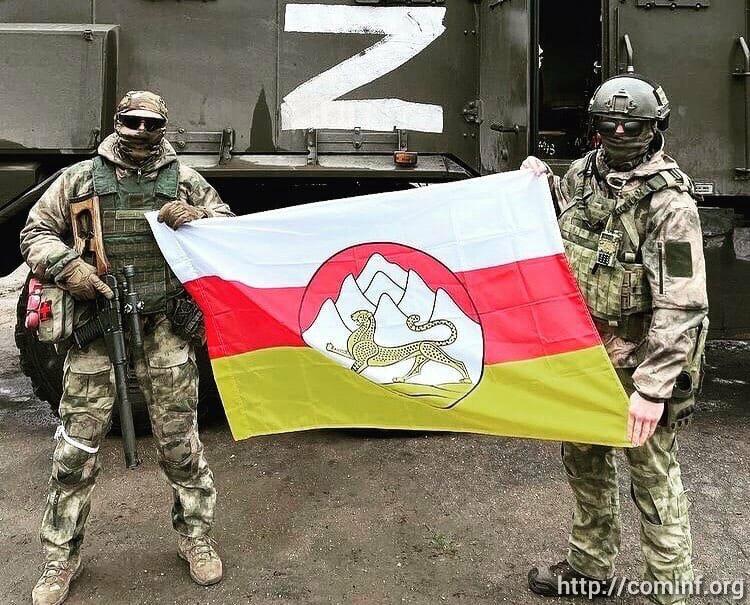
In February 2022, many ethnic Ossetians from the occupied Tskhinvali region were deployed to Ukraine. This deployment became a significant factor in Bibilov losing the presidential race, as he had previously promised that Ossetians serving at Russia’s 4th Military Base would never be required to participate in military conflicts beyond the occupied Tskhinvali region. Notably, Bibilov’s candidacy had the support of Vladimir Putin.
Russia’s stance toward the de facto defence ministry of the so-called Republic of South Ossetia is evident in the statements of former de facto Defence Minister Iakhnovets, who held the position before Ibragim Gasseev. Iakhnovets highlighted the lack of competency within the Ossetian military, noting that its personnel had little to no theoretical knowledge. At the same time, he praised their dedication to serving their “homeland,” despite the harsh conditions. According to him, “there were far more disadvantages and discrepancies within the (de facto defence ministry’s) system.”
The incident that occurred during then-de facto Defence Minister Vladimir Pukhaev’s term serves as a notable example of the issues within the “Ossetian army.” Personnel from the de facto ministry abducted a civilian to an Ossetian military base and physically abused him. As a result, over one hundred employees of the ministry were forced to resign. This incident, along with other similar cases, reinforced the perception that Ossetian military circles had evolved into informal brotherhoods, where personal relationships overshadowed formal order. It should also be noted that Pukhaev fought in the Russo-Ukrainian war on the Russian side and was wounded in 2023, when his vehicle struck a landmine near the frontline.
The brief “tradition” of ethnic Ossetians leading the de facto defence ministry came to an end in May 2022, when another ethnic Russian officer, Marat Pavlov, was appointed to the position. Speculation within the occupied Tskhinvali region suggested that Pavlov’s appointment was a decisive move by Russia to bring an end to the “Ossetian sovereign army.”
In addition to Bibilov, former de facto President Eduard Kokoity also supported the full integration of the Ossetian army into the Russian military structure. He initially endorsed Bibilov’s candidacy for the 2022 “presidential elections,” but shortly after the outbreak of the full-scale war in Ukraine and the deployment of ethnic Ossetian soldiers to the frontline, he changed his position.
Another de facto President, Leonid Tibilov, sought to avoid angering either the Russian authorities or the Ossetian military by maintaining a neutral stance on the issue. In 2016, he stated that he had convinced Putin in 2012 to annul the agreement concluded between former de facto President Kokoity and Russia on the abolishment of the armed forces of the so-called Republic of South Ossetia. Thus, he claimed, he had succeeded in preserving the Ossetian army.
A month after the outbreak of the full-scale war in Ukraine in 2022, Ekho Kavkaza published a phone interview with officer Eduard Kabarev, a former official of the de facto defence ministry of the occupied Tskhinvali region. Kabarev noted that a significant portion of the military at the de facto defence ministry opposed the abolishment of the Ossetian army under the agreement on cooperation and integration between “South Ossetia” and the Russian Federation. According to him, “everything was prearranged,” and, as a result, the “republic” was left without its own combat-capable units.
Ossetian human rights advocate Fatima Markieva highlighted a similar context. She stated that the politicians had left the citizens of “South Ossetia” without options. No economic or infrastructural projects were being implemented, and, in order to survive, the Ossetian military had no choice but to sign contracts with the Russian Army.
Eduard Kabarev’s statements align with the points made by Fatima Markieva, reflecting the sentiments of society in the occupied Tskhinvali region: “…our families need to be fed, right? If we had remuneration in the de facto armed forces comparable to that of the Russian Army, I am fully convinced that not a single man would go there [to the Russian military base].”
Despite the general turmoil in the occupied Tskhinvali region caused by Russia’s full-scale war in Ukraine, ex-de facto President Bibilov remained in an absolute pro-Russian stance. In March 2022, he stated: “We must understand that the Special Military Operation is one for all who consider themselves Russian. Russia is our historic homeland. Therefore, this operation is our operation. We are one.” He subsequently lost the 2022 “presidential race.”