
Giorgi Bidzinashvili
Since the 2008 Russo-Georgian War, the Russian Defence Ministry’s 7th Military Base has been the main guarantor of security in occupied Abkhazia. Nonetheless, the de facto Abkhazian defence ministry continues to hold a degree of significance, as its general staff has frequently been led by ethnic Russian senior officers with prior service in the Russian Armed Forces.
This article provides a chronological overview of the activities of these de facto chiefs of general staff. Drawing on open-source information, it highlights notable episodes from their military careers, both within Abkhazia and elsewhere. The focus is on ethnic Russian officers who have been appointed as chiefs of general staff before and after the 2008 Russo-Georgian War.
Key Conclusions:
- In occupied Abkhazia, unlike in the occupied Tskhinvali region, ethnic Abkhazians are appointed as de facto defence ministers. Sultan Sosnaliev is an exception — an ethnic Kabardian who is considered one of the most prominent figures of the war in Abkhazia. Meanwhile, the majority of chiefs of the general staff have been ethnic Russian high-ranking military officers.
- The general staff of Abkhazia had only two ethnic Abkhazian chiefs: Sergey Dbar and Vladimir Arshba, both of whom were experienced Soviet officers who had graduated from Soviet military schools and gained combat experience in wars waged by the Soviet Army.
- The first ethnic Russian high-ranking officer was appointed chief of the general staff in 2005. A year earlier, a high-ranking ethnic Russian military officer — Anatoly Barankevich — was appointed de facto defence minister in the occupied Tskhinvali region. The appointment of high-ranking military officers by Russia in the occupied regions marked a crucial point, reflecting a shift in Russia’s attitude toward Georgia, as expressed through ever harsher policies following the 2003 Rose Revolution.
- Since 2005, the chiefs of the general staff have consistently been ethnic Russian high-ranking military officers, ensuring that processes within the so-called armed forces of occupied Abkhazia remain under total subordination to the Russian Federation.
“Chiefs of the General Staff” of Occupied Abkhazia
Sultan Sosnaliev
From October 1992 to April 1993
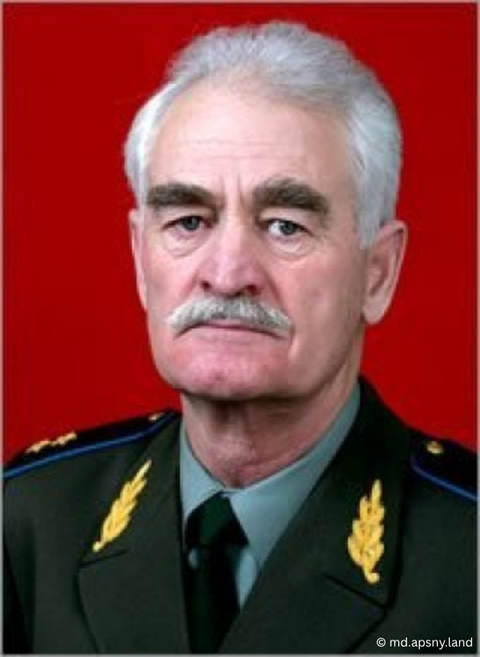
Sultan Sosnaliev was born on April 23, 1942, in Nalchik, the Russian SFSR. He studied at the Sizransk Aviation Academy between 1961 and 1964, and graduated from the Zhukov Air Defence Military Academy in 1978. His 29-year career in the Soviet Armed Forces included a rise from pilot to assault aviation corps commander and head of the aviacenter. In 1989, he retired from active military service as an honoured pilot of the USSR, and briefly entered the private sector. However, he was soon appointed commander of the military wing of the Confederation of Mountain Peoples of the Caucasus, a position he held until the end of 1992. The Confederation fought in Abkhazia on the separatists’ side and was armed and trained by Russia.
As commander of the Confederation of Mountain Peoples of the Caucasus, Sosnaliev travelled to Abkhazia before the start of the war. According to separatist Valiko Pachulia, he personally conducted reconnaissance operations, identifying tactical and strategic sectors of the potential frontline. The armed forces of the “confederation” entered Abkhazia on August 15, 1992, the day after the war began, and commenced combat operations.
There was no de facto defence ministry during this period. It was formally established on October 11, 1992, on an order issued by the so-called High Council Presidium of Abkhazia. The general staff was created along with the de facto defence ministry. Prior to the ministry’s establishment, its functions were carried out by the so-called national defence committee. Sosnaliev became the first chief of staff of the “Abkhazian National Resistance.” With the establishment of the de facto defence ministry, he became the first “chief of the general staff” and, later, on April 25, 1993, a de facto acting defence minister, following Vladimir Arshba’s transfer to Russia for medical treatment.
Abkhazia’s separatists regard Sosnaliev as a founder of the “Abkhazian Armed Forces”. He was awarded the rank of major-general for this endeavour. He personally led operations to capture Sokhumi during the war in Abkhazia. For this achievement, the separatists awarded him the rank of lieutenant-general and, in 1994, the title of “Hero of Abkhazia.”
He moved to the reserve in 1996, returned to Russia, and began a political career. He was elected Vice-President of the Circassian International Association. In 2005, he returned to Abkhazia, where he was appointed de facto defence minister and de facto vice prime-minister. That year, Sosnaliev stated that officers and military personnel of the so-called Abkhazian army were regularly sent to Russia for training. In 2007, he retired due to health-related issues. He died the following year.
Sergei Dbar
From May 21, 1993, to June 1996
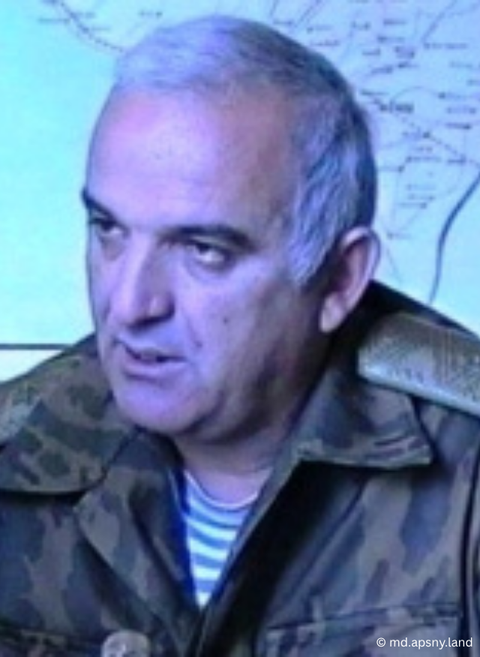
Sergei Dbar was born on May 2, 1946, in Gudauta, in the Georgian SSR. In 1968, he graduated from the Baku Higher Combined-Arms Command School, became a Soviet Army lieutenant, and was appointed motor rifle platoon commander. He later served as a reconnaissance platoon commander. In 1972, he was put in charge of a company, and subsequently became a battalion commander in the Baikal Military District. In the late 1970s, he served in the German Democratic Republic as a battalion commander. In 1982, he graduated from the Frunze Military Academy in Russia and was appointed Chief of Staff of the Division of the 93rd Guard. In 1987, he became Deputy Chief of Staff of the 9th Motor Rifle Division of the 12th Army Corps. Dbar also served as a military advisor in Ethiopia.
In 1989, Dbar was deployed to Abkhazia, and appointed military commissioner of the Sokhumi City Commissariat. In 1992, when the war started in Abkhazia, he commanded the separatist paramilitary groups in Sokhumi. As one of the commanders of the separatist forces, he participated in every major operation of the war. In 1993, when Sosnaliev was appointed de facto defence minister, Dbar became Chief of the General Staff. Sosnaliev and Dbar organized the separatist forces, and their efforts culminated in September 1993.
Shortly after the end of the war in 1993, Dbar became a major-general, and in 1994, he was awarded the title of “Hero of Abkhazia.” In 1994, he continued participating in hostilities, particularly at the village of Lata. He was de facto first deputy defence minister from August 1995 to June 1996, and, in July, he became a military advisor to the de facto president of occupied Abkhazia. In 2001, he took part in hostilities in the Kodori Gorge. In 2002, he became a member and speaker of the de facto parliament. Simultaneously, he was head of the “Veterans Union” until 2001. Sergei Dbar died in 2002.
Vladimir (Raul) Arshba
From June 1996 to September 2004
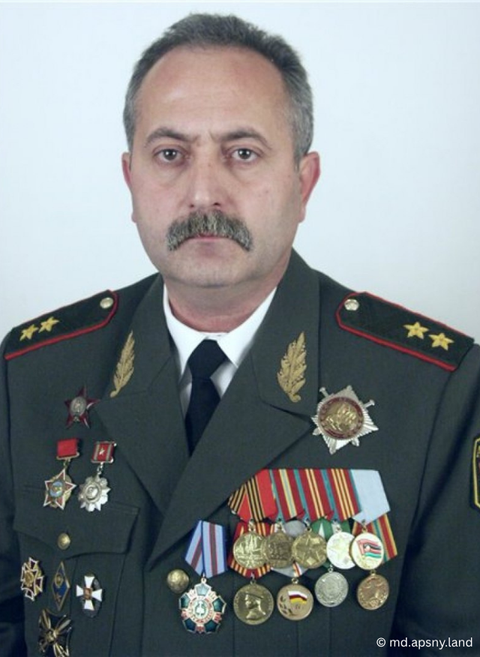
Vladimir Arshba was born on May 8, 1959, in Tbilisi, in the Georgian SSR. In 1980, he graduated from the Tbilisi Higher Artillery Command School and commenced his military service in the German Democratic Republic with the Soviet Army. From 1981 to 1983, he served at the 108th Sound and Radar Reconnaissance Battery. He participated in the Afghanistan War, including operations in Panjshir province. In 1988, he served in the Armenian SSR, where he was deputy commandant of Ijevan. In 1989, he began military service in Abkhazia and became military commissioner of Tkuarcheli.
In 1992, he became commander of a special purpose separate battalion of the internal troops. De facto President Ardzinba appointed him de facto minister in October of the same year. In November, Arshba was injured in combat and abandoned his de facto ministerial position in April 1993 to become a military advisor to the head of the so-called High Council of Abkhazia. From 1996 to 2004, he was Chief of the General Staff. He later became the de facto president’s military advisor and spent the last six years of his active career as Head of the so-called Immigration Service of Abkhazia.
Major-General Giorgi Karkarashvili, the commander of the Georgian National Guard during the war in Abkhazia, and a former defence minister of Georgia, mentioned Vladimir Arshba in his recent book. In the summer of 1992, Vladimir Arshba, along with other separatists, was taken prisoner by the Georgian armed forces. The then de facto interior minister of Abkhazia, Aleksandr Ankvab, coordinated the exchange of prisoners and told General Karkarashvili that the release of prisoners would be an important step and could positively affect the fate of Georgian prisoners of war captured by the opposing forces.
Giorgi Karkarashvili recalls: “…and it was followed by a call from Tbilisi. Among the prisoners turned out to be Lieutenant Colonel Raul (Vladimir) Arshba, who was the commander of the internal troops of the Abkhazian separatist government. He was a graduate of Tbilisi Higher Artillery Command School in 1981, along with the son of my patron during my studies there, Giorgi Aleksandrov. Giorgi Aleksandrov, who by that time had relocated to Krasnodar, had called my parents and asked them to convey that graduates of the same school should show respect to each other. It was not a hard guess what he meant by that” (Karkarashvili, 2025, p.408).
Also: “At 11 o’clock, under the estacade, Ankvab and Kakalia were already waiting for the prisoners at the Railway Hospital in a UAZ-469 vehicle. I spoke with Raul Arshba, telling him that his classmate, Boria Aleksandrov, had sent his regards, and I told him my hope that our paths would never cross again in war. I then shook hands with the Abkhaz leaders. They thanked me for the gesture, and we went our separate ways. I assigned six “Eagles” to escort the prisoners to the Gumista Bridge, placed my brother in command of the group, and divided them into two UAZ-469s. Tolika, for some reason, insisted on joining them as well. I instructed the group to follow Lieutenant Colonel Khevsuriani and his deputy, Lieutenant Colonel Zakaraia. Returning to headquarters, I smiled, wondering whether our act of goodwill could steer destiny toward peace” (Karkarashvili, 2025, p.408).
The Georgian escort was ambushed immediately after the prisoners were delivered and the peaceful farewell had taken place. Two of the Georgians, Paata Mamrikishvili and Gocha Chigoshvili, were killed, and three others were seriously wounded. Shortly after the incident, Ankvab travelled back to Giorgi Karkarashvili: “…deeply shaken by the incident, Ankvab struggled to speak, explaining that the betrayal had been carried out by factions opposed to peace and reconciliation between Georgians and Abkhazians, and that he himself was a victim. He expressed his willingness to take personal responsibility, though not as the offender, but for the broken promise and, if necessary, said he would pay with his life. It was clear he was emphasizing that the attack had not been perpetrated by the Abkhazians. Later, it was revealed that the ambush was the first combat operation of a newly arrived Chechen field commander, Shamil Basayev, and his eight-man unit. Ankvab spoke with such conviction that it was hard not to believe him” (Karkarashvili, 2025, p.410).
Anatoly Zaitsev
From March 2005 to April 2010
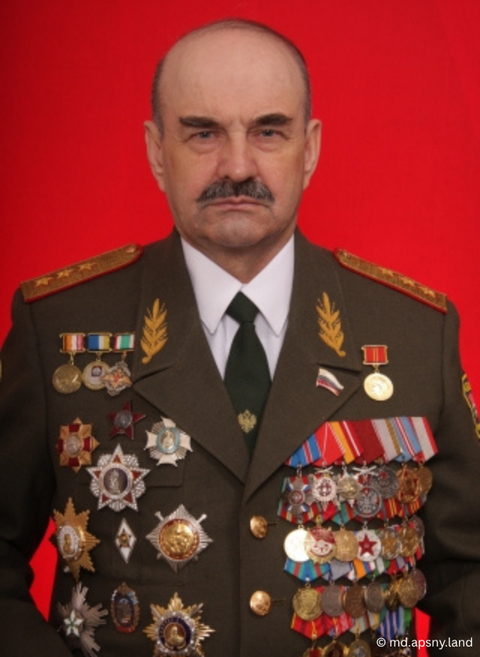
Anatoly Zaitsev was born on December 20, 1947, into a Russian military family in Mongolia. He graduated from the Tank School in 1969, the Armored Tank Force Academy in 1979, and the Academy of the General Staff of the Russian Federation in 1991. Over his career, he advanced from tank platoon commander to deputy commander of the Baikal Military District, serving in the Far East, Ukraine, the German Democratic Republic, and Czechoslovakia. He also served as the primary military advisor in Syria.
In 2004, Zaitsev retired from the Russian army and continued his military career in Abkhazia, where he was appointed de facto deputy defence minister. In 2005, he became Chief of General Staff, the first ethnic Russian to hold this position in Abkhazia. His appointment coincided with the assignment of another ethnic Russian officer, Anatoly Barankevich, as de facto defence minister of the occupied Tskhinvali region. Although Abkhazian media speculated that Zaitsev might be put in charge of the de facto defence ministry rather than the general staff, this did not occur. The de facto government of Abkhazia purchased a private house for him, where he relocated with his family.
Zaitsev directly planned and oversaw combat operations in Abkhazia. According to him, the de facto defence minister, Merab Kishmaria, diligently followed and implemented his instructions. In addition, Zaitsev was simultaneously involved in military processes in the occupied Tskhinvali region. In an interview, he stated that he had instructed the de facto President, Eduard Kokoity, to prepare minefields along the probable advance routes of the Georgian Armed Forces.
Zaitsev coordinated the movements of the Russian Armed Forces with those of the separatist groups. In a 2012 article, he described his role in the 2008 Kodori military operation. According to him, he had been informed of a leak of secret information from the Abkhazian side, prompting him to assume operational command. He detailed the challenges of employing assault aviation and artillery in mountainous terrain, and explained the measures he implemented to ensure that the Kodori Gorge came under Abkhazian separatist control.
Zaitsev has also been active in academia, teaching courses on governance and national security, patriotic upbringing, and civil identity and awareness at the Saint Petersburg Polytechnic University. His reflections on the Kodori special operation, as described in an article, are connected to Russia’s parallel hybrid warfare, in which disinformation and demoralization play a central role.
Vladimir Vasilchenko
From March 2011 to May 2014
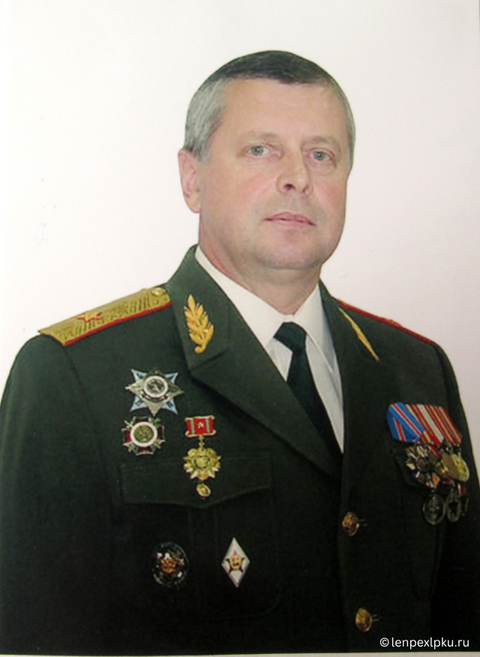
Vladimir Vasilchenko was born in Lepel, in the Belarus SSR, in 1953. At 18, he entered the Kirov Combined-Arms Higher School in Leningrad, and graduated in 1975. He then served four years in the Belarus Military District as a unit commander and deputy platoon commander. In 1979, he was assigned to the Military Group–South of the Soviet Army, where he served as a company commander and Chief of Staff. In 1987, he graduated from the Frunze Academy. By 1996, Vasilchenko had become Deputy Chief of Staff of the Operational Command of the Siberian Military District. He participated in both Chechen–Russia wars, overseeing operational command and planning.
Vasilchenko was appointed de facto chief of staff in March 2011, filling a position that had remained vacant for a year following the retirement of his predecessor, Zaitsev. During his tenure, he actively pushed for the full recruitment and staffing of the so-called defence ministry, criticizing the slow pace, while other law-enforcement bodies were reportedly exceeding their recruitment targets. Notably, during his time in office, forged lists of Abkhazia war veterans emerged, granting approximately 27,000 individuals veteran status, despite none of them having served in the war or having deserted their units. Vasilchenko left the position in 2014 with the rank of major-general.
Anatoly Khruliov
From May 2015 to August 2018
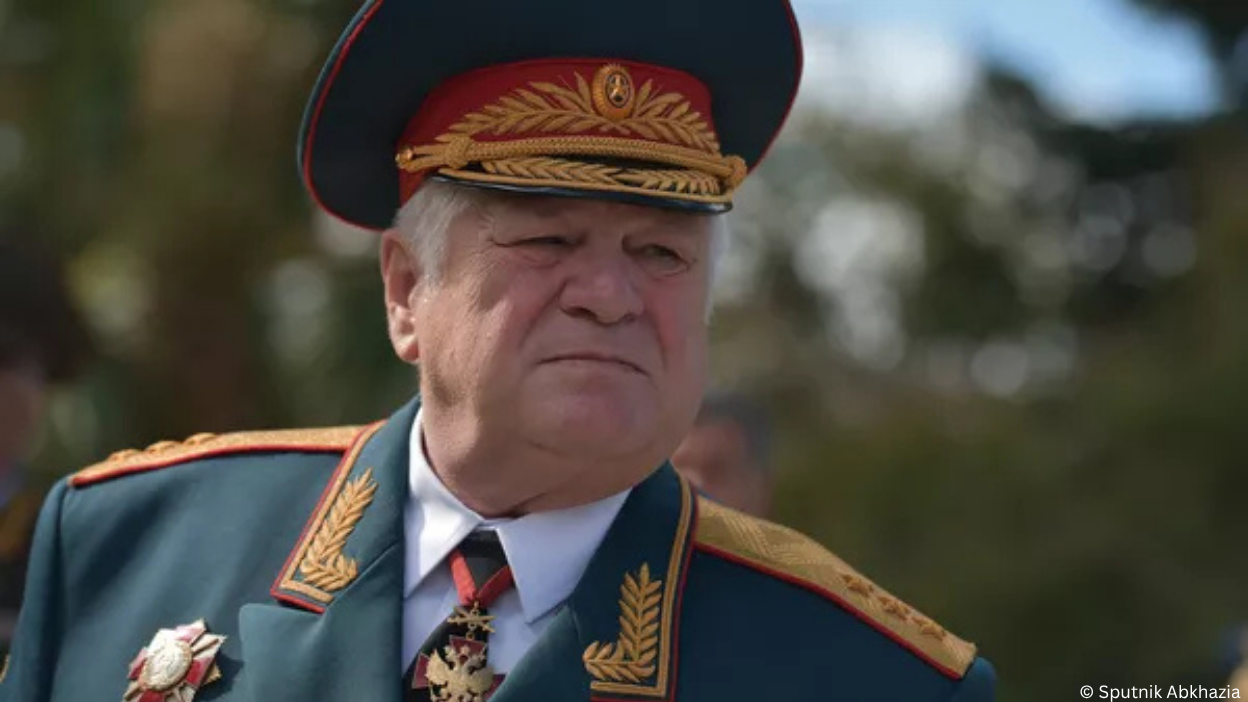
Anatoly Khruliov was born on June 3, 1955, in Moscow Oblast, in the Russian SFSR. He graduated from the Tashkent Higher Tank Command School in 1976, the Malinovski Armored Tank Academy in 1989, and the Military Academy of the General Staff of the Russian Federation. Khruliov participated in the Second Chechen-Russia War, during which he was concussed in combat. Between 2003 and 2006, he served as Chief of Operational Command of the Siberian Military District and, prior to commanding the 58th Army, held the position of Deputy Commander. Khruliov led the 58th Army from 2006 to 2010, and commanded the Russian forces during the 2008 Russo-Georgian War, where he was wounded in action.
In May 2015, Khruliov was appointed de facto chief of general staff of the de facto defence ministry of Abkhazia.
Vasily Luniov
From August 2018 to November 2022
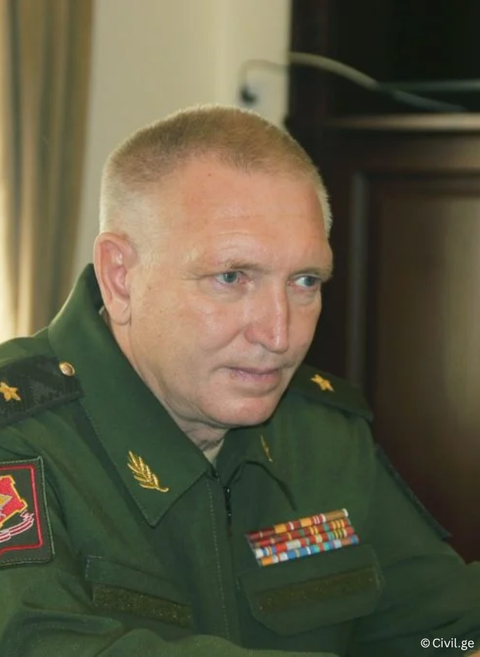
In 2018, Major-General Vasily Luniov was appointed Head of the General Staff of the de facto defence ministry of Abkhazia by de facto President Raul Khajimba. In this position, Luniov replaced former Commander of the 58th Army, Anatoly Khruliov.
Vasily Luniov was born in 1956 in Chelyabinsk Oblast, in the Russian SFSR. He graduated from the Frunze Military Academy in Moscow and the Military Academy of the General Staff of the Russian Federation. He served in the Far East, Siberia, and the Urals. From 2003 to 2004, he was Deputy Head of the Siberian Military District. In 2007, he became Military Commissioner of Perm Oblast.
Luniov served as de facto defence minister from March to October 2008. According to available information, he took charge of the 58th Army during the 2008 Russo-Georgian War, after the army’s commander, Anatoly Khruliov, was wounded in action. Luniov returned to his previous role as Military Commissioner in Perm Oblast shortly after the end of the 2008 war. He was later sent to Syria as a military counselor. Since 2013, Luniov has performed similar functions in Algeria.
Vladimir Savchenko
From November 2022 to Present
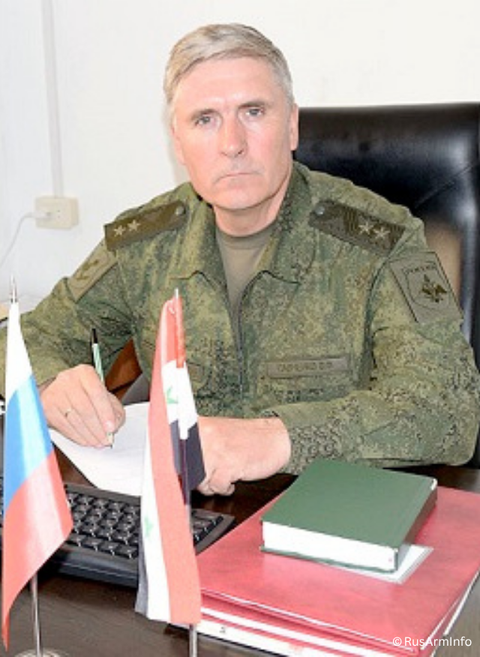
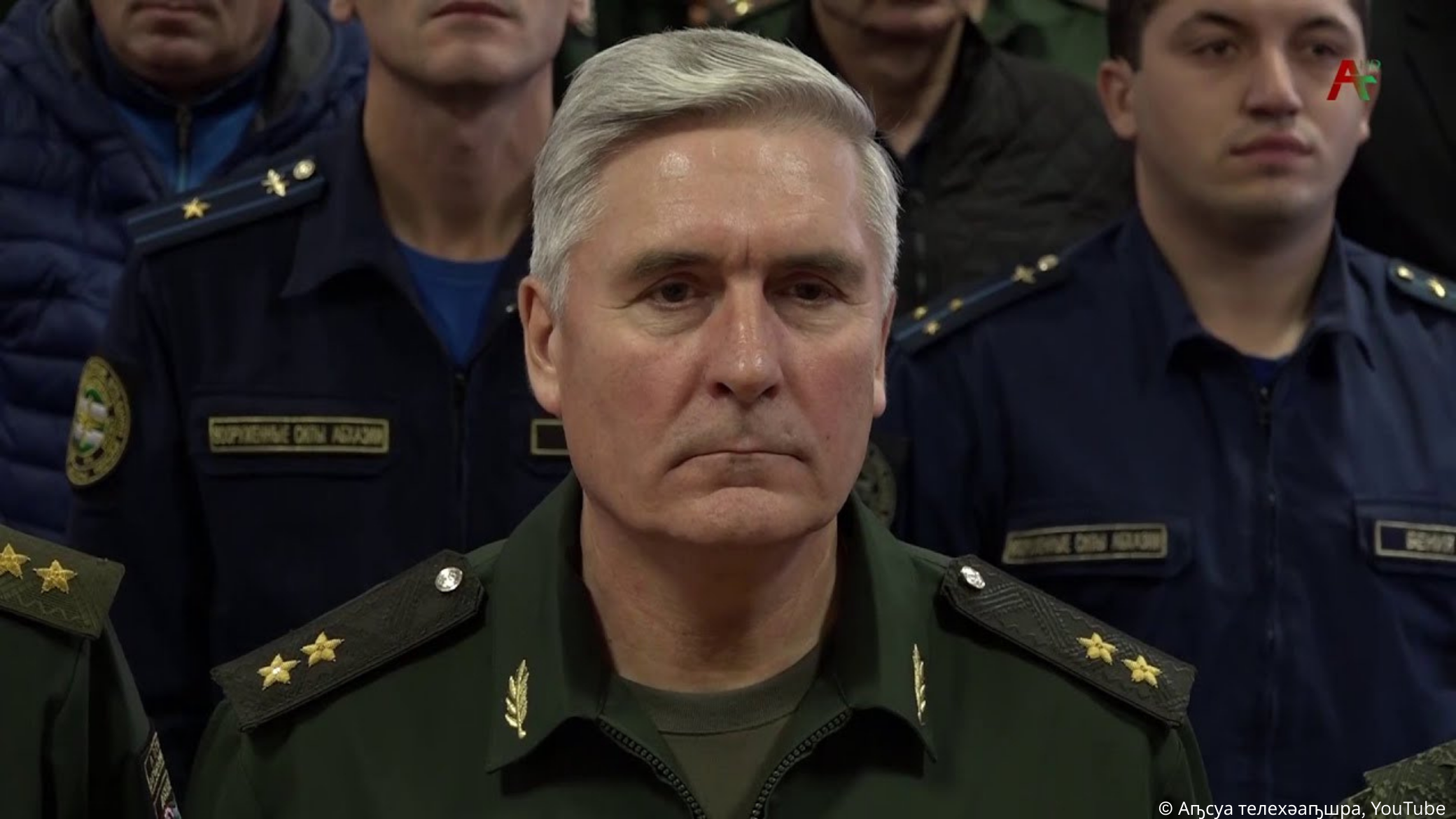
Lieutenant-General Vladimir Savchenko was appointed de facto chief of general staff of occupied Abkhazia in November 2022, during the de facto presidency of Aslan Bzhania. He succeeded Vasily Luniov in the post. Speaking to Luniov, Bzhania remarked: “We do not say farewell to each other: we take a short break, and will recommence cooperation under a new status.”
Vladimir Savchenko was born on July 23, 1959, in the Kazakhstan SSR, into a military family. He had served in the Soviet Army since 1976. In 1980, he graduated from the Higher Tank Command School; Armored Tank Military Academy in 1991; and the Academy of the General Staff of the Russian Federation. He served in the German Democratic Republic and, later, in the Far East.
He has held the title of Candidate of Sciences (the Soviet-Russian equivalent of a PhD) since 2001. That same year, he was appointed Deputy Head of the Academy of the General Staff of the Russian Federation. Savchenko has served in Syria, leading the Russian Center for Reconciliation of Opposing Sides and Refugee Migration Monitoring in the Syrian Arab Republic, as well as the Russian Centre for the Reception, Allocation, and Accommodation of Refugees.
De facto defence minister Vladimir Anua, while introducing Savchenko to the public, stated: “We are grateful to the Chief of Staff of the Armed Forces of the Russian Federation, who recommended such an exceptional general.”
This statement underscores that the position of de facto chief of general staff of Abkhazia is effectively reserved for Russian officers.