
Occupied Tskhinvali Region (“South Ossetia”)
The Ossetian military spent most of September in preparation for various upcoming ceremonies. Other activities were mostly formal and non-combative in nature. The de facto Defence Ministry reported multiple times on their “Honour Guard” and other servicemen preparing for the 36th anniversary of the establishment of the “Republic of South Ossetia.” The de facto minister himself, Russian general Yuri Yarovitsky, took part in the rehearsals.
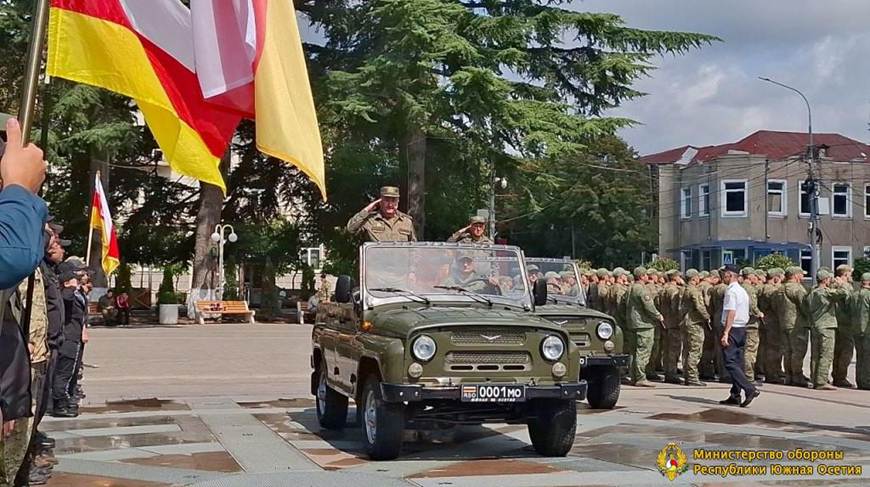
Yarovitsky saluting on a Soviet UAZ utility vehicle. Source: alaniamil.org
On September 29, 2026, the Ossetian “Honour Guard” held a dress rehearsal for the inauguration ceremony of the so-called President-elect of “South Ossetia,” Marat Kambolov. Kambolov himself participated in the process along with de-facto Defence Minister and Russian General Yuri Yarovisky. Both de facto leaders of Georgia’s breakaway Tskhinvali region gave a high evaluation of the “Honour Guard’s” professionalism and readiness. The inauguration ceremony was held on September 30, with the involvement also of servicemen from Russia’s 4th Military Base stationed in the occupied region.
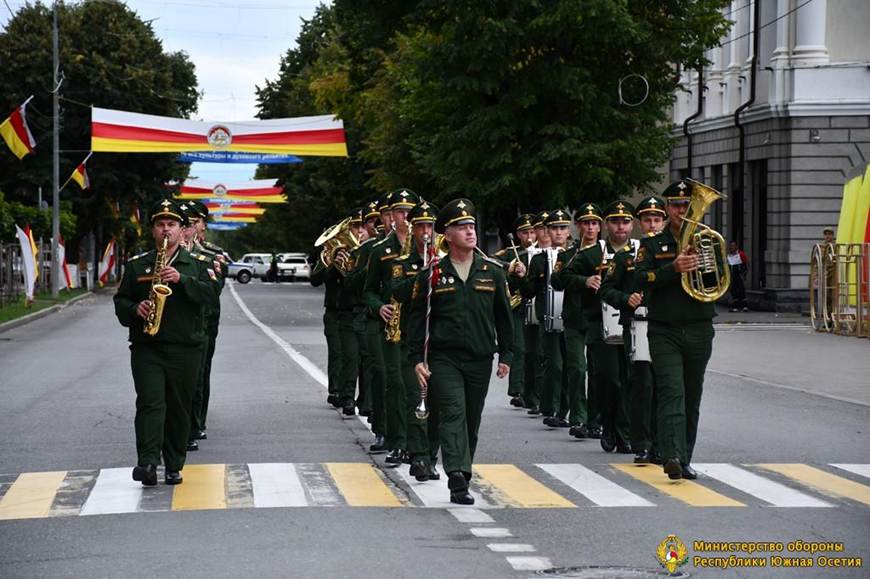
Russian 4th Military Base orchestra at Kambolov’s “inauguration.” Source: alaniamil.com
The same day, September 30, representatives of the 4th Military Base attended a roundtable titled The Role of Russia in Ensuring the International Recognition of South Ossetia, at the University of South Ossetia in Tskhinvali.
Ossetian Personnel at Russian Military Schools
In early September, a cohort of Ossetian cadets attending various Russian military educational institutions began practical internships across local and North Ossetian military agencies. According to the de facto Ministry of Defence of “South Ossetia,” the students were assigned to the military prosecutor’s office, the North Ossetian military hospital, and local divisions of the de facto ministry.
Vehicle Pool Weekly Upkeep
On September 4, the de facto Defence Ministry reported that they had been holding a regular “weekly upkeep day,” although the agency has rarely mentioned this specific activity before. The publication noted the “weekly upkeep day” sees close scrutiny of every detail, from washing the Russian-delivered SUVs to checking the oil levels and hydraulic pressures of their fuel cistern trucks.
Yarovitsky’s Activities
On September 24, Yuri Yarovitsky, along with his deputies, visited the vehicle pools and warehouses on a routine inspection. He has been conducting these “unannounced” inspections at least once a month since Russia delivered new military equipment to “South Ossetia.” Said inventory is made up largely of trucks, light weapons, and a few SUVs.
On September 28, Yarovitsky chaired the planned staff training session in the de facto ministry, which aims to improve various operational directions in the military. However, a particularly interesting section appears to be the wording and messages in the statement, according to which: “During the exercises, decision-making algorithms and the operational redistribution of forces are being practiced, while communications skills, comprehensive support, and continuous unit command and control are being refined.” The monthly overview of military activities in Georgia’s occupied territories has noted in earlier publications that the de facto agencies deliberately choose such complicated and sophisticated terms to project their professionalism and create an illusion of security among the local population.
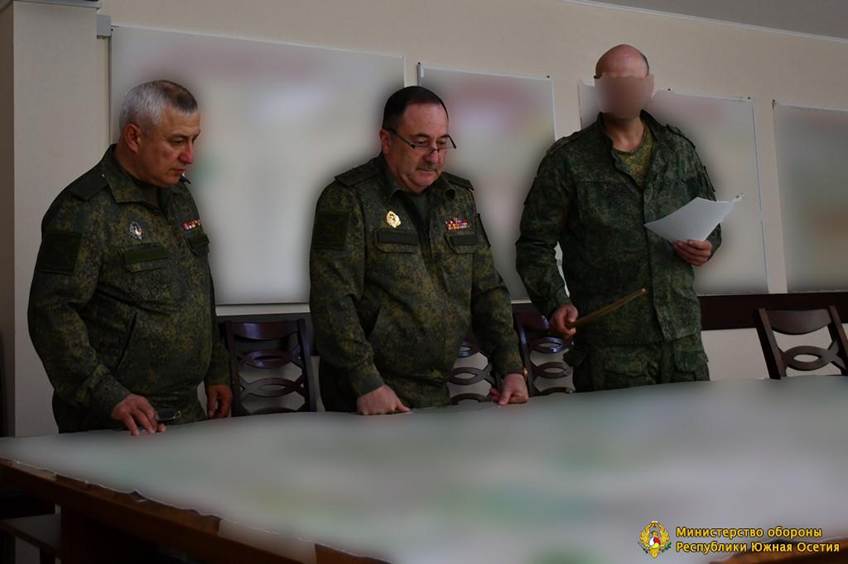
Russian general and “South Ossetia’s” de facto Defence Minister, Yuri Yarovitsky, overseeing the staff exercises. Source: alaniamil.org
Ossetian Children Constructing FPV Drones
On September 22, Sputnik Ossetia reported that the Station of Young Technicians, a facility in Tskhinvali, had incorporated equipment necessary to teach Ossetian children how to construct and set up actual FPV drones. According to the article, the equipment delivered to the facility so far includes 3-D printers, solders, and other necessary tools for this purpose.
Naryman Kalayev, director of the station, noted: “The educational programme consists of three stages: theoretical training and computer-lab simulators, engineering practice (assembly, soldering, and programming), and flight training at the Young Technicians’ Station, including the use of a protective flight cage. The laser technology program is also expanding rapidly, allowing students to transition quickly from digital design to fabricating real products from plywood or plastic. This process generates high interest among the children, as it enables them to quickly achieve tangible results from their work.”
The outlet then posted a photograph of an 8-9-year-old Ossetian child learning the assembly of FPV drones at the facility.
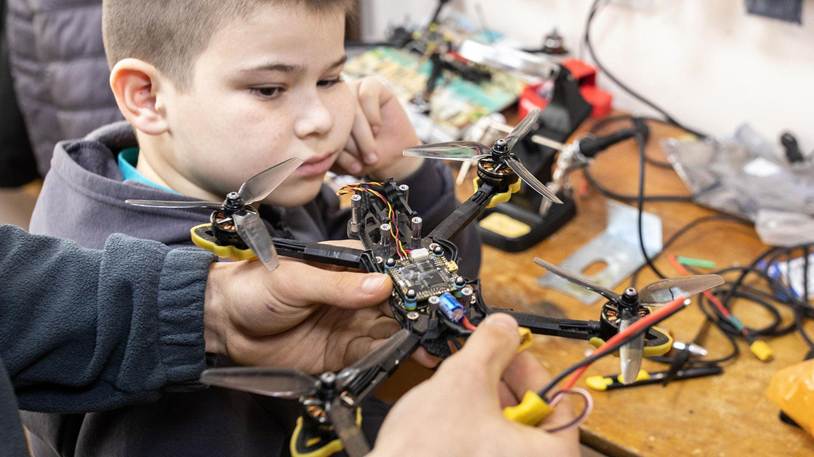
An Ossetian child at the Station of Young Technicians in Tskhinvali. Source: Sputnik Ossetia
Occupied Abkhazia
Russian Officers Visit Abkhazia
On September 8, 2026, a group of Russian officers visited Russia and held a series of meetings with the Abkhazian de facto authorities. The official purpose of the visit, as stated by the Abkhazian de facto defence ministry, was to discuss “mutual aspects of cooperation in defence, including the functioning of Russia’s 7th Military Base” deployed in the occupied Abkhazia region. Neither party disclosed any details on the officers or the specific topics discussed.
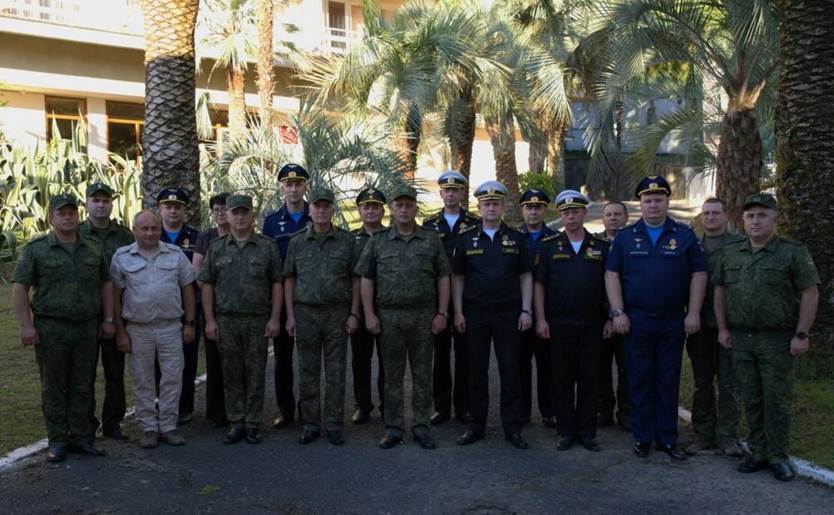
Russian officers with Abkhazian military representatives. The group includes Beslan Tsvizhba, newly appointed Abkhazian de facto Defence Minister, and Russian General and Chief of Abkhazian de facto General Staff, Vladimir Savchenko.
According to the pictures published by the Abkhazian side, the group consisted of Russian military servicemen representing two branches: the Ground Forces and the Aerospace Forces of the Russian military. The specific insignias worn by the officers in the dark blue uniforms suggest they are part of the air defence branch of the aerospace forces. This detail suggests the purpose of their visit, considering that Abkhazian airspace has become a regular route for Ukrainian UAVs targeting military sites in Sochi.
On September 28, during the anniversary of the “victory day” of the 1992-1993 war in Abkhazia, the de facto defence ministry held a parade, during which they rolled out a batch of brand new Mitsubishi L200 pickup trucks with mounted machine guns. This specific setup has become widely adopted in the Russo-Ukrainian war, where the mobile air defence units hunt down enemy UAVs using machine guns mounted on SUVs. As such, it is quite possible that the September 8 visit of those Russian officers served the purpose of amplifying Abkhazia’s air defence capabilities.
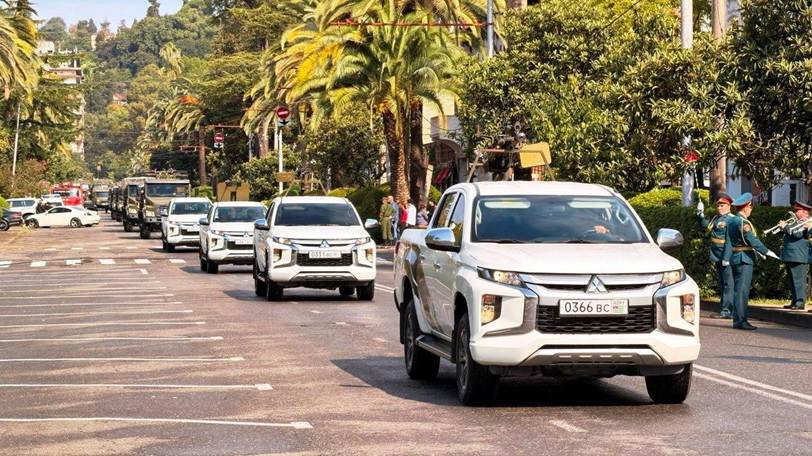
Brand-new Mitsubishi L200 pickup trucks with mounted machine guns paraded by the Abkhazian de facto defence ministry on “victory day.”
Military Exercises
On September 18, the de facto defence ministry reported on “planned” exercises. These were held over three days. The agency named the activity “Tactical-Special Exercise,” and gave it an abbreviation in Russian. The Abkhazian military logistics unit also joined the training. The “ministry” stated that the aim of the activity was to improve the methodical approach, perfect professional knowledge and skills, and improve organisational aspects in combat conditions.
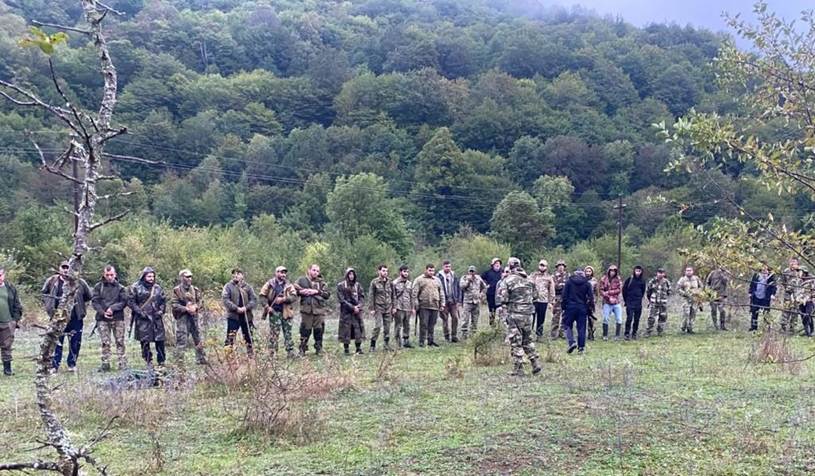
An official photo published by the Abkhazian “defence ministry” depicting Abkhazian servicemen participating in September 15-17 combat exercises. Notably, none of the servicemen is wearing a standard uniform, and some are dressed in jeans. Source: apsny.land