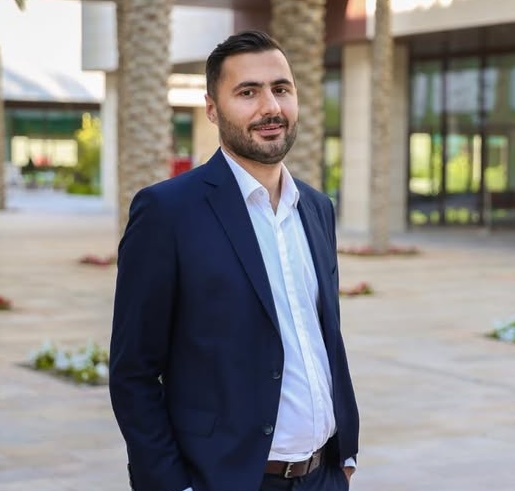
Aleksandre Kvakhadze
PhD candidate at the University of Birmingham, UK
Introduction
Over the past several years, numerous media outlets have reported on Ramzan Kadyrov’s deteriorating health and the possibility of a future transfer of power in Chechnya. At the same time, Kadyrov’s sons have been increasingly promoted in the regional media, while experts have speculated about who might eventually succeed him. This paper examines the most likely successors to Kadyrov, and explores the potential consequences of a leadership transition in Chechnya.
Kadyrov’s Health
Rumours about Kadyrov’s deteriorating health began to circulate in Russian media in late 2022 (Milashina, 2023). The rumours were further reinforced by Chechen opposition blogger-in-exile Tumso Abdurakhmanov, who claimed to have exclusive information from within Kadyrov’s inner circle.
Reportedly, Kadyrov has been suffering from pancreatic necrosis, a serious condition that can lead to multiple organ failure and carries a high risk of mortality (Novaya Gazeta Yevropa, 2024). According to Akhmed Zakayev, the head of the Chechen Republic of Ichkeria government-in-exile, Kadyrov underwent kidney treatment at a clinic in the United Arab Emirates (24UA, 2024).
Apart from rumours, there have been several visible signs that have led some observers to suggest that Kadyrov may be suffering from a serious chronic illness. First, over the past three years, he has gained significant weight. Some have speculated that this could be related to fluid retention, which is a common symptom associated with kidney disorders.
Kadyrov also appears slower and more lethargic in his recent videos, both in his speech and physical movements. Compared with older footage, in which he actively participated in sporting events, wrestling, performing Chechen traditional dances, and engaging in other physical activities, this may suggest a significant change in his physical condition.
Furthermore, in several recent videos of public meetings, Kadyrov appears to avoid greeting officials using the traditional Chechen style, which involves embracing each other with one hand placed around the waist. Some observers have speculated that this may be related to the possible presence of a medical device regulating his urinary or digestive system. Taken together, these factors have contributed to speculation about a potential deterioration in his health.
Yet Kadyrov’s administration has denied any health complications. Kadyrov himself has appeared in multiple videos attempting to demonstrate that he is in good health. For instance, on 2 January this year, he appeared alongside Chechen Minister of Press and Information Akhmed Dudaev and stated: “We are in good and fighting spirit. Normal people understand us, but those satanists and neo-Nazis do their job and are paid for it. Regardless of what we say and show them, there will still be rumours” (Tass, 2025). For Kadyrov’s administration, it is crucial to demonstrate that the head of the republic remains actively involved in the decision-making process and is physically capable of carrying out his duties.
Kadyrov’s Family
When discussing a potential transfer of power, the first group to consider is Kadyrov’s family. Although Chechnya has historically never had a dynastic system of rule, the transfer of power from Akhmat Kadyrov to Ramzan Kadyrov represented the first precedent of such a succession, creating expectations that this political lineage may continue. The main challenge regarding Kadyrov’s offspring is that none of them currently appears to be a strong candidate capable of maintaining the highly centralised system of rule in Chechnya. All of Kadyrov’s children are relatively young and lack the political experience required for the position of head of the republic.
According to media reports, Ramzan Kadyrov has actively promoted his 18-year-old son, Adam Kadyrov, as a potential successor. From an early age, Adam was involved in MMA training, Quran memorisation, and military exercises, which contributed to the cultivation of a masculine and religious image within Chechen society. He is reportedly considered his father’s favoured son, believed to have inherited many of Ramzan Kadyrov’s personal traits and characteristics (Novaya Gazeta Yevropa, 2026).
Since 2020, Adam Kadyrov has regularly been awarded medals from Chechen authorities and those of other Russian regions. Moreover, in an effort to cultivate his image as a religious Muslim figure, in 2023, he was allowed to assault a detainee, Nikita Zhuravel, on camera. A young Russian man, Zhuravel had been arrested for burning the Quran on camera and charged with insulting religious sentiments. He is serving his sentence in Chechnya (Gazeta Ru, 2024).
Adam Kadyrov’s chances of succeeding to the leadership of Chechnya have reportedly decreased following unconfirmed reports of a car accident in Grozny, in which Adam and his bodyguards allegedly sustained serious injuries (Radio Svoboda, 2026). Additionally, critics often emphasise his perceived lack of intellectual capacity and insufficient education required to govern the republic. Moreover, he is still too young, needing another 17 years until he reaches the age of 35, the minimum age required to be eligible for election as head of the republic.
The second potential candidate from Kadyrov’s family is his older son, Akhmat, who was named after Ramzan Kadyrov’s father. He currently serves as Deputy Prime Minister of the Chechen Republic. Among his advantages is his relatively higher level of education compared with other members of the family. However, the main obstacle to a potential transfer of power to him is his limited public speaking ability. According to insider accounts, Akhmat Kadyrov has struggled with anxiety when appearing in public (Novaya Gazeta Yevropa. 2026).
Among Kadyrov’s children, his daughter Ayshat stands out in terms of both her education and managerial abilities. During her tenure as Minister of Culture of the Chechen Republic, she organised numerous cultural events, invited prominent Russian artists to Chechnya, and contributed to the improvement of library and museum infrastructure across the republic.
However, in 2025, she resigned from her position, stating that she intended to pursue opportunities in the private sector (Radio Svoboda, 2025). The main obstacle to her becoming head of the republic would be her gender. Chechnya remains a highly conservative society, and the prospect of a woman ruling the republic would likely face significant resistance from the local population.
Kadyrov’s Security Apparatus
Beyond Kadyrov’s family, the most realistic candidates for succession are likely to be individuals who constitute the pillars of Chechnya’s security system. Several figures within the republic play a crucial role in maintaining the functioning of Kadyrov’s political system. One of them is Magomed Daudov, who currently serves as Prime Minister of the Chechen Republic. Considered one of the most influential politicians within Chechnya, Daudov, known by the nickname “Lord,” has been associated with allegations of repression and human rights violations in the republic. He is unofficially considered to head police forces and security structures within Chechnya. Moreover, since rumours about Kadyrov’s deteriorating health began to circulate, Daudov has increasingly been engaging with Russian federal officials, which suggests an attempt to establish independent informal links with the federal centre beyond Kadyrov’s personal network (CHGTRK, 2026).
Daudov has also been actively developing a militarised security base in his native village of Geldengen, creating a structure that some observers compare with Kadyrov’s transformation of his own village, Akhmat Yurt (formerly Tsentoroy or Khosi-Yurt), into a personal stronghold (Radio Svoboda, 2024).
Another potential candidate emerging from Kadyrov’s circle is Adam Delimkhanov. A member of the Russian State Duma, he is widely regarded as an informal coordinator of Chechen business elites and organised crime networks outside Chechnya. Although he spends most of his time outside the republic, primarily in Moscow, several of his relatives occupy important positions within Chechnya’s security apparatus. For instance, his brother Sharip Delimkhanov serves as the head of Rosgvardia in Chechnya. However, this is also considered his main disadvantage, as he lacks direct influence over law enforcement structures inside the republic.
Appointment from the Federal Centre
As an alternative to transferring power to Kadyrov’s family or his inner circle, Moscow could appoint a new candidate to lead Chechnya. The name of Apty Alaudinov – the commander of the Akhmat battalion, which has been involved in the invasion of Ukraine, has been mentioned among the potential successors to Kadyrov’s rule. Alaudinov previously worked in Chechnya’s law enforcement structures, but following a conflict with Kadyrov, left the republic. He re-emerged during the war in Ukraine and subsequently gained prominence at the national level in Russia. Alaudinov’s Akhmat unit is multiethnic, comprising not only Chechens, but also ethnic Russians and members of other nationalities.
Alaudinov has managed to gain support among Russian nationalist circles. He is fluent in Russian, which is relatively rare among the current Chechen political elite, and, unlike Kadyrov, does not employ Islamist rhetoric, a factor that has caused irritation among some Russian nationalist circles. Instead, he promotes interreligious dialogue with the Russian Orthodox Church, emphasising a perceived shared threat from the West and LGBT propaganda. One of his units was reportedly named Voysko Iisusa (“Army of Jesus”).
Nevertheless, despite having support from Russian military circles, replacing Kadyrov would be a significant challenge for Alaudinov.
First, while he has established strong connections in Moscow, he lacks influence within Kadyrov’s security structures. Many of his supporters within these structures were removed during the purge that followed his dismissal. Although Alaudinov may retain support among certain clans in his hometown of Urus-Martan, he lacks broader support across Chechnya.
Secondly, Alaudinov could face difficulties in reconciling with the Islamist segment of Chechen society. He lacks allies both within Chechnya’s official muftiate and among informal Salafi networks. His previous statements and positions would also make engagement with Islamist groups more challenging.
Thirdly, there is no consensus among Russian elites regarding the appointment of Alaudinov as Kadyrov’s successor. While he enjoys support primarily from military circles, the Presidential Administration and the Rosgvardia are more inclined to maintain the current status quo.
Chechnya after Kadyrov
The main question regarding the future of the Chechen Republic is not who will replace Kadyrov, but whether the political system he has built will survive. While Moscow has tightened its control over the other North Caucasian republics by appointing officials from the federal centre and placing less trust in local elites, Chechnya remains a unique case. Under Kadyrov, the republic has retained a relatively high degree of autonomy, and Moscow has often refrained from intervening in its domestic affairs.
Today, however, certain circles within the Kremlin are looking to end Chechnya’s unique status and bring its legislation and political system into closer alignment with the rest of the Russian Federation. Yet any attempt to do so is likely to have significant consequences for Moscow.
At present, Kadyrov’s security apparatus comprises more than 10,000 personnel, most of whom have acquired varying degrees of combat experience in Ukraine. They are well armed and well equipped, and there is a chance that they could resist any attempt to dismantle the existing system if the Chechen elite were to lose their privileges.
This draws parallels with the First Russo-Chechen War, during which the military experience gained by many Chechen commanders in the Soviet–Afghan War played a central role in the organisation and effectiveness of Chechen forces. Furthermore, the level of political and social alienation between Chechnya and the rest of Russia remains exceptionally high.
As a result, it appears highly unlikely that Moscow could implement a comprehensive policy of ethnic assimilation and Russification in Chechnya comparable to that pursued in other ethnic republics of the Russian Federation.
Conclusions
Despite the secrecy surrounding Ramzan Kadyrov’s health and the ongoing power struggles within the republic, persistent rumours and insider accounts suggest that a leadership transition in Chechnya may soon become a reality. Who will ultimately succeed Kadyrov remains uncertain, as does the future of the political system he has built. Regardless of the outcome, the post-Kadyrov era is likely to have significant implications for both the North Caucasus and the Russian political system.
Bibliography
24UA (2024), Zakaev Rozpoviv Sho Stalo Z Kadirovym [Zakaev Explains What Happened to Kadyrov] https://24tv.ua/ramzan-kadirov-stan-zdorovya-shho-stalosya-samoprogoloshenim_n2398142
CHGTRK (2026). Magomed Daudov at Official Meeting with Andrey Yaryn in Moscow https://grozny.tv/index.php/news/politics/78025
Gazeta Ru (2024). Chem Proslavilsya Syn Ramzana Kadyrova [Why Ramzan Kadyrov’s Son is Famous] https://www.gazeta.ru/social/20191034/nagrady-i-dolzhnosti-adama-kadyrova.shtml
Milashina, Y. (2023). Predstavim Kadyrova Net [Let’s Imagine Kadyrov Has Gone]. Novaya Gazeta https://novayagazeta.ru/articles/2023/03/31/predstavim-kadyrova-net
Novaya Gazeta Yevropa (2024). Preemnik Padishakha [Padishah’s Successor] https://meduza.io/feature/2024/04/22/novaya-gazeta-evropa-ramzanu-kadyrovu-postavili-diagnoz-nekroz-podzheludochnoy-zhelezy
Novaya Gazeta Yevropa (2026). Adam Kadyrov v Opale [Adam Kadyrov in Disgrace] https://novayagazeta.eu/articles/2026/03/31/adam-kadyrov-v-opale
Novaya Gazeta Yevropa (2026). Adam Kadyrov v Opale [Adam Kadyrov in Disgrace] https://novayagazeta.eu/articles/2026/03/31/adam-kadyrov-v-opale
Radio Svoboda (2024). V Chechne Stroyatsa Novye Bazy Dlya Dvukh Kadyrovskikh Batalionov [Two New Bases Are Being Constructed for Two Kadyrov Battalions] https://www.svoboda.org/a/v-chechne-stroyat-bazy-dlya-polkov-ahmat-rossiya-i-ahmat-chechnya-/32783417.html
Radio Svoboda (2025). Chechnya: Otstavka Ayshat Kadyrovoy I Borba s Zarubezhnoy Ekstremistskoy Propagandoy [Ayshat Kadurova’s Resignation and the Struggle against Foreign Extremist Propaganda] https://www.svoboda.org/a/chechnya-otstavka-ayshat-kadyrovoy-i-borjba-s-zarubezhnoy-ekstremistskoy-propagandoy-/33330696.html
Radio Svoboda (2026). Adam Kadyrov Vpervye Posle DTP ZVystupil na Ofitsialnom Meropriatii [Adam Kadyrov Appears at an Official Event for the First Time since His Car Incident] https://www.gazeta.ru/social/20191034/nagrady-i-dolzhnosti-adama-kadyrova.shtml
Tass (2025). Kadyrov Oproverg Soobshenia o Yego Bolezni i Gospitalizatsii [Kadyrov Denies Rumours about Illness and Hospitalisation] https://tass.ru/obschestvo/26075057
All rights reserved and belong to Georgian Foundation for Strategic and International Studies – Estonia. No part of this publication may be reproduced in any form, including electronic and mechanical, without the prior written permission of the publisher. The opinions and conclusions expressed are those of the author/s and do not necessarily reflect the views of the Georgian Foundation for Strategic and International Studies – Estonia.
Copyright © 2026 Georgian Foundation for Strategic and International Studies – Estonia