
Armenia’s Foreign Policy
On June 18, 2026, Armenian Prime Minister Nikol Pashinyan announced that Yerevan and Washington were prepared to move forward quickly with the “Trump’s Path to International Peace and Prosperity” (TRIPP) project.
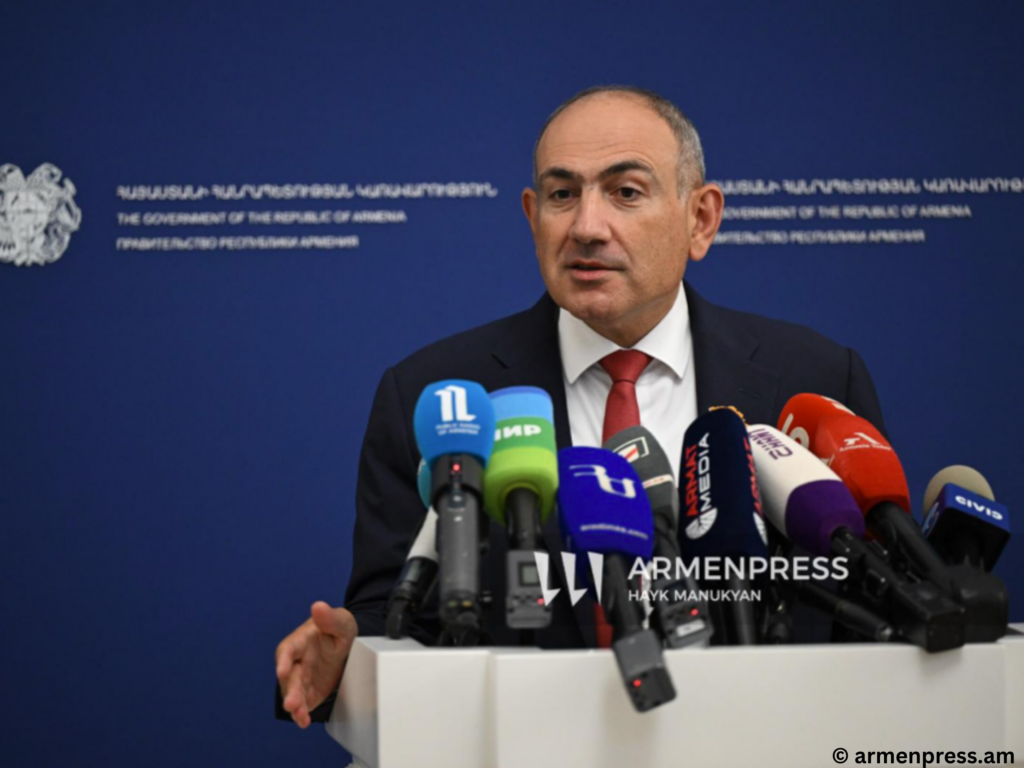
Prime Minister of Armenia Nikol Pashinyan
The Prime Minister emphasised the availability of investment and capital for the project, noting that the United States has made a preliminary decision to finance it, and has established a fund to support regional initiatives, including the TRIPP project. He stated that a significant amount of funding has already been allocated, and that Armenia will fulfill its remaining obligations. The TRIPP agreement, signed by Armenian Foreign Minister Ararat Mirzoyan and U.S. Secretary of State Marco Rubio, is now pending ratification. Prime Minister Pashinyan stressed the importance of moving forward without delay, reflecting the shared commitment of both Armenia and the United States.
On June 25, 2026, Prime Minister Nikol Pashinyan stated at a government meeting that Russia’s restrictions on imports from Armenia, and on the export of Armenian goods through its territory to other Eurasian Economic Union (EEC) countries, is likely to raise serious concerns among the member states.
The government discussed measures to support economic actors and diversify Armenia’s exports in response to Russia’s restrictions. Prime Minister Pashinyan reiterated Armenia’s ongoing cooperation with the Eurasian Economic Union (EEC), and highlighted that Armenia does not assume that any irreversible changes have occurred in the EEC market. He stressed the importance of finding solutions, noting that the EEC is founded on the free movement of labour, goods, services, and finance. If these principles are not upheld, he says, the existence of the EEC itself is to be questioned. Pashinyan called for clarity from the EEC regarding its status, and claimed that the current situation raises serious concerns for several member states. He also noted that diversification efforts are underway in Armenia and likely in other EEC countries as well, as they recognise similar risks.
He emphasised the need to address these issues within the Eurasian Economic Union, and stated he will raise them at the next available opportunity.
Pashinyan also noted that he has questions about the statements made by EEC partners regarding Armenia during his absence.
On May 29, 2026, at a session of the Supreme Council of the Eurasian Economic Union, in which Armenian Prime Minister Nikol Pashinyan did not participate, the presidents of the four EEC member states, Russia, Kazakhstan, Belarus, and Kyrgyzstan, adopted a statement calling on Armenia to hold a referendum as soon as possible on the issue of choosing between the Eurasian Economic Union and the European Union.
“I have questions for our partners regarding the statement made in my absence, and we need to clarify its practical implications. Specifically, we must determine whether any EEC member state can unilaterally make such decisions regarding another member state. If so, this would effectively signify the dissolution of the EEC, and we must draw appropriate conclusions. There must be a clear answer: Does the EEC exist or not? If it does, we will act accordingly; if not, there will be no need for special positioning,” Pashinyan said.
Deputy Prime Minister Mher Grigoryan stated that the EEC’s justification for restricting imports of Armenian goods, citing product quality, is undermined by Armenia’s diversifying of export routes and supplying of the same goods to multiple countries. He explained that if exports were limited to one destination, quality concerns might be valid, but with expanded export routes, such arguments lose credibility.
On June 29, 2026, Armenia’s Ambassador to the United States, Narek Mkrtchyan, met with William Cunningham, Director of International Programs at the United States Geological Survey.
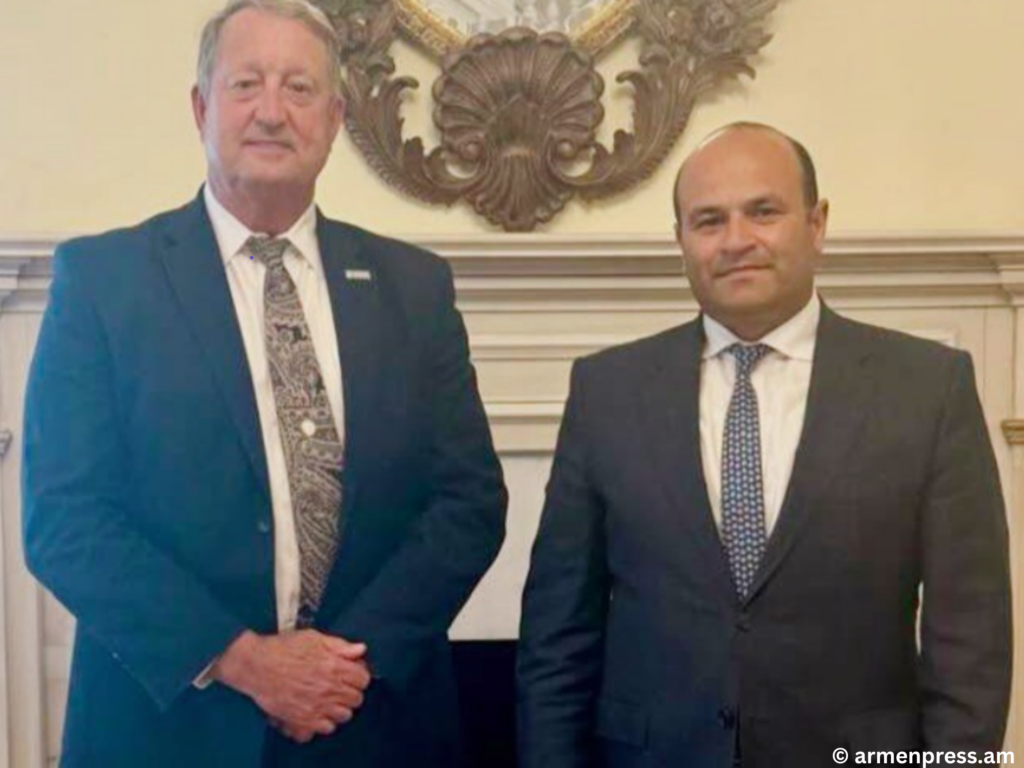
The Mkrtchyan-Cunningham meeting
The Armenian Embassy in Washington stated that the meeting addressed the U.S. experience in establishing a geological agency, and explored potential areas for cooperation. The parties also discussed opportunities to enhance Armenian-American collaboration in critical and rare minerals.
The discussion highlighted the importance of cooperation under the Charter of Comprehensive Strategic Partnership and the Framework Memorandum on Ensuring Supply in Mining and Processing of Critical and Rare Earth Minerals, signed in May.
Azerbaijan’s Foreign Policy
On June 29, 2026, the Ministry of Foreign Affairs of the Republic of Azerbaijan expressed concern regarding the Israeli government’s recognition of the so-called “Armenian Genocide,” through an official press release.
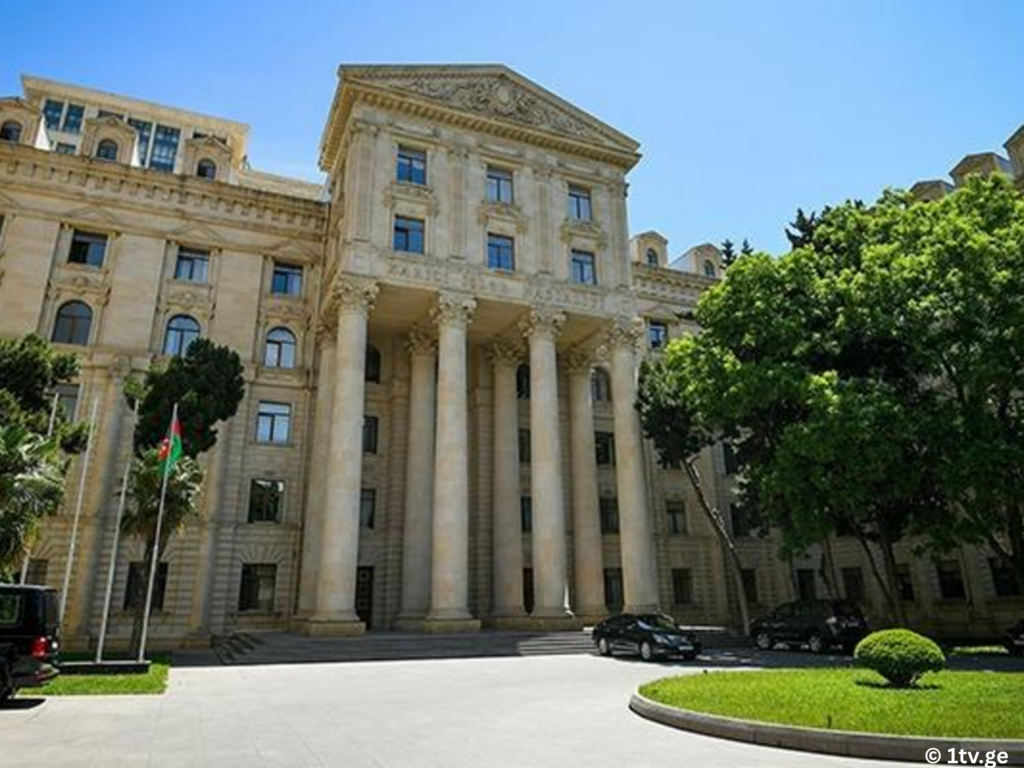
Ministry of Foreign Affairs of the Republic of Azerbaijan
The ministry stated: “The distortion of historical facts related to the events of 1915, and the transformation of complex historical processes into the subject of political decisions devoid of legal and scientific foundations, are unacceptable.
“Such actions do not promote reconciliation or mutual understanding. Instead, they deepen existing divisions and impede efforts to achieve lasting peace in the region. We urge the Israeli government to reconsider this decision. Azerbaijan remains committed to upholding historical truth, respecting international law, and supporting lasting peace in the region,” the Azerbaijani Foreign Ministry said in a statement.
According to Israeli Foreign Minister Gideon Sa’ar, the Israeli government unanimously supported the official recognition of the “Armenian Genocide.” The bill will be included on the Knesset plenary session agenda, where it will be put to a vote.