


Tornike Zurabashvili
Researcher, political and security affairs in Georgia and the Black Sea region. He holds a Ph.D. in Political Science from Tbilisi State University.
Introduction
Russia’s full-scale invasion of Ukraine in February 2022 has had serious political and economic reverberations both within the immediate neighborhood and across the wider region. One such major consequence has been the renewed attention given to transport routes running through Central Asia, the Caspian Sea, and South Caucasus, collectively known as the Middle Corridor (MC). Disruptions affecting the Northern Corridor, which passes through the Russian Federation, have redirected part of China-Europe cargo transport toward the states along the corridor, most notably Kazakhstan, Azerbaijan, and Georgia. As companies sought alternative routes that could reduce exposure to geopolitical and sanctions-related uncertainty, the MC emerged as a potential substitute for Russia-dependent transit routes.
The growing cargo volumes have been accompanied by increased coverage in media and policy literature, as well as in government communications. Since early 2022, authorities in the MC countries have started framing the corridor as a critical instrument for trade route diversification and supply-chain security. The Iran war and the closure of the Strait of Hormuz gave an additional impetus to these discussions.
The present paper analyzes the history and evolution of the MC and finds that, despite its increased geopolitical relevance over the past four years, the commercial significance of the MC has often been overstated in policy and media discussions. While the corridor offers important political and strategic advantages to the countries involved, as well as to third actors seeking to diversify their trade routes, it continues to struggle, with serious constraints limiting its competitiveness vis-à-vis other options.
At the same time, the paper argues that dismissing the MC as merely a by-product of changing geopolitical realities would overlook its long-term potential. Regardless of the consequences of the wars in Iran and Ukraine, cargo flows through the corridor are expected to grow. The key question, therefore, is not whether the MC will retain its strategic value, but whether that value can be translated into commercial viability. The present paper seeks to answer exactly that: after examining its performance and challenges, it delves into priority measures that could turn the MC into a viable and efficient link for China-Europe trade.
The Middle Corridor: Terminological clarification
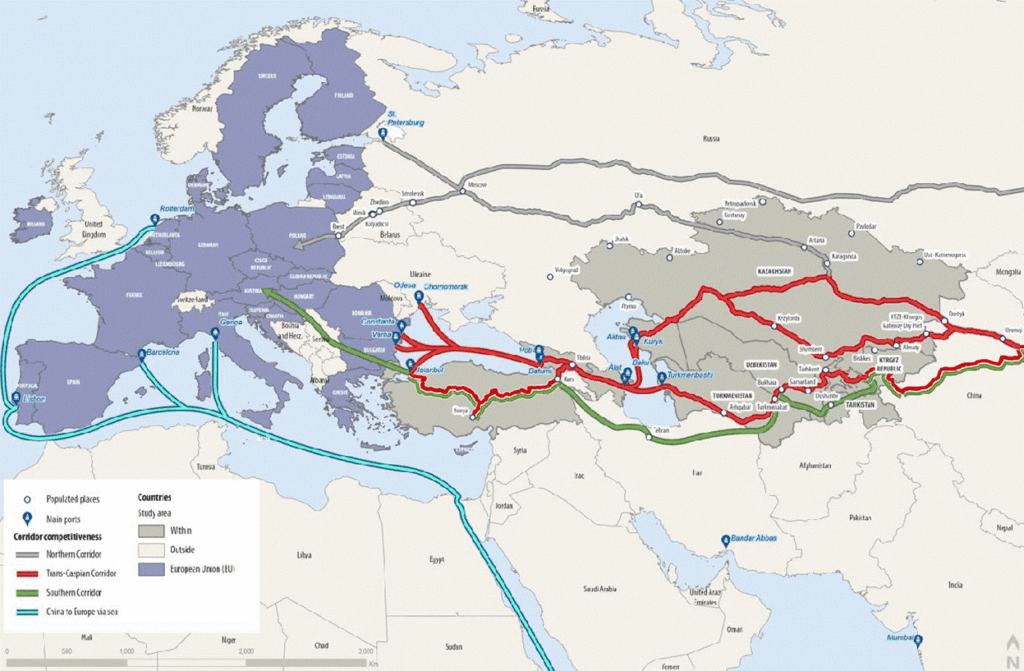
The Middle Corridor (MC) is an overland transport route connecting European and Asian markets. It is distinct from both the Northern Corridor, which passes through the Russian Federation, and the Southern Corridor, which runs through Iran, as well as from the maritime route that transits the Suez Canal.
While the distinction between the MC and alternative trade routes is generally clear, the term itself has been used rather inconsistently in both policy and industry-related discussions. Some interpretations have focused on regional or cross-regional transit, whereas others have defined it exclusively in the context of intercontinental connectivity. For the purposes of this opinion paper, the MC is understood as the route connecting China with Europe, specifically, the EU on the one hand and Turkey on the other.
This definition is aligned with the geography of the Trans-Caspian International Transport Route (TITR), an initiative established by the national railway companies of Kazakhstan, Azerbaijan, and Georgia in 2014. TITR is a multimodal transport network integrating rail transport across Kazakhstan, shipping services across the Caspian Sea, and rail transport through Azerbaijan and Georgia, either onward to Turkey via the Baku-Tbilisi-Kars (BTK) railway, or to the EU through Georgia’s Black Sea ports of Poti and Batumi. From there, ships travel to the Romanian port of Constanta or the Bulgarian ports of Burgas and Varna. The third route, running through the Ukrainian port of Chornomorsk near Odesa, operates via a stopover in Varna, Bulgaria.
Officially, TITR is an association aimed at increasing coordination among the participating railways, ports, and logistics operators along the Trans-Caspian route, as well as harmonising tariffs across the corridor.
It is also worth noting that TITR is not the only option for cargo transit between China and Europe. A second sub-route runs through Kyrgyzstan, Uzbekistan, and Turkmenistan, connecting to Baku via the port of Türkmenbaşy, and continuing onward through Georgia. However, this route remains less developed and less utilised due to infrastructure gaps and limited coordination. A third potential sub-route, crossing Armenia, remains far from implementation and is, therefore, of limited relevance to the present analysis.
To sum up, for the purposes of this paper, the term Middle Corridor will be understood as synonymous with TITR, a rail transit route connecting China and Europe via Kazakhstan, Azerbaijan, and Georgia.
The significance of the Trans-Caspian route
The importance of the Trans-Caspian route is threefold. Geographically, TITR constitutes the shortest overland connection between China and Europe bypassing both Russia and Iran. Under normal circumstances, Europe-bound cargo can reach its destination in around 13-21 days, which is faster than maritime transport via the Suez Canal (35-45 days), the most widely used route for transcontinental trade. Second, the route bypasses the Northern Corridor running through the Russia Federation and Belarus, the traditional overland route for China-Europe trade, which, although relatively faster, is generally more politically risk-prone than its Trans-Caspian alternative. Third, it also circumvents Iran, which is not fully integrated into the international transit network and faces a number of challenges, among them infrastructure gaps and sanctions-related issues.
What further reinforces the importance of the Trans-Caspian route is that it has long been on the radar of the European Union. In fact, the origins of the Trans-Caspian International Transport Route (TITR) trace back to 1993, when the EU launched its Transport Corridor Europe-Caucasus-Asia (TRACECA) initiative, a project aimed at developing transit infrastructure across the Black Sea and Caspian Sea regions. Although the initiative did not materialise into a large-scale connectivity project, the route has in recent years regained renewed attention from Brussels, particularly as it seeks to diversify trade routes with China and secure access to energy and critical raw materials from Central Asia. The Trans-Caspian route is also a priority area for Turkey, which views the route as a means of accessing Central Asian markets.
TITR has also gained recognition from Beijing, particularly in the mid-2010s, following the announcement of the Belt and Road Initiative (BRI), China’s flagship connectivity project. The Trans-Caspian route aligns with one of BRI’s overland corridors, the China-Central Asia-West Asia Economic Corridor (CCAWEC), and fits within Beijing’s broader vision of diversifying trade destinations and transit routes.
TITR gained renewed attention within China’s connectivity agenda following Russia’s full-scale invasion of Ukraine in February 2022, to the point that, in May 2023, Chinese President Xi Jinping openly endorsed the development of the Trans-Caspian route (State Council of the People’s Republic of China, 2024). He reiterated this support on several occasions in subsequent years. A clear illustration of China’s growing interest is its participation, from August 2025, in a joint Azerbaijani-Georgian-Kazakh venture providing services along the Trans-Caspian route.
In short, what began as a platform for trilateral cooperation of the national railway companies of Georgia, Azerbaijan, and Kazakhstan has evolved into an important element of transcontinental and regional connectivity. Yet a closer look at rail freight statistics reveals that, despite dynamics of growth in recent years, the Trans-Caspian route still accounts for only a small share of China-Europe trade.
The Trans-Caspian route in numbers
Since announcing the Trans-Caspian route in 2013, Georgian, Azerbaijani, and Kazakh officials have invested considerable efforts in promoting it, yet cargo volumes in the initial years remained minimal. The situation began to change in the aftermath of Russia’s full-scale invasion of Ukraine in 2022. The temporary disruption to the Northern Corridor at the beginning of the war, driven partly by western sanctions, redirected a portion of trade flows to TITR, including shipments originating in China. As a result, the volume of cargo transportation along the Trans-Caspian route increased sharply, reaching 1.5 million tons in 2022. The volumes continued to grow in subsequent years, reaching 1.8 million tons in 2025.
Figure 1: Transportation volume via TITR, thousand tons
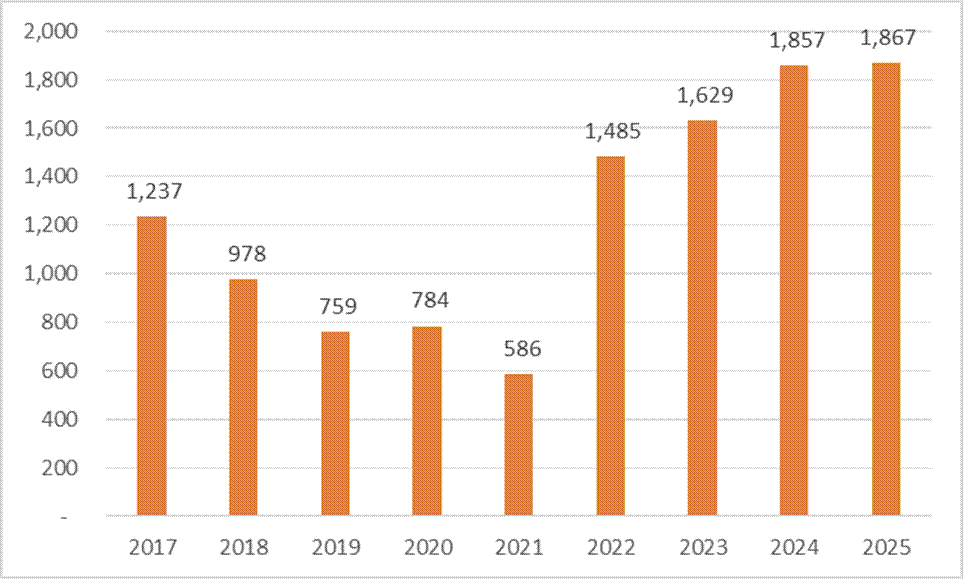
Source: https://middlecorridor.com/en/. The figures provided in this chapter account for containerised rail cargo only.
The increase was also sizable in TEUs (Twenty-Foot Equivalent Units). Compared to 2021, when the number of containers handled by TITR stood at 25,200, the figure tripled in 2025, reaching 76,900 TEUs.
Figure 2: Container traffic via TITR, TEUs
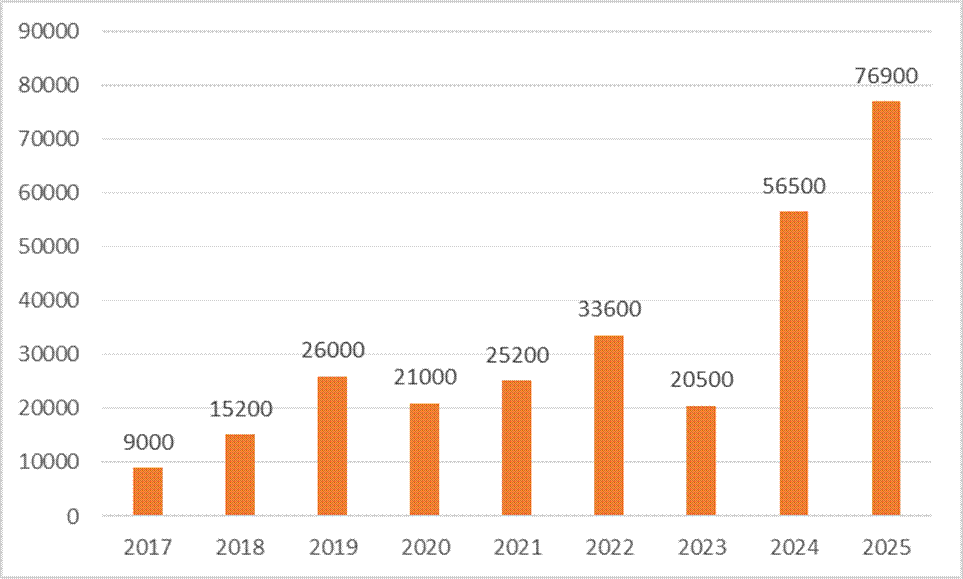
Source: https://middlecorridor.com/en/
Although traffic along the Northern Corridor has since continued mostly uninterrupted, interest in the Trans-Caspian route has persisted. A number of Western companies began providing cargo services via the Trans-Caspian route, including Nurminen Logistics, Maersk, MSC, CMA CGM, and others. Both Chinese and European companies now appear to view the route as an option for diversifying access to each other’s markets. This reassessment has been further reinforced by intermittent disruptions to maritime shipping routes, notably due to security incidents in the Red Sea and US-Israeli strikes on Iran in early 2026.
Nevertheless, the volumes of rail freight, when compared to the main overland alternative, remain limited. Figure 3 demonstrates that, despite gradual growth, the Trans-Caspian route carries only a fraction of China-Europe rail freight (RailFreight.com, 2025a). In 2024, the China-Kazakhstan-Russia rail link handled approximately 380,000 TEUs, far exceeding the volume for TITR at around 56,100 TEUs. In 2025, the figure for the Trans-Caspian route increased to 76,900 TEUs, against the backdrop of a decrease in the Northern Route (310,000 TEUs), but latest reports suggest that the Kazakhstan-Russia route has seen an increase in 2026, jumping from 63,000 TEUs in the first quarter of 2025, to 85,496 TEUs over the same period in 2026.
Figure 3: China-Europe container traffic, TEUs
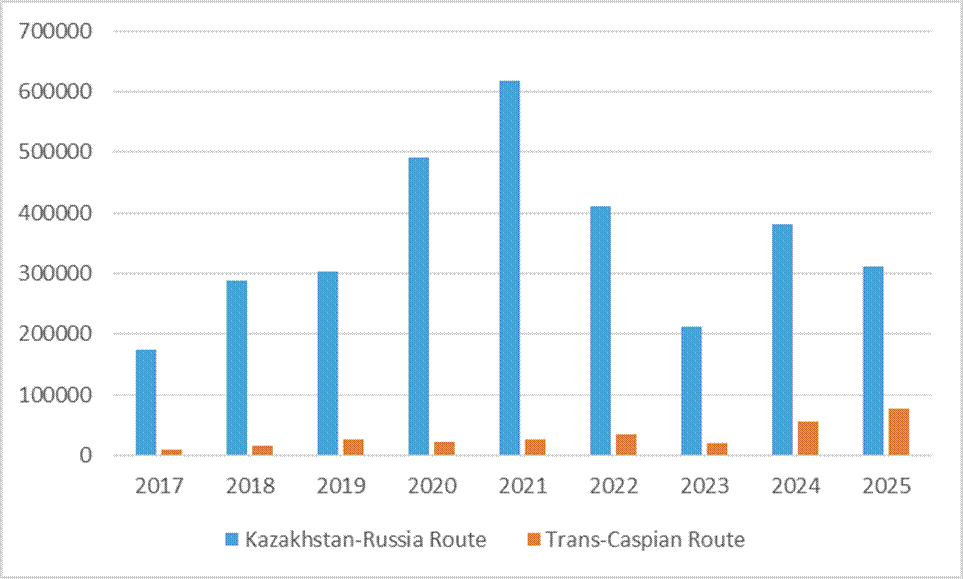
Source: railfreight.com for the Kazakhstan-Russia Route and https://middlecorridor.com/en/ for the Trans-Caspian Route
The gap becomes less pronounced when freight volumes by weight are taken into account. Although the Northern Corridor maintained a clear advantage prior to the invasion, the gap began to narrow in 2022, and by 2025, the two routes were handling nearly comparable volumes. In other words, on average, a container transiting the Trans-Caspian Route is heavier than one transported via the Northern Corridor. This has two possible explanations. First, the Northern Corridor handles a larger proportion of high-value and lighter goods, such as electronics and machine components, whereas the Trans-Caspian Route carries heavier commodities, including metals, machinery, construction materials, and chemicals. Second, freight forwarders have an incentive to maximise container loads in order to offset the higher transport costs and longer transit times associated with the Trans-Caspian route.
The handling of heavier cargo is undoubtedly a positive factor for maintaining price efficiency, but it also has negative implications. Heavier containers place greater pressure on infrastructure, particularly port facilities, ferries, rolling stock, and loading equipment, exacerbating existing bottlenecks along the route.
Figure 4: China-Europe transportation volumes, thousand tons
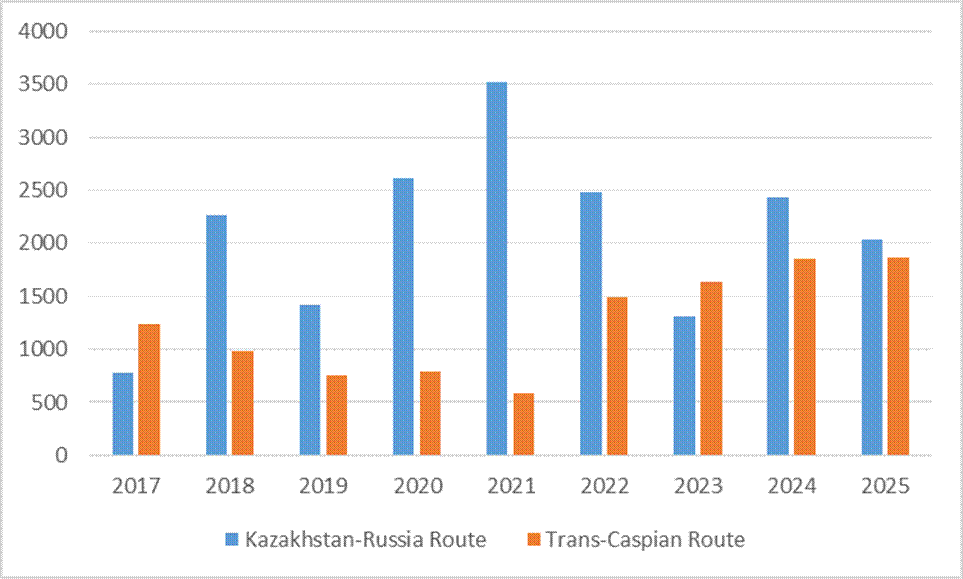
Source: railfreight.com for the Kazakhstan-Russia Route and https://middlecorridor.com/en/ for the Trans-Caspian Route
These statistics show that, despite handling broadly comparable weights, the Trans-Caspian route remains a secondary option compared to the Northern Corridor in terms of container volumes. Moreover, a study by the Asian Development Bank in September 2022 estimated that the capacity of the Trans-Caspian route was approximately 5% of that of the Northern Corridor, at around 75,000 TEUs compared to 1.5 million TEUs (Asian Development Bank, 2022).
When maritime transport is taken into consideration, the role of the Trans-Caspian route in overall China-Europe trade flows appears even more minimal. The same assessment puts the total capacity of maritime routes at around 35 million TEUs. This would imply that the Trans-Caspian route and the Northern Corridor account for around 0.21% and 4.7% of total maritime capacity, respectively. Actual freight-handling data further corroborates these estimates.
In 2022, when the Asian Development Bank released its assessment, around 33,000 TEUs were shipped between China and Europe along the Trans-Caspian route. This was considerably lower than the 410,500 TEUs transported along the Northern route and far below the 24.2 million TEUs handled through maritime transport (European Institute for Asian Studies, 2024).
The figure for the total capacity of the Trans-Caspian route is likely to be higher than it was in 2022, considering the improvements in maritime and rail connectivity undertaken by the three TITR countries over the past few years. Nevertheless, it is also reasonable to assume that the capacity will not exceed 100,000 TEUs.
Figure 5: Main land-based corridors for Europe-China trade
Challenges in the Trans-Caspian route
Analysis of recent statistics shows that the Trans-Caspian route has played a relatively modest role in transcontinental trade. It remains marginal compared to maritime shipping, and continues to lag behind the Northern Corridor in container volumes. There are several reasons for this structural imbalance.
The first and perhaps the most fundamental factor constraining the performance of the Trans-Caspian route lies in its multimodality. Unlike the Northern route, which relies on predominantly continuous rail infrastructure, the Trans-Caspian route requires multiple transshipments. Cargo containers arriving from China to Kazakhstan (Dostyk or Altynkol/Khorgos crossing points) are transferred between train platforms due to differences in track gauges between the systems used in the two countries.
It is worth noting here that all rail lines across Kazakhstan, Azerbaijan, and Georgia are built to the Soviet broad gauge (1,524 mm), except for the 26-kilometre Akhalkalaki-Kartsakhi section of the Baku-Tbilisi-Kars railway, which was constructed to the 1,435 mm standard gauge to ensure interoperability with the Turkish and European rail networks. Transshipment between the two rail systems requires bogie swapping, or the transfer of containers between trains using specialised cranes.
Once the transfer is complete, the containers are transported by rail to the Kazakh ports of Aktau and Kuryk, where they undergo another transshipment and are loaded onto ships (cargo vessels or rail ferries). The cargo is subsequently unloaded on the Azerbaijani side at the Port of Alat, after which it continues by rail to Tbilisi. From Tbilisi, it can take two routes: either westward to Georgia’s Black Sea ports of Poti and Batumi via the main East-West railway line, or southward towards Turkey via the Baku-Tbilisi-Kars railway. Cargo moving along the latter route requires an additional transshipment in Akhalkalaki, close to the Georgia-Turkey border, due to differences in track gauge (1,524 mm vs. 1,435 mm). Once in Turkey, the cargo continues along the railway system and enters the European side of the country via the Marmaray rail tunnel under the Bosporus Strait.
Each break in the transit chain increases delivery times. The World Bank, for instance, noted in November 2023 that the Trans-Caspian route was comparable in duration to the maritime route due to operational deficiencies, delays on border crossings, and transshipments (World Bank, 2023). Similarly, the EBRD estimated in July 2023 that the transit duration across TITR varied from 14 days to 45 days, and at times, 60 days, depending on circumstances (European Bank for Reconstruction and Development, 2023). In contrast, the Northern Route takes 14 days on average to reach Central Europe (Cargo From China, 2025).
In recent years, the cost gap between the Northern Corridor and the Trans-Caspian route has narrowed. Still, some reports indicate that the fees charged in the Northern Corridor are still considerably lower and more predictable than the fees of the Trans-Caspian route (Transcor.ge, 2025c).
Experts also point to disparities in eastbound and westbound container flows: transit volumes on the Trans-Caspian route are largely driven by Chinese exports, so containers often travel fully loaded toward Europe, but return empty to their points of origin, reducing cost effectiveness. This is not the case for the Northern Route, where the container flows between Europe and China are relatively more balanced.
No less important are administrative bottlenecks in customs and border procedures. Unlike the Northern Corridor, which runs largely within a single, Russian economic jurisdiction, the Trans-Caspian route traverses at least three different jurisdictions, complicating coordination and slowing cargo transit.
However, structural factors are not the only issue affecting the efficiency of the Trans-Caspian route. Persistent infrastructural challenges continue to hinder both modes of transport involved: rail and maritime.
The railways
Kazakhstan’s national railway company, Kazakhstan Temir Zholy (KTZ) handles the longest leg of the journey, stretching from the Chinese border to the Caspian Sea. There are two main rail entry points from China: Khorgos/Altynkol and Dostyk. Both lines converge near Sekseul in western Kazakhstan before continuing toward the Caspian ports of Aktau and Kuryk. Once the cargo reaches Baku, it is handled by Azerbaijan Railways (ADY), which transports the freight to the Georgian border at the Boyuk Kesik-Gardabani crossing point. From there, Georgian Railways (GR) carries the cargo onward to the Black Sea ports of Poti or Batumi. The alternative route, the one running along the Baku-Tbilisi route before branching southward along the Marabda-Kartsakhi line (the Georgian segment of the Baku-Tbilisi-Kars railway) to Turkey, remains underutilised, and has not yet reached its intended operational capacity .
The three railway systems are highly interoperable due to their shared broad-gauge track, compatible rolling stock parameters, operational practices, and other technical characteristics inherited from the Soviet railway system. Moreover, most of the rail lines are double-tracked and electrified, which contributes to relatively smooth in-country and cross-border operations across the route.
Nevertheless, there are a number of cross-cutting issues facing the railway systems in all three countries. Rail infrastructure remains outdated, leading to load and speed limitations across the whole stretch of the route. Weaknesses in data exchange between shipping companies, port authorities, rail operators, and customs officials also remain problematic, creating additional backlogs at transshipment points. Furthermore, all three railways suffer from a shortage of rolling stock, with the problem most acute in Georgia, where around 65% of locomotives and wagons are reported to be more than 35 years old.
Georgia’s rail infrastructure presents another key issue. Both the East-West and the Marabda-Kartsakhi lines pass through mountainous terrain, which reduces speeds and requires lighter loads. This was especially problematic on the Likhi Pass section of the East-West line, but following the completion of infrastructure modernisation works in 2025, these constraints have reportedly begun to ease. In addition, the Gardabani crossing point lacks the necessary infrastructure to handle higher throughput.
Governments in all three countries have treated the above issues as a priority, and have been investing in railway modernisation, albeit to varying degrees. Azerbaijan has recently completed the railway modernisation process of the Baku-Boyuk Kasik line, mainly through electrification upgrades and the introduction of modern digital signaling and centralised traffic control systems. Additionally, according to EBRD, Azerbaijan had renewed most of its freight wagons by 2021. In 2025, Azerbaijan Railways also expanded its rolling stock by purchasing seven new diesel locomotives and 300 new freight wagons, including 200 platform wagons and 100 open wagons (railfreight.com, 2025b). The purchase of an additional 14 locomotives is also planned.
Similarly, Kazakhstan intends to complete renovation of about 11,000 km of railway tracks by 2029, with 4,448 km already upgraded by the end of 2025 (Kazakhstan Temir Zholy, 2026a). In parallel, the national railway operator continues to replenish its rolling stock, including through the purchase of 24 new locomotives in the first quarter of 2026 (Kazakhstan Temir Zholy, 2026b). From 2023 to 2025, the company acquired a total of 433 locomotives.
Georgia has traditionally lagged behind its Kazakh and Azerbaijani peers in infrastructure renewal. But in May 2026, the Georgian authorities announced a new phase of the railway modernisation project, under which the purchase of 50 new locomotives and 1,500 new carriages between 2026 and 2028 is planned.
If the three countries continue taking measures to improve the carrying capacity and operational efficiency of their railway systems, they will inevitably reduce the backlogs caused by infrastructural deficiencies. Nevertheless, unless these measures are complemented by additional investments in seaport infrastructure in Georgia and expanded maritime capacity on the Caspian Sea, it is unlikely that we will see a substantial improvement in the overall effectiveness of the Trans-Caspian route.
Maritime transport
When it comes to maritime transport, the route suffers from the poor operational efficiency of ports and shipping services on the Caspian Sea. The problem is particularly acute on the Caspian crossing itself.
Two ports on the Kazakh side of the Caspian Sea, Aktau and Kuryk, serve the Trans-Caspian route. Of the two, Aktau has a handling capacity of around 70,000 TEUs, while Kuryk can process up to 150,000 TEUs. On the Azerbaijani side, the Trans-Caspian route is served by the Port of Alat, which currently has a capacity of processing 150,000 TEUs per year (there are ongoing works to increase it to 500,000).
The Aktau/Kuryk-Alat routes are served by the national maritime shipping companies of Kazakhstan and Azerbaijan, KazMorTransFlot (KMTF) and the Azerbaijan Caspian Shipping Company (ASCO). KMTF operates five oil tankers, three specialised container vessels, and one general cargo ship, with a carrying capacity of around 47,000 TEUs in both directions. ASCO, in turn, is considerably better equipped. Its fleet includes around twenty oil tankers, as well as a sizable dry cargo fleet consisting of 15 rail ferries, two Ro-Ro vessels, two bulk carriers, and 14 conventional dry cargo ships. In reality, however, most TITR-related transit is carried out by KazMorTransFlot, which lacks shipping vessels.
As a result, the route has been facing a shortage of cargo ships for westbound journeys, leading to considerable backlogs (Walter, 2022). Furthermore, existing cargo vessels are often not fully loaded due to fluctuating water levels in the Caspian Sea (ships carry approximately 280 TEUs instead of their nominal capacity of around 350 TEUs), meaning that the shipping companies are operating at lower efficiency and reduced profitability (Transcor.ge, 2025b).
It is also worth noting that the Port of Alat lags behind Kazakh ports in cargo-handling capacity, contributing to further delays. According to media reports citing Georgian companies from early 2026, the duration of cargo transportation from Georgia to Kazakhstan can sometimes reach 2-2.5 months due to congestion and non-transparent queuing practices at the Port of Alat (Transcor.ge, 2026b).
As in the railway sector, Kazakhstan and Azerbaijan are actively addressing the issue of maritime capacity. In January 2025, KazMorTransFlot signed an agreement providing for the addition of two new container ships (with a carrying capacity of around 500 TEUs each) for operations on the Caspian Sea. There are ongoing works in Kazakh seaports to expand container terminal capacity, alongside dredging activities aimed at reducing depth constraints and enabling fuller vessel loading. Similarly, ASCO is planning to add two 780 TEU container ships intended to operate in the Caspian Sea by 2028, while a new container terminal is being developed at the Port of Alat to increase throughput and reduce congestion.
Another bottleneck in the transit chain is Georgia’s seaport infrastructure. Poti remains the primary destination for transit goods, with an annual capacity of around 650,000 TEUs (Georgian Railway, 2025). Batumi’s capacity is approximately 200,000 TEUs. In 2025, Poti handled around 630,000 TEUs, close to its maximum operational capacity. In the same year, Batumi handled around 109,000 TEUs (Transcor.ge, 2026a), but its ability to absorb additional volumes remains limited, as the rail-port interface is constrained by its location within a densely populated area. This means that Georgia’s seaport capacity is effectively saturated.
In addition, both ports face depth limitations (10-12 meters) and are unable to accommodate larger container vessels above roughly 1,500 TEUs. To address these constraints, Georgia is developing a deep-water port in Anaklia, about 40 km north of Poti, but the project has been delayed for a number of years, and is unlikely to be completed in the near term. There are also plans to expand the Port of Poti to accommodate 9,000 TEU container vessels, which would raise the total annual capacity to one million TEUs, however, this has likewise been stalled.
Another problem concerns port tariff pri cing. According to a World Bank assessment published in November 2023, freight handling charges in Georgia’s Black Sea ports were significantly higher than those in Azerbaijan, Kazakhstan, and other Black Sea ports, as well as those in major European and Asian ports (World Bank, 2023). Both ports (Poti by APM Terminals and Batumi by KazTransOil) are privately owned, limiting the authorities’ ability to regulate prices. Tariffs for cargo shipping charged by ASCO are also relatively high, in some cases comparable to those on major global shipping routes such as Shanghai and Rotterdam.
A further issue affecting the Trans-Caspian route is insufficient digitalisation of freight transit processes. There are also reports of a lack of specialised container handling equipment at interface points.
Conclusion
The changing geopolitical environment in the aftermath of Russia’s full-scale invasion of Ukraine in February 2022 has made the Northern route increasingly unpredictable, elevating the relevance of alternative overland corridors. In this context, the Trans-Caspian route has gained renewed strategic and commercial attention. Simultaneously, countries along the corridor have upped their investments to increase operational efficiency of the route. Yet major structural and infrastructure-related constraints remain, limiting the corridor’s potential to emerge as a reliable alternative to existing transit channels.
A major issue is multimodality. The route requires multiple transfers between rail and maritime transport, is beset by technical incompatibilities in rail infrastructure, and is therefore both costlier and slower than the Northern Corridor. In addition, there are pronounced imbalances between eastbound and westbound container flows, with the latter significantly exceeding the former, further undermining the cost-effectiveness of the corridor.
Moreover, the Caspian Sea has limited navigation depths and is frequently subject to weather-related disruptions, constraining the volume and reliability of commercial shipping. These challenges are exacerbated by declining water levels in the Caspian Sea, which threaten to restrict navigability in the long-run and reduce the financial and operational competitiveness of the route.
This means that the Trans-Caspian route is unlikely to replace, or even seriously challenge, its Russian alternative, let alone the maritime route in intercontinental trade.
At the same time, improvements in cross-country cooperation, better coordination among stakeholders (shipping companies, port authorities, rail operators, customs officials), and increases in overall efficiency and predictability are likely to attract greater Europe-China cargo traffic in the coming years. In this respect, it is realistic to expect that the route can be developed in such a way that it competes with the Northern route in terms of both delivery times and transit costs to the closest European destinations, particularly Turkey and Southeast Europe.
For that to happen, however, the three countries should, as a matter of priority, make immediate investments to expand ferry and port capacity, and continue upgrading their rail infrastructure. In terms of soft measures, they also need to strengthen stakeholder coordination, integrate freight data exchange, continue digitalisation efforts, and seek to improve the stability and transparency of tariff structures.
Securing the buy-in of the European Union is of key importance for the long-term viability and stability of the Trans-Caspian route. Importantly, this should include not only the (co-)funding of priority infrastructure projects, but also a more systematic effort to align the corridor with the broader EU connectivity agenda. More EU engagement could also address the structural imbalances between westbound and eastbound cargo flows, enhancing the commercial attractiveness of the route.
In sum, without coordinated and consistent action by Georgia, Azerbaijan, and Kazakhstan, alongside sustained support and involvement from the EU, the Trans-Caspian route risks remaining an insignificant element for intercontinental trade, one that, rather than evolving into a fully competitive transit route for China-Europe trade, continues to underperform as a fragmented and underutilised corridor.
Bibliography
Asian Development Bank. CAREC Middle Corridor Assessment: Transport Connectivity on the Eurasian Transit Routes. Manila: Asian Development Bank, September 2022. https://www.carecprogram.org/uploads/19th_TSSC_CAREC-Middle-Corridor-Assessment-Report.pdf.
Baltic Transport Journal. China to Germany via the Middle Corridor. April 20, 2022. https://baltictransportjournal.com/index.php?id=2266
Cargo from China. Cross-Border Rail Freight from China to Europe, Central Asia, Southeast Asia – Everything You Need to Know [2025]. Accessed 2025. https://cargofromchina.com/rail-freight/
European Commission and European Bank for Reconstruction and Development. Study on Sustainable Transport Connections between Europe and Central Asia. Brussels: European Commission, 2023. https://transport.ec.europa.eu/transport-themes/international-relations/study-sustainable-transport-connections-central-asia_en.
European Institute for Asian Studies (EIAS). The Middle Corridor Initiative – Where Europe and Asia Meet. Brussels: EIAS, March 29, 2024. https://eias.org/publications/briefing-paper/the-middle-corridor-initiative-where-europe-and-asia-meet/
Georgian Railway. Annual Report 2024. Tbilisi: JSC Georgian Railway, 2025. https://www.railway.ge/en/managerial-accounting-and-analysis/
Jafarova, Nigar. The Rise of the Middle Corridor. FrontierView, May 25, 2023. https://frontierview.com/insights/the-rise-of-the-middle-corridor/
Kazakhstan Temir Zholy. Modernization of Kazakhstan’s Railway Infrastructure. Astana: Kazakhstan Railways, March 10, 2026. https://railways.kz/en/news2026/modernization-kazakhstans-railway-infrastructure/
Kazakhstan Temir Zholy (KTZ). Modern Locomotives Have Replenished KTZ Fleet. Astana: Kazakhstan Railways, April 9, 2026. https://railways.kz/en/news2026/modern-locomotives-have-replenished-ktz-fleet/
Kazakhstan Temir Zholy. На прочных рельсах – труд и мастерство: Интегрированный годовой отчет за 2024 год. Astana: Қазақстан темір жолы (KTZ), 2025. https://www.railways.kz/en/reports/integrated–annual–report-2024.pdf
Nurseiit, Nurlan. Attractiveness and Prospects of the Middle Corridor for Cargo Transportation between Europe and Asia. Journal of Eurasian Studies 17, no. 1 (2026). https://doi.org/10.1177/18793665251388115
Organisation for Economic Co-operation and Development (OECD). Realising the Potential of the Middle Corridor. Paris: OECD Publishing, 2023. https://doi.org/10.1787/635ad854-en
RailFreight.com. Data of the Week: A Maturing Middle Corridor Runs into Growth Pains. December 24, 2025. https://www.railfreight.com/beltandroad/2025/12/24/data-of-the-week-a-maturing-middle-corridor-runs-into-growth-pains/
RailFreight.com. Azerbaijan Railways to Get 300 New Freight Wagons. August 21, 2025. https://www.railfreight.com/beltandroad/2025/08/21/azerbaijan-railways-to-get-300-new-freight-wagons/
Satubaldina, Assel. Cargo Transportation Along Middle Corridor Soars 88%, Reaches 2 Million Tons in 2023. The Astana Times, December 28, 2023. https://astanatimes.com/2023/12/cargo-transportation-along-middle-corridor-soars-88-reaches-2-million-tons-in-2023/
Sharashenidze, Tornike, and George Cherkezishvili. The Perspectives of the Middle Corridor in an Age of Global Confrontation and Uncertainty. Tbilisi: Friedrich-Ebert-Stiftung, 2025. https://southcaucasus.fes.de/fileadmin/Publications/2025/Middle_Corridor_ENG_2025.pdf
State Council of the People’s Republic of China. Full text of Xi Jinping’s keynote speech at China-Central Asia Summit. Beijing: Government of China, May 19, 2023. https://english.www.gov.cn/news/202305/19/content_WS6467059dc6d03ffcca6ed305.html
Transcor.ge. “ჩინეთი – ევროკავშირის სახმელეთო საკონტეინერო გადაზიდვები შუა დერეფნის საკვანძო მიმართულებად ყალიბდება.” March 21, 2025. https://transcor.ge/chinethi-evrokavshiris-sakh/
Transcor.ge. “კასპიის ზღვაში წყლის დონის ვარდნა შუა დერეფნის და მისი ტრასეკას განშტოების კონკურენტუნარიანობაზე უარყოფითად აისახება.” November 28, 2025. https://transcor.ge/kaspiis-zghvashi-cqhlis-don/
Transcor.ge. “შუა დერეფნის კონკურენტუნარიანობაზე მოქმედი ინფრასტრუქტურული და ადმინისტრაციული ბარიერები.” December 8, 2025. https://transcor.ge/shua-derephnis-konkurentun/
Transcor.ge. “ბათუმის ნავსადგურის ინფრასტრუქტურა დაბალი დატვირთვითაა გამოყენებული, რაც ტვირთბრუნვის ზრდის მნიშვნელოვანი რეზერვის არსებობაზე მიუთითებს.” February 19, 2026. https://transcor.ge/bathumis-navsadguris-inphr/
Transcor.ge. “‘დერეფანი უყურადღებოდაა მიტოვებული’ – სისტემურ პრობლემად აზერბაიჯანის ალიათის ნავსადგურში ხელოვნურად შექმნილი ბარიერი სახელდება.” March 31, 2026. https://transcor.ge/derephani-uqhuradghebodaa/
Walter, Woldemar. Challenges and Opportunities of the Middle Corridor. Newsletter Uzbekistan, Issue 21 (November–December 2022). German Economic Team, 2022. https://www.german-economic-team.com/wp-content/uploads/2022/12/GET_NL_UZB_21_2022_en-1.pdf.
World Bank. 10 Priority Actions That Can Triple Trade in the Middle Corridor by 2030. Washington, DC: World Bank, 2024. https://www.worldbank.org/en/region/eca/brief/10-priority-actions-that-can-triple-trade-in-the-middle-corridor-by-2030
World Bank. Middle Trade and Transport Corridor: Policies and Investments to Triple Freight Volumes and Halve Travel Time by 2030. Washington, DC: World Bank, 2023. https://documents.worldbank.org/en/publication/documents-reports/documentdetail/099111723122527465/p1803220f863200b5096710f86d78ee0b36
Zurabashvili, Tornike. China in South Caucasus Post-2022: Toward a New Strategic Vision? Warsaw: OSW Centre for Eastern Studies, 2026. https://think.visegradfund.org/wp-content/uploads/OSW_China-in-Caucasus-Report_Zurabashvili.pdf
All rights reserved and belong to Georgian Foundation for Strategic and International Studies – Estonia. No part of this publication may be reproduced in any form, including electronic and mechanical, without the prior written permission of the publisher. The opinions and conclusions expressed are those of the author/s and do not necessarily reflect the views of the Georgian Foundation for Strategic and International Studies – Estonia.
Copyright © 2026 Georgian Foundation for Strategic and International Studies – Estonia