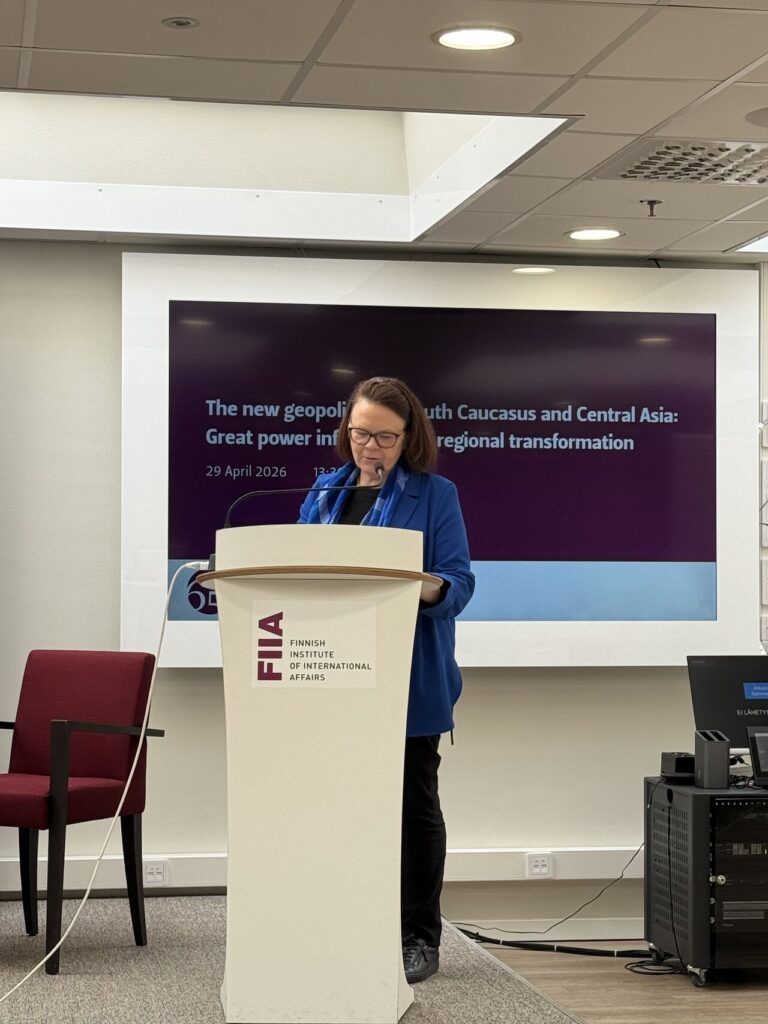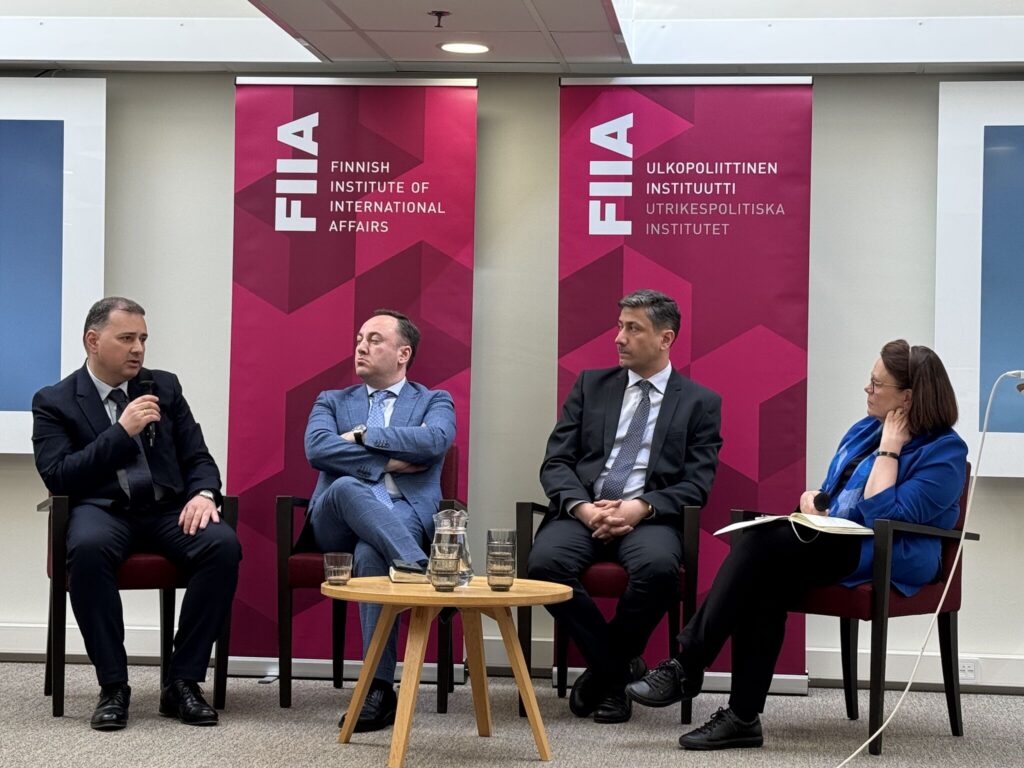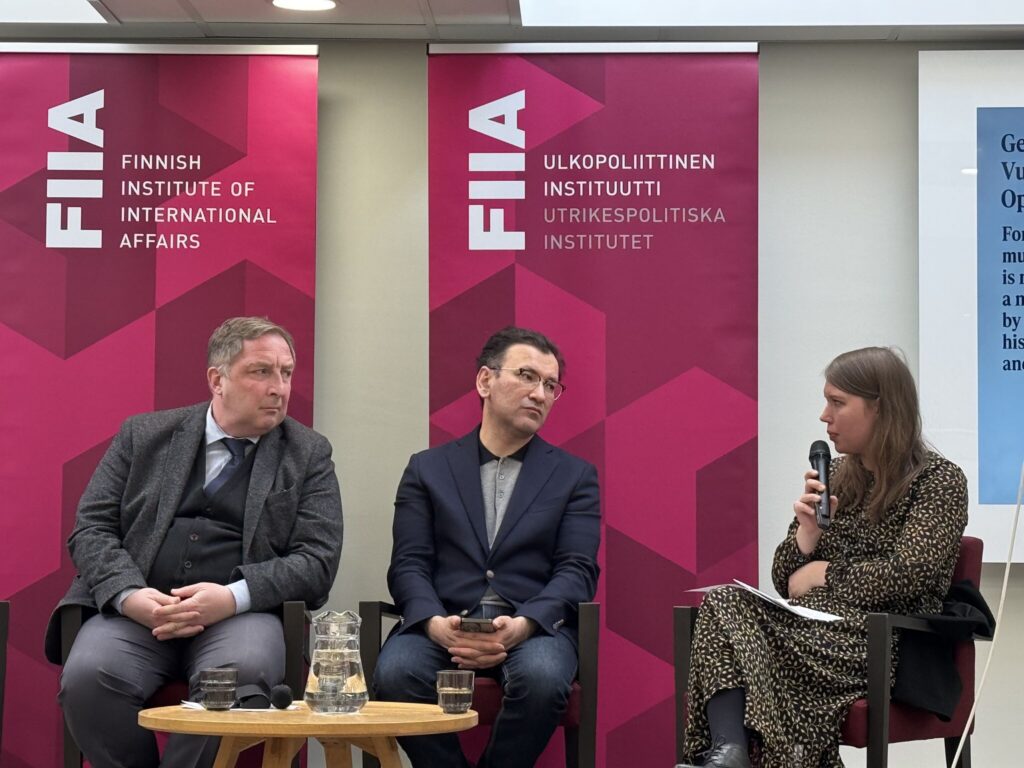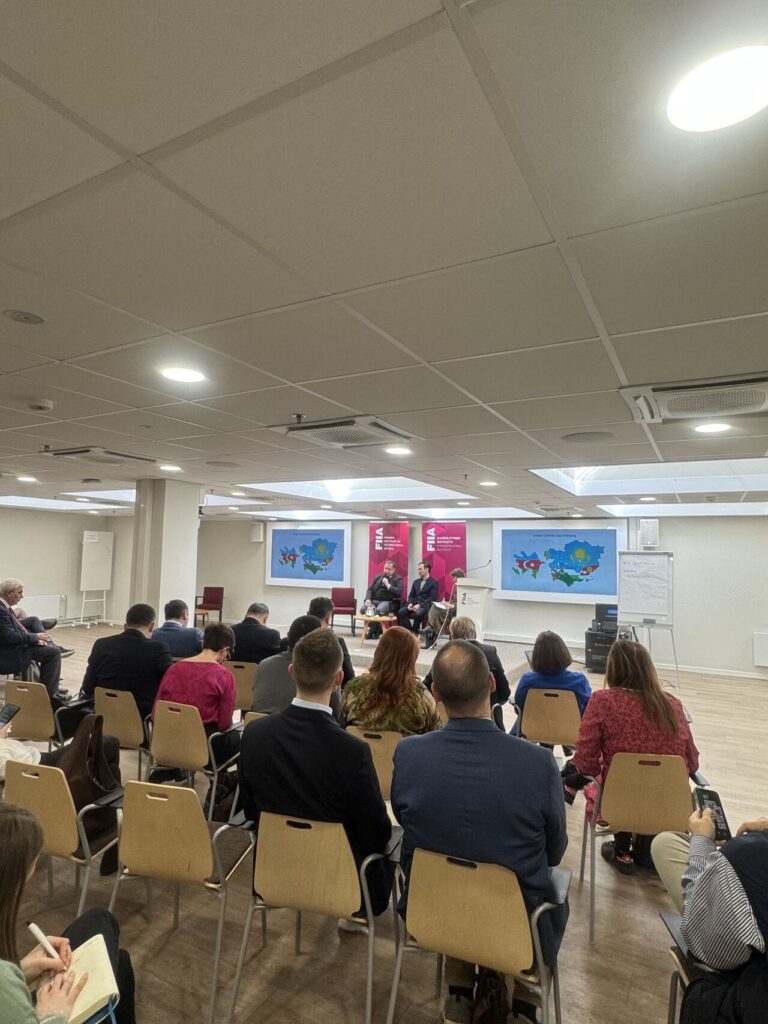

On 29 April 2026, GFSIS-E co-hosted a seminar in Helsinki, Finland, dedicated to exploring the evolving geopolitical dynamics of the South Caucasus and Central Asia.
Since the moment of the disintegration of the Soviet Union, Western attention to the countries of the South Caucasus and Central Asia has been oscillating. Periods of active engagement, driven by factors ranging from economic opportunities, including energy cooperation, to security concerns such as radical Islam, have regularly given way to more passive approaches. At the moment, the attention paid to these two regions, connected by the Caspian Sea, is growing again.
As Russia’s war against Ukraine continues to drain Moscow’s resources, countries of the South Caucasus and Central Asia are reassessing their long-standing dependencies and exploring alternative alignments. However, while the overall picture is one of Russia’s gradual decline, there are also areas where Moscow’s presence is on the rise. Meanwhile, other external actors ranging from China and Turkey to the European Union and the United States are seeking to strengthen their relationships with states located on both sides of the Caspian Sea. In the end, however, it is domestic political players that are shaping great power politics in the two regions.
The seminar examined ongoing regional trends in both the South Caucasus and Central Asia. The first session analyzed the shifting balance of power and external influences in the South Caucasus, the current foreign policies of Armenia, Azerbaijan, and Georgia, their conflict legacies, and regional security challenges. The second session focused on the Central Asian states’ multi-vector foreign policies, practiced amid growing external pressures, making reference to the region’s pursuit of strategic autonomy and regional integration amidst a variety of security partnerships.
This unique seminar brought together speakers and participants from most of the countries of the region, providing an opportunity to gain insights into both national perspectives and their interplay.