
Armenia’s Foreign Policy
On April 14, 2026, Armenian Foreign Minister Ararat Mirzoyan met with European Commissioner for Defense and Space Andrius Kubilius, in Brussels.
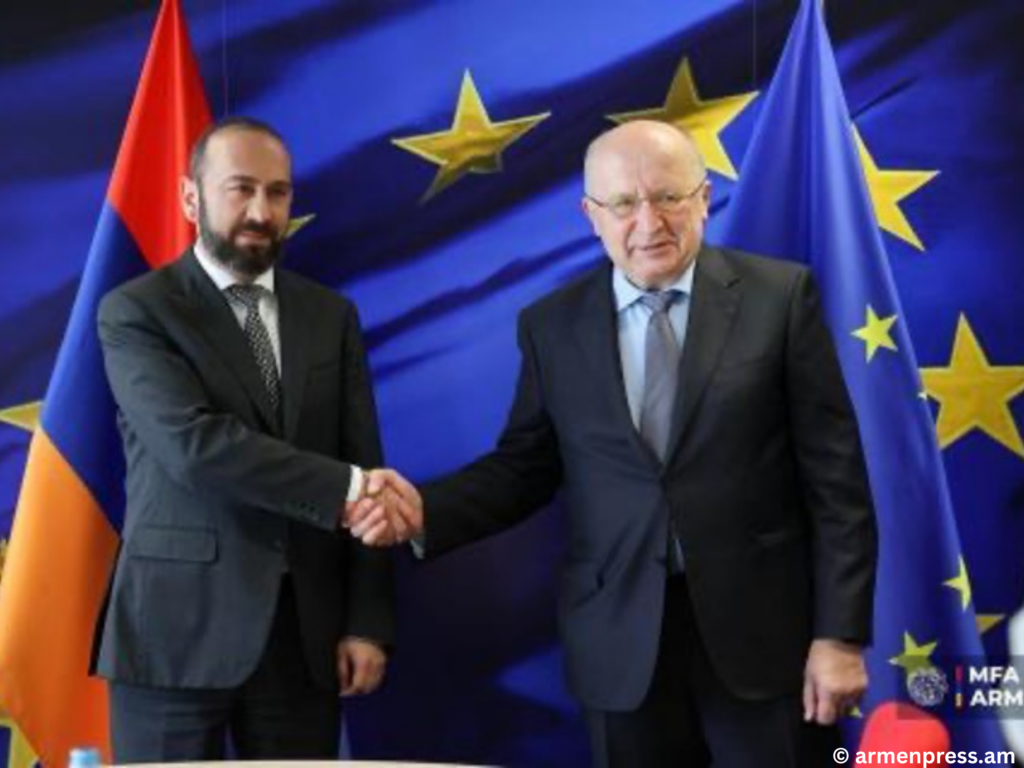
Ararat Mirzoyan and Andrius Kubilius
Mirzoyan and Kubilius discussed recent developments in security and defense cooperation, highlighting that Armenia’s substantial progress in democratic reforms, along with the adoption of the Armenia-EU Strategic Partnership Agenda, has established a new framework and opportunities for collaboration.
The meeting addressed the agenda for high-level events scheduled for May in Yerevan, including the Armenia-EU Summit.
The Armenian Foreign Minister and the European Commissioner discussed regional developments. Minister Mirzoyan outlined efforts to further institutionalize the peace agreement between Armenia and Azerbaijan.
Armenia’s Domestic Policy
Samvel Karapetyan, an entrepreneur and leader of the ‘Strong Armenia’ party, announced on April 15, 2026, that the process of renouncing his citizenship of all countries except Armenia had begun.
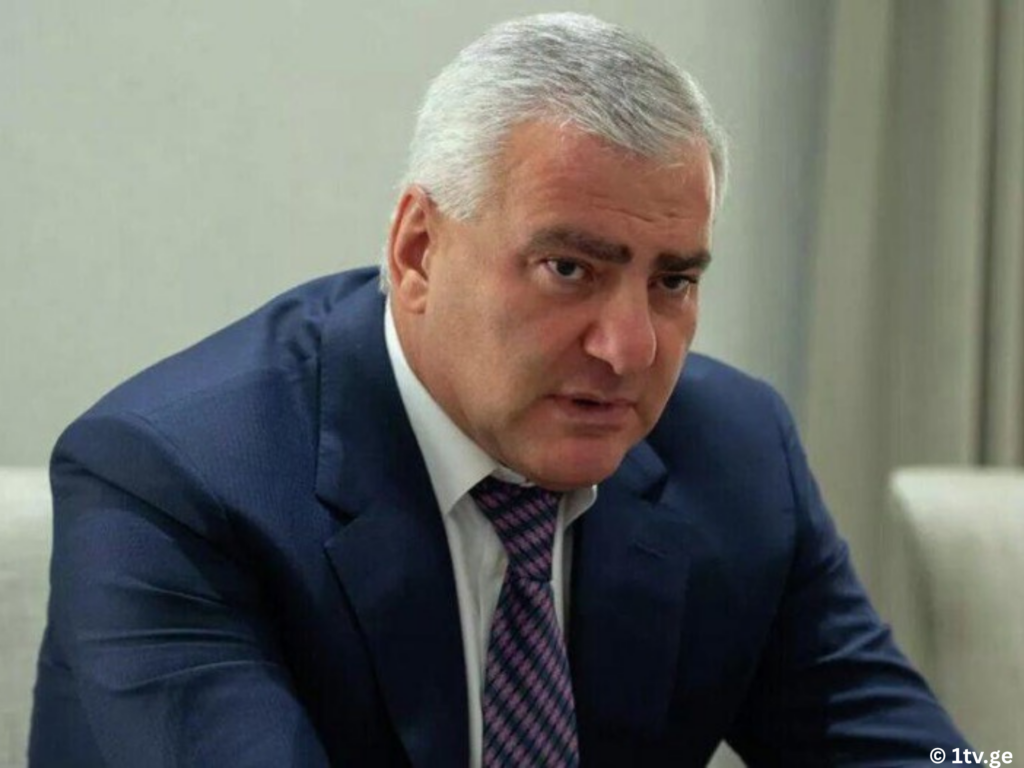
Samvel Karapetyan, leader of the ‘Strong Armenia‘ party.
During his first court hearing, Samvel Karapetyan stated, “Since I am participating in the elections and I am confident of my victory, I have decided to start the process of renouncing [my other] passports.”
Possessing citizenship in a country other than Armenia disqualifies individuals from participating in Armenian parliamentary elections, this year scheduled for June 7.
Authorities had brought Karapetyan before the Anti-Corruption Court: following a ten-month investigation, his trial commenced on April 15. The prosecution charged him with money laundering and making public calls for the usurpation of power.
Deputy Speaker of the Armenian National Assembly Ruben Rubinyan referred to the opposition forces intending to participate in the June parliamentary elections as “the three-headed party of war,” a term previously used by Prime Minister Nikol Pashinyan. Rubinyan asserted that voters would confront these groups with a “people’s wall,” which would prevent their entry into parliament.
The ruling party applies this label to the ‘Armenia Alliance,’ ‘Strong Armenia’ and ‘Prosperous Armenia’ parties. Prime Minister Pashinyan contends that the leaders of these groups support revising the peace process with Azerbaijan, a move he argues would return the country to a state of war.
The principal opposition leaders possess distinct political and business backgrounds. Former President Robert Kocharyan leads the ‘Armenia Alliance’ bloc; the ‘Strong Armenia’ party is headed by businessman Samvel Karapetyan, who is currently under house arrest, while the founder of ‘Prosperous Armenia’ is the prominent entrepreneur Gagik Tsarukyan.
Rubinyan claims that, despite apparent diversity, these three opposition groups effectively support a single candidate for prime minister: Robert Kocharyan. He argues that Karapetyan is constitutionally ineligible for the position due to dual citizenship, while Tsarukyan has not even nominated a separate candidate.
Rubinyan asserts that this situation creates a paradox in which the opposition is looking to participate in the elections with a form of “secret candidate.” He specifically criticized Gagik Tsarukyan’s party where, although ‘Prosperous Armenia’ has submitted its election program, the identity of its candidate for prime minister remains undisclosed.
The vice-speaker suggests that this approach creates uncertainty among voters and may represent a deliberate strategy to attract support without identifying a specific leader.
He also noted that both Tsarukyan’s and Karapetyan’s party lists feature individuals previously affiliated with Kocharyan’s bloc. He argues that this reinforces the perception that the opposition forces are closely interconnected.
Rubinyan’s most pointed criticism addressed Samvel Karapetyan’s citizenship status. He questioned why Karapetyan had not renounced his Russian and Cypriot citizenships if he intends to govern Armenia.
Rubinyan contextualized the issue by noting that other such cases exist within the opposition, seeing leaders retaining foreign citizenship while asserting their right to govern the state. He argued that this situation raises concerns regarding their political loyalty.
He also criticized the opposition’s emphasis on the need for “new faces.” He questioned the validity of labeling figures such as Kocharyan or Tsarukyan, who have participated in Armenian politics for decades, as “new faces.”
He contended that the opposition’s rhetoric amounts to sloganeering rather than genuine political renewal.
Rubinyan drew a parallel to the municipal elections in Gyumri, where opposition groups ultimately supported a single candidate despite earlier claims of independence from one another.
He assessed that a similar scenario could play out after the parliamentary elections: the opposition may present itself as separate entities before the vote, but subsequently unite into a coalition after the results are announced. Rubinyan argued that this approach is intended to mislead voters, enabling the opposition to maximize support before altering the distribution of power.
Armenia intends to prohibit the distribution of foreign audiovisual programs that interfere with the nation’s internal political affairs.
The draft law amending the Law “On Audiovisual Media,” submitted to the National Assembly of Armenia, proposes prohibiting the distribution of audiovisual programs that contain information intended to incite the violent overthrow of the constitutional order, promote war propaganda, or interfere in the internal political affairs of the Republic of Armenia.
The Minister of High-Tech Industry, Mkhitar Hayapratyan, presented the draft law during its second reading at the National Assembly of the Republic of Armenia.
Hayrapet explained that the draft was revised in collaboration with the Ministry of Justice and the Television and Radio Broadcasting Commission. Specifically, the revised draft grants the regulatory body the authority to establish standards for cases involving the dissemination of information that calls for war or interferes in the Republic of Armenia’s internal political affairs.
Normalization Process of Armenian-Azerbaijani Relations
The Speaker of the National Assembly of Armenia, Alen Simonyan, will attend the 152nd Assembly of the Inter-Parliamentary Union (IPU) in Istanbul. During the event, the Head of the Armenian Parliament is scheduled to meet with the Speaker of the Parliament of Azerbaijan, Sahiba Gafarova, and the Speaker of the Parliament of Georgia, Shalva Papuashvili.
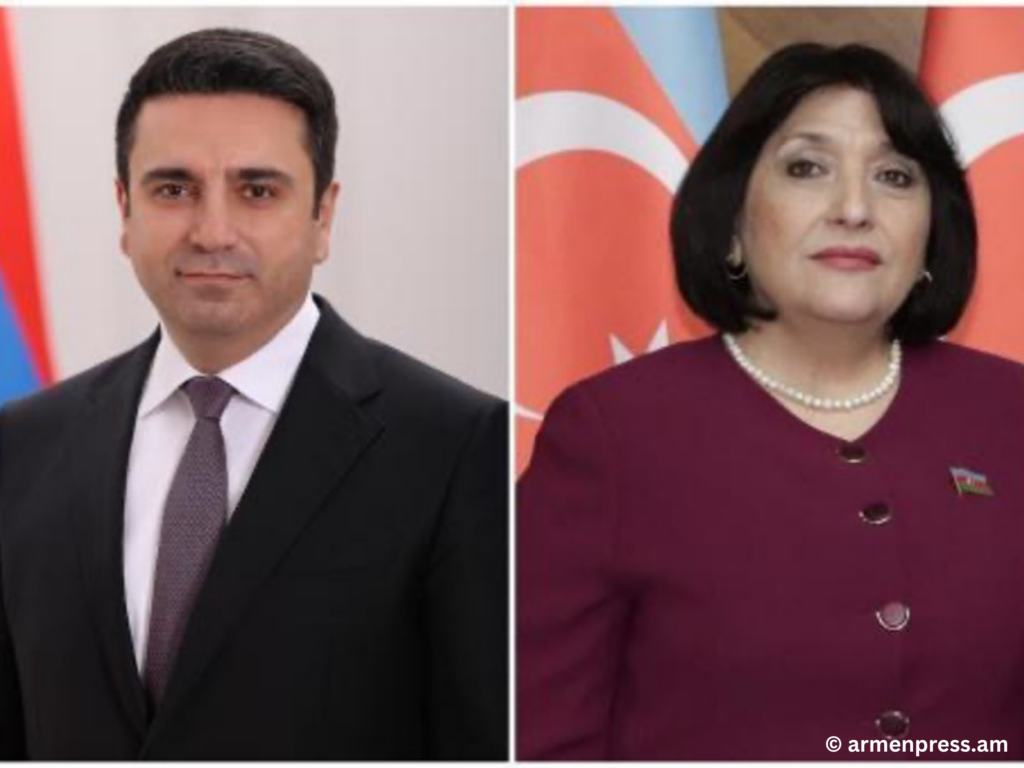
Alen Simonyan and Sahiba Gafarova
“Heads of parliaments from numerous countries will attend. Meetings with our Azerbaijani and Georgian colleagues are planned,” Simonyan stated.
The 152nd Assembly of the Inter-Parliamentary Union (IPU) is scheduled to take place in Istanbul from April 15 to 19, 2026.
The fourth round of the Armenian-Azerbaijani meeting under the “Bridge of Peace” initiative took place in Gabala from April 10 to 12, 2026. Delegates crossed the interstate border by land at the Tavush-Gazakh section, which has already been delimited and demarcated. All participants completed the necessary border and passport procedures.
The first bilateral roundtable was held in Yerevan on October 21 and 22, 2025. Following this, representatives of the Armenian side conducted a working visit to Azerbaijan on November 21 and 22, 2025. The third meeting, in an expanded format, took place in Tsaghkadzor, Armenia, on February 13 and 14, 2026.
Ahead of April’s meeting, 19 experts, along with representatives from the media and non-governmental organizations, traveled from the Armenian side to Azerbaijan. The delegation also included a cameraman from the Armenian Public Broadcasting Service.
Following the meeting in Gabala, the organizers stated that it had taken place in an atmosphere characterized by “constructive dialogue and sincere discussions.”
The April 10-12 meeting agenda covered three areas:
- The current status of the peace process;
- Activities of participants in both countries, and their outcomes;
- The impact of the regional geopolitical situation on the peace process.
A meeting also took place in Gabala with Hikmet Hajiyev, Head of the Foreign Policy Department of the Azerbaijani Presidential Administration.
The meeting addressed regional security, the progress of the peace process, and the role of civil society in normalizing relations between the two countries.
Hikmet Hajiyev stated in a post on X that the meeting lasted more than two hours.
He emphasized that Azerbaijan is “fully committed to the Washington agenda,” and noted that achieving the economic benefits of peace requires expanding trade, transit transportation, and people-to-people contacts.
In the same post, Hajiyev observed that, with the ongoing regional and global tensions, the importance of sustainable peace between Azerbaijan and Armenia is growing. He noted, however, that revanchist rhetoric in Armenia’s domestic politics poses a risk to stability.