
Occupied Abkhazia
Ukrainian Unmanned Aerial Vehicles in Occupied Abkhazia’s Airspace
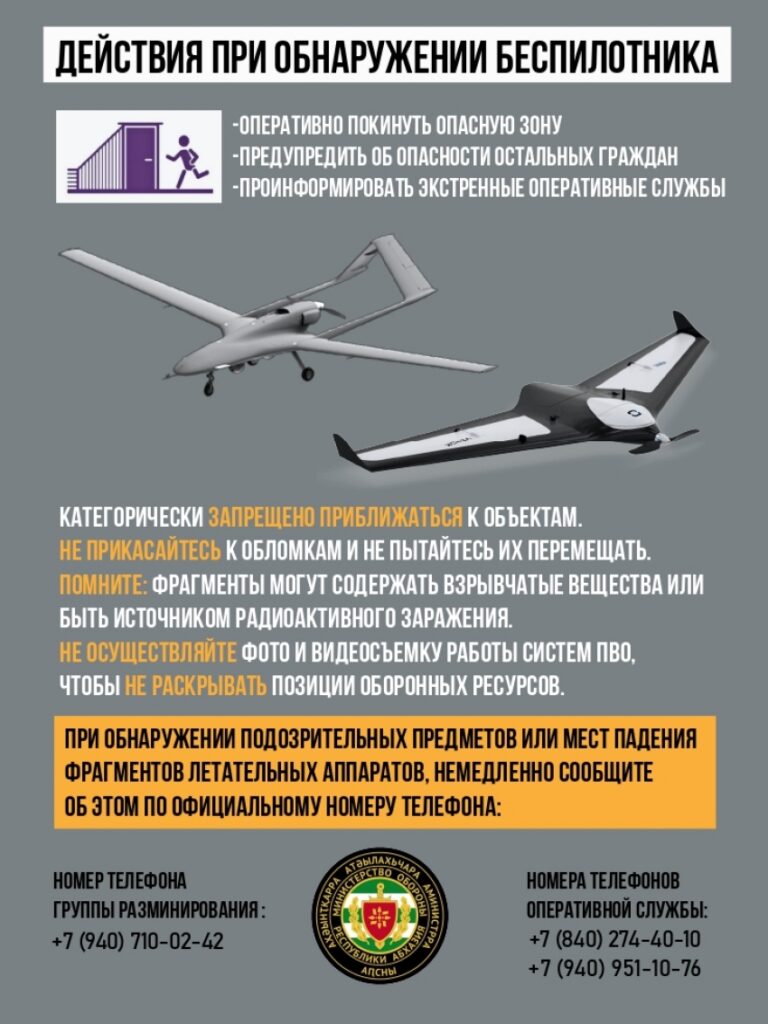
On March 7, the de facto Ministry of Defense released a brochure outlining recommendations on how to act in the event of encountering UAVs. Source: apsny.land
On March 1, the so-called border crossing between Russia and occupied Abkhazia was temporarily closed due to the threat of unmanned aerial vehicles (UAVs) and the activation of air defense systems in Sochi. During the night of March 3, debris from downed drones was discovered in the Ochamchire district of occupied Abkhazia. On March 4, Rustam Lapitov, head of the border unit of Abkhazia’s de facto State Security Service, announced the reopening of the crossing. However, on March 5, one of the commanders of the de facto Armed Forces of Abkhazia, Adgur Gumba, stated that, on March 4, approximately 30 drones had been detected in the airspace over 11 populated areas of Abkhazia. According to him, the threat was addressed jointly and effectively by Abkhaz and Russian air defense units, with “99% of the approximately 30 identified drones neutralized.”
Statements by Abkhaz separatist government representatives suggested the incident was unprecedented in scope. While military facilities in and around the Russian city of Sochi have been targeted by Ukrainian drones on multiple occasions, this episode differed in a way that the UAVs reportedly entered Russian airspace en masse via the airspace of occupied Abkhazia. Unofficial reports further indicated that, during their flight toward Sochi, the drones traversed virtually the entire territory of Abkhazia – from the Ochamchire district to Gagra.
On March 4, the de facto Ministry of Defense of Abkhazia issued a statement urging residents to refrain from approaching drone debris, warning that the wreckage could potentially contain “radioactive” materials.
Training of Command and Operational Staff
Source: apsny.land
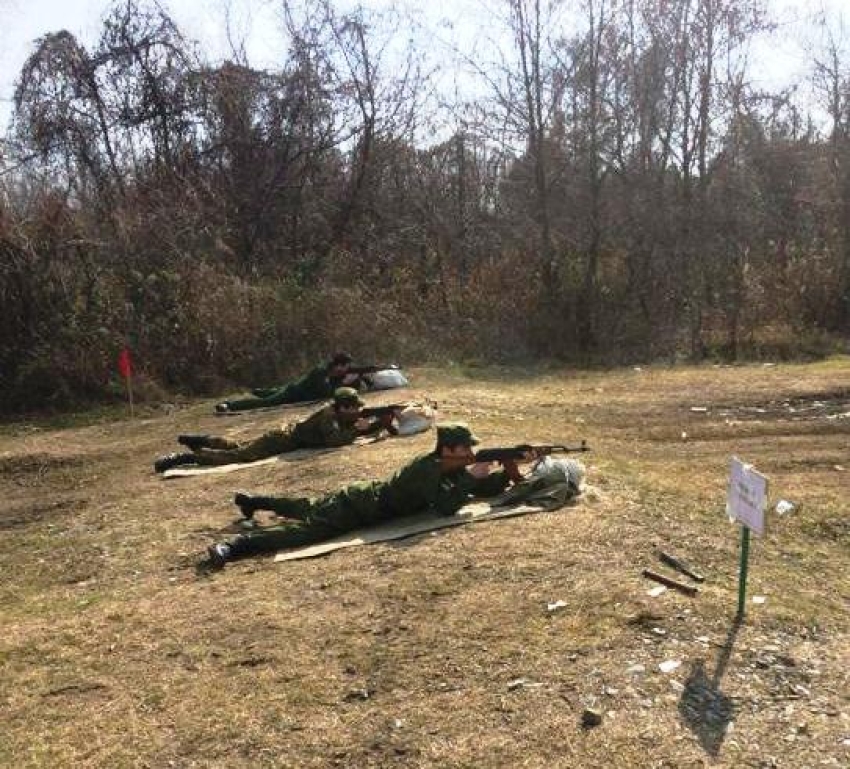
On March 11–12, military exercises were conducted in occupied Abkhazia under the supervision of Vladimir Anua, commander of the de facto armed forces. According to the official statement, the “planned” activities focused on enhancing the professional readiness of the staff of the de facto Ministry of Defense, as well as the General Staff. The stated objective of the exercises was to improve the command and control capabilities of military units in the context of a deteriorating crisis environment. The drills reportedly combined both theoretical and practical training components.
On March 13, the de facto Ministry of Defense announced another “planned” training activity. Specifically, within the framework of the 2026 action plan, a competition was held at a training range that focused on marksmanship and weapons-handling techniques. The same day, another group of military personnel conducted exercises involving the use and safe handling of hand grenades. Participants were evaluated by a panel of judges, who identified the top-performing shooters and teams. Certificates were subsequently awarded to the winners.
From March 16 to 19, “planned” command and staff exercises were held under supervision of Major General David Bzhania. The drills were designed to assess the effectiveness of combat operations across a range of simulated scenarios, enhance interoperability among different branches of the armed forces, and strengthen the ability to carry out assigned tasks under conditions approximating real combat.
On March 31, the Chief of the General Staff of the so-called Armed Forces of Abkhazia, Russian officer Vladimir Savchenko, reviewed the activities conducted that month. The meeting was attended in full by mid and senior-level officers of the de facto armed forces and ministry representatives. Participants discussed a range of issues, including military discipline, internal order, and the continuous maintenance of combat readiness. Concluding the session, Savchenko outlined the key priorities for the post-exercise period.
The Occupied Tskhinvali Region
Yarovitsky’s Interview with a Russian Publication
On March 2, the Russian media outlet Rossiyskaya Gazeta published an interview with the ethnic Russian de facto Minister of Defense of “South Ossetia,” Yuri Yarovitsky. In the interview, Yarovitsky spoke on several issues, including the “armed forces.” Responding to a question from the Russian journalist, he stated that “given the prevailing military-political environment in the South Caucasus, a unified defense and security domain (with Russia) is currently being formed.” He confirmed this process is being carried out in line with the 2015 Treaty on Alliance and Integration concluded between Russia and “South Ossetia,” and reiterated a position he has expressed on multiple occasions, stating that, in his view, the “South Ossetian army” should be mobile, professionally staffed, and equipped with modern weaponry. To this end, Yarovitsky noted that all necessary measures are being implemented. He also expressed gratitude to Russian President Vladimir Putin and Minister of Defense Andrei Belousov for their support in enhancing the “republic’s” defense capabilities.
Yarovitsky also underscored the significance of Russia’s 4th Military Base, noting that Ossetian personnel regularly undergo training alongside the Russian Armed Forces. The interview further addressed cooperation between the Russian Ministry of Defense and the de facto Ministry of Defense of “South Ossetia.” Within the framework of this arrangement, Ossetian servicemen receive an education at Russian military institutions before returning to “South Ossetia” to continue their service. Russia also provides support in the training and professional development of military instructors in Tskhinvali.
The de facto Ministry of Defense places particular emphasis on lessons learned from the ongoing war in Ukraine and the conflict in Syria, which, according to Yarovitsky, Russia actively shares with those in the occupied Tskhinvali region. A dedicated center for unmanned aerial vehicles (UAVs) and electronic warfare has been established, headed by an officer with combat experience from the war in Ukraine.
During the interview with Yarovitsky, the Russian journalist asked about the military-patriotic education of youth in “South Ossetia.” In response, Yarovitsky stated: “Among young people in South Ossetia, a certain cult has developed around service in the armed forces and other law-enforcement structures. Practically every family has defenders of the homeland in it… I emphasize that military-patriotic education is a focal point for every government institution. Materials fostering patriotic sentiments are disseminated through television, newspapers, theatrical performances, and creative collectives.”
Exercises
On March 4, de facto Defense Minister Yuri Yarovitsky attended combat exercises at Russia’s 4th Military Base, where Ossetian servicemen participated alongside Russian troops. Photographs released from the exercises showed part of the military equipment ceremonially handed over to Tskhinvali by Russia at the beginning of the year. This creates a reasonable doubt that the weapons and equipment sent from Russia to so-called South Ossetia were not intended for the de facto Ministry of Defense, but were actually designated for Russia’s 4th Military Base.
Yarovitsky evaluated the performance of the personnel during the exercises, noting that the assigned tasks were completed in full.
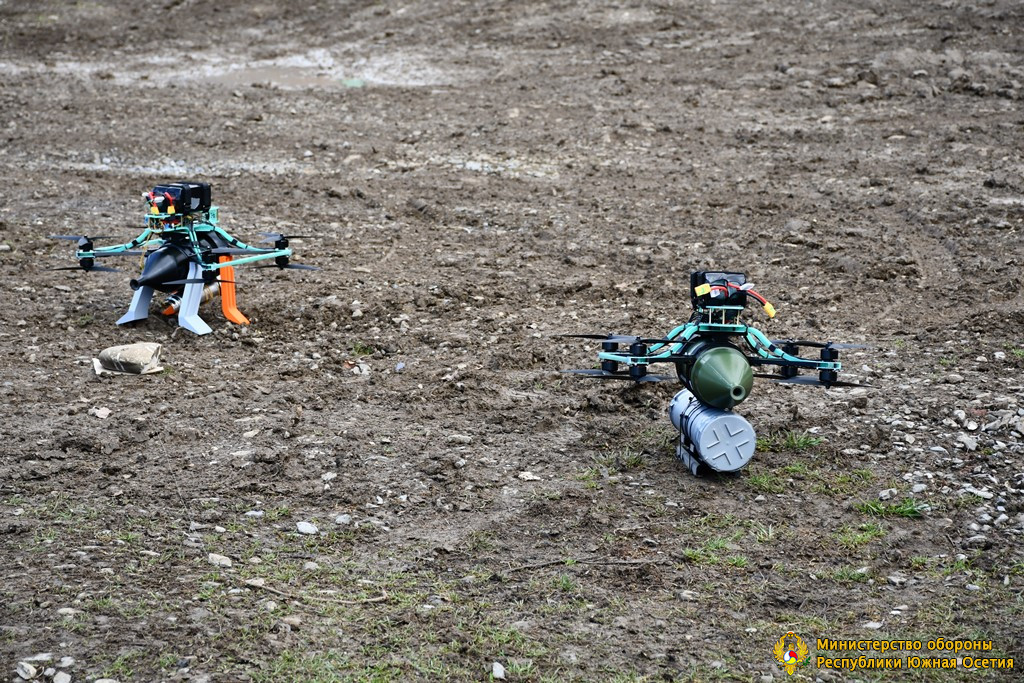
Fiber-Optic FPV Drones prepared for takeoff in Tskhinvali. Source: alaniamil.org
On March 5, the de facto Ministry of Defense held a concluding session for the preparatory phase of tactical exercises, stating that it had been conducted “in strict accordance with the action plan.” According to the official statement, the command staff reviewed the training activities scheduled for April; however, reports published by the de facto ministry indicate that March was already heavily occupied with exercises. During this period, Yarovitsky continued to actively oversee inspections of military depots, weaponry, and equipment, conducting two such inspections on March 13 and 23.
On March 12, in line with the stated “plan,” the de facto Ministry of Defense conducted a live-fire training exercise for the “special forces battalion.” The ministry reported that the special forces personnel demonstrated high proficiency with the firearms, reflecting the benefits of regular training. On March 13, de facto ministry staff officers participated in their own live-fire exercises. The ministry’s press service emphasized that this event, too, had been pre-planned. Officers repeated similar exercises on March 20, and again on March 27. The second phase of the special forces’ live-fire training also took place on March 20.
On March 17, under the direct supervision of Yuri Yarovitsky, another preparatory phase was conducted for the large-scale exercises scheduled for April. Infrastructure and command posts are being prepared for the use of combined arms. It is expected that, in April, Ossetian personnel will, for the first time, train in the combat use of optical-fiber FPV drones.
Yarovitsky’s Meeting with a Russian Official Representative
On March 25, a meeting took place between Yarovitsky and Valery Lipin, Deputy Head of the Main Directorate for International Military Cooperation of the Russian Ministry of Defense. According to the de facto ministry, the discussion focused on the maintenance and operation of military equipment. Yarovitsky expressed his gratitude to Lipin for his support, and noted that various units of the so-called ministry continue to work toward fulfilling the objectives outlined in the established “plan.”
A Military-Patriotic Event
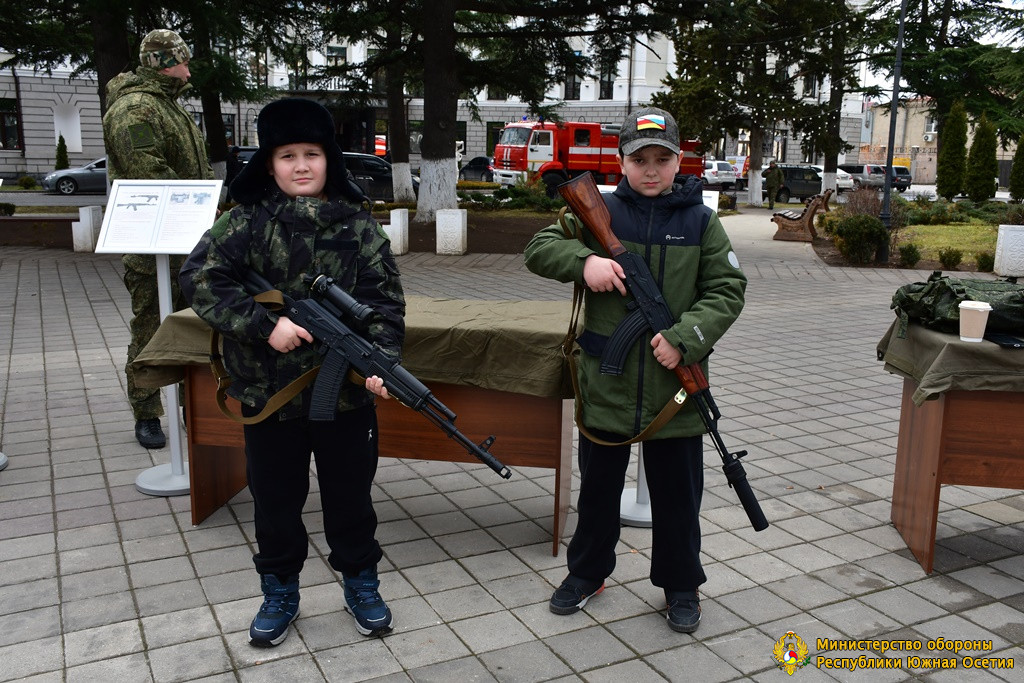
Ossetian Children at a “Military-Patriotic” Event. Source: alaniamil.org
The de facto Ministry of Defense published information in March about an event held in Tskhinvali on February 23. The event featured a “military-patriotic” program and an exhibition of Russian weaponry and military equipment. It was organized jointly by the de facto Ministry of Defense and Russia’s 4th Military Base. Yuri Yarovitsky and the commander of the 4th Military Base, Rajab Aliev, were both present. According to the ministry’s statement, such events serve not only the purpose of fostering patriotic education among youth, but also symbolize unity with Russia.