
Armenia’s Domestic Policy
Armenian Prime Minister Nikol Pashinyan said that in the parliamentary elections scheduled for June 7, the people must decide whether Armenia will continue the Karabakh movement.
“I wish to address the topic of peace and war, particularly in light of my recent statements,” the PM said. “In the Armenian context, where people across different settings and for various reasons refer to the ‘Republic of Artsakh’ or ‘the Artsakh issue,’ it is essential to acknowledge the complexity behind these terms and to be clear about what we mean.
“Words carry weight: they shape decisions and signal intent. Each one can point to a course of action. So, when we use them, we should do so carefully, with a clear understanding of what may follow. ”
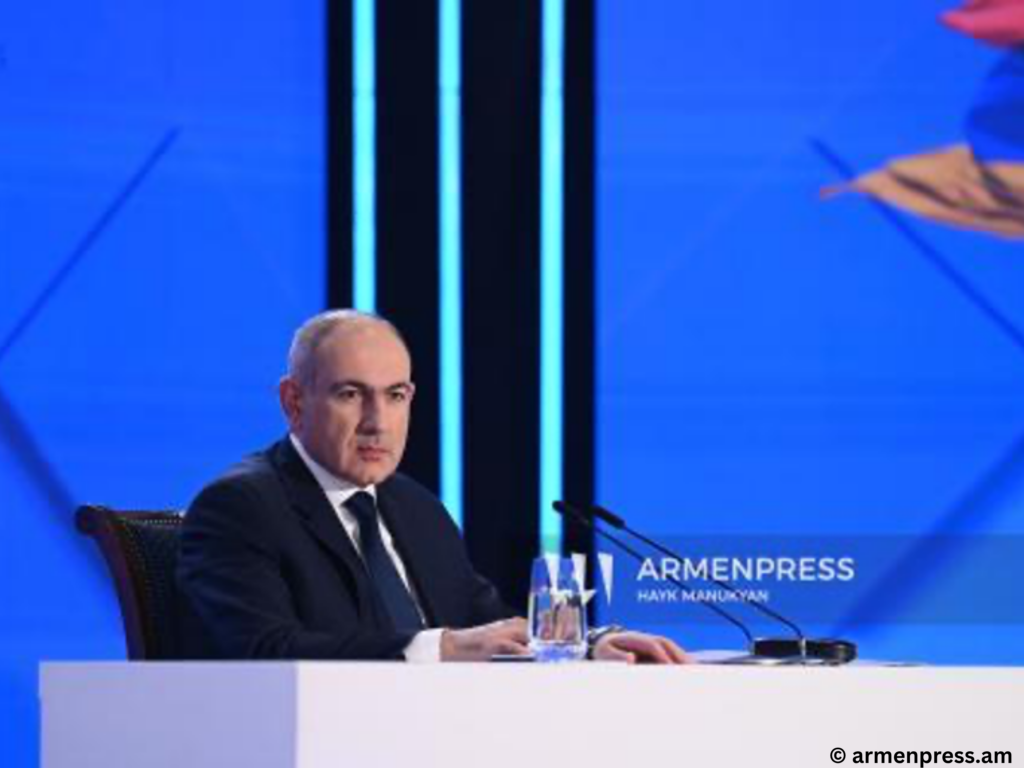
Prime Minister of Armenia Nikol Pashinyan
The Prime Minister further stated, “Whenever these phrases are used, whether from a church pulpit, in academic argument, public discourse, or any other form, it inevitably leads to conflict sooner or later. I’m not saying tomorrow or next week, but at some point, it will.”
He stressed the need for a clear decision on whether Armenia should continue the Karabakh movement, noting that the country’s political landscape is largely defined by this issue, with a so-called “peace party” advocating for the cessation of the movement and a “ war party” supporting its continuation, directly or indirectly.
“I state clearly that Ktrich Nersisyan has assumed leadership of the war party,” the Prime Minister said. “Others—Levon Ter-Petrosyan, Robert Kocharyan, Serzh Sargsyan, and their allies—operate within the same logic. We must make a decisive choice: do we continue the Karabakh movement or not? If we do, it means a new war: it cannot be otherwise. ”
He added that, in effect, the country had been in a state of war even before 2020, but had failed to recognize it. “Peace was so unfamiliar to us that we could not distinguish it from war. Only now are we beginning to understand the difference,” he said.
The Prime Minister emphasized that this decision ultimately rests with the people, and will be reflected in the upcoming elections. If voters choose to continue the Karabakh movement, he said, they should support the forces led by Ktrich Nersisyan. If they choose to end it, they should back the Civil Contract party, which he described as the only political force explicitly advocating for that position.
He also underlined the need for a broader collective decision, noting that Civil Contract is the only party calling for the removal of references to the Declaration of Independence from a new constitution. “The rationale is that this is not truly a declaration of independence, but instead constitutes a declaration of conflict. Such an approach implies that the state is being established not to guarantee the security, well-being, and freedom of its citizens, but to pursue claims related to Nagorno-Karabakh and Western Armenia. This constitutes a declaration of conflict. That path inevitably leads to conflict,” he said.
“In both public and political life, this is a choice we must make. When I use ‘we,’ I am referring to the people,” he continued. “As the Prime Minister of Armenia and Chairman of the Board of the Civil Contract party, I unequivocally state: we must not continue down this path.”
Addressing potential criticism of his past positions, he acknowledged that he had previously made statements in support of the Karabakh agenda: “I was part of that reality and acted to the best of my ability within it,” he said, pointing to his remarks from 2018–2019 and the reactions they provoked. “But today the message is clear: words carry consequences, convey meaning, and imply action.”
He also noted that discussions about the right of return for Armenians from Karabakh are met by similar claims from Azerbaijan. “Their terminology is well known, and I will not repeat it,” he said.
The Prime Minister concluded by stressing that the current moment presents a fundamental choice: “Peace has created a new reality. We must decide whether to continue the Karabakh movement. Continuation means war; ending it means peace. With each passing day, peace, independence, sovereignty, and the Republic of Armenia will grow stronger. I am leading this path, and those who share this vision are invited to follow.”
Armenian Interior Minister Arpine Sargsyan reported that 34,576 individuals who migrated to Armenia from Karabakh have already obtained Armenian citizenship.
Sargsyan noted that approximately 1,000 applications are currently under review at the presidential administration. She added that, within a few days, another 1,000 individuals will receive decisions, further accelerating the process.
The minister also observed a significant increase in the pace of the process, stating that while there were only 4,000 applications in the first half of the previous year, the number has already exceeded 5,000 in just two and a half months this year.
According to official data, during the most recent Karabakh war, more than 100,000 ethnic Armenians fled their homes in Nagorno-Karabakh.
Armenia’s Foreign Policy
On March 10, 2026, Armenian Prime Minister Nikol Pashinyan met with French President Emmanuel Macron during an official visit to France.
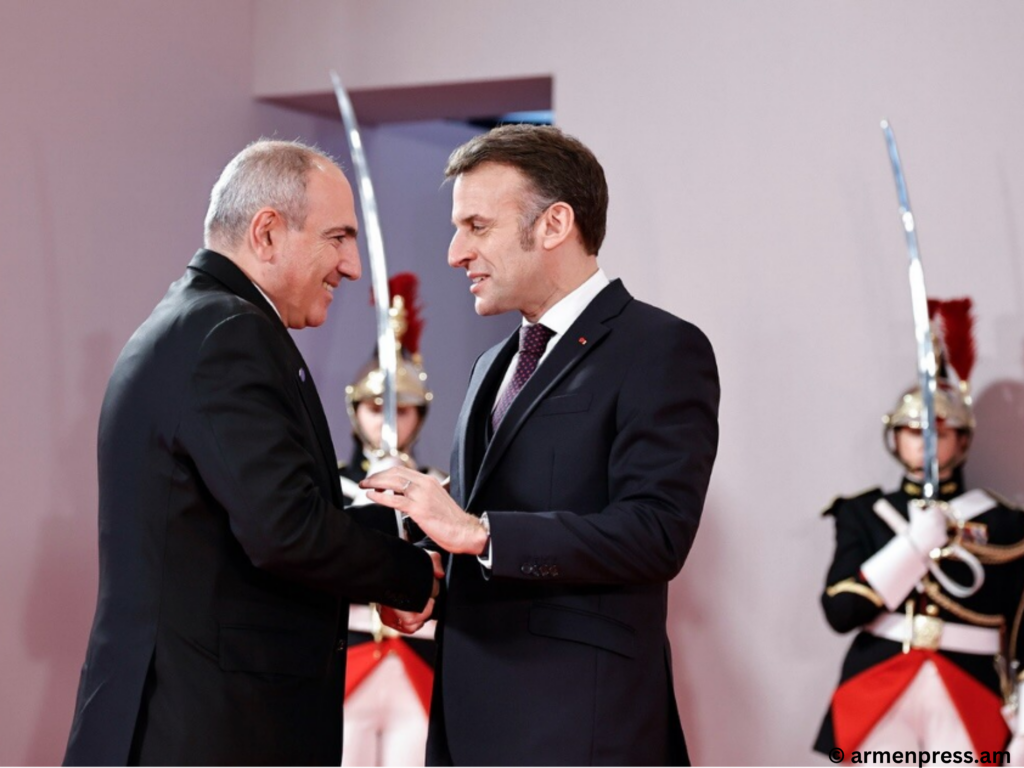
Armenian Prime Minister Nikol Pashinyan and French President Emmanuel Macron
During the meeting, the parties addressed bilateral relations, the normalization process between Armenia and Azerbaijan, and the ongoing conflict in the Middle East.
On March 12, 2026, European Commissioner for Home Affairs and Migration Magnus Brunner visited Armenia. He met with Prime Minister Pashinyan and Minister of Internal Affairs Arpine Sargsyan, and participated in a discussion titled ‘The Path to Visa Liberalization: Strengthening EU-Armenia Cooperation within the Framework of the Implementation of the Visa Liberalization Action Plan.’
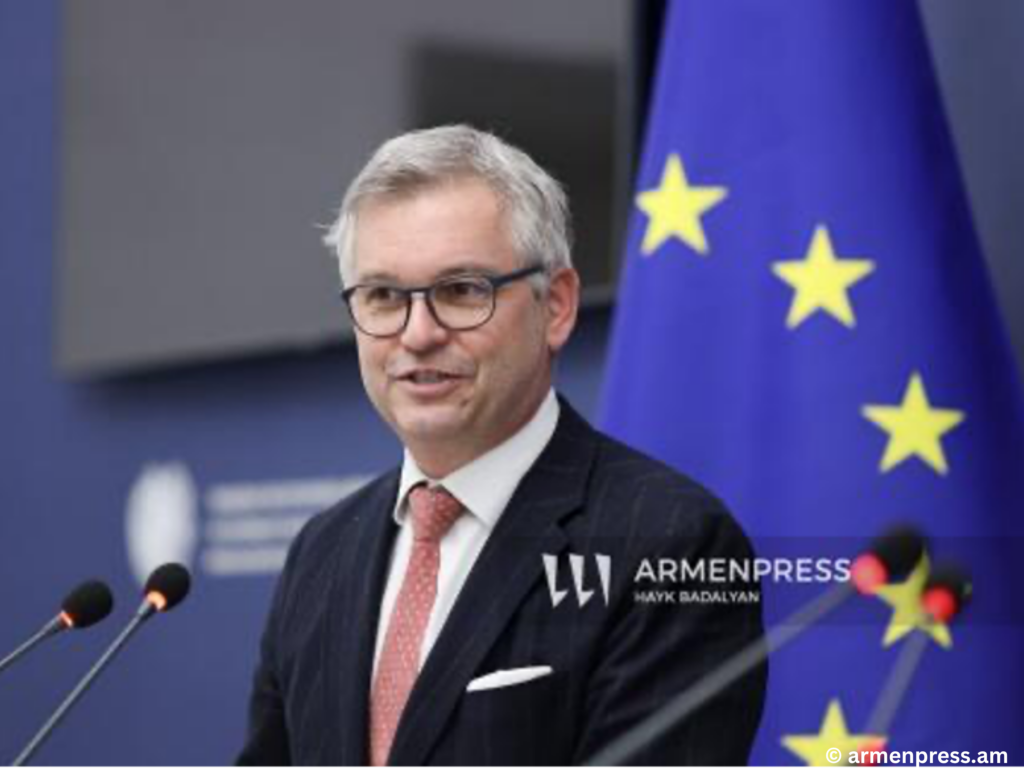
Magnus Brunner, European Commissioner for Internal Affairs and Migration
The European Commissioner stated that visa liberalization is one of the key components of the Armenia–EU partnership, and emphasized that visa liberalization will make travel for work, study, and tourism easier, thereby deepening cooperation and strengthening people-to-people connections.
“Last November, we submitted a Visa Liberalization Action Plan, and since then, steady progress has been recorded, particularly in the areas of document security and migration management“. “The introduction of biometric identification documents is an important step and, as I understand, will be implemented soon. Reforms are also continuing in the areas of asylum, as well as in the fight against organized crime and corruption, with the support of EU partners and agencies such as Europol and Frontex.”
Visa liberalization follows a criteria-based process, requiring all Action Plan requirements to be met before a final decision is made. This serves both the EU and, most importantly, the Armenian people. The first progress report will be presented at the Armenia-EU summit in May 2026.
“If this pace of reforms is maintained, visa-free travel is a realistic prospect in the coming years. This will create new opportunities for Armenian citizens in the areas of education, business, tourism, and cultural exchange, and will further strengthen ties between Armenia and the EU,” Brunner said.
Azerbaijan-Iran relations
Senior Azerbaijani government officials reported that on March 5, 2026, an Iranian drone crashed into the main passenger terminal in Nakhchivan, causing an explosion that injured two civilians.
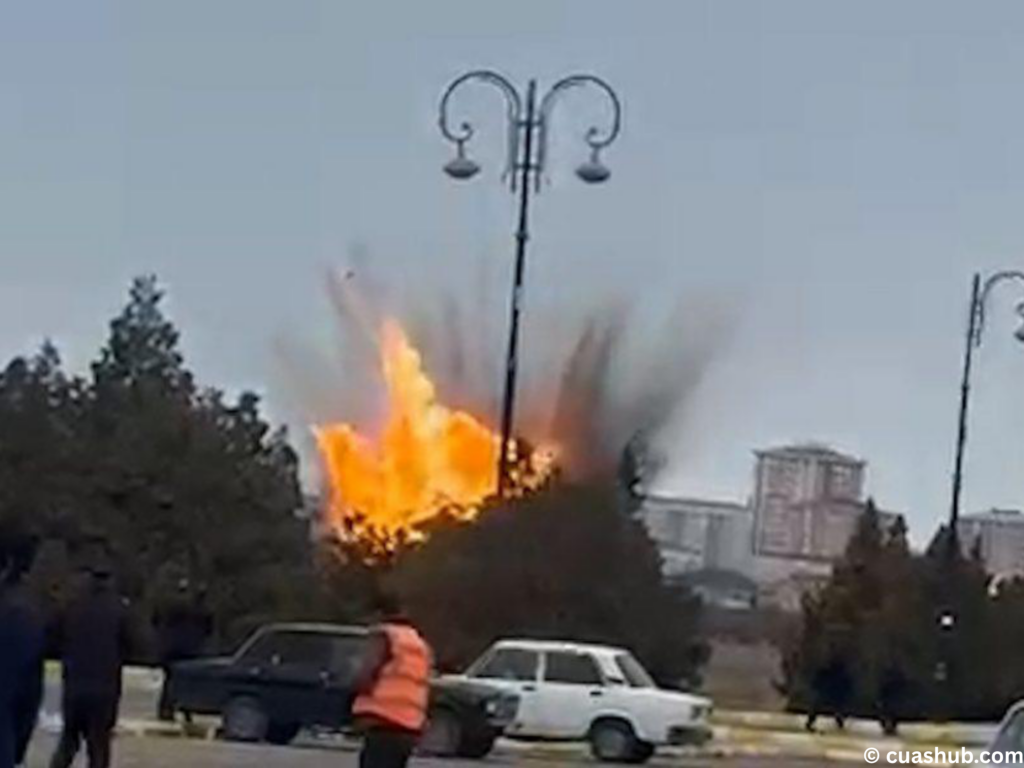
Attack on Nakhchivan Airport, March 5, 2026
Another drone crashed near a school in Shakarabad. Schools near the airport temporarily suspended classes, and teachers and students were evacuated.
The Azerbaijani Foreign Ministry promptly condemned Tehran’s actions, calling them an attack on the country, a serious violation of international norms, and a factor that increases regional tensions.
Baku requested an explanation from Tehran and summoned Iranian Ambassador Mojtaba Dermichilu to the Foreign Ministry.
Azerbaijani authorities state that the country reserves the right to respond, and the Ministry of Defense indicated that such measures are “already being prepared.”
“The Ministry of Defense of the Republic of Azerbaijan strongly condemns the attacks carried out by the armed forces of the Islamic Republic of Iran, directed against civilian infrastructure on the territory of Azerbaijan without any justification.
“The Ministry of Defense of the Republic of Azerbaijan is preparing necessary retaliatory measures to protect the country’s territorial integrity and sovereignty, as well as to ensure the safety of the civilian population and infrastructure.
“These acts of aggression will not go unanswered,” the statement issued by the Azerbaijani Defense Ministry read.
At an emergency Security Council meeting, Ilham Aliyev called the March 5 strike a “monstrous terrorist act,” and warned Tehran of possible consequences.
Aliyev also referenced previous incidents he claims were organized by Iran against Azerbaijani citizens. He stated that Tehran knows Baku is “a source of hope for many Azerbaijanis living in Iran.”
He added that, despite the current tensions, Azerbaijan is not involved in, nor is it planning, any military action against Tehran, emphasizing the country’s commitment to regional stability and peace.