Introduction
The Southern Military District is the most significant military-administrative formation of the Armed Forces of the Russian Federation. Although it covers the smallest territory among the military districts, it has been at the forefront in terms of combat experience and participation in armed conflicts since the collapse of the Soviet Union.
Presently, in addition to military units and infrastructure located on the territory of the Russian Federation, the Southern Military District includes the 7th Military Base in occupied Abkhazia, the 4th Military Base in the occupied Tskhinvali region, and the 102nd Military Base in Armenia. Furthermore, Russian military bases deployed in Syria are subordinate to the operational command of the Southern Military District. The district has undergone several waves of large-scale reform.
This article explores the establishment of the Southern Military District and the principal reforms shaping this military-administrative structure. It also reviews its operational activities, as well as its subordinate bases, armies, and individual units.
The Formation of the Southern Military District, and the Reforms
In the late 1980s, the largest and most combat-capable contingents of the Armed Forces of the Soviet Union were deployed in the German Democratic Republic, Czechoslovakia, and Hungary. The reunification of Germany was accompanied by the withdrawal of Soviet forces and their return to Russian territory, where they had been promised social guarantees and free housing. These promises went unfulfilled due to corruption, alleged informal arrangements, and other contributing factors.
Alongside numerous structural challenges and disorganization, growing dissatisfaction spread within the Soviet Army units returning to Russia. According to one Russian researcher, the Russian army transformed into “a mix of military and economic/entrepreneurial activities aimed at preserving the infrastructure of an army in the process of disintegration.” This situation was soon compounded by the outbreak of armed conflicts in the Caucasus region in the 1990s. As a result, Russia deployed its most combat-capable units to the south.
In 1999, then-Acting President of the Russian Federation Vladimir Putin launched a drive to centralize governance. A decree he signed that year initiated reforms of the Russian Armed Forces, which began in 2000. As an initial measure, Putin appointed presidential representatives to the federal districts. He consolidated presidential authority and, in many cases, shifted the appointment of government positions from Russia’s legislative body to the presidency, effectively bypassing the State Duma. At the time, Russia’s immediate priority was resolving the issues related to the war in Chechnya, while the medium-term objective was to establish effective order within the armed forces and pursue further structural reforms.
Following the Russo-Georgian War in 2008, the Russian Federation launched a large-scale reform of its armed forces. According to various assessments, the reform was based on the experience gained during the two Russo-Chechen wars and the 2008 war with Georgia. The 2008 conflict exposed deficiencies within the Russian military, ranging from strategic planning to operational command and control. By a presidential decree issued in 2010, the North Caucasus Military District was abolished and replaced by the Southern Military District.
The primary waves of reform of the Armed Forces of the Russian Federation can be divided into several distinct phases:
- The late Soviet and early 1990s period, characterized by chaos, corruption, and disorganization within the Russian military following the dissolution of the Soviet Union.
- The 1990s, when the Russian army was simultaneously engaged in multiple conflicts. In 2000, shortly after assuming the presidency, Vladimir Putin initiated efforts to centralize the management of the armed forces.
- The post-Russo-Georgian War reform period, launched after said war, and led by then Minister of Defense Anatoly Serdyukov. This phase marked the first large-scale rearmament and structural reorganization of the Russian military.
- The pre-(full-scale) Ukraine war period, distinguished by the intensification of military exercises, further expansion of military infrastructure, and changes in social policy within the armed forces. Russia refined its methods of warfare in Ukraine from 2014 onward, and began conducting air superiority-oriented operations in Syria in 2015.
- The full-scale war launched against Ukraine in 2022. The failure of the Russian military to achieve its stated objectives during the first year of the war led to a new wave of major reforms beginning in 2023.
A Reform Underway in Parallel with the War in Ukraine
In parallel with the full-scale war in Ukraine, a new wave of reforms has been underway in the Russian military since 2023, accompanied by structural changes within the armed forces. By a 2024 decree of President of the Russian Federation Vladimir Putin, the Southern Military District incorporated the territories annexed and occupied by Russia in Ukraine: Donetsk, Luhansk, Zaporizhzhia, and Kherson. Occupied Crimea had already been subordinated to the Southern Military District in 2014. Under the same decree, the Western Military District was dissolved and replaced by the Moscow and Leningrad Military Districts. The Moscow and Leningrad Military Districts had previously existed within the Russian Empire from 1864 to 1917.
As part of the ongoing reform, the Southern Military District has been expanded to include new ground force formations, including the additional armies established after 2014. The Russian Ministry of Defense has removed the latest information regarding the structure and composition of the military districts from its official website, mil.ru. However, based on the most recent publicly available data, the Southern Military District is made up of the following formations:
- 3rd Combined Arms Army (Created in 2024 – Luhansk);
- 8th Combined Arms Army;
- 18th Combined Arms Army (Created in 2023 – Crimea);
- 49th Combined Arms Army;
- 7th Military Base in occupied Abkhazia;
- 51st Combined Arms Army (Created in 2024 – Donetsk);
- 58th Combined Arms Army;
- 4th Military Base in the occupied Tskhinvali region;
- 102nd Military Base in Armenia;
- 7th Airborne Division (Part of Russia’s Airborne Forces);
- 10th Separate Brigade;
- 22nd Separate Brigade;
- 346th Separate Brigade;
- Separate brigades of command: communications; radiological, chemical, and biological defense; electronic warfare; and railway.
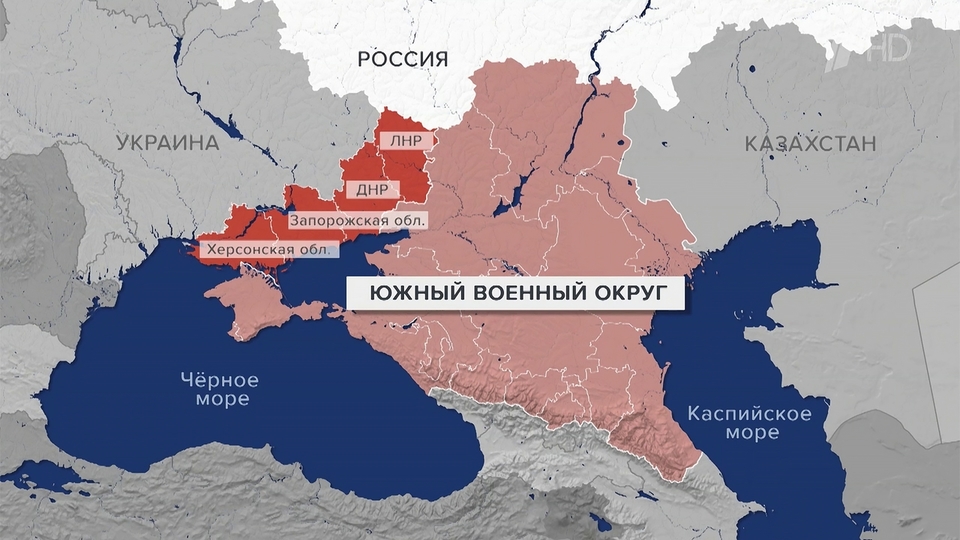
The Southern Military District as of 2026. After the 2022 full-scale invasion, Russia incorporated the following Ukrainian territories into the district: Kherson, Zaporizhzhia, Luhansk and Donetsk. Source: 1tv.ru
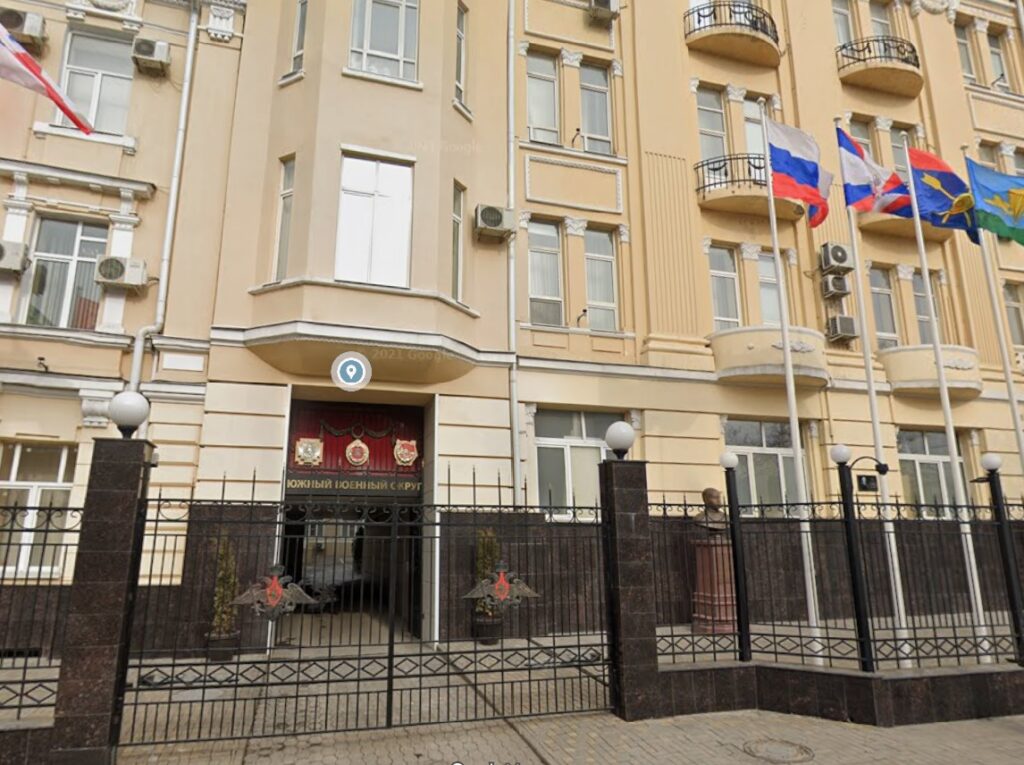
The Headquarters of the Southern Military District on Pushkin Street, Rostov-on-Don, Russia. Source: google maps
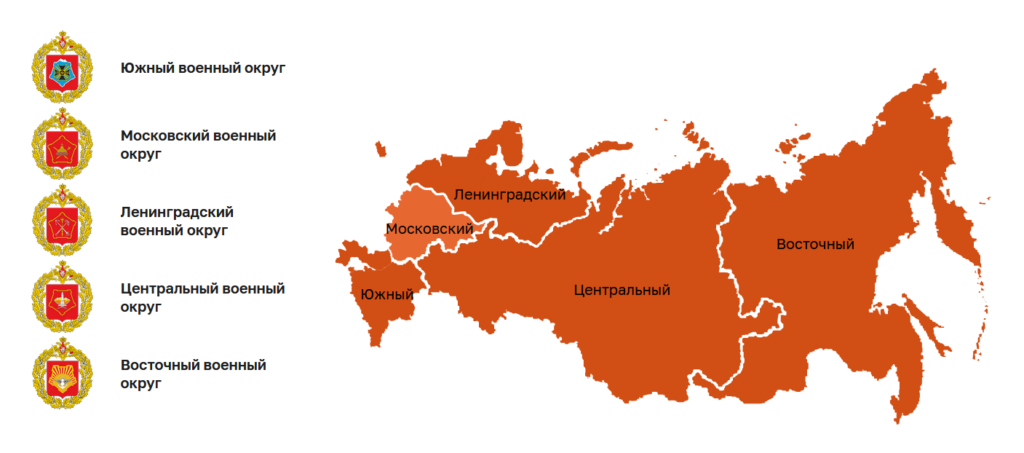
Russia’s military districts as of the latest military reform, including the newly formed Moscow and Leningrad Military Districts. Source: mil.ru
Commanders of the Southern Military District
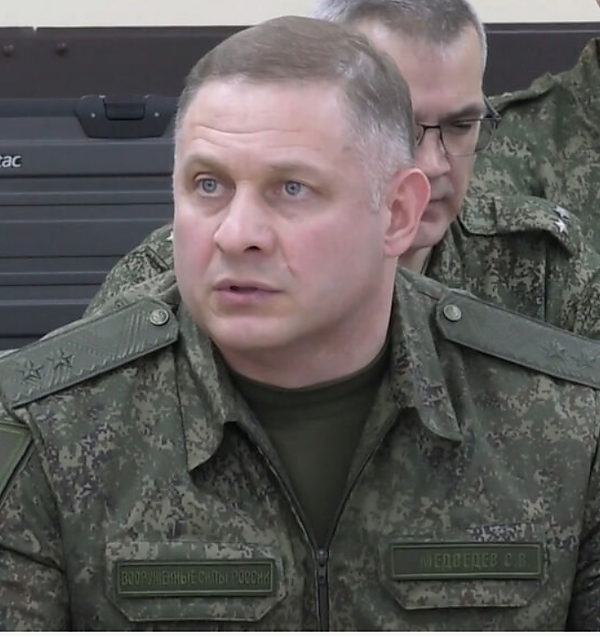
Current Commander – Sergey Medvedev. Source: topwar.ru
Sergey Medvedev – From November 20, 2025 to the present day.
- Passport No.: 5302 № 982788
- Individual Tax Code in Russia (Russian: “ИПН”): 564902805806
- Insurance Number (Russian -“СНИЛС”): 198-585-569 61
Sergei Medvedev was born on 22 October 1979, in Prague, former Czechoslovakia, to the family of a Russian serviceman. Medvedev graduated from the Military Academy of the General Staff of the Armed Forces of the Russian Federation and was awarded the rank of lieutenant general on 2 May 2024, during the full-scale war in Ukraine. Prior to this, he served as Chief of Staff of the 58th Army, and was later promoted to Commander of the 58th Army. This army is responsible for the Russian 4th Military Base stationed in the occupied Tskhinvali region. He was appointed Commander of the Southern Military District on 20 November 2025. He also serves as commander of the Southern Grouping of Russian Forces, engaged in combat operations in Ukraine.
Prior to Medvedev, this position was held by the following:
- Aleksandr Sanchik – from November 2024 to November 8, 2025. In parallel with the appointment of Sergei Medvedev as head of the district, Sanchik was promoted to the position of Deputy Minister of Defense of Russia;
- Gennady Anashkin – from May 2024 to November 2024;
- Sergei Kuzovlev – from January 2023 to May 2024;
- Aleksandr Dvornikov – from September 2016 to January 2023;
- Aleksandr Galkin – from December 2010 to June 2016.
A Brief Historical Overview of Russia’s Military Districts in the South
During the Soviet period, the Armed Forces of the Soviet Union were organized into two military-administrative entities in the southern direction: The Transcaucasian Military District and the North Caucasus Military District.
Following the dissolution of the Soviet Union, the Transcaucasian Military District was abolished. The majority of its subordinate formations were initially reorganized into independent border units, and were subsequently incorporated into the Southern Military District.
The North Caucasus Military District
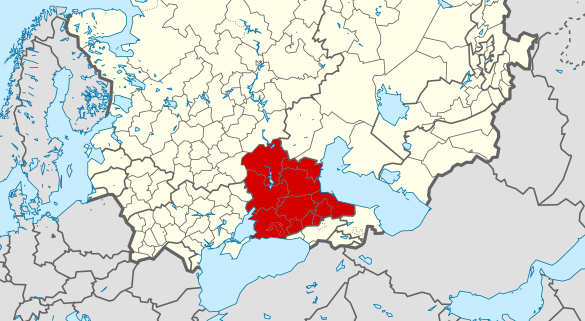
Territory of the North Caucasus Military district within the USSR. Source: wikipedia
The North Caucasus Military District was established in 1918 within the Russian Soviet Federative Socialist Republic. In 1945–1946, for a brief period, three separate military districts were created in the North Caucasus region: the Don, Stavropol, and Kuban Military Districts. By the late 1980s, the district included the territories of Rostov, Astrakhan, Volgograd, Krasnodar, Stavropol, Dagestan, Chechnya, Ingushetia, North Ossetia, Kabardino-Balkaria, and Kalmykia.
Following the dissolution of the Soviet Union, the North Caucasus Military District effectively became the “fighting” district of the Russian Armed Forces. Its units participated in all major armed conflicts in the North Caucasus, including the Ossetian–Ingush armed conflict (1992); the First Chechen War (1994–1996) and the Second Chechen War (1999–2009); and the 1999 armed conflict in Dagestan. The district’s military formations were also involved in the wars in Abkhazia and the Tskhinvali region, where they provided arms, intelligence and air support to the separatist forces. During the 2008 Russo-Georgian War, the district’s 58th Army operated in the Tskhinvali direction, while the 49th Army was engaged in Abkhazia. Soon, Russia proceeded with establishing the 7th and the 4th Military Bases within the district in the occupied regions of Georgia.
The Transcaucasian Military District (Russian: ЗакВО)
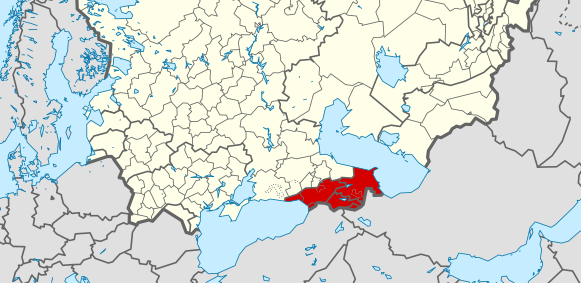
Territory of the Transcaucasian Military District within the USSR. It included the Georgian, Armenian and Azerbaijan SSRs. Source: Wikipedia
The Transcaucasian Military District was established in 1935 and stretched across the territories of the Georgian, Armenian, and Azerbaijani Soviet Socialist Republics. The headquarters of the military district was located in Tbilisi. Units of the newly formed district participated in the Soviet–Finnish War and subsequently became fully engaged in the Second World War. At the same time, the North Caucasus Military District functioned separately within the Soviet Armed Forces.
Shortly after Germany’s capitulation, the Transcaucasian Military District was divided into two entities on 9 July 1945: The Tbilisi Military District and the Baku Military District. The Tbilisi Military District covered the territories of the Georgian and Armenian SSRs, as well as the Nakhchivan Autonomous SSR. The Baku Military District incorporated the territories of Azerbaijan and Dagestan. Within a year, the two districts were reunified into the Transcaucasian Military District.
Following the dissolution of the Soviet Union, the district was transformed into the Group of Russian Forces in the Transcaucasus and ceased to function in its previous institutional form. Its headquarters remained in Tbilisi, on Tamarashvili Street. Numerous reports have suggested that after the collapse of the Soviet Union, the Russian military remaining in Georgia – and subsequently being integrated into the Southern Military District structure – directly interfered in the internal political affairs of Georgia, Armenia, and Azerbaijan.
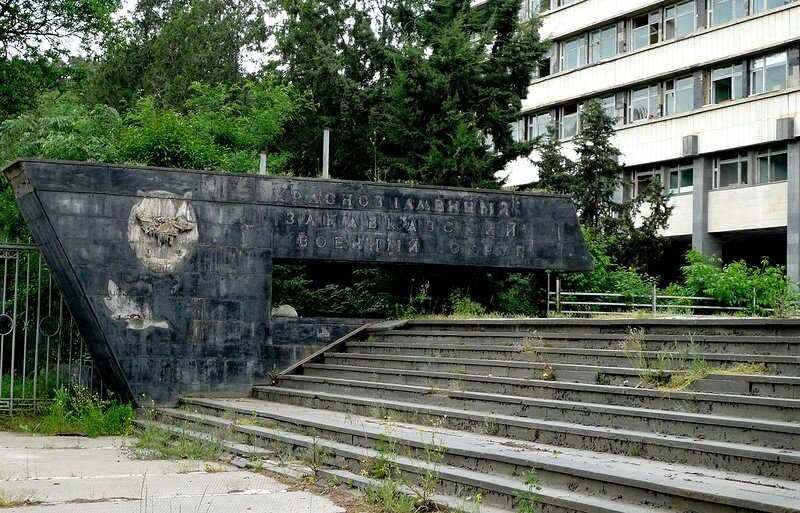
The former Transcaucasian Military District Headquarters on Tamarashvili Street, Tbilisi, Georgia.
Vardiko Nadibaidze, who served as Georgia’s Minister of Defense from 1994 to 1998, was a senior officer of the Transcaucasian Military District. Prior to his ministerial appointment, Nadibaidze was responsible for logistics and transport within the military district. In 1989, he was awarded the rank of major general of the Soviet Army. In 1991, by personal decree of the Minister of Defense of the USSR, Nadibaidze received the Order of the Red Star for an exceptionally well-executed undisclosed assignment in Georgia. In 1993, while still serving in the military district, he was promoted to Lieutenant General and appointed Deputy Commander of the district in charge of armaments. In 1994, he assumed the position of Georgia’s Minister of Defense, which he held until April 1998.
By the decision of the same USSR Defense Minister, a special-purpose unit called the “Bats” (Russian: летучие мыши, later operating under Russia’s GRU – ГРУ) was created within the Transcaucasian Military District. Formally, this unit was tasked with conducting asymmetric military operations in Georgia, Armenia, and Azerbaijan. The unit’s name appears in the context of the Tbilisi War (1991), the war in Abkhazia (1992–1993), and the war in the Tskhinvali region (1991–1992).