
Introduction
Armenia and Russia are members of the Collective Security Treaty Organization, which brings together states allied with Russia. Under the 1995 agreement, the 102nd Military Base is stationed in Armenia, with its primary garrison located in the city of Gyumri. In 2010, the original 25-year deployment term for the base was extended to 49 years, until 2044. On November 30, 2016, an agreement was signed on the establishment of a joint group of the armed forces of the two countries.
With the decline of the Russian Federation’s influence in the Middle East and the South Caucasus, the military base in Armenia’s city of Gyumri, and the presence of Russian troops in Armenia, have become particularly relevant issues.
The article reviews the history and chronology of the deployment of Russian military units on Armenian territory. It also examines public attitudes within Armenian society toward Russia and the Russian Armed Forces. In addition, the article provides information on the infrastructure and military facilities of the 102nd Military Base in Gyumri.
Brief History
The first Russian garrison was deployed on the territory of Gyumri in 1804, when war broke out between the Russian Empire and Persia. In 1701, 1723, 1760, and 1782, Armenians, notably the Armenian Catholicos (of the Church), had appealed to Russia to deploy its army on Armenian territory. The Russian army entered Armenia only after the Georgian Kingdom of Kartli-Kakheti became part of the Russian Empire in 1801. Russian military units have not left Armenian territory since. During the late Soviet period, Russian units were stationed in Armenia through the 127th Motor Rifle Division.
After the dissolution of the Soviet Union, under agreements concluded between Russia and Armenia concerning the Russian Armed Forces deployed on Armenian territory, the 127th Division was separated from the 7th Combined Arms Army. In 1994, the division’s reorganization resulted in the establishment of the 102nd Military Base, which was subordinated to the Transcaucasian Military District. The Transcaucasian Military District (Russian: ЗакВО) was a Soviet military territorial formation encompassing the Georgian, Armenian, and Azerbaijani Soviet Socialist Republics. In 2001, the 102nd Military Base became part of the Joint Grouping of Forces of the armed forces of Russia and Armenia.
Formal and Legal Foundations
The presence of the Russian Armed Forces operating on the territory of Armenia is based on the following agreements:
- The 1992 Agreement on the Legal Status of the Russian Armed Forces Deployed on the Territory of Armenia;
- The 1995 Agreement on the Russian Military Base;
- The 1997 Treaty on Friendship, Cooperation, and Mutual Assistance.
Armenia signed the Collective Security Treaty (Russian: ОДКБ) on May 15, 1992. An agreement on the legal status of the Russian Armed Forces was also signed the same year. This was the first document through which Russia, following the dissolution of the Soviet Union, began establishing a legal framework for its military units deployed on Armenian territory. The agreement covers virtually all aspects of the regulation of Russian units stationed in Armenia. According to the document, the fields not regulated by this agreement were to be addressed through consequent bilateral treaties.
According to the agreement, the Russian Federation assumed responsibility for providing military protection within the Soviet-era borders of the Republic of Armenia. Armenia, in turn, undertook the obligation to co-fund the Russian military units stationed on its territory. Under this agreement, Russia ensures security of the Russian Federation through its military force. Armenia was required to provide full and unrestricted access for family members of Russian servicemen to Armenia’s state social and educational programs, and to simplify their entry and residency procedures.
The document contains an interesting provision concerning real estate. The property acquired for the interests of the former Soviet Union by the Union itself, its government bodies, or by its citizens and organizations, was to become the property of the Russian Federation. The Republic of Armenia regained ownership of real estate that Armenian citizens, legal entities, and military units had previously held under lease. During the transitional period following the dissolution of the Soviet Union, the amount of real estate under the effective use of the Republic of Armenia was limited. Ultimately, Russia acquired ownership rights over a significant portion of such property.
In 1995, based on the agreement on the legal status of the Russian Armed Forces, Russia and Armenia signed an agreement on the Russian military base. This treaty was intended to provide further legal framework for the former Soviet, and later Russian, troops already deployed on Armenian territory. Under this agreement, Armenia hosts Russian military units within the framework of the 1991 Agreement on Friendship, Cooperation, and Mutual Security, as well as within the Collective Security Treaty framework. It should be noted that the December 1991 Agreement on Friendship, Cooperation, and Mutual Security never entered into force, yet the 1995 agreement relied partially on a document that lacked legal weight. This points to Russia’s cosmetic use of legal mechanisms.
By the time the document was signed, the 127th Division had already been reorganized into a military base. Under this agreement, family members of Russian servicemen were granted unrestricted rights to seek employment in Armenian organizations and institutions. In addition, Article 24 of the agreement stipulates that the Russian side shall not use the Russian base for purposes not foreseen in the agreement. The stated purpose is defined as the protection of the sovereignty, territorial integrity, and security of the Russian Federation and Armenia. However, what exactly is meant by the protection of Russia’s security is not specified. Under a separate agreement, Armenian citizens were granted the opportunity to serve in the Russian border forces deployed in Armenia.
After the December 1991 Agreement on Friendship, Cooperation, and Mutual Security failed to enter into force, Armenia and Russia signed a similar treaty on Friendship, Cooperation, and Mutual Assistance in 1997. Following the dissolution of the Soviet Union, the Russian Federation began concluding treaties on friendship, cooperation, and mutual assistance with various states. Although the specific provisions of these agreements were adapted to reflect the particular circumstances of each participating state, their overall content remained largely consistent, and closely resembled the Warsaw Pact, serving as a general framework for establishing allied relations. Through the use of this framework agreement, Russia established an international legal groundwork for its military, political, and economic relations with the co-signatory states. The subsequently concluded bilateral agreements are based on this framework document.
Since the dissolution of the Soviet Union, the Russian Federation has concluded identical treaties, titled “On Friendship, Cooperation, and Mutual Assistance,” with the following entities:
- Kazakhstan – 25 May 1992;
- Kyrgyzstan – 10 June 1992;
- Tajikistan – 25 May 1993;
- Armenia – 29 August 1997;
- The so-called Republic of South Ossetia – 17 September 2008;
- The so-called Republic of Abkhazia – 17 September 2008;
- The so-called Luhansk People’s Republic – 21 February 2022;
- The so-called Donetsk People’s Republic – 21 February 2022.
Russia also concluded similar agreements, though with certain differences, with the following states:
- Belarus, in 1995 – On Friendship, Good-Neighborliness, and Cooperation;
- Ukraine, in 1997 – On Friendship, Cooperation, and Partnership;
- Azerbaijan, in 1997 – On Friendship, Cooperation, and Common Security;
- China, in 2001 – On Friendship, Good-Neighborliness, and Friendly Cooperation;
- North Korea, in 2024 – On Comprehensive Strategic Partnership.
On 21 February 2022, following the agreements concluded with the so-called Donetsk and Luhansk People’s Republics, Russia proceeded, on 30 September of the same year, to sign agreements with these entities providing for their incorporation as new subjects of the Russian Federation, thereby completing the full annexation of the occupied regions of Ukraine.
Activities of the 102nd Military Base
The Russian Embassy in Armenia notes that from May 1994 to November 1997, Russian units stationed in Armenia participated in the “Georgian–Abkhaz conflict,” where the Russian units “successfully carried out the combat task of bringing the conflicting parties to peace.” The Russian Ministry of Foreign Affairs here is presumably referring to the participation of the Russian contingent in the so-called peacekeeping mission during the post-war period in Abkhazia.
In 2010, when Russia and Armenia extended the term of the Russian military base operating on Armenian territory, then-President of the Russian Federation Dmitry Medvedev, during his visit to Armenia, mentioned Georgia, stating: “In 2008, we had to overcome rather difficult events, and we do not want the same events to be repeated in the Caucasus.”
Medvedev’s words indirectly point to the potential use of the 102nd Military Base in the context of Georgia. No direct involvement of the 102nd base in the 2008 Russia–Georgia war has been confirmed, although there is speculation that Russia may have used the military aviation infrastructure in Armenia against Georgia. The flight paths of Russian strategic aviation and combat aircraft have yet to be confirmed. Nor has it been verified that all aircraft that took off from Russian territory returned there after completing their combat missions.
Regardless of whether Russian military elements from the 102nd base were used against Georgia, the presence of a large Russian military formation in Armenia, located roughly 50 kilometers from the Georgian border, remains a security risk.
In 2022, Ukrainian media reported that, one month after Russia’s full-scale invasion of Ukraine, Russia was deploying its military units to Ukraine from bases located outside Russian territory. Russia reportedly sent 800 servicemen from the Gyumri base to Ukraine in March 2022. It was also reported that combat-ready personnel were being sent from Gyumri to Ukraine, while the 102nd Military Base was replenished with conscripts and inexperienced contract soldiers. Azerbaijani media also reported on the transfer of Russian troops from Armenia to Ukraine, citing operational information from the General Staff of the Ukrainian Armed Forces.
Additionally, in March 2022, information circulated that Russia was preparing missile forces from the Russian 102nd Military Base in Gyumri for deployment to Ukraine. Specifically, the reports mentioned the base’s missile forces commander, Lieutenant Colonel Gritsaenko, and his team. Gritsaenko is a Ukrainian born in the Sumy region who built his military career in the Russian Armed Forces. According to the reports, Russia wanted to send him to Ukraine precisely because of his knowledge of the local terrain and geography.
Satellite imagery available on Google Earth shows that combat-ready heavy and armored vehicles were removed from the territory of the Gyumri military base as early as 2020. In more recent images, aside from military transport trucks, significantly fewer tanks can be observed.
Incidents Related to Russian Military Servicemen Stationed in Gyumri
On April 14, 1999, two intoxicated servicemen from the 102nd Military Base opened indiscriminate fire in the Gyumri bazaar, killing two civilians and injuring nine others. The Armenian court sentenced them to 15 and 14 years of imprisonment, respectively. One of the two was transferred to Russia by Armenia two years after the incident, on the condition that they would serve their sentence in a Russian penal facility. The second serviceman was transferred to Russia after 11 years. To date, there has been no information on whether the servicemen served their sentences after returning to Russia.
On July 11, 2003, young ethnic Armenians attempted to enter the territory of the 102nd Military Base, during which Russian servicemen opened fire, killing two residents of Gyumri and wounding two others. Following the incident, the base commander was dismissed, but no one was held criminally responsible.
On April 7, 2013, two children died on the territory of a training ground near the village of Vagramaberd in Armenia’s Shirak Province. According to one account, the 12 and 16 year-old Armenians were killed in a mine explosion. According to another, released by the Prosecutor’s Office, they were illegally collecting scrap metal when they were struck by a shot from a Russian BMP-1 infantry fighting vehicle. No one was held accountable.
On January 12, 2015, a serviceman from Russia’s 102nd Military Base murdered six members of a single family in Gyumri, including a two-year-old child. Despite Armenia’s request that the arrested Russian soldier be prosecuted under Armenian law, the case was taken over by the Russian military court. The court, held at the Gyumri base, sentenced him to life imprisonment.
In 2018, a Russian serviceman from the 102nd base, while intoxicated, beat a 57-year-old woman to death in Gyumri. In 2024, the case was reopened for the fifth time, but the Russian serviceman has yet to be convicted.
These incidents represent only a fraction of events in Armenia involving Russian servicemen. They have significantly influenced public attitudes toward Russian forces, and Russia in general, within the country.
Attitudes within Armenian Society
Over the past decade, public attitudes in Armenia toward the Russian Armed Forces stationed on Armenian territory have shifted to some extent. In the early post-Soviet period, Russian servicemen were generally seen as guarantors of Armenia’s security; a responsibility Russia assumed under bilateral agreements with Armenia. However, public perceptions have been influenced not only by economic factors, but also by incidents involving Russian military personnel and the ineffective fulfillment of Russia’s obligations.
In April 2016, the four-day war between Azerbaijan and Armenia spiked public dissatisfaction with Russia. In just the few years leading up to the April conflict, Azerbaijan procured weapons worth over USD$4 billion from Russia. Armenia’s then-President, Serzh Sargsyan, stated that Azerbaijan had used the entirety of weapons purchased from Russia against Armenia. This, of course, conflicted with the intent of Russia’s bilateral agreements with Armenia and the role of the Russian Armed Forces stationed in the country.
In a 2013 sociological survey conducted in Armenia, respondents were asked whether Armenia should primarily focus on developing relations with the European Union or with Russia. Over 67% supported Russia. Additionally, 72.3% considered Russia a more reliable partner than the EU. By 2017, attitudes had shifted and only 34% of respondents regarded Russia as Armenia’s strategic ally. That same year, more respondents felt that Russia had a negative influence on Armenia regarding the Nagorno-Karabakh conflict. In a 2025 survey conducted by the International Republican Institute, only 27% of respondents evaluated relations with Russia as good, with just 4% rating them as very good.
According to the 2025 survey, Armenians view national security and the economic situation as the primary challenges the country faced. Due to multiple incidents involving Russian servicemen in Gyumri, several protest demonstrations against the Russian military base had taken place. However, even in 2025, Gyumri remained the most pro-Russian city in Armenia. That year, Gyumri’s newly elected mayor, Vardan Ghukasyan, stated that he supports unification with Russia “based on the Belarus model of a common state.”
It is important to consider other factors when discussing the situation in Gyumri. Since its establishment, the 102nd Military Base has become a significant part of the city’s economy, to which the Russian servicemen stationed in Gyumri contribute substantially. As such, the base is primarily associated with economic welfare for Gyumri residents.
Military Facilities
The 102nd Military Base consists of the following military facilities:
- Military base in Gyumri
- Military garrison in Yerevan
- Military airfield in Erebuni
- Airfield in Shirak
- Training grounds at Alagyaz and Kamkhud
- Military towns
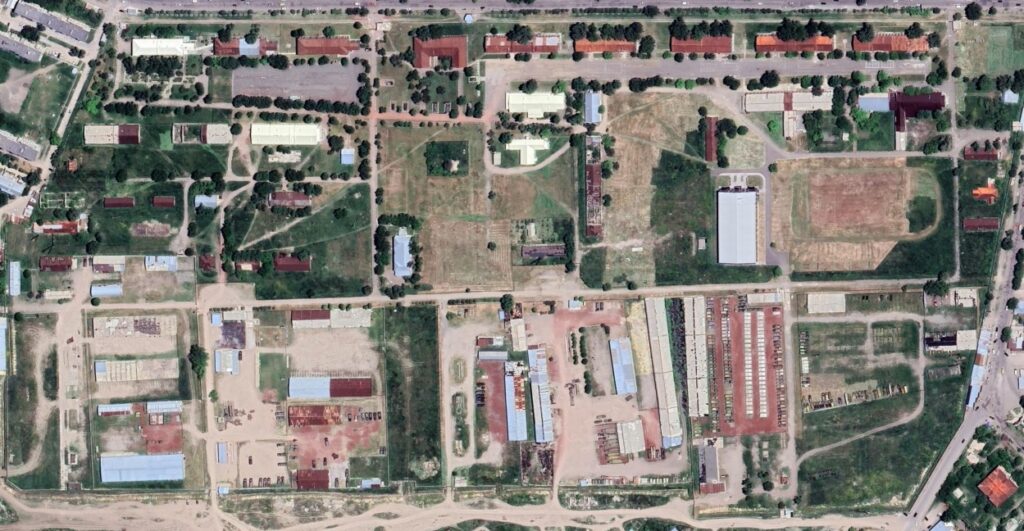
No.1 Russian Military Base in Gyumri.
Coordinates: 40°48’27″N 43°49’44″E
Source: Google Earth
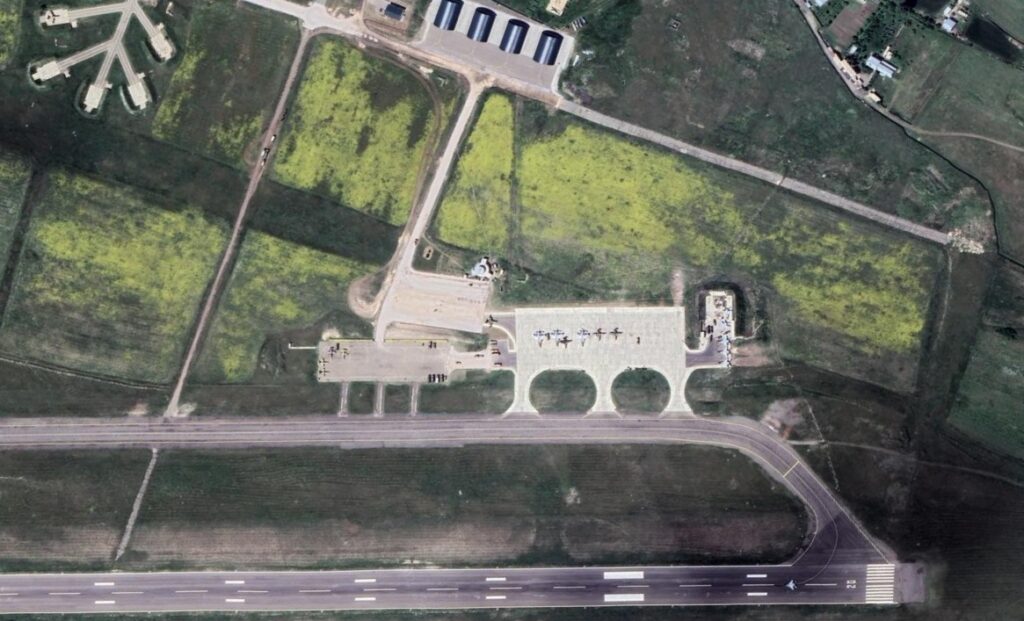
Russian combat aircraft at Shirak Airbase.
Source: Google Earth
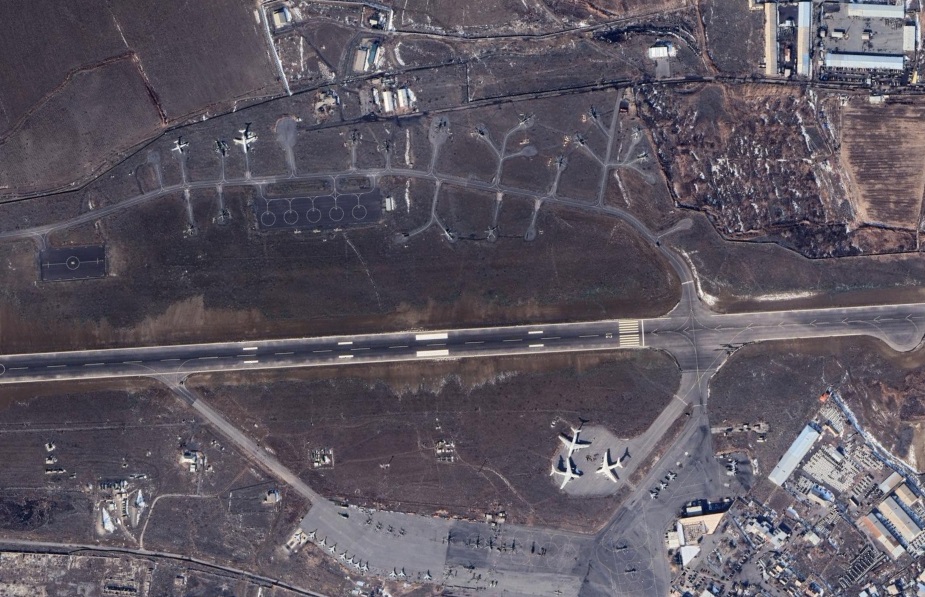
Erebuni Airbase. Russia’s largest combat aircraft pool in the region is based here.
Source: Google Earth
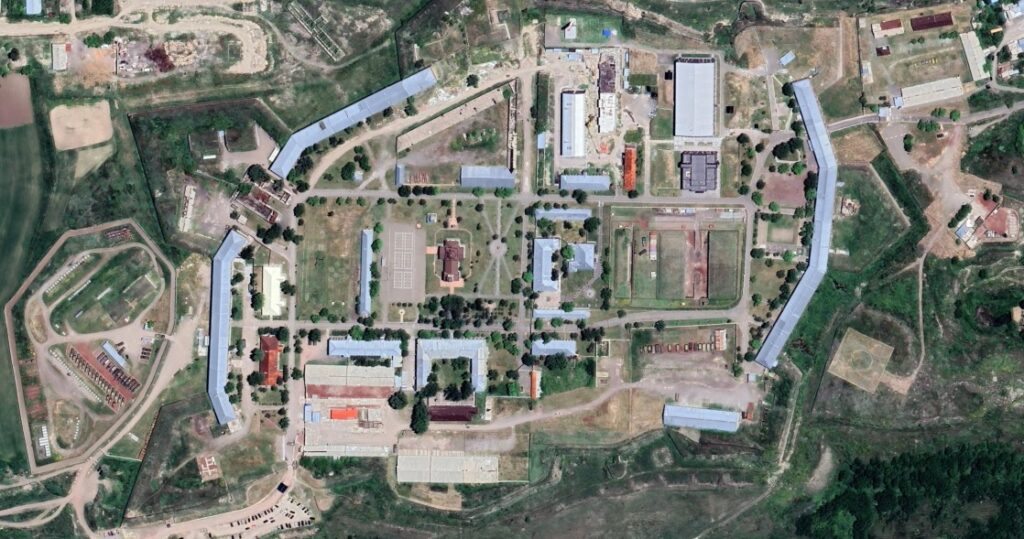
No.2 Major Military Facility of the 102nd Military Base in Gyumri.
Coordinates: 40°47’23″N 43°49’31″E
Source: Google Earth
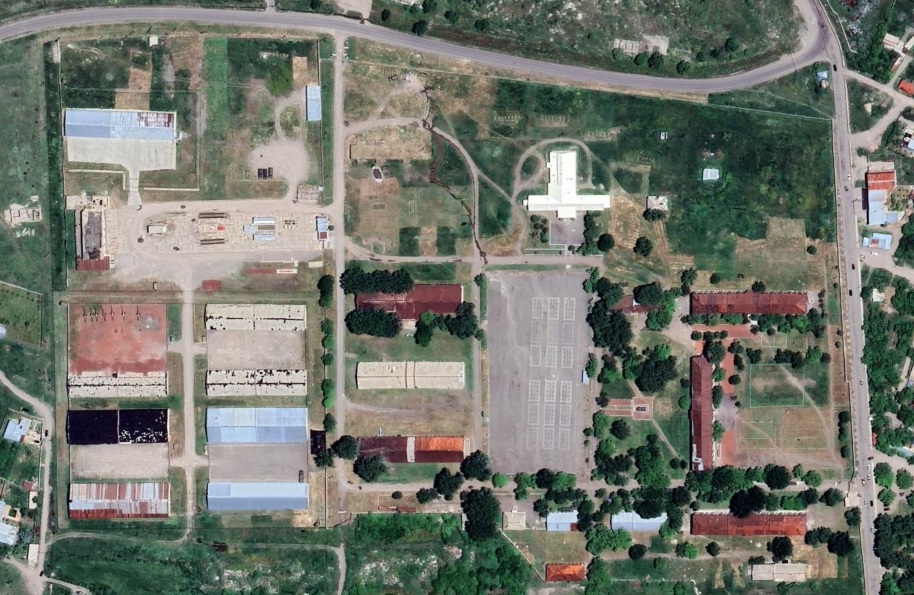
No.3 Major Military Facility of the 102nd Military Base in Gyumri.
Coordinates: 40°46’37″N 43°49’03″E
Source: Google Earth
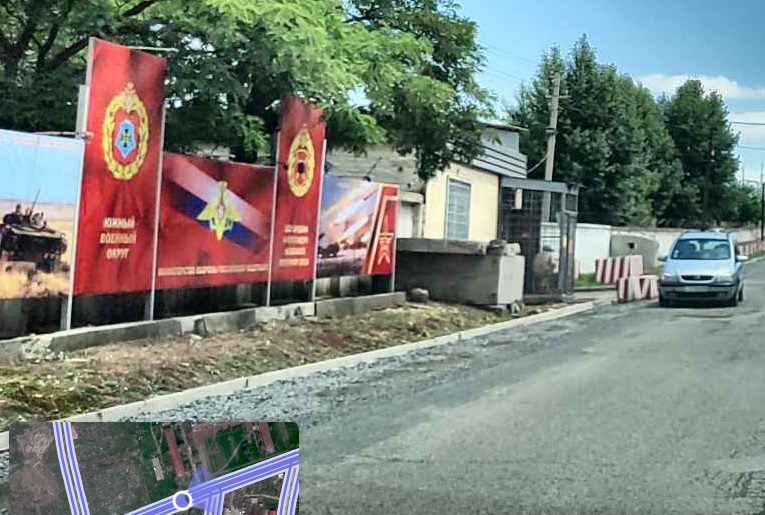
Entrance view of the No.3 Major Military Facility in Gyumri.
Source: yandex.ru
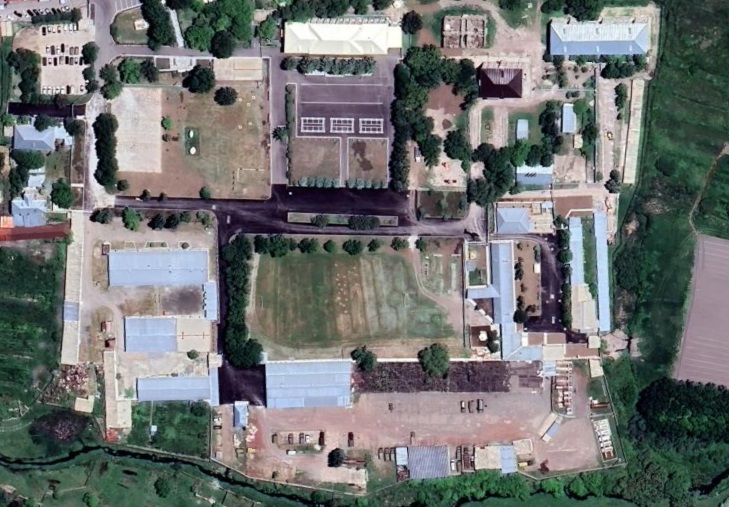
No.4 Military Facility of the 102nd Military Base in Gyumri.
Coordinates: 40°46’44″N 43°49’57″E
Source: Google Earth
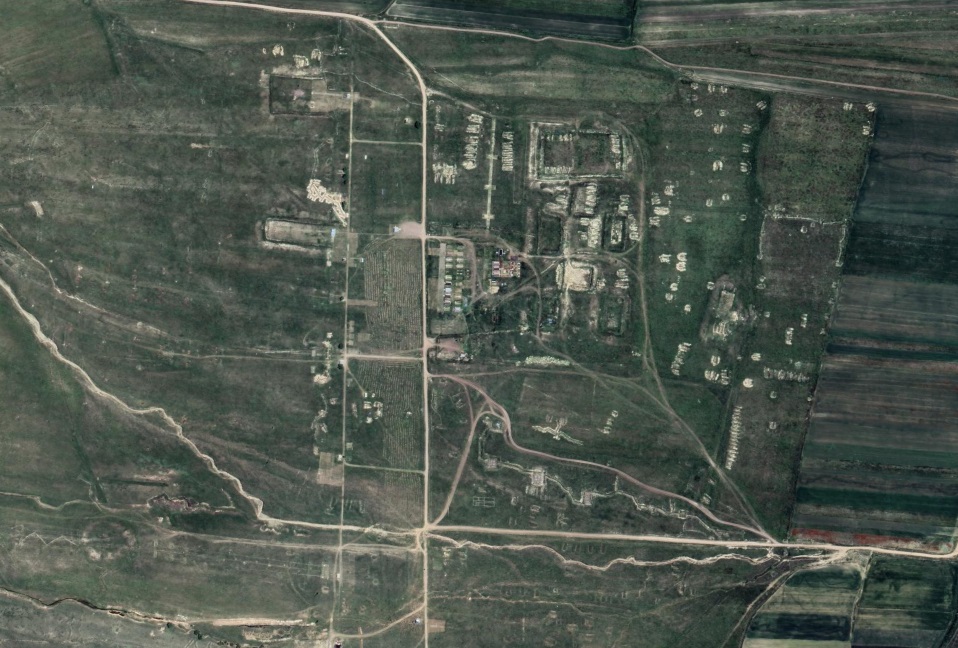
Kamkhud Military Range of the 102nd Russian base near Gyumri.
Coordinates: 40°51’42″N 43°47’03″E
Source: Google Earth
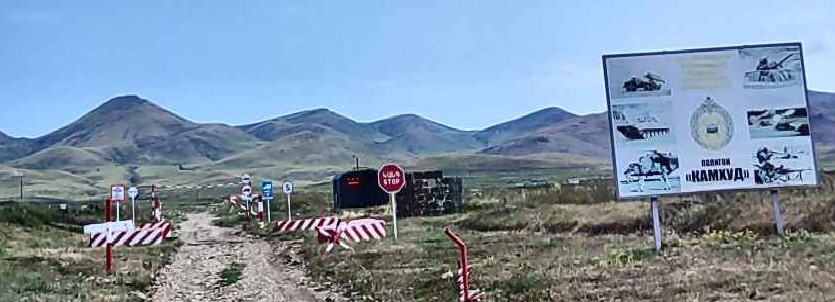
Kamkhud range gate.
Source: yandex.ru