
Armenia’s Foreign Policy
During a conference hosted by the Armenian Institute for International and Security Studies in Yerevan on January 14, 2026, the Prime Minister stated:
“Do we want to become a full member of the European Union? Yes, unequivocally, and without hesitation. How do we envision this? We fully recognize that, as past experience shows, no country is accepted into the European Union based on geopolitical or other convenience.”
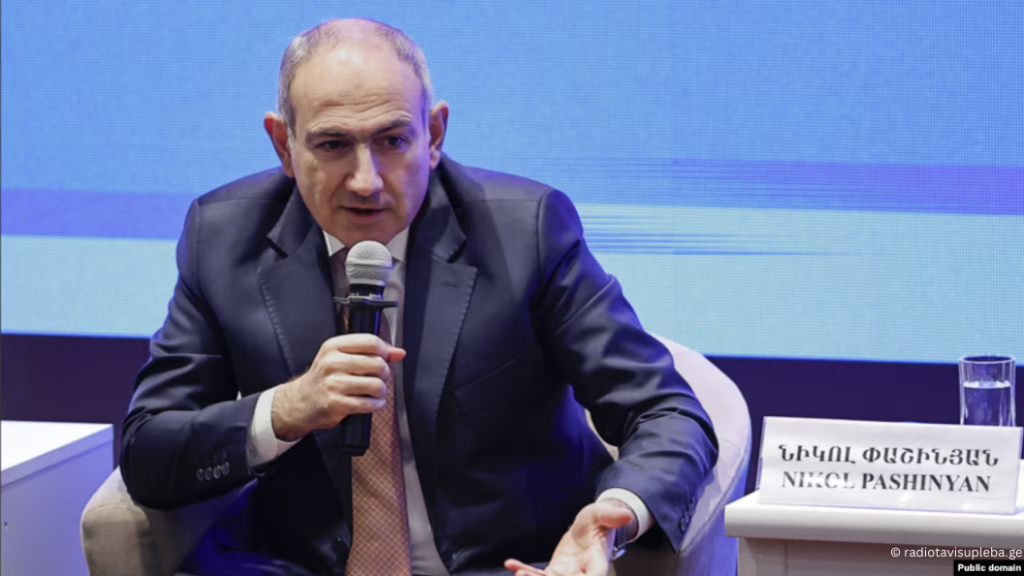
Prime Minister of Armenia Nikol Pashinyan
“Therefore, a key prerequisite is that the country must objectively meet EU standards by at least 97, 98, or 99 percent,” he said.
He stated, “Our strategy is this: we must very firmly and clearly continue Armenia’s path to becoming a country that meets EU standards.”
On January 13, 2026, U.S. Secretary of State Marco Rubio met with the Foreign Minister of Armenia, Ararat Mirzoyan, in Washington.
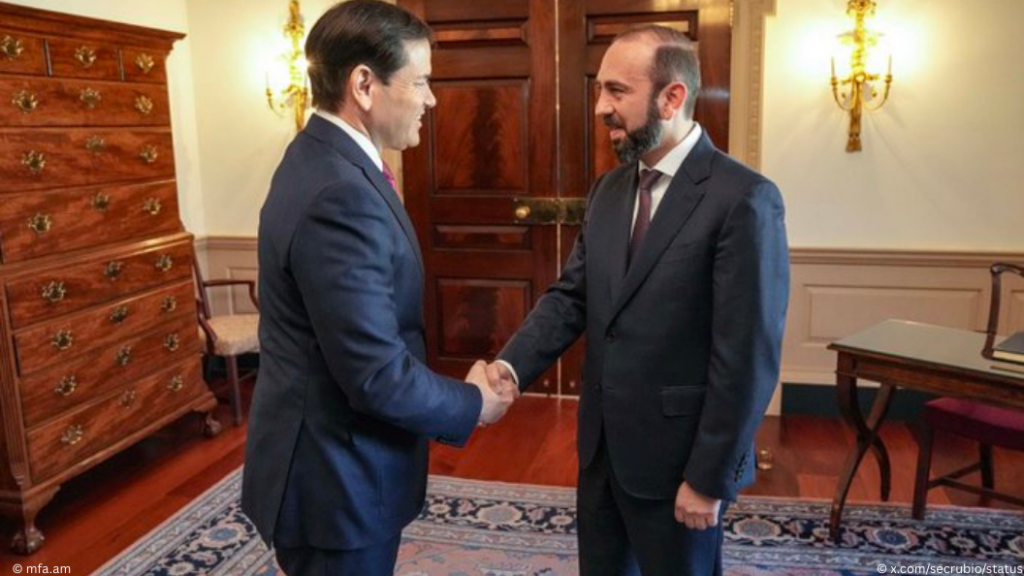
Meeting of U.S. Secretary of State Marco Rubio and Armenian Foreign Minister Ararat Mirzoyan, Washington, January 13, 2026
After the meeting, the Joint Framework Agreement for the Implementation of the “Trump Roadmap” (TRIPP) was released. This agreement builds on the peace accord between Armenia and Azerbaijan, signed on August 8, 2025, under the mediation of President Trump.
The document comprises six pages and specifies that the United States will maintain a 74 percent stake in the TRIPP development company, while Armenia will hold a 26 percent stake. The agreement is anticipated to be extended for an additional 50 years following its expiration, after which Armenia’s stake in the company would increase to 49 percent.
The document further affirms that Armenia will maintain full control over border and customs operations. According to the document, “Armenia’s sovereignty and jurisdiction over border and customs operations are absolute and indisputable.”
The TRIPP development company intends to contract private operators to deliver “customer-oriented services,” among them the initial collection and verification of documents and the collection of transit fees for cargo and individual passengers. Concurrently, “Armenia will maintain a physical presence at all Armenian border and customs facilities,” and will implement decisive measures concerning customs clearance and immigration control.
The TRIPP initiative seeks to establish a seamless, multimodal transit corridor through Armenia, thereby promoting regional peace, stability, and integration grounded in respect for sovereignty, territorial integrity, and state jurisdiction. By linking mainland Azerbaijan with the Nakhichevan Autonomous Republic and serving as a critical segment of the Trans-Caspian trade route, TRIPP is expected to yield reciprocal benefits for the Republic of Armenia’s international and interstate relations.
According to the plan, an American-Armenian company is designated to construct a railway, road, power lines, and additional infrastructure for the transit corridor along the specified section. The company will also manage revenues generated from the road for a minimum of 49 years.
Through TRIPP, the United States aims to promote progress in the South Caucasus, consistent with the August 8 Joint Declaration, by fostering lasting peace and enhancing communications, trade, and connectivity to support regional stability and prosperity. Additionally, the initiative seeks to improve market access and strengthen critical supply chains in the Trans-Caspian region, thereby providing a model for global cooperation.
The TRIPP initiative aims to reinforce Armenia’s position as a regional transit and economic hub, attract foreign investment, and develop institutional capacity within its infrastructure. Additionally, the program seeks to implement modern border management practices and promote trade facilitation. Strengthening the strategic partnership with the United States is expected to advance regional integration and broaden Armenia’s export opportunities and market access.
The framework document outlines the following objectives for the project:
- Increase national employment levels;
- Expand employment opportunities for qualified Armenian citizens within joint ventures;
- Facilitate technology exchange and transfer between international and Armenian firms;
- Develop Armenian business capability through targeted training initiatives;
- Enhance the skills of the Armenian workforce; and
- Reinvest revenues in the region.
Armenian Foreign Minister Ararat Mirzoyan commented on the document via X:
“In Washington, together with Secretary Rubio, we will sign the TRIPP Implementation Framework Agreement, which is an important step toward implementing the agreements reached at the August 8 Peace Summit. The agreement aims to improve regional connectivity, generate economic benefits, and promote sustainable peace and prosperity.”
Armenia’s Domestic Politics
Armenian Prime Minister Nikol Pashinyan asserted that Serzh Sargsyan[1] did not intend to resign, but was ultimately compelled to do so. He further indicated that the same circumstances apply to Karekin Nersisyan (Catholicos Garegin II), who, according to Pashinyan, will also be compelled to step down.
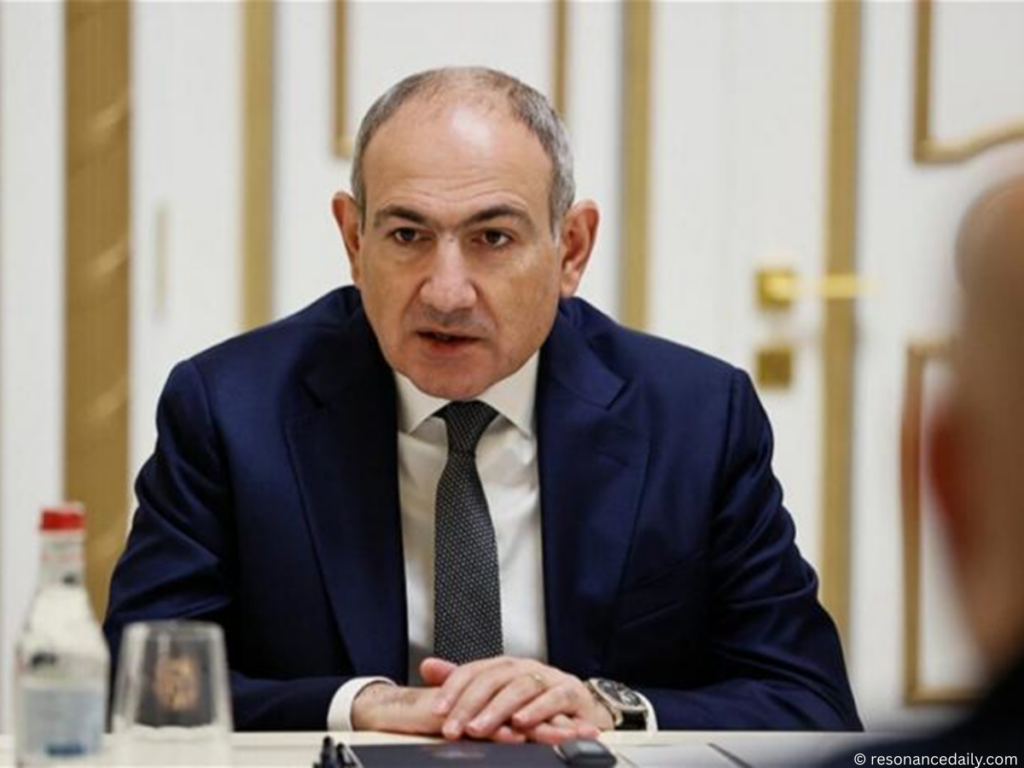
Prime Minister of Armenia Nikol Pashinyan
The head of the Armenian government indicated that Karekin Nersisyan does not intend to resign; however, the authorities plan to take actions that, according to the Prime Minister, will prompt Nersisyan to reconsider his position.
Pashinyan emphasized that he was addressing the issue both as a member of the Armenian Apostolic Church and as the Prime Minister of Armenia.
Azerbaijan-Russia Relations
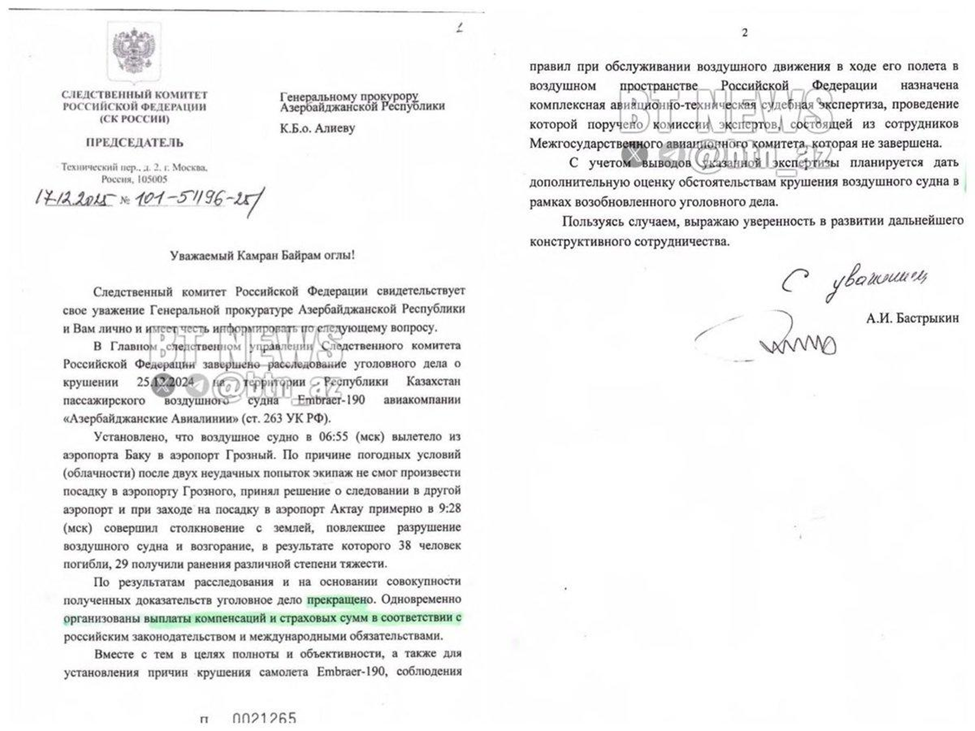
Russia has declined to accept responsibility for the downing of Azerbaijan Airlines Flight J28243, although President Vladimir Putin publicly acknowledged in October 2025 that Russian air defenses had indeed shot down the aircraft while countering Ukrainian drones.
Normalization of Armenian-Azerbaijani relations
On January 14, 2026, Armenian Prime Minister Nikol Pashinyan announced on social media that Azerbaijan had released four Armenian prisoners and transferred them to Armenia.
“Gevorg Sujian, Davit Davityan, Vigen Euljekjian, and Vagif Khachatryan were handed over by representatives of the relevant bodies of the Republic of Azerbaijan at the Hakkari Bridge, and are now on the territory of Armenia.
According to preliminary assessments, Gevorg Sujian, Davit Davityan, and Vigen Euljekjian do not have health problems. Vagif Khachatryan’s condition is considered satisfactory. The group is being transported to Yerevan,” Pashinyan stated.
Normalization of Turkish-Armenian Relations
The Armenian authorities soon plan to withdraw Russian border guards from the Akhurik checkpoint on the Turkish border.
Reports in the Armenian media indicate that the decision to transfer control of the Akhurik checkpoint has already been finalized, and a flagpole has been installed. The condition of the railway line there which leads to Turkey is currently being assessed.
Other sources report that Turkish authorities have already initiated construction near the Margara checkpoint.
Armenian media report that the combination of construction activity on the Turkish side and the anticipated use of the Akhurik checkpoint suggests a firm intention to open the border in the near future.
New Year’s Addresses by the Leaders of Azerbaijan and Armenia
In their New Year’s addresses, the leaders of Azerbaijan and Armenia emphasized the importance of establishing peace in the region.
Azerbaijani President Ilham Aliyev asserted that a de facto peace currently exists in the South Caucasus.
He further explained that Azerbaijan’s efforts to strengthen its armed forces are not intended as preparation for war with any country. Aliyev also observed that current global circumstances require states to prioritize security and enhance their defense capabilities.
Aliyev referenced the Washington Declaration and reiterated Azerbaijan’s commitment to establishing a durable peace with Armenia.
In his address, Armenian Prime Minister Nikol Pashinyan emphasized the pursuit of peace with Armenia’s neighbors and discussed the concept of a “real Armenia.” He asserted that the Karabakh issue had constituted a trap for Armenia and claimed that the country had achieved genuine independence by resolving it.
“The narrative that ‘Karabakh was ours, now it is not ours’ reflects the mindset of a person constrained by geopolitical frameworks. In contrast, the perspective of the state and its citizens is: ‘The Republic of Armenia was not ours; now it is ours,” Pashinyan added.
[1] Third President of Armenia from 2008 to 2018.