
The Post-Soviet Conflicts Watch provides an overview of ongoing conflicts and post-conflict developments across the post-Soviet space. The document presents a review and analysis of key events and trends in the Russian-occupied regions of Georgia — Abkhazia and the Tskhinvali region — as well as in the breakaway region of Transnistria, the autonomous entity of Gagauzia, and other areas within the post-Soviet space. The review also examines issues related to the Armenian-Azerbaijani peace negotiations following the Second Nagorno-Karabakh War.
Note: This review does not cover issues related to Russia’s military aggression against Ukraine.
Armenia and Azerbaijan
Civil Society Dialogue Begins
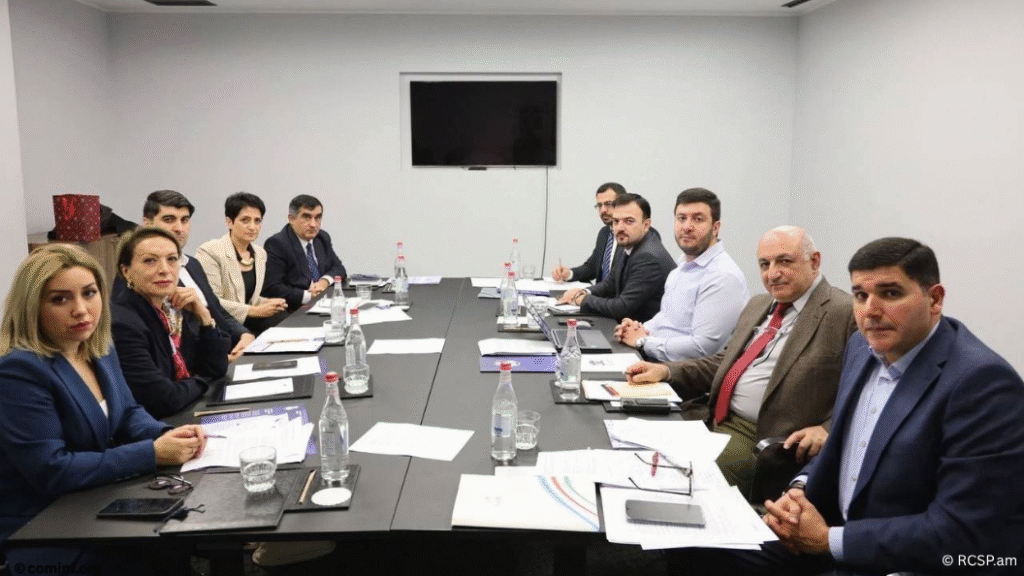
On October 21–22, 2025, a bilateral roundtable was held in Yerevan at the initiative of Armenian and Azerbaijani civil society representatives, with the support of both governments. The meeting was attended by five representatives, who also met with Armen Grigoryan, Secretary of Armenia’s Security Council.
The roundtable sought to advance the peace agenda outlined in the Joint Declaration adopted in Washington on August 8, 2025. Participants discussed the prospects for the peace process, humanitarian concerns, economic and logistical opportunities in the context of normalizing relations, and further confidence-building measures.
Azerbaijani outlets also provided extensive coverage of the meeting.
It had been a long time since such a meeting was last held. Its organization was facilitated by the ongoing peace talks between Armenia and Azerbaijan and the agreement reached in Washington. In addition to meetings between political leaders, the development of relations among civil society representatives broadens the scope of the peace process and helps foster positive dynamics in Armenian–Azerbaijani relations. This progress may also be an essential factor in overcoming other existing barriers to bilateral ties.
When will the transport routes be opened?
In October, the leaders of Azerbaijan and Armenia made several statements regarding the implementation of transport routes, consistent with the spirit of the Washington peace agreement. Although the peace agreement between Armenia and Azerbaijan was reached in the United States on August 8, its formal signing has yet to take place. The deal grants the United States exclusive rights to develop a strategic transit corridor in the South Caucasus.
On October 21, 2025, Azerbaijani President Ilham Aliyev announced the lifting of all restrictions on the transit of goods through Armenia. Speaking at a joint press conference with Kazakh President Kassym-Jomart Tokayev in Astana, Aliyev noted that the transit of Kazakh wheat to Armenia via Azerbaijan marked the first such case since the severance of ties following the collapse of the Soviet Union. According to Aliyev’s foreign policy adviser, Hikmet Hajiyev, the goods would be transported to Armenia through Georgia. He described the transit as “an economic benefit of peace.”
The press secretary of the Armenian Prime Minister described Aliyev’s decision as “a step of great importance toward opening regional communications, strengthening trust, and institutionalizing peace between Armenia and Azerbaijan.”
On October 22, at the Fifth International Silk Road Forum in Tbilisi, Armenian Prime Minister Nikol Pashinyan described Aliyev’s decision as “a statement of special importance,” and welcomed it as a direct implementation of the peace declaration reached in Washington.
Aliyev’s decision was also positively assessed by the European Union Special Representative for the South Caucasus and the Crisis in Georgia, Magdalena Grono.
During a parliamentary session on October 27, Prime Minister Pashinyan reaffirmed that Armenia is ready to facilitate the transit of trucks between Turkey and Azerbaijan via the Margara-Yeghegnadzor-Sisian-Goris route. He stated that Yerevan is prepared to implement this measure as soon as possible.
Russia has also expressed interest in new transport routes. According to media reports, on October 26, Russian Deputy Prime Minister Alexei Overchuk stated that the Azerbaijani side had confirmed the possibility of using its railways for the transit of Russian cargo to Armenia. Overchuk added that Russian Railways is already working to resolve the organizational aspects of the transit, while the Ministry of Agriculture has been instructed to develop a new logistics route.
On October 28, during the 8th Paris Peace Forum, Prime Minister Pashinyan stated that the establishment of diplomatic relations with Turkey and the opening of the borders are only a matter of time.
The opening of transport routes and their swift implementation are expected to have a distinctly positive impact on the peace process, and to help Armenia overcome its isolation. While full implementation will take time and depend on the completion of specific infrastructure projects, current statements suggest that the process is already underway, and that both sides are prepared to develop new transit corridors. These developments will contribute to a reconfiguration of the region’s transport routes and the emergence of a new geopolitical reality. In the short term, some transit traffic will pass through Georgia due to existing infrastructure constraints. However, in the longer term, Georgia is likely to lose much of its transit role between Azerbaijan and Armenia.
Gagauzia
When will the elections be held?
The new composition of the People’s Assembly, the local parliament of the autonomous entity of Gagauzia, was expected to be elected in November; however, the exact date of the elections has not yet been set. The Bashkan (head) of Gagauzia, Evgenia Gutsul, is currently in prison. If the Court of Appeal upholds her detention, elections for both the People’s Assembly and the Bashkan could be held on the same day. The People’s Assembly of Gagauzia is composed of 35 deputies, each elected from one of 35 electoral districts.
The autonomous region, which has a predominantly pro-Russian population, was visited by the Director of the Information and Security Service, Alexander Musteata, to discuss the upcoming elections. Following the meeting, the People’s Assembly approved the establishment of a working group tasked with ensuring the proper functioning of the autonomy. It was later announced that, due to ongoing legal disputes, elections will not be possible before March 2026. After the Supreme Court’s decision — whose session is scheduled for November 26 — a new election commission can be formed, which will then require three months to begin its work. Musteata’s visit to the region suggests that Chisinau remains interested in ensuring that elections in the autonomous unit are held promptly.
Transnistria
Energy crisis in the separatist region
Moldova’s separatist region of Transnistria has experienced a budget reduction of approximately €15 million in 2025 due to decreased gas supplies. The resulting energy shortage has forced several companies to scale back operations, and has led to a decline in electricity exports from the Moldovan Thermal Power Plant, a key source of revenue for the separatist authorities. The plant, located in territory under Transnistrian control, is owned by Russia’s Inter RAO.
By the end of 2024, Moldova was purchasing between 70% and 90% of its electricity from the Moldovan Thermal Power Plant. In 2021, the country imported electricity worth 176.7 million USD. The power plant is a critically important asset for Transnistria’s economy, and has served as a key lever of Russian pressure on Moldova.
In mid-2025, Transnistria was receiving between 1.1 and 1.5 million cubic meters of gas per day, a figure that increased to 3–3.7 million cubic meters in October. While this supply is sufficient to cover the population’s needs and sustain most enterprises in the separatist region, it falls short of fully meeting the local economy’s demands.
The current situation stems mainly from the suspension of electricity exports from the thermal power plant. The plant no longer receives “free” Russian gas; instead, it sources gas from Europe via Hungarian intermediaries MET and Moldovagaz. Under this new arrangement, Russia compensates for the gas with credits, although the payments are technically made by a company registered in Dubai. Due to higher gas prices and reduced supply volumes, electricity exports have become unprofitable. As of 2024, Transnistria continues to receive Russian gas via Ukraine, which fully meets its contractual obligations.
In 2025, Moldova faced a severe gas crisis when Gazprom suspended gas supplies to the country on January 1, due to Moldovagaz’s outstanding debts. On the same day, Ukraine also halted the transit of Russian gas after failing to sign a new transit agreement. In February 2025, the European Union provided Transnistria with €20 million worth of gas as humanitarian aid, intended solely for household consumption and not for industrial use. The EU also offered an additional €60 million in financial assistance, contingent on several conditions, including the protection of human rights and a gradual increase in electricity tariffs. However, Tiraspol declined the offer, although it was ultimately compelled to raise the tariffs slightly anyway.
A similar situation has developed in the breakaway region, where Ukraine’s refusal to allow Russian gas transit coincides with Moldova’s gradual efforts to diversify its energy imports. For decades, Moldova’s dependence on Russian gas and electricity from the Transnistrian thermal power plant has made it vulnerable in conflict-resolution processes, and has weakened its negotiating position with both Tiraspol and Moscow.
The Occupied Abkhazia and Tskhinvali Regions
Meeting with Sergey Lavrov
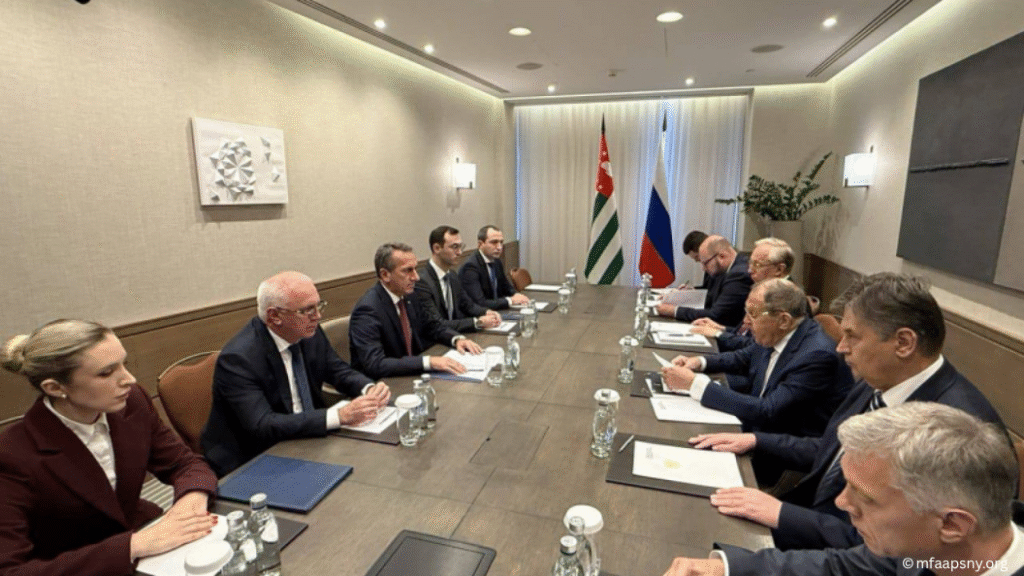
On October 1, 2025, Russian Foreign Minister Sergei Lavrov hosted the foreign ministers of the Russian-occupied regions of Abkhazia and Tskhinvali in Sochi. He held separate meetings with Oleg Bartsits, the de facto foreign minister of Abkhazia, and Akhsar Dzhioev, the de facto foreign minister of Tskhinvali. This was followed by a trilateral meeting that included all parties.
At the conclusion of the meeting, Bartsits and Lavrov signed a Plan of Consultations between the de facto Ministry of Foreign Affairs of Abkhazia and the Ministry of Foreign Affairs of the Russian Federation for the years 2026–2027. A similar agreement was also signed between Dzhioev and Lavrov. For context, the previous plan covering the period of 2024–2025 was finalized on October 3, 2023. The “foreign activities” of the occupied regions are entirely dependent on Russia’s diplomatic and logistical support, with the framework and scope of cooperation predetermined through such plans.
The consultation plan envisions discussions regarding current issues in bilateral relations, the establishment of a comprehensive legal and contractual framework, and the exchange of information on each side’s foreign policy activities. Additionally, it aims to organize joint scientific and practical seminars, conferences, and roundtables, and to support cultural and sporting events.
Lavrov also met with the de facto ministers in Moscow on June 6.
‘Foreign Policy’ Activities of Occupied Abkhazia
In October 2025, two notable developments occurred in the so-called ‘foreign policy’ of occupied Abkhazia. On October 20, the de facto Foreign Minister of Abkhazia met with Isaac Kumesina, the Ambassador-at-Large of the de facto Ministry of Foreign Affairs. This meeting marked Kumesina’s first visit to Abkhazia in this capacity. The discussions focused on the need to establish a roadmap for collaborative activities and to outline priority areas for Kumesina’s mandate, which includes promoting the interests of the occupied region in African nations. Sukhumi is actively pursuing ways to expand its international outreach, and seeks further recognition, with Africa identified as a relatively untapped region for engagement. Kumesina, primarily based in Ghana, is a businessman with diverse commercial interests.
A notable development was the visit of a delegation from occupied Abkhazia to Iran. On October 20-21, the XXII session of the International Business Cooperation Council of the Chambers of Commerce and Industry of the Caspian Region Countries, ‘Business Caspian,’ took place in Tehran. This marked the first time representatives from occupied Abkhazia participated in such an event on Iranian soil. The so-called Chamber of Commerce and Industry of occupied Abkhazia was represented by Adgur Lushba, a member of the Governing Council, and Naali Basaria, the Head of the Department of Foreign Relations and Investments. They engaged with representatives from the Tehran Chamber of Commerce, Industry, Mines, and Agriculture, as well as with the Iran-Russia Joint Chamber of Commerce. Additionally, the Abkhaz delegation held discussions with Iranian entrepreneurs and members of the Russia-Iran Business Council. Prominent members of the Iranian government attended the forum’s closing session. The International Council serves as an advisory body dedicated to fostering economic cooperation and strengthening business ties among the countries of the Caspian region. The previous, XXI, session was held in Astrakhan, Russia, in 2024.
In both instances, Russia’s involvement is apparent: it actively encourages representatives from the occupied regions to participate in international events, and works to enhance their external connections. The overarching aim of these initiatives is to achieve wider international recognition of the purported independence of the occupied territories of Abkhazia and Tskhinvali region by additional UN member states.
The UN Resolution and the Response of the Occupied Regions
On October 8, 2025, the UN Human Rights Council adopted a resolution in Geneva titled “Cooperation with Georgia,” which addresses the situation in the Russian-occupied territories of the country. This resolution, submitted annually by Georgia since 2017, primarily focuses on the human rights conditions in Abkhazia and the Tskhinvali region. Notably, it was adopted by consensus for the first time.
In its resolution, the UN Human Rights Council reaffirmed its commitment to Georgia’s sovereignty and territorial integrity within its internationally recognized borders.
The Council underscored the significance of the Geneva International Discussions, established under the August 12, 2008, ceasefire agreement.
Consistent with previous years, the resolution reiterated its acknowledgment of Russia’s occupation of Abkhazia and the Tskhinvali region, referencing the decisions of the European Court of Human Rights issued between 2021 and 2024.
Additionally, the Council expressed concern that international and regional human rights monitoring mechanisms continue to be denied access to the occupied territories. In this context, the resolution called for immediate and unrestricted access for the Office of the United Nations High Commissioner for Human Rights, and other international and regional human rights mechanisms, to the regions of Abkhazia and Tskhinvali.
The representative of the United Kingdom articulated that “For 17 years, Russia’s unlawful military occupation of Abkhazia and South Ossetia has constituted a violation of international law, resulting in the infringement of fundamental human rights for ethnic Georgians. This occupation must be resolved.”
According to an assessment released by the de facto Ministry of Foreign Affairs of occupied Abkhazia, both the resolution and the statement issued by the representative of the United Kingdom were characterized as part of a meticulously orchestrated political spectacle intended to discredit the “Republic of Abkhazia” and the Russian Federation. The statement took issue with the use of the terms “occupation” and “illegal military control,” asserting that such terminology “bears no relation to reality, and grossly distorts the historical and politico-legal context.”
Similar statements were made in the occupied Tskhinvali region, where the de facto authorities described the adoption of the resolution by the United Nations as an act of “political myopia.”
The Strasbourg Court’s decision and the response of the occupied regions
The European Court of Human Rights (ECHR) ruled that Russia must pay Georgia more than €253 million for human rights violations resulting from the tightening of administrative boundary lines after the 2008 war. In its judgment in the case Georgia v. Russia on October 14, the Court unanimously ordered Russia to pay €253,018,000 in compensation for non-pecuniary damages suffered by more than 29,000 victims. The case concerned the process of “borderization” that began after the 2008 conflict, which has restricted the movement of people across the administrative boundary lines separating Tbilisi-controlled territories from the Russian-occupied regions of Abkhazia and Tskhinvali.
The de facto Ministry of Foreign Affairs of the occupied Tskhinvali region characterized the Court’s decision as “yet another biased move.” In a statement, the de facto agency asserted, “This decision is profoundly biased and politicized, accurately reflecting the ‘level of justice’ of the organization in question, and revealing Europe’s true character in the best possible light.”
New Curator of the Occupied Regions
On October 20, 2025, by order of the President of the Russian Federation, Igor Maslov, the head of the now-defunct Department for Interregional and Cultural Relations with Foreign Countries within the Presidential Administration, was dismissed. A week later, on October 27, President Putin also dismissed Alexei Filatov, who had headed the dissolved Department for Cross-Border Cooperation. Maslov and Filatov had long overseen matters related to the occupied regions of Abkhazia and Tskhinvali, and were among the most experienced officials in this area. Both departments were formally liquidated on August 29, 2025.
By presidential decree, Vladimir Putin established a new Department for Strategic Partnership and Cooperation within the Presidential Administration to replace the two previously abolished departments. The new department will oversee the occupied regions. Although its formation is not yet complete, on October 24, President Putin appointed Vadim Titov as its head. Titov previously worked at the state corporation Rosatom, which Sergei Kiriyenko led. Kiriyenko, currently the First Deputy Head of the Presidential Administration, has served as the curator of the occupied regions since January 2025. He is also reported to oversee Moldova and Armenia, with a mandate to strengthen Russia’s political influence in these countries.
Cargo Terminal near the Occupation Line
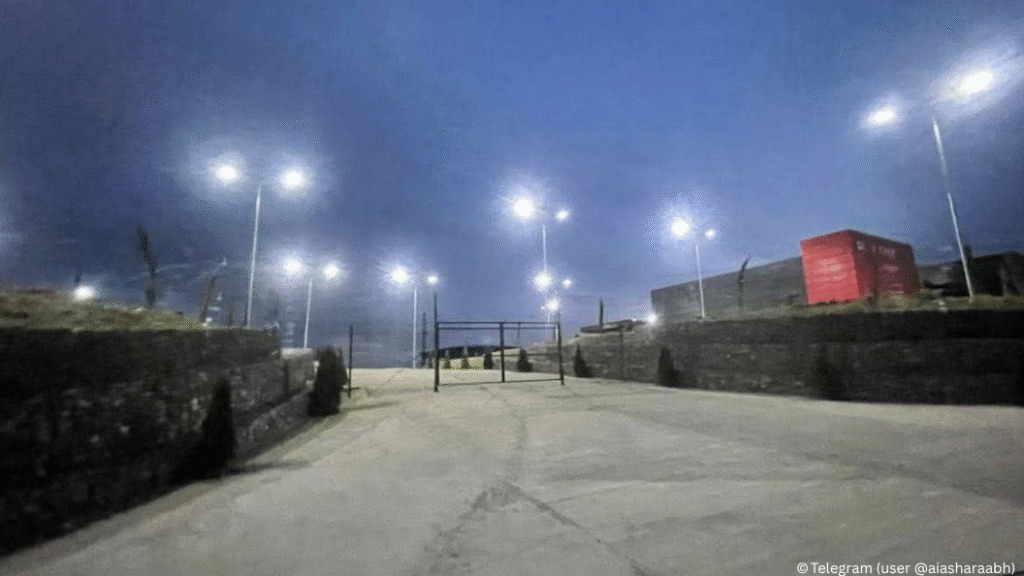
Social media outlets critical of the de facto government of occupied Abkhazia reported that construction of a cargo terminal at the so-called Enguri checkpoint in the occupied Gali district has been completed. In addition to the terminal, three duty-free shops are already operating near the occupation line. Users of various Telegram channels questioned the purpose of opening a cargo terminal “to communicate with Georgians,” whom the de facto authorities frequently portray as adversaries. Some commentators have speculated that the facility’s purpose is to increase the checkpoint’s throughput capacity. Pro-government Telegram channels, by contrast, have framed the terminal’s opening as a positive development, claiming that it “will enhance the attractiveness of the territory for international cooperation” and “constitute an important step toward integrating the region into global economic processes.” Nevertheless, the opening has raised suspicions that the terminal could serve as a transit hub between Russia and the Georgian government-controlled territory, potentially enabling Russia to circumvent international sanctions.
Demarcation of the “border”
The 11th meeting of the South Ossetia-Russia Joint Border Commission was held in Moscow from October 13 to 17. The participants discussed the “progress of the international legal formalization” of the so-called state border.
Notably, on October 22, 2025, by order of the President of the Russian Federation, Nikolai Udovichenko was appointed Special Representative of the President for the Delimitation and Demarcation of the State Border of the Russian Federation with Neighboring States, Members of the Commonwealth of Independent States (CIS). His mandate includes overseeing the establishment of borders with neighboring post-Soviet countries and with the occupied regions of Abkhazia and Tskhinvali. By a separate decree, Udovichenko was also appointed head of the Russian delegation in multilateral negotiations on issues concerning the Caspian Sea. In both roles, he succeeded Mikhail Petrakov, who was appointed Russian Ambassador to Australia on August 21, 2025.