
The ultimate guarantor of security in the occupied Tskhinvali region since the 2008 Russo-Georgian War has been the 4th Military Base of the Russian Defence Ministry. However, the de facto Defence Ministry retains a certain degree of importance in its capacity, often headed by ethnic Russian high-ranking officers who previously served in the Russian Armed Forces.
This article primarily presents a chronological overview of the activities of the de facto defence ministers. Notable episodes from their military careers, both within the Tskhinvali region and beyond, are reviewed based on open-source data. The article focuses on ethnic Russian military personnel who were or have been appointed as defence ministers before and since the 2008 Russo-Georgian War.
Key Conclusions:
- Ethnic Russian high-ranking officers have been repeatedly appointed as de facto defence ministers in the occupied Tskhinvali region, whereas no ethnic Russian has ever held a similar position in occupied Abkhazia. This appointment policy suggests that Russia places law enforcement institutions under local control in Abkhazia, while in the Tskhinvali region, such roles are exclusively held by representatives of the Russian security sector. The Russian “Defence Ministers” are on official assignments and remain fully accountable to, and directed by, authorities in Russia.
- Since 1993, seven out of fourteen de facto defence ministers of the occupied Tskhinvali region have been ethnic Russian high-ranking officers from the Russian Armed Forces. The first ethnic Russian military officer was appointed in 2004, during a period of rising tensions between the Georgian central government and the separatist, so-called Republic of South Ossetia.
- The appointments of ethnic Russian military officers in the occupied Tskhinvali region have coincided with critical occurrences in the timeline. For example: in 2004, during a period of heightened tensions in the region; in 2008, when the ethnic Russian de facto Defence Minister was replaced by a more experienced Russian military officer shortly before the Russo-Georgian War; in 2011, when the “creeping occupation” accelerated; and in 2022, following Russia’s full-scale invasion of Ukraine.
- The first ethnic Russian de facto Defence Minister was Anatoly Barankevich, appointed in 2004. His appointment followed the “Rose Revolution” and the new Georgian government’s shift toward a Western foreign policy orientation. Barankevich’s appointment marked a crucial turning point, reflecting a shift in Russia’s attitude toward Georgia, as expressed through ever harsher policies.
- The de facto Defence Ministry has limited resources, as the armed forces of the occupied Tskhinvali region were downsized, and locals were allowed to serve at the 4th Military Base of the Russian Armed Forces deployed in the region. Despite these limitations, the appointment of ethnic Russians ensures the de facto Ministry’s total subordination to the Russian Federation.
- The de facto Defence Ministry does not serve a “sovereign defence” function. Instead, it acts as a tool for propaganda and creates an illusion of sovereignty.
- The Russian de facto Defence Ministers appointed in the occupied Tskhinvali region often go on to hold the highest military positions in occupied Abkhazia. Some have also served in the self-proclaimed People’s Republics of Luhansk and Donetsk. This supports the observation that the occupied regions of Tskhinvali and Abkhazia function as training grounds for individuals who Russia deploys in escalations against various countries.
De Facto Defence Ministers
Valery Khubulov
From 1993 to 1996
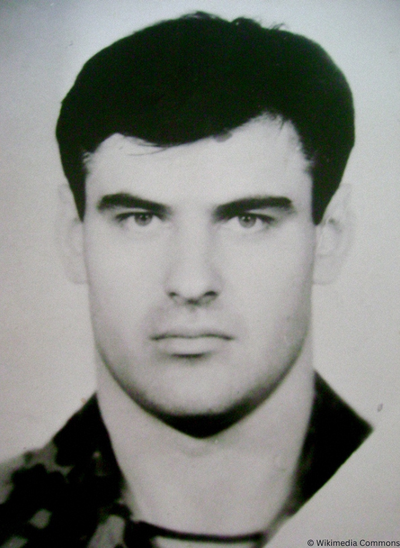
Valeryi Khubulov was the first head of the de facto Defence Ministry established after the 1991–1992 Tskhinvali War. He was born on November 6, 1966, in Tskhinvali. Khubulov served in the Soviet Army from 1984 to 1986. After completing his compulsory military service, he became president of the youth organization Farn. In 1991, he was elected Chairman of the South Ossetia Department of the All-Union Leninist Youth Communist League. He actively participated in the separatist movement from 1991 onward. Khubulov led an ethnic Ossetian armed unit that fought in the Abkhazia War in 1992–1993. He was a friend of the Chechen warlord Shamil Basayev, who fought alongside separatists against Georgia that same war. He also participated in forming the 1992 Sochi Agreement. Khubulov was killed in an ambush in 1998, in Vladikavkaz, Russia.
Soslan Gatikoev
From 1996 to 2001
Soslan Gatikoev was born in 1967. He was appointed de facto Defence Minister by then–de facto President Ludvig Chibirov. In 2001, he relocated to North Ossetia, Russia, and took up a number of entrepreneurial activities. In 2012, he funded Leonid Tibilov’s “election campaign”, and once Tibilov secured the de facto presidency, Gatikoev was put in charge of the Foreign Intelligence Service of so-called South Ossetia, a position in which he served until 2017.
Valery Tedeev
From December 26 to July, 2003
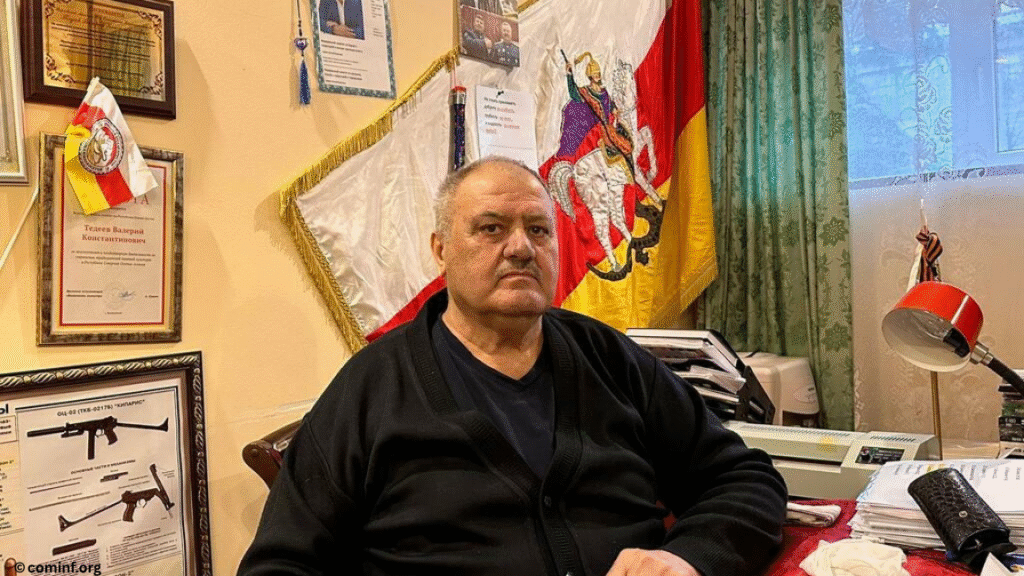
Valery Tedeev was appointed de facto Minister of Defence by de facto President Eduard Kokoity. Prior to this appointment, he served as de facto Deputy Minister of Defence. Tedeev accused Kokoity of attempting to sell “Ossetian Tanks” to Turkey. In July 2003, he was dismissed by Kokoity following accusations of an attempted coup. Tedeev sought to participate in the 2011 illegitimate presidential elections; however, the so-called Election Commission did not register his candidacy.
Bala Bestauti
From July 2003 to September 2003
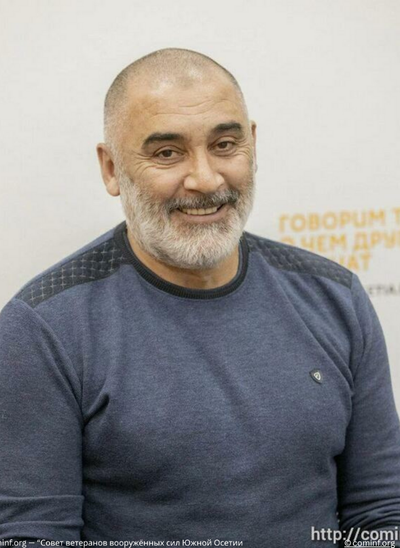
Bala Bestauti was born on April 22, 1959. He is the shortest-serving de facto Defence Minister, having held the position from July to September 2003. Prior to that, he served as the de facto Minister of Internal Affairs. He participated in the Tskhinvali War in 1991, as well as the 2008 Russo-Georgian War. Over the years, he has been a member of the de facto Parliament, Director of the Tskhinvali Bus Terminal, and Head of the so-called Geology and Ecology Committee of the Tskhinvali region.
Zelim Muldarov
From September 25, 2003, to April 15, 2004
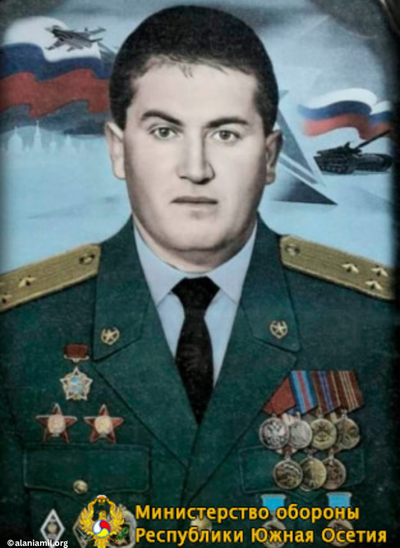
Zelim Muldarov was born in 1964 in the village of Ortevi, in the Tskhinvali region. After completing elementary school, he moved to Tbilisi and later decided to pursue a military career. Muldarov served as a Soviet officer in the Far East and Afghanistan, and as a Russian officer in Armenia. Notably, from 1989 to 1993, he was in active service at the Russian military base in Gyumri, Armenia, and none of the available sources indicate his participation in the Tskhinvali War. He was found deceased at his home in 2004. A special-purpose separate battalion was named after him in Tskhinvali. After his death, and prior to Anatoly Barankevich’s appointment, Ibragim Gaseev served as the acting de facto Defence Minister.
Anatoly Barankevich
From June 2004 to December 2006
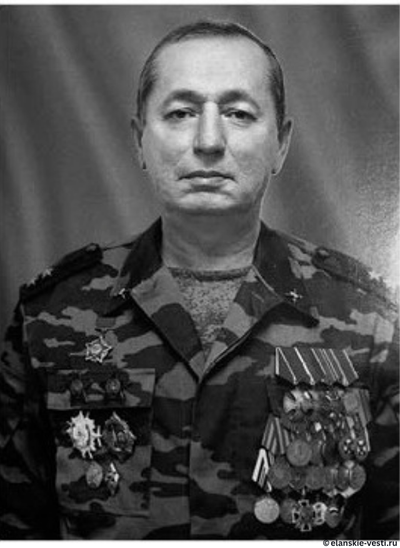
Anatoly Barankevich was the first Russian officer to be appointed as de facto Defence Minister in the Tskhinvali region. Prior to his appointment, this position had been held solely by ethnic Ossetians.
Barankevich was born on December 10, 1959, in Kaliningrad, in the Russian SFSR. In 1977, he graduated from the Ussuriysk Suvorov Military School; in 1981, the Far Eastern Higher Combined Arms Command School; and in 1989, the Frunze Military Academy in Moscow. As an officer, he served in the Siberian Military District, Afghanistan, the German Democratic Republic (East Germany), the Volga District, and the Northern Caucasus Military District. He participated in both Chechen-Russian wars. He was Deputy Head of the Stavropol and Chechnya Military Commissioner’s Offices.
In 2004, he left the ranks of the Russian Armed Forces as a colonel and continued his career in the Tskhinvali region. He was de facto Defence Minister from 2004 to 2006, heading the de facto Security Council from 2006 to 2008. According to him, in 2004, after the passing of his predecessor and his appointment as de facto minister, hostilities were ongoing between the Russian-backed separatists and the Georgian Armed Forces. He calls himself the “founder of South Ossetia’s systemic defence structure.” In 2012, Barankevich was appointed Chief of Staff of the de facto government. He was a military counselor to the leader of the so-called Luhansk People’s Republic in 2015.
“I am grateful to my destiny for giving me South Ossetia,” Barankevich said in a speech to de facto President Alan Gagloev in Tskhinvali in September 2025, during the celebration of the 35th anniversary of the so-called Republic of South Ossetia, which he attended as an honorary guest.
Andrey Laptev (Oleg Ivannikov)
From December 2006 to March 2008
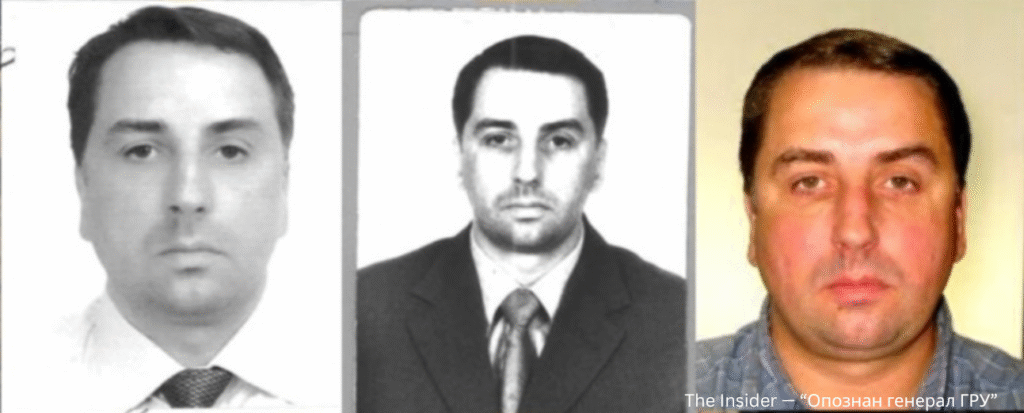
Andrey Laptev was born in Karl-Marx-Stadt (German Democratic Republic) in 1967, into the family of aviation Major-General Vladimir Ivannikov, who was a commander of the Aviation Corps of the 53rd Guard. He spent his childhood years in the Lithuanian SSR, where the aviation corps were based. In 1988, he graduated from the Kyiv Military Aviation Engineering Academy, after which he moved to Moscow and continued his studies at the 6th Rocket Department of the Moscow Aviation Institute. From 1990 to 2003, he worked in Rostov. He was appointed de facto Defence Minister in the Tskhinvali region in December 2006 and held the position until March 2008.
Laptev was an adviser to the head of the military headquarters of the self-proclaimed Luhansk People’s Republic. Bellingcat and The Insider named Laptev one of the “key figures” behind separatist activities and the war in Luhansk in 2014. The journalistic investigation revealed his direct involvement in the shooting down of a civilian aircraft in Ukraine, which claimed 298 lives. The European Court of Human Rights highlighted in its ruling that the Boeing flying from Amsterdam to Kuala Lumpur was shot down by Russian forces. Andrey Laptev, call sign Orion, is one of the central figures in this case.
Later, it was revealed that Andrey Laptev’s real name is Oleg Ivannikov, who is an experienced officer of the Main Intelligence Directorate of the General Staff of the Russian Defence Ministry. He held one of the executive positions at PMC Wagner during the Joint Forces Operation (the so-called Anti-Terrorist Operation, or ATO) in Ukraine in 2014.
Vasily Luniov
From March to October 2008
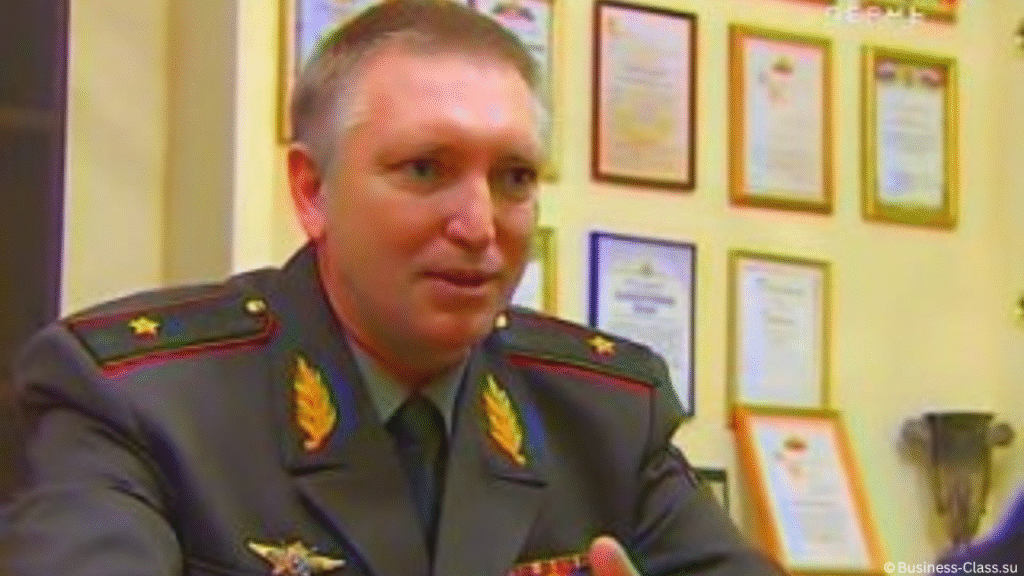
Vasily Luniov was born in 1956 in Chelyabinsk Oblast, in the Russian SFSR. He graduated from the Frunze Military Academy in Moscow and the Military Academy of the General Staff of the Russian Federation. He served in the Far East, Siberia, and the Urals. From 2003 to 2004, he was Deputy Head of the Siberian Military District. In 2007, he became Military Commissioner of Perm Oblast.
Luniov served as de facto Defence Minister from March to October 2008. According to available information, he took charge of the 58th Army during the 2008 Russo-Georgian War after the army’s commander, Anatoly Khruliov, was wounded in action. Luniov returned to his previous role as Military Commissioner in Perm Oblast shortly after the end of the 2008 war. He was later sent to Syria as a military counselor. Since 2013, Luniov has performed similar functions in Algeria.
In 2018, Luniov was appointed Head of the General Staff of the de facto Defence Ministry of Abkhazia by de facto President Raul Khajimba. In this position, Luniov replaced former Commander of the 58th Army Anatoly Khruliov. Luniov holds the rank of Major-General.
Anatoly Luniov’s military career in the Tskhinvali region began prior to the 2008 war. Russia had begun preparations for the war in advance. Luniov, as an experienced officer, was selected for the decisive phase and was tasked with ensuring coordination with the 58th Army and its commander, Khruliov. Further evidence of his deployment to the region on a special assignment is the fact that he returned to his previous job in Perm Oblast immediately after the war ended.
Yuri Tanaev
From October 31, 2008 to July 27, 2010
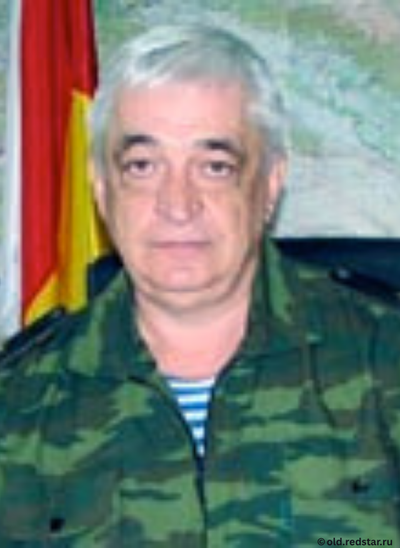
Yuri Tanaev was appointed de facto Defence Minister by de facto President Eduard Kokoity in October 2008, shortly after the 2008 Russo-Georgian War. Tanaev graduated from the Minsk Suvorov Military School in 1967. Prior to his deployment in the Tskhinvali region, he was the commander of the Intelligence Department of the Urals Military District. He holds the rank of Major-General.
Valery Iakhnovets
From July 27, 2010 to 2015
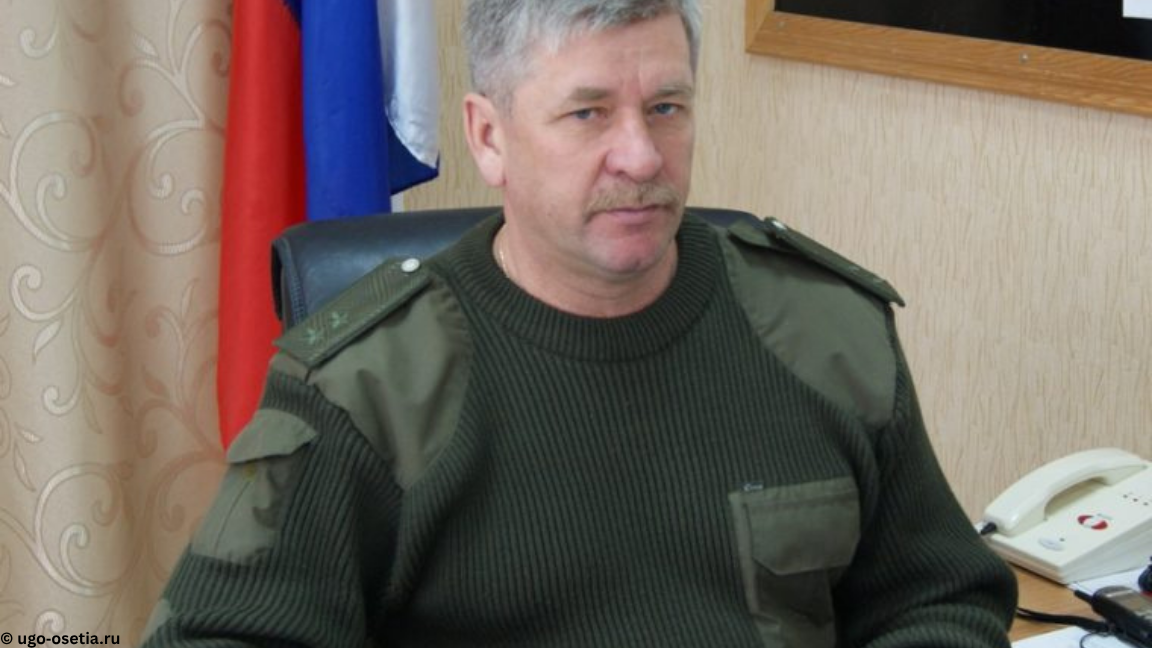
The de facto President of the occupied Tskhinvali region, Eduard Kokoity, appointed Valery Iakhnovets de facto Defence Minister on July 27, 2010. Iakhnovets held the rank of Colonel in the Russian Army at the time of his appointment. He later received the rank of Lieutenant-General in the Tskhinvali region.
Iakhnovets is a Russian officer who held the position of de facto Defence Minister under three different de facto presidents. Prior to that, he was a commander in the reconnaissance unit of Russia’s elite Airborne Forces. He participated in the Yugoslav conflict. Iakhnovets is a friend of the former President of the Republic of Ingushetia, Yunus-Bek Yevkurov, who was his deputy in the Russian Airborne Forces. In 1999, both took part in the assault on Pristina Airport. He also participated in the 2008 Russo-Georgian War.
A 2010 interview says a lot about him and contemporary events. In particular, he confirmed the participation of Russian officers in paramilitary groups in so‑called South Ossetia. According to him, Ossetian fighters had no theoretical training and relied solely on practical experience of warfare. He also described the Russian vision for a sovereign army of the so‑called South Ossetia. In one 2010 interview, he implied that a state should be defended by its own army; however, his views shifted radically two months later, when he expressed the opposite in another interview. According to Iakhnovets, an Ossetian army should not exist. He was the first to mention the number of employees at the de facto Defence Ministry — 1,300, including civilian personnel. This number includes soldiers, sergeants, and officers; 1,300 military personnel is approximately one‑third of a brigade in the Soviet and Russian military systems. Russia, however, began integrating local ethnic Ossetians into the 4th Military Base of the Russian Armed Forces, a step that effectively abolished the idea of a “sovereign Ossetian army.” Iakhnovets said that the safety and security of “South Ossetia” is ensured by the 4th Military Base and that an attack on this base would be regarded as an attack on Russia. According to him, in the best‑case scenario, a separate battalion could be formed that would consist entirely of ethnic Ossetians.
The “creeping occupation” process began during Iakhnovets’ incumbency. Initial signs of “creeping occupation” and “borderization” were observed in 2009; however, the process accelerated in 2011. Since 2013, it has intensified. “Borderization” includes the erection of artificial barriers, fences, barbed wire, and trenches, which collectively form an occupation line that gradually absorbs new territories.
From September 16, 2016, to February 25, 2022
Ibragim Gasseev was born in Tskhinvali on August 30, 1978. He is an ethnic Ossetian. He graduated from the Military Academy of the General Staff of the Russian Federation, specifically from the training programme for foreign specialists in state military security. He also earned a master’s degree from the Russian Presidential Academy of National Economy and Public Administration. Prior to that, he graduated from the so‑called South Ossetia State University, where he specialized in sports and law.
From 1998 to 2004, he rose through the ranks from platoon commander to de facto Deputy Defence Minister. On July 6, 2004, he was appointed deputy to de facto Defence Minister Anatoly Barankevich. Gasseev became Acting de facto Defence Minister during the 2004 Georgian-Ossetian conflict, while Barankevich was in Russia on personal matters. He served as a member of the de facto Parliament until 2009. In 2008, he participated in the Russo-Georgian War as de facto Deputy Defence Minister. During the war, his unit took control of the Akhalgori region. In parallel with his parliamentary role, he also served as de facto Deputy Defence Minister and commanded the General Staff. He temporarily led the de facto ministry after his predecessor was relieved of duty. Gasseev served as de facto Defence Minister from 2016 to 2022. In 2022, an improvised explosive device (IED) detonated at the entrance of his home; however, Gasseev and his mother were unharmed.
In 2022, de facto President Anatoly Bibilov dismissed Gasseev, justifying the decision by claiming that Gasseev did not dedicate enough time to the army and military training, while the army required active leadership. Bibilov’s decision was also influenced by earlier events. In February 2016, a conflict arose between Acting de facto Defence Minister Gasseev and then-Speaker of the de facto Parliament, Anatoly Bibilov. Gasseev stated that concerns raised by military personnel during a meeting with the Speaker had not been addressed. The main topic of the meeting was the status of an additional agreement with Russia regarding military integration, and unification with the Russian Federation. According to opinions circulating within the military, the de facto Parliament was planning to dissolve or downsize the de facto Defence Ministry of the separatist republic once it was absorbed into the Russian Ministry of Defence. In 2022, Gasseev attempted to run in the illegitimate presidential elections; however, the so-called central election committee rejected his candidacy, arguing that he was not fluent in the Ossetian language. The 2022 illegitimate presidential elections were won by Alan Gagloev, who later appointed Gasseev as de facto Minister of Emergency Situations.
Following Gasseev’s dismissal as de facto Defence Minister, the position was assigned to Viktor Fedorov, an ethnic Russian. Fedorov was born in 1958 in Ulan-Ude, into a military family. In 1980, he graduated from the Serpukhov Higher Military Command School. He served in the Strategic Rocket Forces in Tver Oblast, Kozelsk, and Aleisk. In 2004, he was appointed head of the Strategic Rocket Forces Command Post. In 2005, he became Chief of Staff for Operational Control within the same unit and was promoted to Deputy Chief of Staff the following year. He was deployed to the Tskhinvali region in 2011. He holds the rank of Major-General. Previously, he also served as Gasseev’s deputy.
Vladimir Pukhaev
From April to August 2022
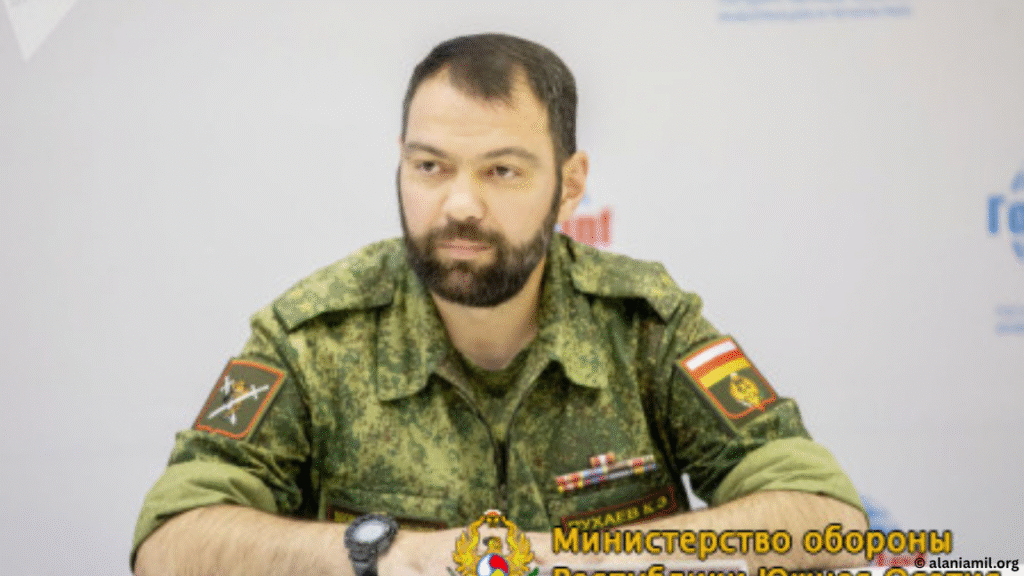
Vladimir Pukhaev was the last de facto Defence Minister appointed by de facto President Anatoly Bibilov. He held the position from April to August 2022. Bibilov replaced Acting de facto Defence Minister Viktor Fedorov with Pukhaev. An ethnic Ossetian, Vladimir Pukhaev was born in 1981 in Tskhinvali. According to his official biography, he began his career in the de facto Ministry of Internal Affairs and later worked at the so-called State Security Council. He subsequently joined the de facto Defence Ministry. In 2015, he studied at the Frunze Military Academy in Moscow. Pukhaev registered as a candidate in the illegitimate 2022 presidential elections; however, shortly before his appointment as de facto minister, he withdrew his candidacy.
Pukhaev was a significant figure during the transitional period and held personal authority and influence within both Ossetian military and civilian circles. There was speculation that Gasseev and Pukhaev were laying the foundation for sovereign Ossetian governance, however, it became evident that military discipline and the rule of law were secondary concerns for the de facto Defence Ministry under ethnic Ossetian leadership. According to Ekho Kavkaza, Ossetian paramilitary circles evolved into informal brotherhoods, where personal relationships overshadowed formal order. This dynamic was well known in Russia, and the deployment of Marat Pavlov as de facto Defence Minister of the occupied Tskhinvali region served a specific purpose: to establish and reinforce formal order.
From August 2022 to April 18, 2024
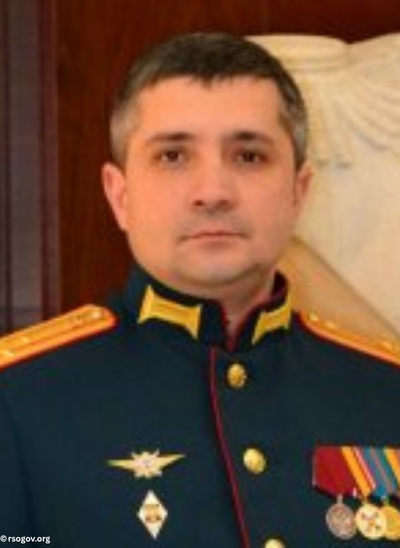
Marat Pavlov was born in 1984. He began his service in the Russian Armed Forces in 2001. He graduated from the Strategic Rocket Forces Military Academy, and has participated in various conflicts. He has been awarded state and other military honours. Pavlov held the rank of Colonel at the time of his appointment as de facto Defence Minister. He was later promoted to Major-General by de facto President Gagloev.
Alan Gagloev appointed Pavlov as de facto Defence Minister in August 2022, five months after Russia’s full-scale invasion of Ukraine. His appointment was directly linked to the full-scale war. Gagloev himself acknowledged this, stating that “South Ossetia” could not afford to lag behind amid the changes taking in the modern world. Pavlov’s appointment followed the deployment of military equipment and personnel from the Tskhinvali region to Ukraine.
Gagloev dismissed Pavlov on April 18, 2024. In May 2024, he also dismissed Pavlov’s deputy, Vepkhvia Tandelov, after Ossetian Telegram channels reported that the Russian FSB had found several thousand packs of contraband cigarettes in Tandelov’s vehicle at a border post in North Ossetia. Tandelov was placed under house arrest in Tskhinvali. According to Ekho Kavkaza, Gagloev dismissed Pavlov due to his alleged involvement in the illegal trafficking of tobacco products. There was speculation that officials in the occupied Tskhinvali region were engaged in smuggling operations for personal financial gain. In this context, Pavlov’s dismissal may have been linked either to disputes over the distribution of profits from the illegal trade or to his failure to assert personal authority and maintain order within Ossetian law enforcement circles. For this reason, a more experienced and influential general was appointed in his place.
From June 2, 2025, to Present
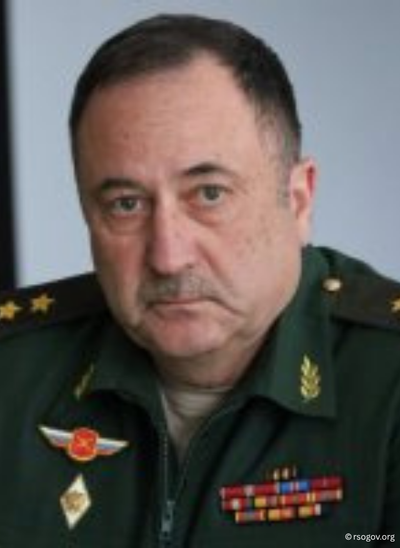
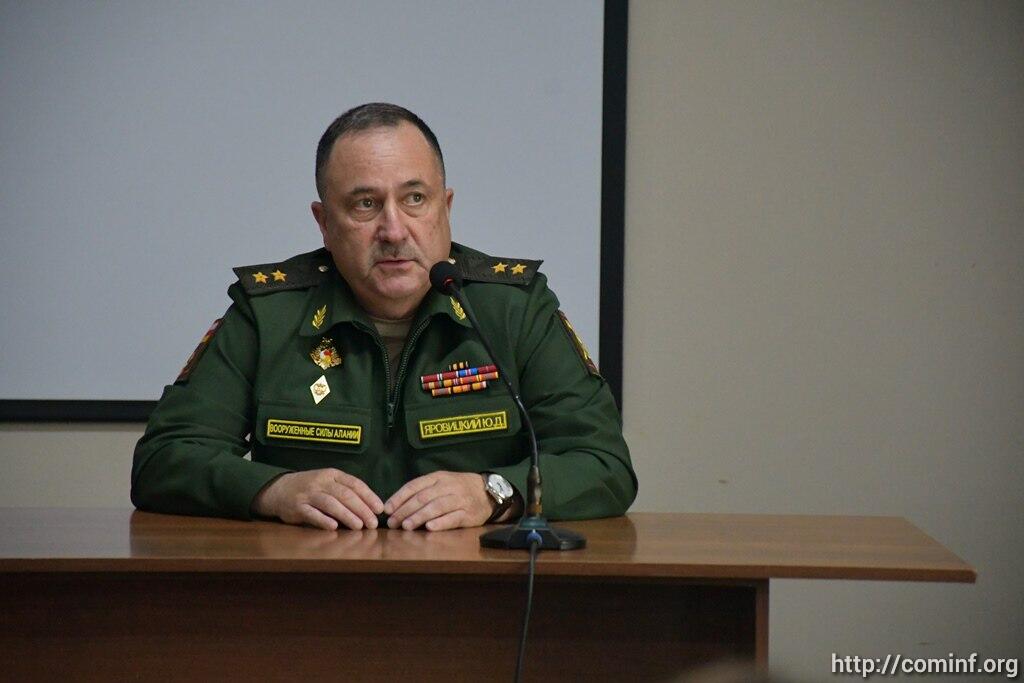
On June 2, 2025, after a long pause, de facto President Alan Gagloev appointed a new de facto Defence Minister—Lieutenant-General Yury Yarovitsky. He is the highest-ranking Russian officer ever appointed as de facto minister in the Tskhinvali region by the Russian Federation.
Yury Yarovitsky was born in 1965 in the Uzbek SSR, where he graduated from the Higher Tank Command School. In the 1990s, he participated in the Russo-Chechen War. As a member of the Russian Army’s “Northern” group, he took part in the assault on Grozny. Yarovitsky was awarded the Medal for Bravery for his exceptional service in Chechnya. From 2016 to 2020, he served as the first deputy commander of the 1st Tank Army of Russia’s Western Military District. In 2015–2016, he participated in Russian military operations in Syria. Russia’s military involvement in Syria has been associated with documented war crimes, and Yarovitsky was one of the Russian commanders involved in the Russian operations in Syria. He has also served in Nicaragua as a military consultant—one of the few states that has recognized the “independence” of Abkhazia and the Tskhinvali region.
Like his predecessors, Yarovitsky has pledged to improve the training system for military personnel and to enhance the material and technical infrastructure in the occupied Tskhinvali region. As of October 2025, construction of a new tank training base has entered an active phase. According to Yarovitsky, both Russian and Ossetian forces will undergo heavy equipment training at the facility.