
Engagements between Armenia and Azerbaijan
On October 2, Armenian Prime Minister Nikol Pashinyan and Azerbaijani President Ilham Aliyev met on the sidelines of the VII Summit of the European Political Community in Copenhagen.
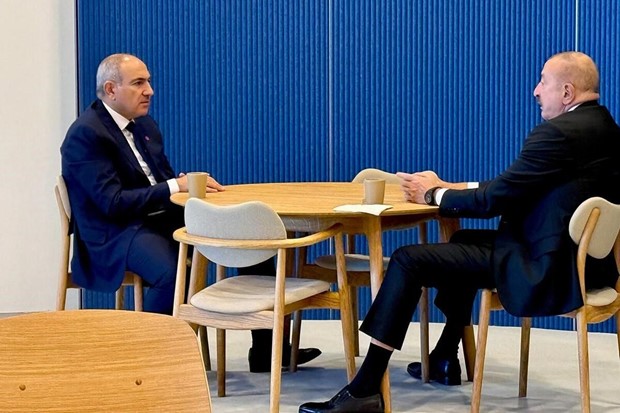
The meeting addressed the implementation of the peace agreement signed on August 8, 2025, under the mediation of U.S. President Donald Trump. Both parties reaffirmed their readiness to continue cooperation in order to consolidate peace and stability in the region.
The conversation also addressed the opening of regional transport communications, also referred to as the “Trump Route.”[1]
Both sides welcomed the closure of the OSCE Minsk Group, and reaffirmed their intention to sustain dialogue and take further measures to rebuild trust between the two nations.
The leaders of Armenia and Azerbaijan attended the Middle East Peace Summit, held in Sharm el-Sheikh, Egypt, on October 12–13.
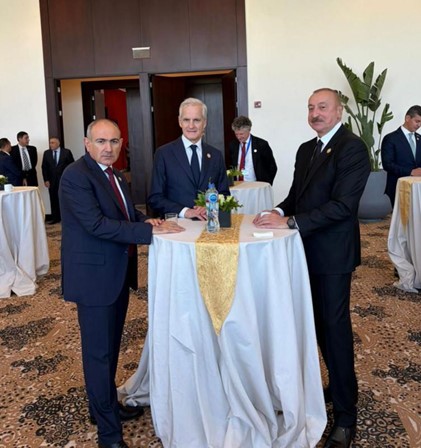
On October 13, the leaders also held a brief meeting to discuss issues of mutual importance.
Trilateral Engagements between Armenia, Azerbaijan and Turkey
Armenian Prime Minister Nikol Pashinyan announced that Armenia will host the 8th European Political Community Summit on May 4, 2026. Yerevan has invited the Presidents of Azerbaijan and Turkey to participate in the gathering.
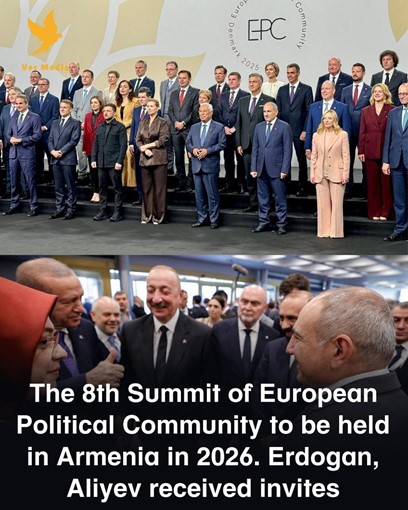
It has been confirmed that President Recep Tayyip Erdoğan of Turkey will attend the upcoming summit and undertake a visit to Armenia.
It has yet to be confirmed whether President Ilham Aliyev of Azerbaijan will attend the summit.
Azerbaijan’s Foreign Policy
On October 9, during a meeting between Azerbaijani President Ilham Aliyev and Russian President Vladimir Putin in Dushanbe, the latter publicly acknowledged that Russia had shot down an Azerbaijan Airlines passenger plane in December 2024.
The Azerbaijani passenger plane, en route from Baku to Grozny, crashed on December 25, 2024. The aircraft was carrying five crew members and 62 passengers, of whom 38 lost their lives. Initial reports suggested that the plane was likely brought down by a Russian air defense system as its approached Grozny, during a period of heightened alert prompted by a suspected Ukrainian drone attack on the airport.
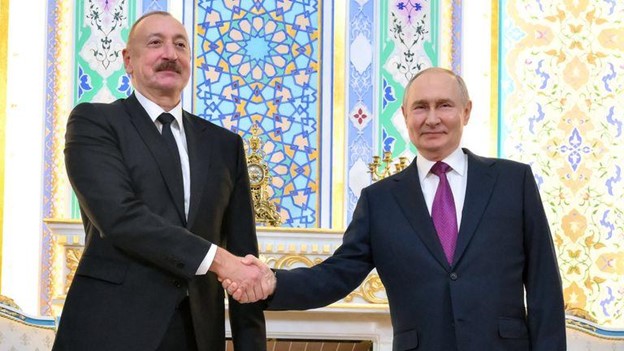
For an extended period, Moscow’s refusal to accept responsibility for the incident placed considerable strain on Russia-Azerbaijan relations. Individuals linked to the Kremlin issued a series of hostile statements directed at Baku, and reports surfaced of harassment targeting members of the Azerbaijani diaspora living in Russia.
Traditionally, the Kremlin has been reluctant to view Azerbaijan, like other former Soviet republics, as a fully equal sovereign actor.
Nevertheless, Baku remained steadfast, leading President Putin to concede, a decision that was officially acknowledged at the Dushanbe meeting.
On October 1–2, Azerbaijani President Ilham Aliyev met with Moldovan President Maia Sandu and Ukrainian President Volodymyr Zelensky in Copenhagen.
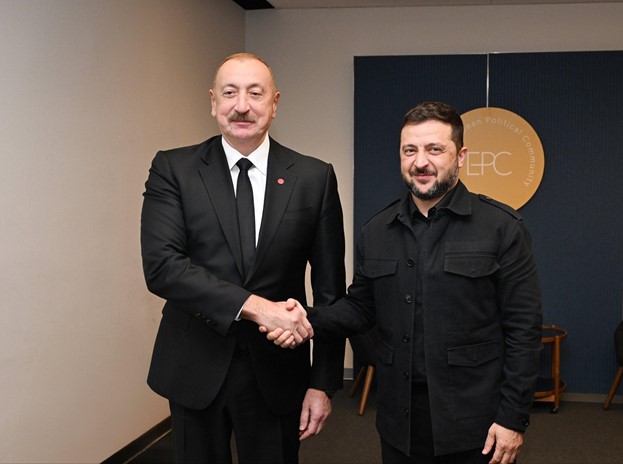
During the meeting with the President of Ukraine, the parties discussed not only the Armenia-Azerbaijan peace process, but also explored opportunities for enhanced cooperation in the energy and defense fields. The discussion also covered Azerbaijan’s ongoing humanitarian support to Ukraine.
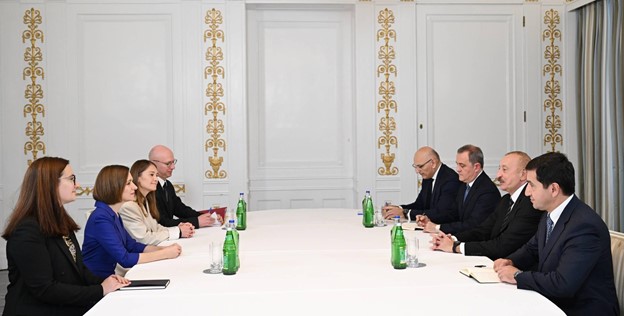
During the meeting with the President of Moldova, the leaders discussed the Armenia-Azerbaijan peace agreement as well as the outcome of Moldova’s parliamentary elections. President Ilham Aliyev congratulated President Maia Sandu on her party’s victory, emphasizing that the results reflected the will of the Moldovan people.
They also discussed deepening bilateral relations, notably, cooperation in the energy sector.
Concluding the meeting, President Ilham Aliyev extended an invitation to President Maia Sandu to pay an official visit to Azerbaijan.
On October 7, the 12th Summit of the Heads of State of Turkic-Speaking Countries was held in Gabala, Azerbaijan.
Participating in the summit were the leaders of Azerbaijan, Turkey, Kazakhstan, Kyrgyzstan, Uzbekistan, Turkmenistan, Hungary, and the “Turkish Republic of Northern Cyprus.”[2]
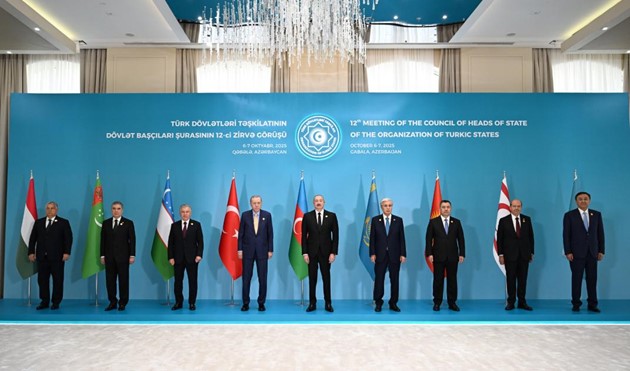
Discussions at the summit focused on significant international and regional developments, notably the Armenia-Azerbaijan peace process and the potential implementation of the “Trump Route.”
The summit participants explored avenues for deepening cooperation among Turkic-speaking states across the military-political, economic, and cultural domains, culminating in the adoption of a joint statement known as the “Gabala Declaration.”
The participants agreed that, in 2026, an informal meeting of the leaders of Turkic-speaking countries would be convened in Kazakhstan, followed by the official summit in Turkey.
On October 15, Elina Valtonen, the OSCE Chairperson-in-Office and Minister for Foreign Affairs of Finland, visited Azerbaijan as part of her regional tour.
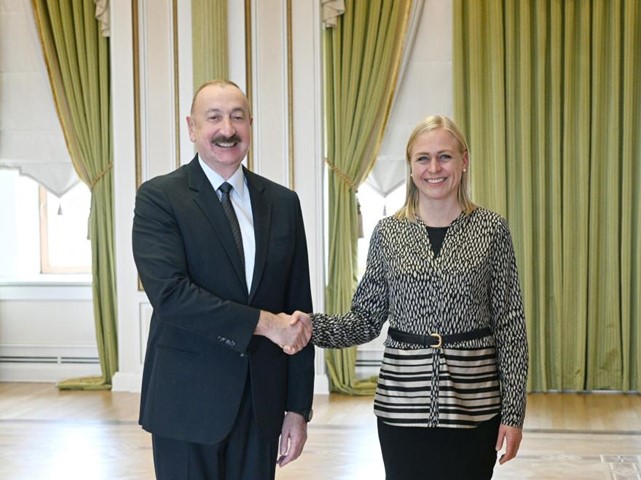
In Baku, President Ilham Aliyev held a meeting with OSCE Chairperson-in-Office Elina Valtonen. During the meeting, the parties discussed the Armenia-Azerbaijan peace process, expressing satisfaction with its current progress.
Valtonen stated that, following joint requests from Azerbaijan and Armenia, the OSCE Minsk Group and its affiliated bodies will officially discontinue their activities as of December 1, 2025.
Armenia’s Foreign Policy
On October 2, 2026, Prime Minister Nikol Pashinyan held meetings in Copenhagen with European Council President António Costa and European Commission President Ursula von der Leyen to discuss Armenia’s cooperation with the European Union.
The meeting addressed the peace agreement signed between Armenia and Azerbaijan at the White House on August 8, 2025, as well as issues concerning the implementation of the “Trump Route.”
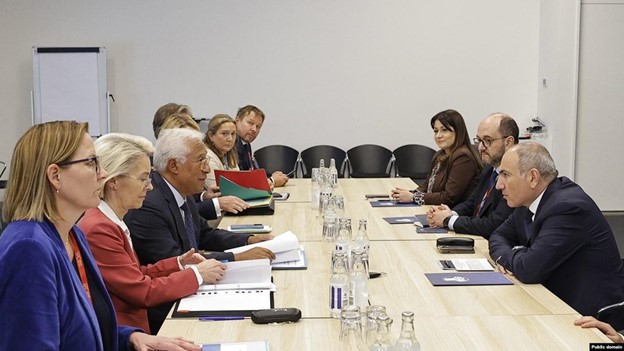
Prime Minister Pashinyan reiterated the importance of advancing Armenia’s rapprochement with the European Union. Nevertheless, the issue of granting Armenia official candidate status for EU accession was not on the agenda.
Interestingly, upon his return from Denmark, Prime Minister Nikol Pashinyan signed a decree establishing a European Integration Department within the Ministry of Foreign Affairs of Armenia.
Armenia’s Domestic Politics
In Armenia, the election campaign is now slowly gathering pace.
In this context, it is noteworthy that, on October 8, former Armenian President[3] Robert Kocharyan, a prominent pro-Russian political figure, held a press conference in which he criticized European involvement in the recent elections in Romania and Moldova, describing it as “interference.” Kocharyan further claimed that the pro-Russian opposition had achieved victory in Moldova.
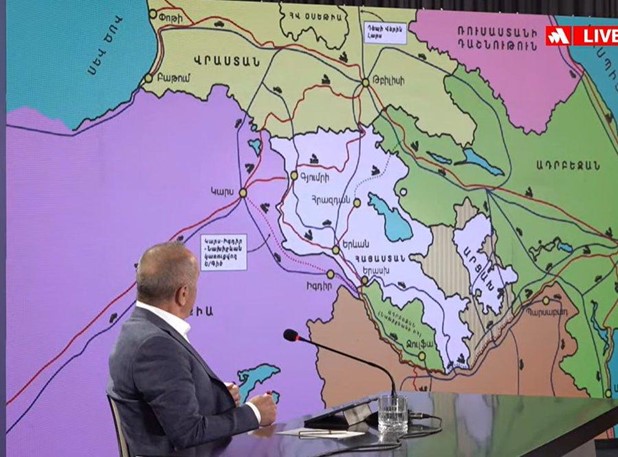
According to Kocharyan, if a similar incident were to occur in Armenia, it “could lead to a revolution.”
Also on October 8, the 7th Congress of the ruling “Civil Contract” party was held, during which Prime Minister Nikol Pashinyan delivered a speech.
During his address, the Prime Minister proposed the creation of a “Fourth Republic” of Armenia. He stated that while the “Third Republic” had been founded on the logic of conflict, the “Fourth Republic” should rest on the logic of peace.
He also emphasized that power in the Republic of Armenia must belong solely to the people.