The 58th Guards Combined Arms Army is one of the more significant components of the Armed Forces of the Russian Federation. Its primary area of responsibility is the Caucasus region. The army’s bases and military infrastructure are located in the territory of the North Caucasus. The 4th Military Base, along with other military facilities deployed in the Russian-occupied Tskhinvali region of Georgia, is subordinated to the 58th Army.
The article primarily focuses on the major formations of the 58th Army – its divisions, brigades and regiments, and their locations and related military facilities. The majority of the relevant publicly accessible satellite images are dated circa 2022-2023. The military equipment found on these military bases have been actively utilized in the full-scale war being waged by Russia in Ukraine. It is frequently reported that the Russian army has been experiencing major shortages of heavy armored vehicles, APCs, and other equipment. Therefore, the combat equipment displayed in this publicly available satellite imagery does not accurately represent the current situation.
It is important to note that the list of military units may not be comprehensive, as this article is based solely on publicly available data, primarily coming from Russian sources. In parallel with the full-scale war launched against Ukraine, the Russian Armed Forces have been undergoing a reform, and within the frames of this, the formal structure of the army frequently changes.
The Southern Military District
Following the 2008 Russo-Georgian War, the Russian Federation launched a large-scale reform of its armed forces. The reform was meant to draw on the lessons learned from the two Russo-Chechen wars and, particularly, from the 2008 Russo-Georgian War. The 2008 conflict exposed shortcomings within the Russian military, ranging from strategic planning to operational command and control.
The 2010 decree issued by Vladimir Putin, President of the Russian Federation, abolished the North Caucasus Military District and established the Southern Military District in its stead. The same year, in accordance with the directives signed by the Russian Minister of Defense, and within the scope of the overall reform, the 49th Combined Arms Army was formed on the basis of the 49th Army of the Armed Forces of the Soviet Union, and was incorporated into the newly established Southern Military District.
In parallel with the full-scale war against Ukraine, the Russian military has been undergoing a new wave of reform since 2023, involving significant structural changes within the armed forces. In 2024, following an order issued by Vladimir Putin, the Ukrainian territories of Donetsk, Luhansk, Zaporizhzhia, and Kherson—occupied and subsequently annexed by Russia—were incorporated into the Southern Military District, while occupied Crimea has been subordinated to the Southern Military District since 2014. In addition, on Putin’s order, the Western Military District was dissolved and substituted by the Moscow and Leningrad military districts.
As part of the ongoing reform, the Southern Military District has been expanded to include new ground force formations, including the additional armies established after 2014. The Russian Ministry of Defense has removed the latest information regarding the structure and composition of the military districts from its official website, mil.ru. However, based on the most recent publicly available data, the Southern Military District is made up of the following formations:
- 3rd Combined Arms Army (Created in 2024 – Luhansk);
- 8th Combined Arms Army;
- 18th Combined Arms Army (Created in 2023 – Crimea);
- 49th Combined Arms Army;
- 7th Military Base in occupied Abkhazia;
- 51st Combined Arms Army (Created in 2024 – Donetsk);
- 58th Combined Arms Army;
- 4th Military Base in the occupied Tskhinvali region;
- 102nd Military Base in Armenia;
- 7th Airborne Division (Part of Russia’s Airborne Forces);
- 10th Separate Brigade;
- 22nd Separate Brigade;
- 346th Separate Brigade;
- Separate brigades of command: communications; radiological, chemical, and biological defense; electronic warfare; and railway.
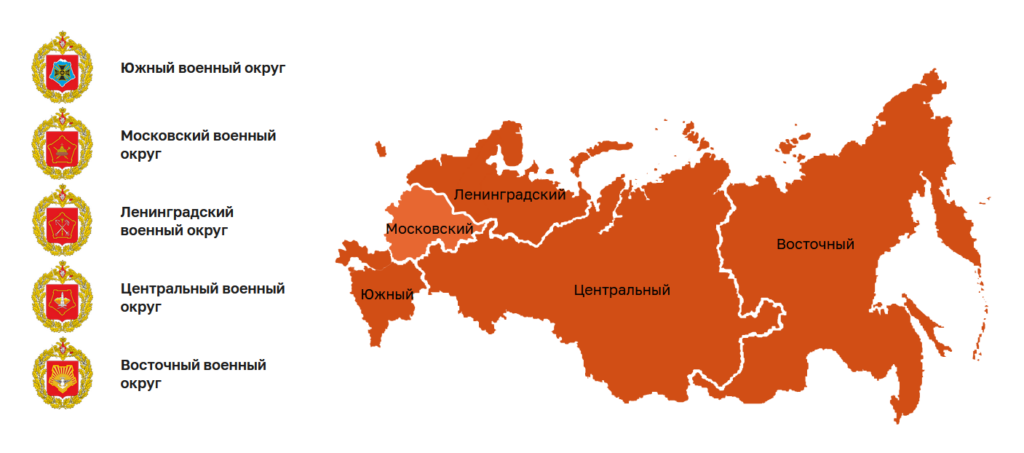
Russia’s military districts as of the latest military reform, including the newly formed Moscow and Leningrad Military Districts. Source: mil.ru
The 58th Guards Combined Arms Army
The 58th Guards Combined Arms Army of the Southern Military District of the Armed Forces of the Russian Federation (hereinafter referred to as the 58th Army) is a particularly important military component in the South and North Caucasus. During the 2008 Russo-Georgian War, the 58th Army was tasked with the execution of a key part of the occupation plan. Additionally, the army took part in the Second Chechen War, where it played a crucial role in the capture of the city of Grozny, the capital of Chechnya. The army is currently involved in Russia’s full-scale war in Ukraine.
Brief History
The 58th Army was formed in 1995, as part of the Armed Forces of the Russian Federation, on the foundation of the 42nd Army Corps. However, it inherited its designation from the 58th Army of the Soviet Union, which ceased functioning in 1943 during the Second World War due to heavy losses. The 42nd Army Corps was actively involved in the Ossetian–Ingush Conflict in 1992. The corps also actively participated in the First Russo-Chechen War in 1994–1996, and after its reorganization into the 58th Army, it also took part in the Second Russo-Chechen War. The army’s headquarters is located in the city of Vladikavkaz.
According to the Russian Defense Ministry’s publishing center “Red Star” (“красная звезда” in Russian), in 1999, the units of the 58th Army destroyed the paramilitary formation led by Shamil Basayev and took part in the capture of the entire territory of Chechnya. In 2004, units of the 58th Army were also involved in the assault on the school in Beslan (also known as the Beslan School Siege, or the Beslan Massacre), which, according to various sources, resulted in the death of 334 civilians, including 186 children.
On December 10, 2014, at the OSCE Security Cooperation Forum (the Forum for Security Co-operation – FSC) held in the Hofburg Congress Center in Vienna, Austria, the Ukrainian delegation presented substantiated information that the Russian Armed Forces were actively supplying separatists with military equipment and weapons. Prior to this, information had also circulated that Russian servicemen were fighting in Ukraine as contractors on the side of the pro-Russian separatists.
The data presented at the Security Cooperation Forum also provides evidence of the indirect involvement of the Russian 49th and 58th Armies in the war in Ukraine, which began at the end of 2013. For example, Ukrainian forces captured a BM-21 “Grad” multiple rocket launcher belonging to the former 18th Separate Guards Motor Rifle Brigade of the 58th Army. Additionally, the Ukrainian army seized a T-64 tank and a BTR infantry fighting vehicle belonging to the Russian 49th Army. This is but a small selection of the sources that confirm that the Russian army had been sending weapons to Ukraine and supplying the separatist forces since the beginning of the war at the end of 2013.
In the Georgian context, the Russian 49th and 58th Armies are of particular significance, as it was through these armies that the Russian Federation occupied the Georgian territories in 2008. The 7th Military Base of the 49th Army, along with related infrastructure, is located in the territory of Russian-occupied Abkhazia, while the Russian-occupied Tskhinvali region is under the effective control of the 4th Military Base of the 58th Army.
In 2008, the 58th Army played a decisive role in the Russo-Georgian War, following which the 4th Military Base was established within the army on the territory of the occupied Tskhinvali region, based on an agreement between the so-called South Ossetia and the Russian Federation (the chronology of the 2008 Russo-Georgian War is scrutinized in the Rondeli Foundation publication – August 7: How Russia Prepared and Launched the 2008 Invasion of Georgia).
Since the end of 2013, the army has been involved in the ongoing conflict in Ukraine.
In 2015, various units of the 58th Army participated in the war in Syria, and since early 2022, it has been among those waging Russia’s full-scale war in Ukraine. In 2023, by order of President Vladimir Putin, the army was awarded the honorary title of “Guards.”
Commanders of the 58th Army
On November 20, 2025, the then-commander of the army, Sergey Medvedev, was appointed as the new commander of the Southern Group of Forces of the Russian Army (Russian: группировка войск «Юг»). Prior to this promotion, Medvedev served as commander of the 58th Army. As of January 2026, his replacement has not yet been publicly announced.
Sergey Medvedev was born on October 22, 1979, in Prague, the former Czechoslovakia. He graduated from the Military Academy of the General Staff of the Armed Forces of the Russian Federation. In October 2023, he replaced Denis Lyamin as a commander of the 58th Guards Combined Arms Army of the Southern Military District. Medvedev previously served as Chief of Staff of the 58th Army. During this period, he was awarded the rank of major general. He has participated in military operations in Ukraine since the beginning of the full-scale invasion. His call sign is “Yermak” (or Ermak). In November 2025, he was promoted and appointed as the new commander of the Southern Group of Forces operating in Ukraine.
The position of the Commander of the 58th Combined Arms Army has been held by the following:
- Sergey Medvedev (October 2023 – November 2025)
- Denis Lyamin (July – October 2023)
- Ivan Popov (June 2023 – July 2023)
- Mikhail Zusko (September 2020 – June 2023)
- Sergey Ryzhkov (February 2019 – September 2020)
- Evgeny Nikiforov (January 2017 – February 2019)
- Sergey Kuzovlev (August 2016 – January 2017)
- Andrey Gurulyov (January 30, 2012 – August 2016)
- Andrey Kartapolov (May 7, 2010 – January 30, 2012)
- Anatoly Khruliov (April 4, 2006 – May 6, 2010)
- Viktor Sobolev (March 2003 – April 2006)
- Valery Gerasimov (February 2001 – March 2003)
- Vladimir Shamanov (August 1999 – December 2000)
- Anatoly Sidyakin (July 1997 – August 1999)
- Gennady Troshev (May 1995 – July 1997)
Some former commanders of the 58th Army have held high-level political positions in the Russian Federation. Today, the commander of the 58th Army from 2001 to 2003, Valery Gerasimov, is the Chief of the General Staff of the Russian Armed Forces and the First Deputy Minister of Defense. He is one of the key figures in the ongoing war in Ukraine. Vladimir Shamanov is a member of Russia’s highest legislative body, the State Duma, and the party “United Russia.” Gennady Troshev served as an advisor to Vladimir Putin from 2003 until his death. Andrey Gurulyov is a member of the Russian State Duma and the party United Russia. Andrey Kartapolov is another ex-commander of the army who is a member of the State Duma, while being a prominent member of Vladimir Putin’s political party. Moreover, the former deputy commander of the 58th Army, Alexander Sanchik, was appointed Deputy Minister of Defense of Russia at the end of 2025.
The Structure of the 58th Army
The 58th Army consists of two major divisions, separate brigades, regiments, and battalions. The separate regiments and battalions usually have auxiliary and support functions, like radiation, chemical and biological defense, demining, communications support, and radio-electronic warfare, etc. The 4th Military Base, along with the related infrastructure, is also part of the 58th Army.
The 42nd Guards Motor Rifle Division
The 42nd Guards Motor Rifle Division (full designation in Russian: 42-я гвардейская мотострелковая Евпаторийская Краснознамённая дивизия) is part of the 58th Army of the Southern Military District of the Russian Armed Forces. Its history dates back to the Soviet period and, following the dissolution of the USSR, it underwent several reforms. Notably, in 2004, the division was commanded by Sergey Surovikin, who, in October 2022, was appointed as a commander of Russian forces in Ukraine and held this position until 2023.
In 2009, as part of the reform of the Russian Armed Forces, the division was disbanded and replaced by the 8th, 17th, and 18th Separate Motor Rifle Brigades. In 2016, the division was re-established within the 58th Army. Units of the division have participated in the Russo-Chechen wars, the Russo-Georgian War, and, to date, are still actively involved in Russia’s full-scale war in Ukraine. Since 2022, the division has been part of the Russian army group “Dnepr,” and it operates in the Zaporizhzhia region of Ukraine.
The 42nd Division also includes all units of Ramzan Kadyrov’s “Akhmat” armed formation, specifically the 78th Special Purpose Motor Rifle Regiment named after Akhmat Kadyrov (Ramzan Kadyrov’s father), the “Akhmat-Russia” and “Akhmat-Chechnya” regiments, and the separate battalions “West-Akhmat,” “East-Akhmat,” and “South-Akhmat.”
The Structure of the 42nd Division
The 291st Guards Motor Rifle Regiment
The 291st Regiment was formed in the early Soviet period and, after its disbandment, for a brief period, was subordinated to the 42nd Division. In 2009, as part of the reform of the Russian Armed Forces, it was reorganized into the 17th Separate Guards Brigade, but, in 2016, it was returned to regiment structure and once again subordinated to the 42nd Motor Rifle Division of the 58th Army of the Southern Military District.
The regiment’s permanent garrison is deployed in the Chechen Republic of the Russian Federation. Before relocating to the city of Shali in Chechnya, its base was located in the Borzoi settlement, also in Chechnya. Since early 2022, the regiment has been involved in Russia’s full-scale war in Ukraine, and it continues to conduct active recruitment campaigns to find contractors for the conflict.
The 71st Guards Motor Rifle Regiment
The 71st Guards Motor Rifle Regiment is stationed in the village of Kalinovskaya in the Chechen Republic. Its history dates back to the Soviet period. In 1997, the regiment was reorganized as a training unit—in 1992, it was disbanded, but then was later reestablished.
The regiment participated in the Second Russo-Chechen War. It also took an active part in the 2008 Russo-Georgian War, specifically on the territory of the occupied Tskhinvali region. In 2017, the units of the regiment were involved in the war in Syria.
Since the second half of 2022, it has been engaged in Russia’s full-scale war in Ukraine, operating in the Zaporizhzhia region, specifically in the Robotyne sector. The unit has suffered heavy losses in Ukraine, which was one of the reasons President Vladimir Putin awarded it the honorary “Guards” title in 2023.
The 70th Guards Motor Rifle Regiment
The 70th Guards Regiment was established in 2002 as part of the 42nd Division. Its permanent garrison is located in the town of Shali in the Chechen Republic. The regiment participated in the Russo-Chechen War and, in 2008, took part in the Russo-Georgian War in the Tskhinvali region. The 70th Regiment has been engaged in Russia’s full-scale war in Ukraine since it was started, and continues to operate in the Zaporizhzhia region. Like the 71st Regiment, the 70th Regiment also suffered heavy losses, and, in 2023, Vladimir Putin likewise awarded the unit the honorary “Guards” title.
The 1429th and 1430th Guards Motor Rifle Regiments
The 1429th and 1430th Guards Motorized Rifle Regiments were formed in the fall of 2022, and became part of the 42nd Division of the 58th Army. Their creation is directly linked to Russia’s full-scale war in Ukraine, and, immediately after formation, both units were deployed into active combat. On January 25, 2025, Vladimir Putin simultaneously awarded both regiments the honorary “Guards” title. Like the other regiments of the 42nd Division, these units operate in the Zaporizhzhia region.
The 42nd Division incorporates the “Akhmat” formations created in the Chechen Republic of the Russian Federation:
- Akhmat Kadyrov 78th Special Purpose Motor Rifle Regiment
- “Akhmat-Russia” and “Akhmat-Chechnya” Regiments (formed in 2023)
- Separate Battalions “Akhmat-West”, “Akhmat-East”, “Akhmat-South”
The formation of the “Akhmat” units is linked to the full-scale war that began in Ukraine. Shortly after the start of the war, Ramzan Kadyrov, the head of the Chechen Republic of the Russian Federation, appointed Apti Alaudinov as commander of the 78th Regiment. Alaudinov previously served as the head of the Chechen Republic Police and holds the rank of Major General of Police.
The “Akhmat” units do not have a permanent, fixed-base location, as their creation was directly tied to the ongoing war in Ukraine. Its subunits are deployed across various parts of Russian-occupied Ukraine. However, for those wishing to join “Akhmat,” their website – добровольцы-чечня.рф – lists the city hall building in Grozny as a point of reference. According to available information, new recruits first undergo training at the “Russian Special Forces University” in the city of Gudermes, Chechnya.
The 19th Motor Rifle Division
The 19th Motor Rifle Division (full name in Russian: 19-я мотострелковая Воронежско-Шумлинская Краснознаменная орденов Суворова и Трудового Красного Знамени дивизия) is subordinated to the 58th Army of the Southern Military District of the Russian Federation.
The 19th Division was formed in 1994 and took part in the First and Second Chechen Wars. Some of its units were involved in the 2008 Russia-Georgia war. The division is based in the Republic of North Ossetia – Alania, in the Russian Federation. Its units conduct military exercises at the Shali and Tarsk training grounds. On December 31, 2024, the Shali training ground became a target for Ukrainian drones.
The division includes the following units: the 429th Motor Rifle Regiment, the 503rd Guards Motor Rifle Regiment, the 135th Assault Motor Rifle Regiment, the 392nd Motor Rifle Regiment, the 292nd Self-Propelled Artillery Regiment, and the 933rd Anti-Aircraft Missile Regiment.
The Structure of the 19th Motor Rifle Division.
The 429th Motor Rifle Regiment
The 429th Motor Rifle Regiment (full name in Russian: 429-й мотострелковый орденов Кутузова и Богдана Хмельницкого полк имени Кубанского казачества) is part of the 19th Division of the 58th Army, and it has been actively involved in combat operations since 1994. The regiment took part in the First Russo-Chechen War, the conflict in Dagestan in 1999, and also fought in the 2008 Russo-Georgian War.
During the first reform of the Russian Armed Forces, the regiment was disbanded. It was reestablished in 2020 alongside the restoration of the 19th Division. The unit is actively engaged in the full-scale war in Ukraine.
The 503rd Guards Motor Rifle Regiment
The 503rd Guards Motor Rifle Regiment participated in the Ossetia-Ingushetia conflict and both Chechen Wars. In 2008, it took part in the Russo-Georgian War. The unit was disbanded during the 2009 military reform, but was reformed in 2021 within the 19th Division of the 58th Army.
The 135th Guards Motor Rifle Regiment
The 135th Assault Regiment inherits its name from a Soviet Army unit. After the collapse of the USSR, it was reorganized into the 135th Separate Brigade, but later returned to a regimental structure, and in 2021 became part of the 19th Division.
As a brigade, it participated in the First Chechen War, and, as a regiment, it took part in the Second Chechen War. The unit was actively involved in the 2008 Russo-Georgian War, fighting directly in battles in the Tskhinvali region of Georgia. The 135th Regiment is currently engaged in the full-scale war in Ukraine.
The 392nd Motor Rifle Regiment
The 392nd Motor Rifle Regiment was formed at the end of 2022 within the 19th Division of the 58th Army. By 2023, it had already been deployed to the full-scale war in Ukraine, operating in the Robotyne sector of Zaporizhzhia Oblast.
Separate Military Units of the 58th Army
The 49th Separate Airborne-Assault Brigade
The 49th Separate Airborne-Assault Brigade was formed within the 58th Army in 2023–2024. It is considered the first brigade of its kind established outside the Russian Airborne Forces (Russian: Воздушно-десантные войска – ВДВ) as a specialized airborne-assault unit.
The 136th Guards Motor Rifle Brigade
The 136th Guards Motor Rifle Brigade, military unit, number 63354 (full designation in Russian: 136-я отдельная гвардейская мотострелковая Уманьско-Берлинская, Апшеронская Краснознаменная, орденов Суворова, Кутузова и Богдана Хмельницкого бригада), was formed in 1993 as part of the 42nd Army Corps of the North Caucasus Military District. Its units participated in the First Chechen War, as well as the Second Chechen War and counterterrorist operations in Dagestan. Since 2023, the brigade has been involved in the full-scale war in Ukraine, operating in the Zaporizhzhia Oblast sector. The brigade’s permanent base is located in Buynaksk, Dagestan. At the beginning of January 2026, the brigade commander, Erik Selimov, died in a car accident in Alchevsk region, in the Russian-occupied Luhansk Oblast of Ukraine. Three other Russian soldiers were also killed in the accident.
The 100th Separate Guards Reconnaissance Brigade “Osman” (Special Purpose)
The 100th Separate Reconnaissance Brigade was formed in 2009 on the foundation of three different units: the 56th Guards Airborne Assault Regiment, the 7th Division of the Airborne Forces, and the 85th unit of the 10th Guards Special Forces Brigade. The 100th Brigade was an experimental project designed to combine reconnaissance and assault functions at the brigade level. The brigade has been actively involved in the full-scale war in Ukraine since the early days of the conflict, operating in the Zaporizhzhia Oblast sector. In December 2023, Vladimir Putin awarded the brigade the “Guards” honorary title.
The Issa Plyiev 166th Separate Motor Rifle Assault Regiment
The 166th Separate Motor Rifle Assault Regiment was formed in 2024, based on the “Storm Ossetia” Battalion, which had previously been part of the 19th Division of the 58th Army. In 2025, Vladimir Putin named the regiment after Soviet Army General Isa Plyiev. The regiment is actively engaged in the full-scale war in Ukraine, operating in the Zaporizhzhia region under the Russian army’s “Dnepr” group. Its permanent base is in North Ossetia. Some of the ethnic Ossetian contractors fighting for Russia from the occupied Tskhinvali region of Georgia are members of the 166th Regiment.
The 67th Anti-Aircraft Missile Brigade
The 67th Anti-Aircraft Missile Brigade (military unit number 32383) participated in the First Russo-Chechen War. The brigade carries out air defense functions, and its permanent base is located in Vladikavkaz, North Ossetia. It has been confirmed that the brigade’s units have been involved in military operations in Ukraine since as early as 2014. The brigade also took part in the 2008 Russo-Georgian War and has been engaged in the full-scale war in Ukraine since 2022.
The 291st Guards Artillery Brigade
The 291st Guards Artillery Brigade (military unit number 64670) is based in Vladikavkaz. Previously, the unit was stationed in Troitskaya, Ingushetia, where the military infrastructure is still in use. In the 1990s, the brigade participated in all armed conflicts in the North Caucasus. Since 2022, it has been involved in the full-scale war in Ukraine. In 2023, by order of Vladimir Putin, the brigade was awarded the honorary “Guards” title.
The 58th Army also incorporates the following units:
- 40th Radiation, Chemical, and Biological Defense Regiment
- 31st Engineering (and Demining) Regiment
- 74th Separate Radio Communications Regiment
- 14th Separate Radio-Electronic Warfare Battalion
- 4th Military Base (occupied Tskhinvali region)
- 50th Guards Self-Propelled Artillery Regiment
- 150th Separate Anti-Tank Artillery Battery
- 245th Separate Anti-Aircraft Missile Battery
- Separate Reconnaissance Battalion
- 539th Separate Engineering (and Sapper Demining) Battalion
- 474th Logistics Battalion
- 106th Separate Medical Battalion
- Unmanned Aerial Vehicles, Radio-Electronic Warfare, and Radiation, Chemical and Biological Defense Companies
Military Infrastructure and Bases of the 58th Army
The 58th Army is deployed across the Russian federal subjects of North Ossetia – Alania, Chechnya, Ingushetia, and Dagestan. In addition, the army maintains significant infrastructure in the territory of the occupied Tskhinvali region. Below is a non-comprehensive list of 58th Army bases and other military facilities, accompanied by satellite imagery.
North Ossetia – Alania
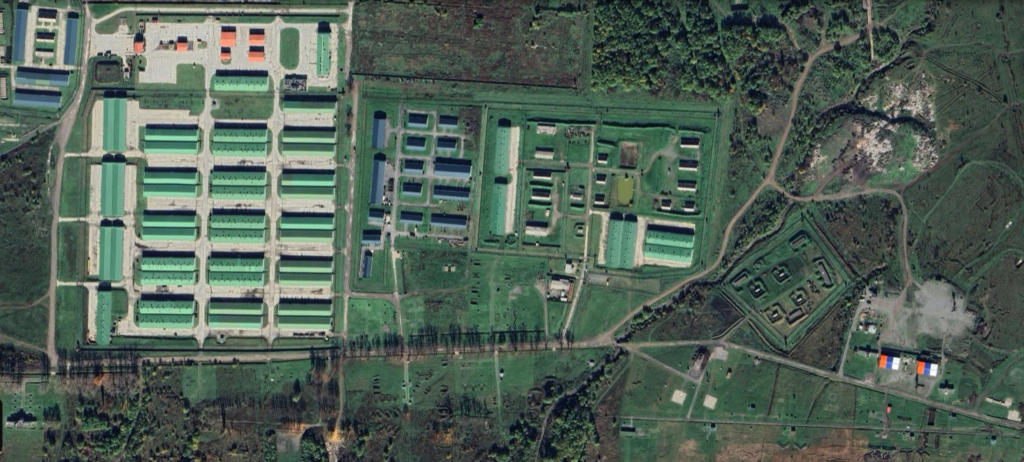
The “Significant Base” and military Settlement “Sputnik” in Vladikavkaz, North Ossetia. The territory includes training grounds.
Coordinates: 43°02’09″N 44°43’32″E
Source: Google Earth
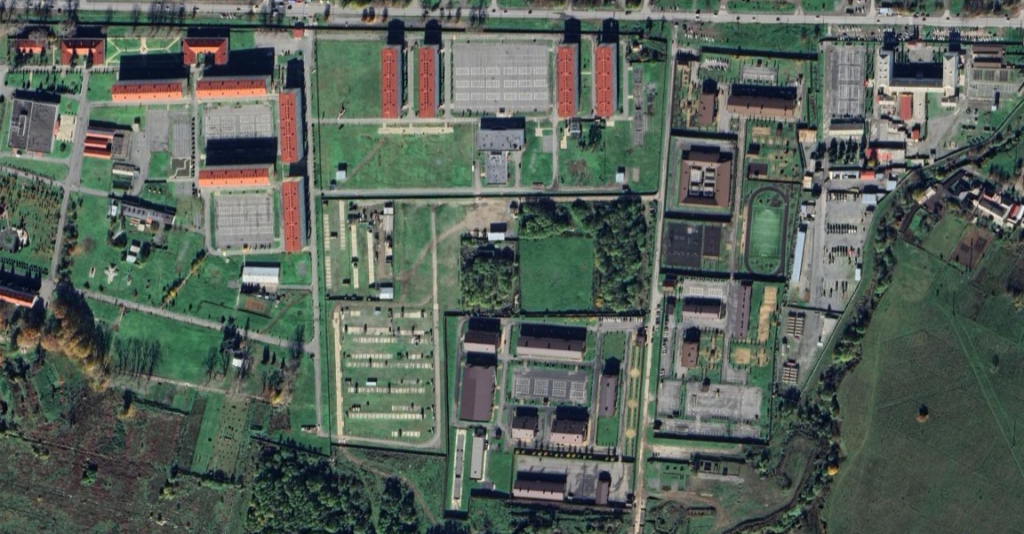
The second part of the military settlement, and the “Sputnik” base in Vladikavkaz.
Coordinates: 43°02’31″N 44°44’01″E
Source: Google Earth
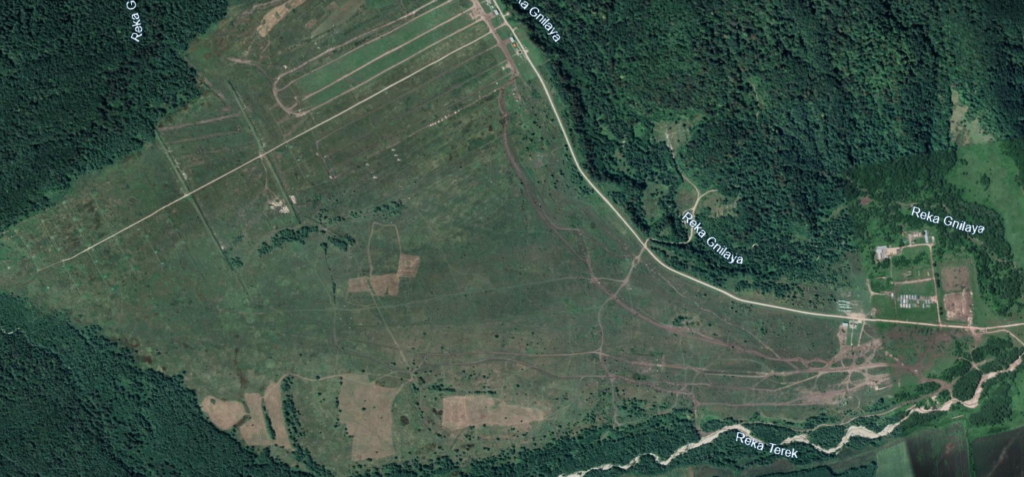
Territory of the Tarsky training ground.
Coordinates: 42°56’06″N 44°44’37″E
Source: Google Earth
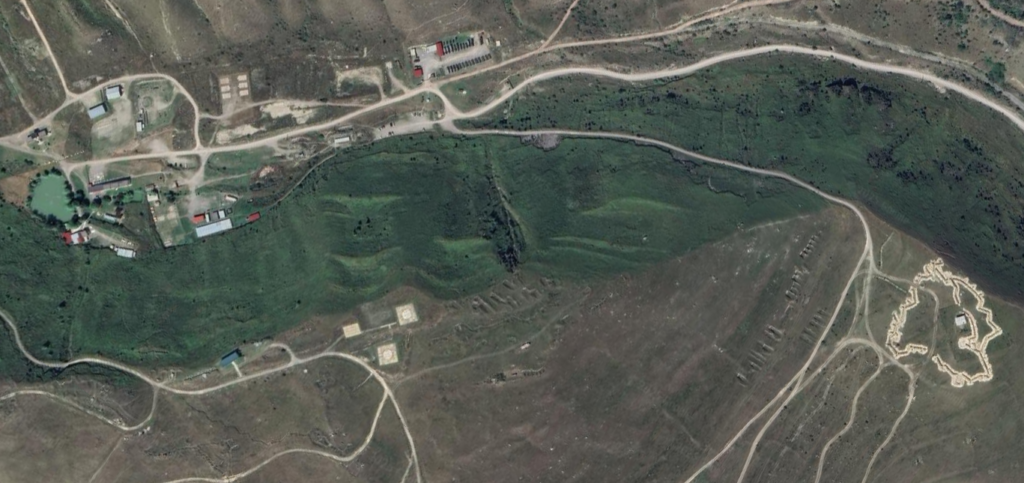
The Dariali training ground, located approximately 15 kilometers north of the Dariali sector of the Russia-Georgia border.
Coordinates: 42°51’38″N 44°37’18″E
Source: Google Earth
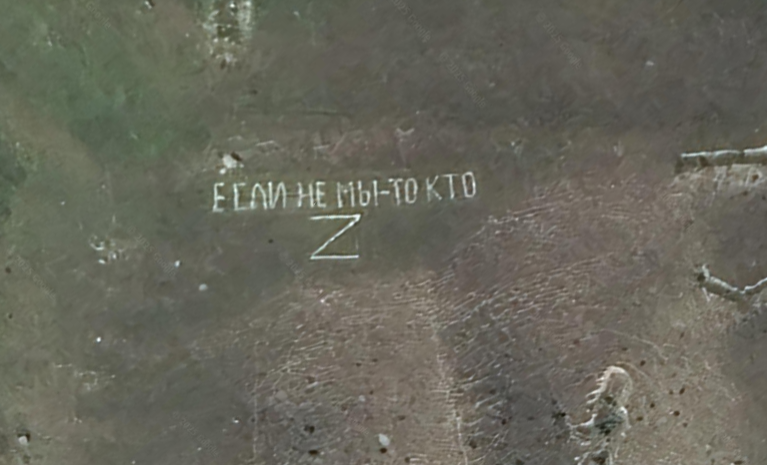
Writing on the territory of the Dariali training ground (in Russian) “если не мы – то кто,” which translates to “Who else, if not us?”
Coordinates: 42°51’45″N 44°36’56″E
Source: Google Earth
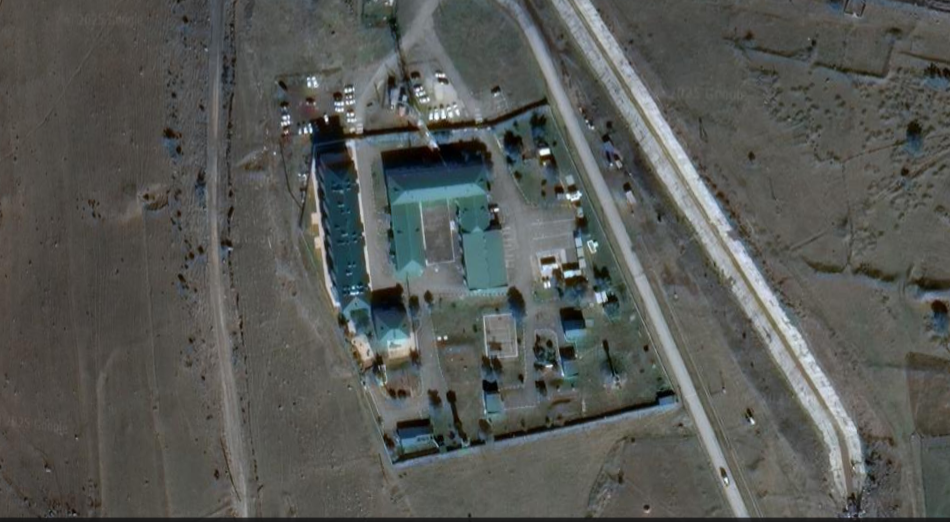
Military building and infrastructure located north of the Dariali crossing of the Russia-Georgia border. Until approximately 2008, the territory was surrounded by defensive fortifications and trenches. The base has a helipad to the south.
Coordinates: 42°50’03″N 44°38’56″E
Source: Google Earth
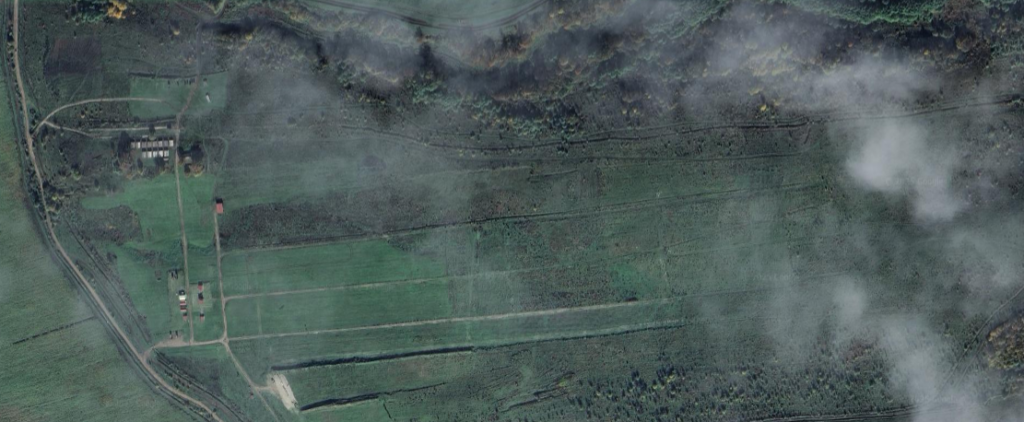
Another military training ground in North Ossetia – Alania.
Coordinates: 43°05’29″N 44°48’48″E
Source: Google Earth
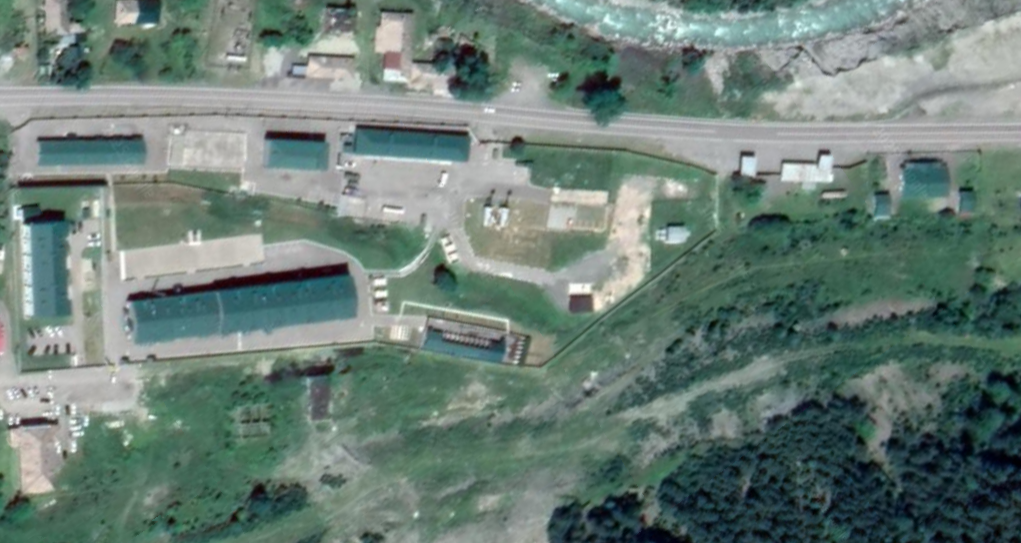
A military facility located in Buron village in North Ossetia.
Coordinates: 42°47’49″N 44°00’33″E
Source: Google Earth
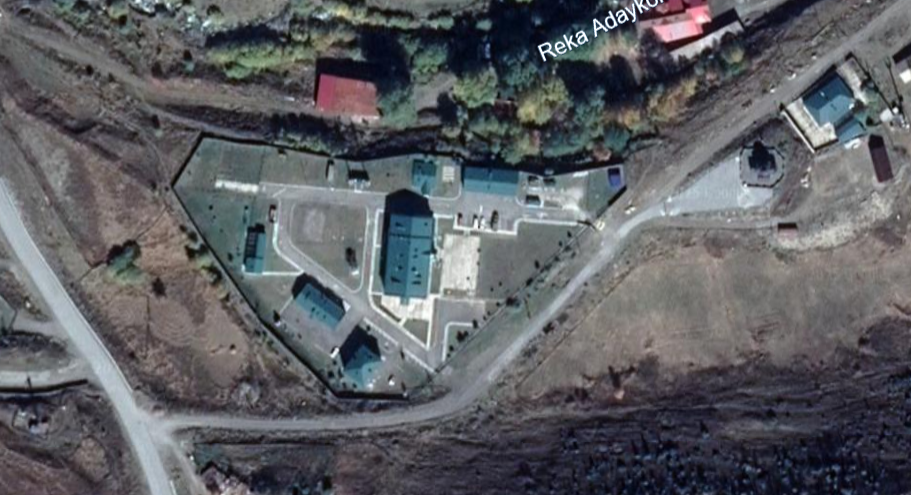
A military facility located in Nizhny Zaramag village in North Ossetia.
Coordinates: 42°41’37″N 43°58’00″E
Source: Google Earth
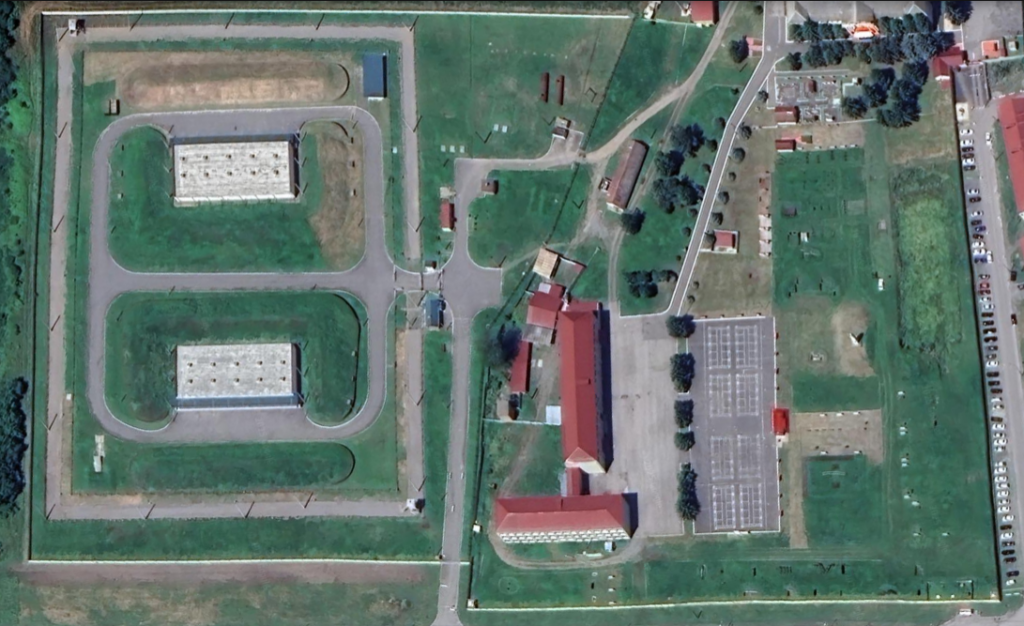
A military base located in Chermen village, north of Vladikavkaz, North Ossetia.
Coordinates: 43°08’04″N 44°42’34″E
Source: Google Earth
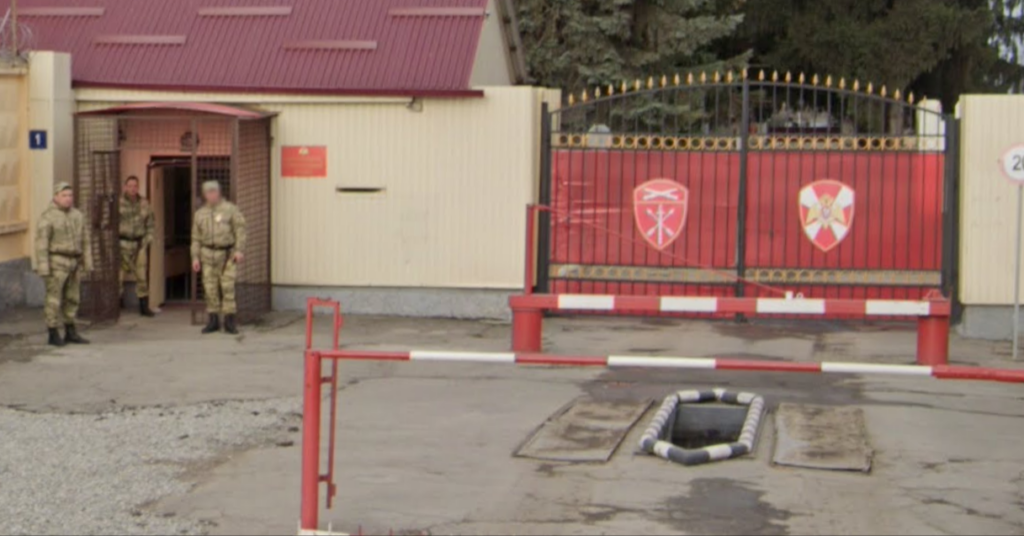
Entrance of the Chermen military base.
Source: Google Maps
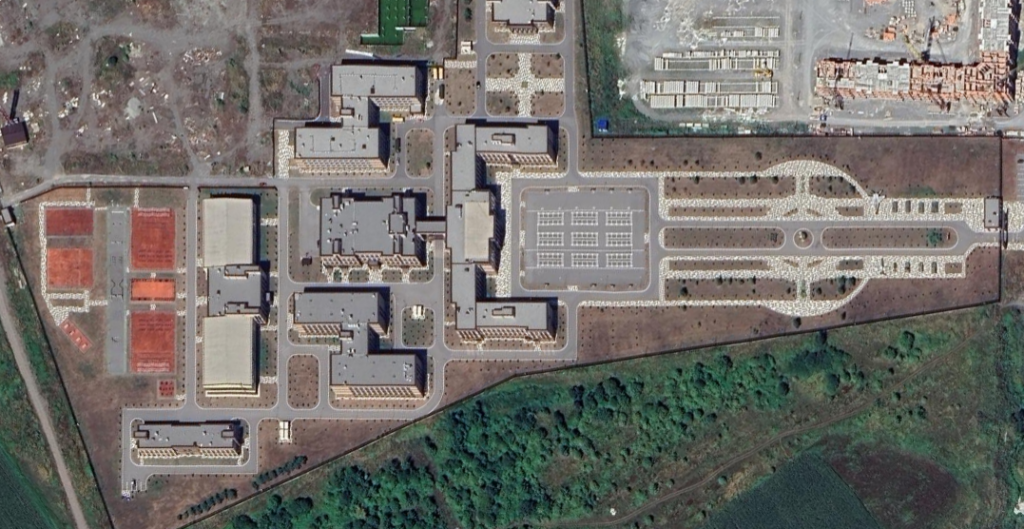
Suvorov Military School in Vladikavkaz, North Ossetia.
Coordinates: 43°02’00″N 44°37’10″E
Source: Google Earth
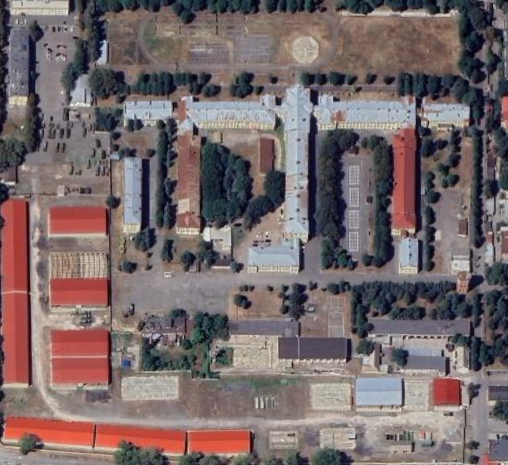
A military base and infrastructure in Vladikavkaz, North Ossetia. The territory also houses the Vladikavkaz military court.
Coordinates: 43°00’14″N 44°40’42″E
Source: Google Earth
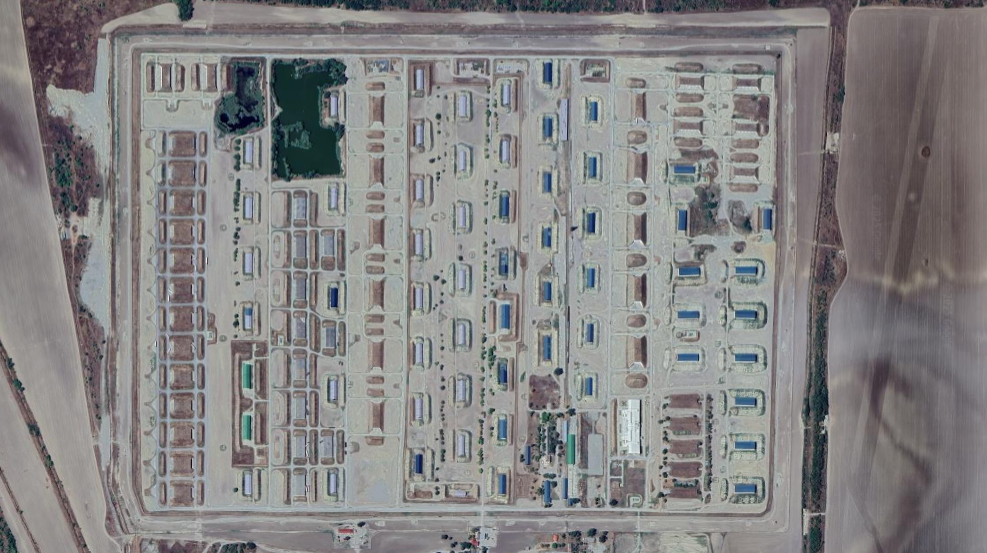
Military base and facilities west of Mozdok. Along with accommodation for servicemen, the territory includes an equipment storage building. Every structure is surrounded with defensive barriers.
Coordinates: 43°44’18″N 44°31’19″E
Source: Google Earth
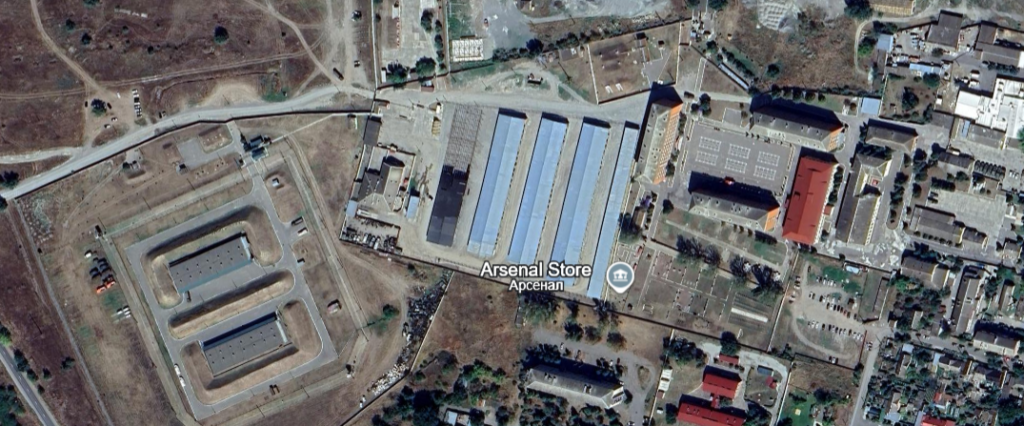
Military base in Mozdok.
Coordinates: 43°45’43″N 44°39’12″E
Source: Google Earth
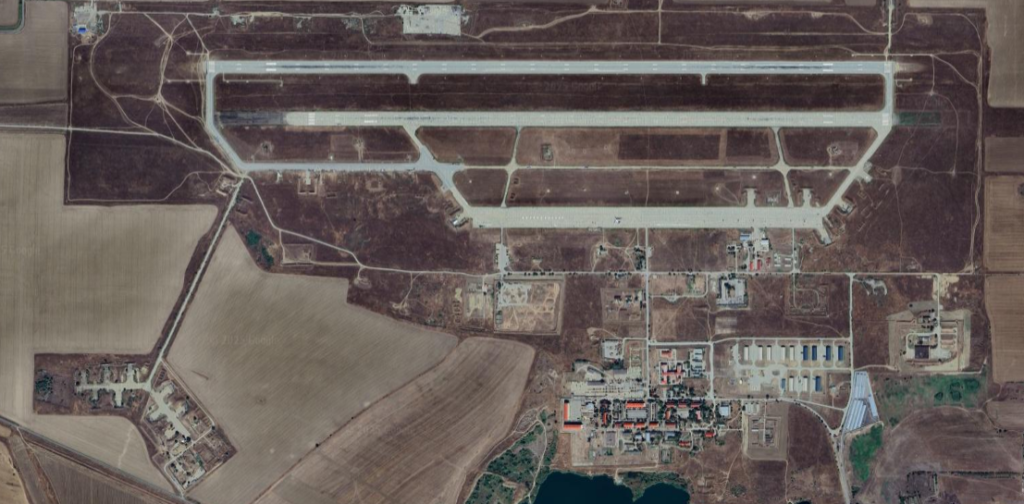
Mozdok Airbase.
Coordinates: 43°46’56″N 44°36’13″E
Source: Google Earth
Ingushetia
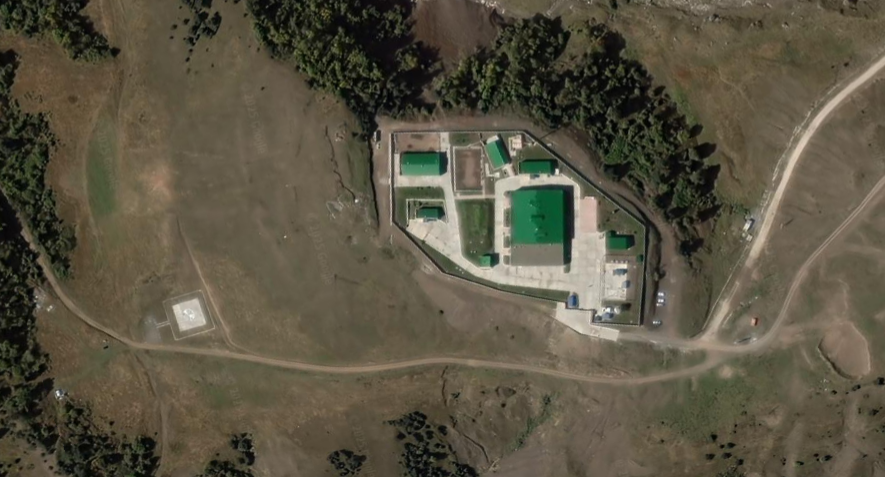
A military base close to Kyaz village in Ingushetia.
Coordinates: 42°48’53″N 44°51’23″E
Source: Google Earth
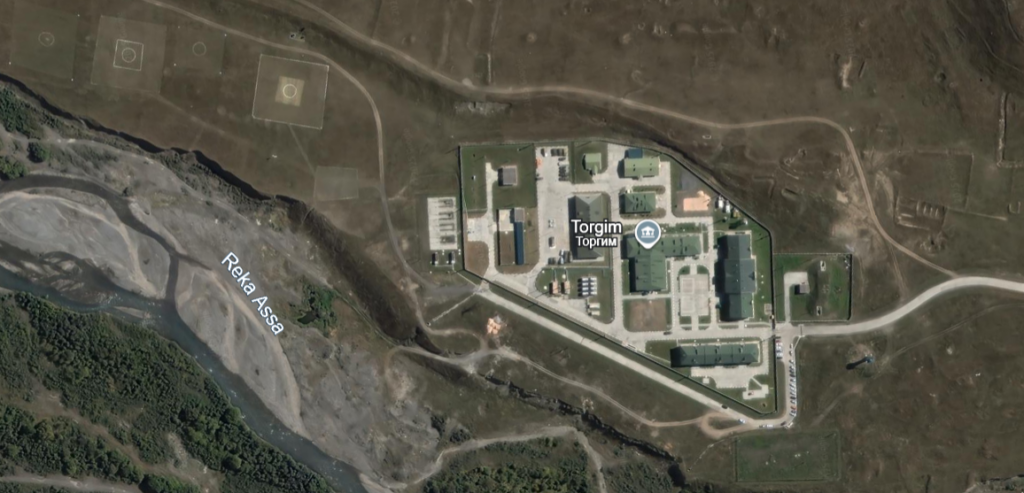
A military base and army training ground close to Torgim village in Ingushetia.
Coordinates: 42°48’51″N 44°56’08″E
Source: Google Earth
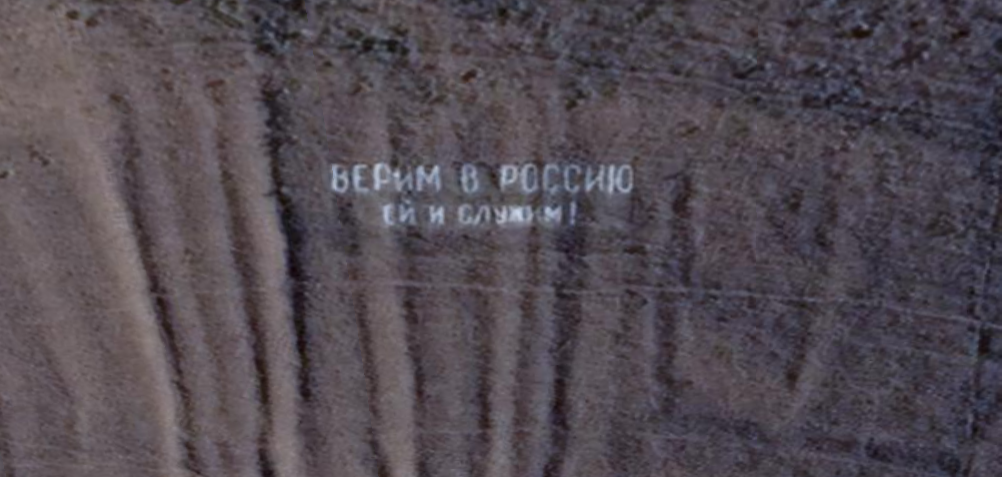
Writing on the territory of the Torgim training ground (in Russian) – “верим в россию, ей и служим!”, which translates to “We trust in Russia, and her we do serve!”
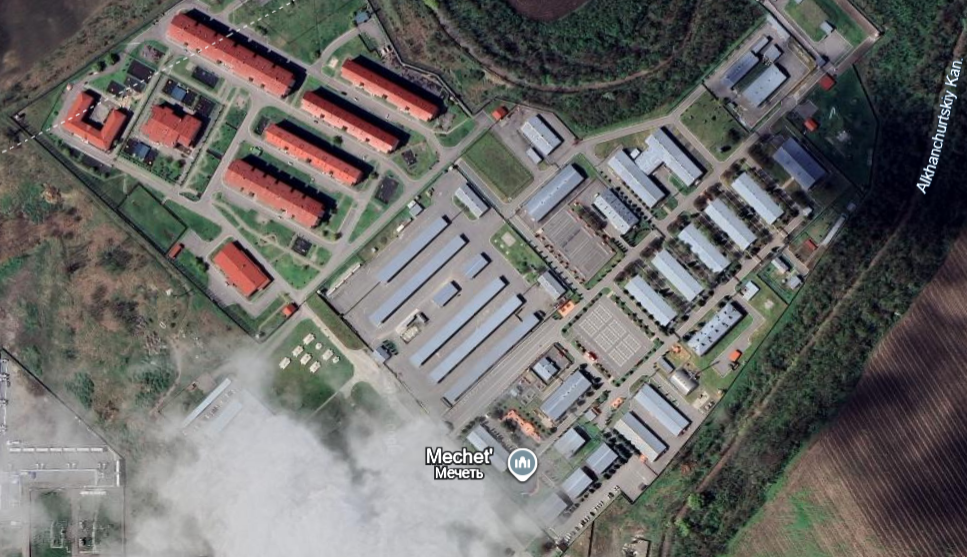
A military base close to Nazran, Ingushetia.
Coordinates: 43°14’01″N 44°43’36″E
Source: Google Earth
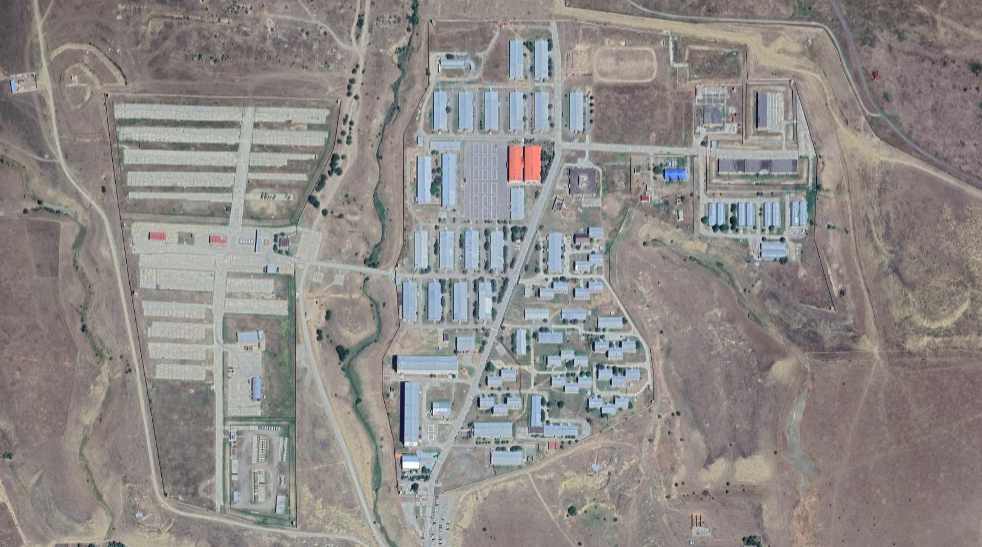
A military base and army infrastructure located in Troitskaya village, east of Nazran, Ingushetia.
Coordinates: 43°19’15″N 44°59’04″E
Source: Google Earth
Chechnya
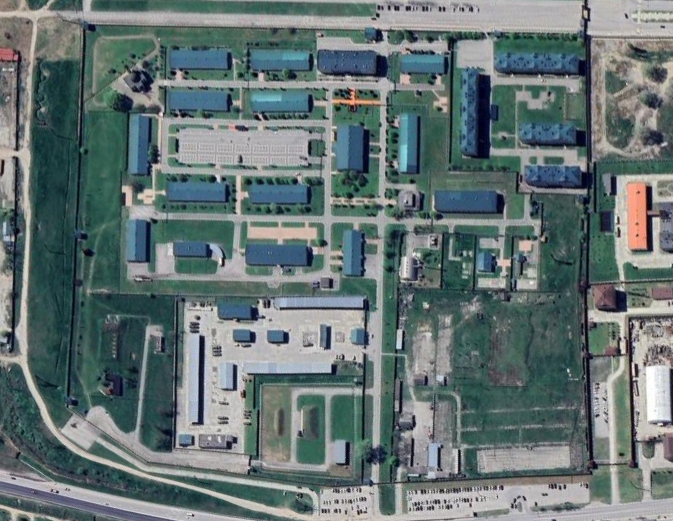
A military town in Grozny, the capital of Chechnya.
Coordinates: 43°16’55″N 45°43’50″E
Source: Google Earth
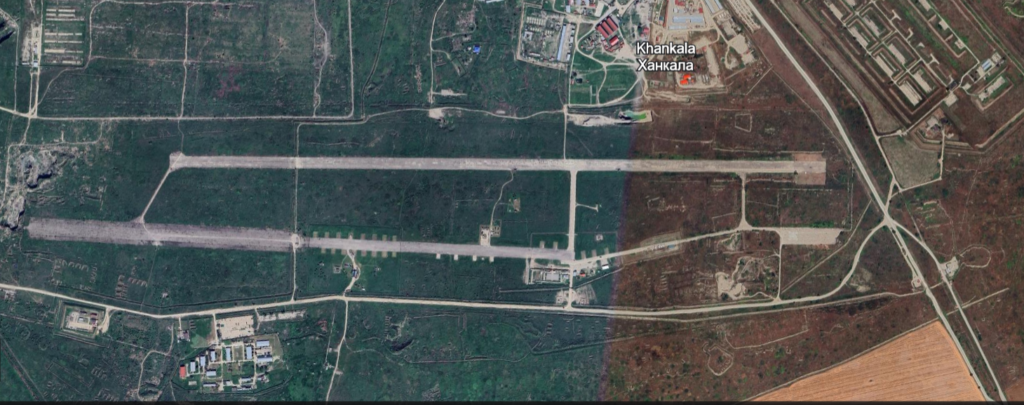
An airbase, army training ground, and military infrastructure located east of Grozny, Chechnya.
Coordinates: 43°17’50″N 45°47’10″E
Source: Google Earth
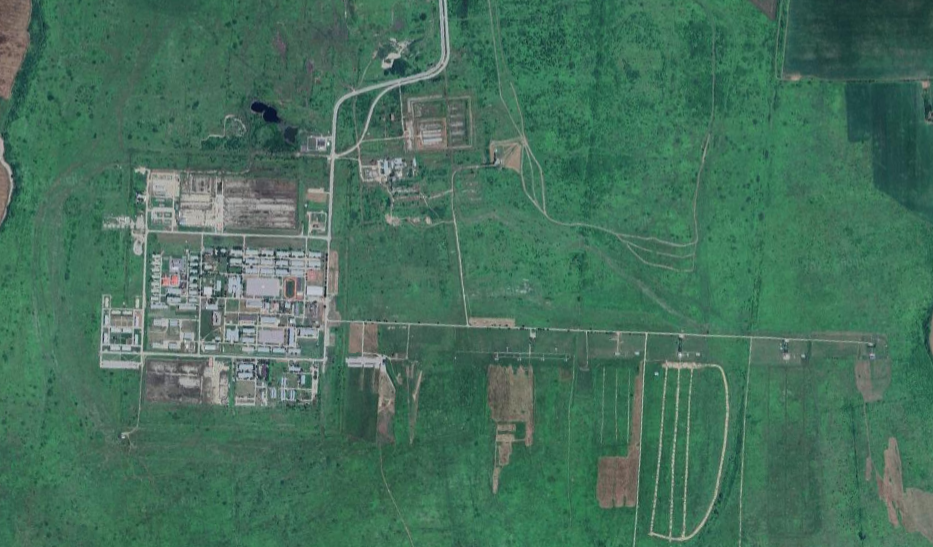
A military town and army training ground located south of Grozny at the town of Shali.
Coordinates: 43°07’25″N 45°49’51″E
Source: Google Earth
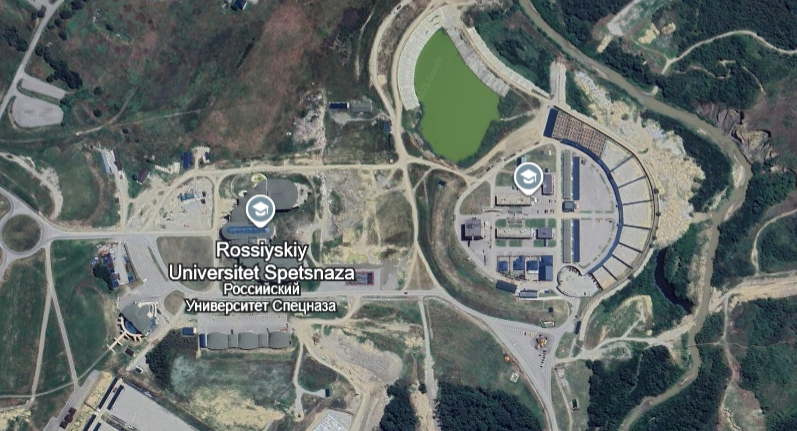
Russian Special Forces University in Gudermes, Chechnya. According to official information, the new recruits of the “Akhmat” military formations that were created by Ramzan Kadyrov, and which are engaged in the war against Ukraine, undergo initial training at this facility.
Coordinates: 43°19’43″N 46°03’12″E
Source: Google Earth
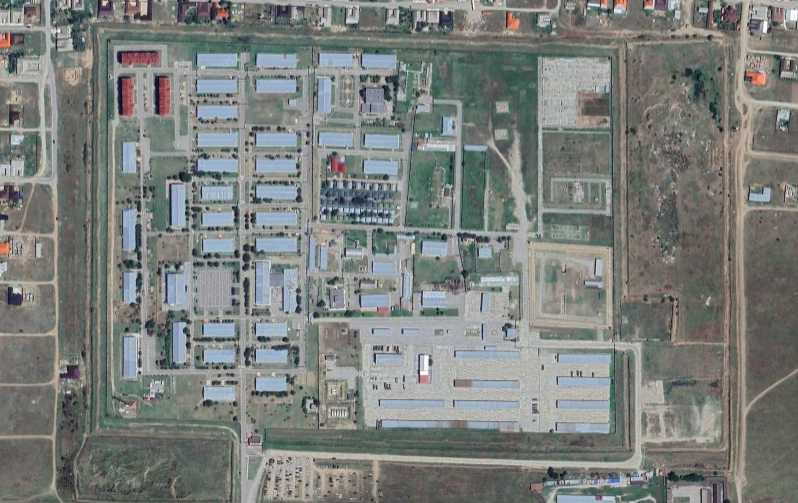
A military town in Gudermes, Chechnya.
Coordinates: 43°19’44″N 46°08’15″E
Source: Google Earth
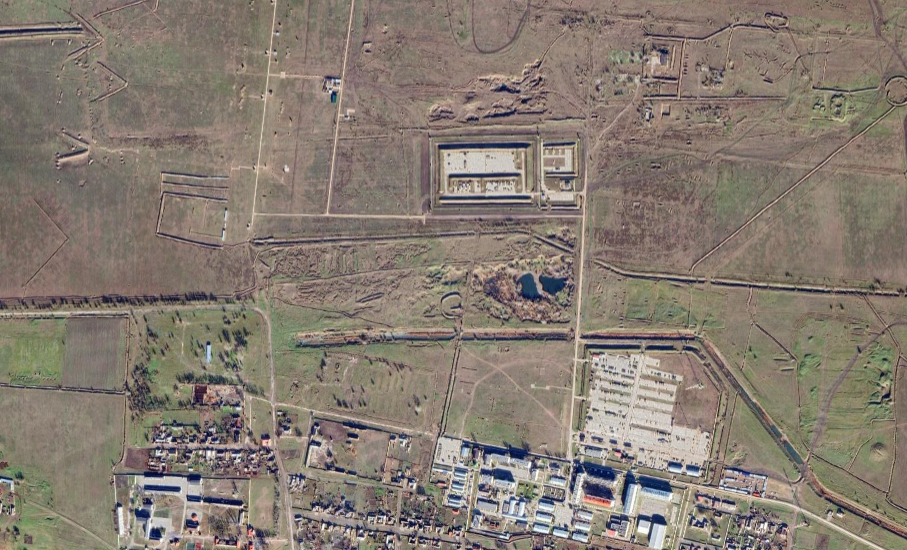
A military base and army training ground close to Kalinovskaya village in Chechnya.
Coordinates: 43°35’00″N 45°31’18″E
Source: Google Earth
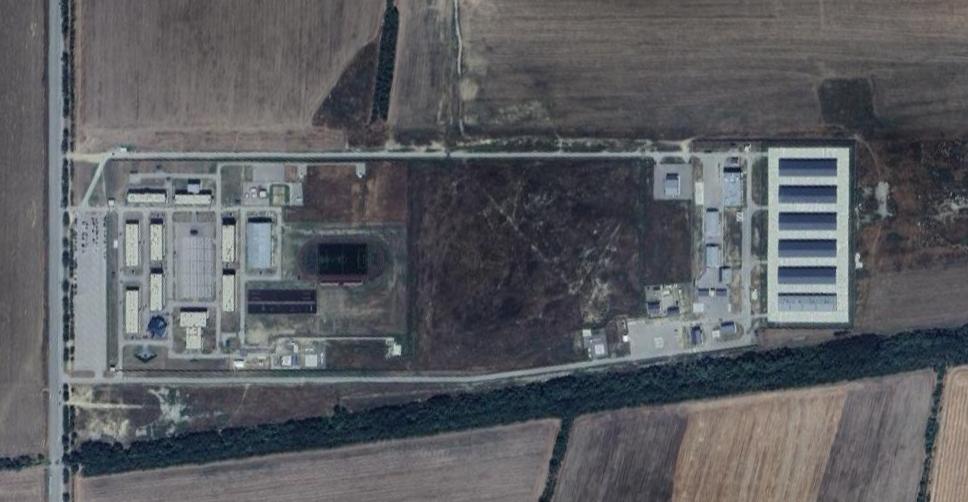
A military base in Chernovodsk village. The facility was likely built in 2025.
Coordinates: 43°17’25″N 45°11’31″E
Source: Google Earth
Dagestan
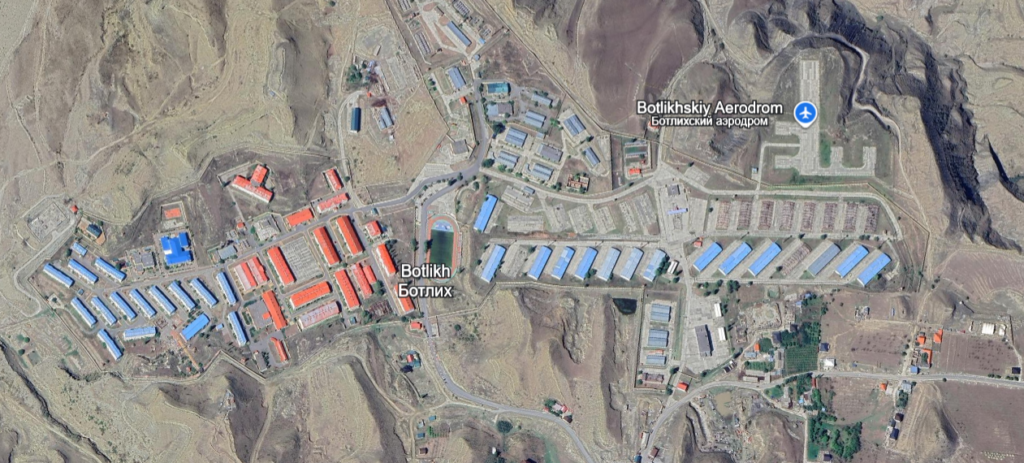
A military town located in Botlikh village, Dagestan.
Coordinates: 42°40’22″N 46°11’09″E
Source: Google Earth
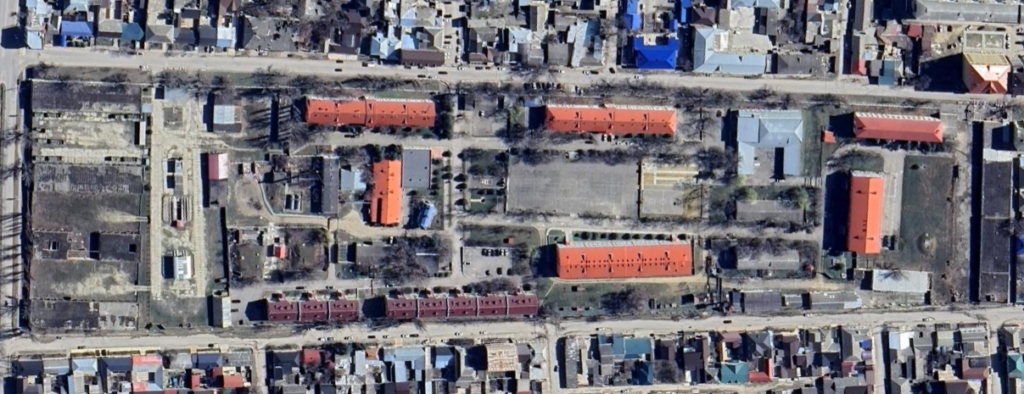
A military facility located in Buynaksk, Dagestan.
Coordinates: 42°49’18″N 47°06’41″E
Source: Google Earth
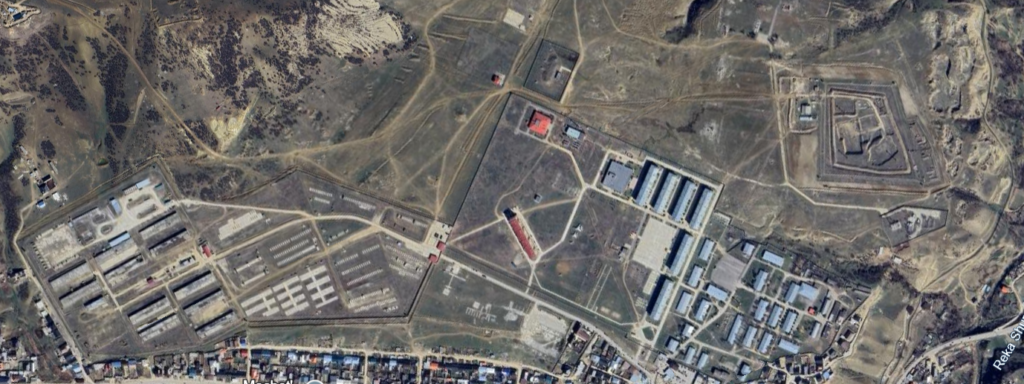
A military town, base and army training ground north-west of Buynaksk, Dagestan.
Coordinates: 42°49’47″N 47°05’09″E
Source: Google Earth
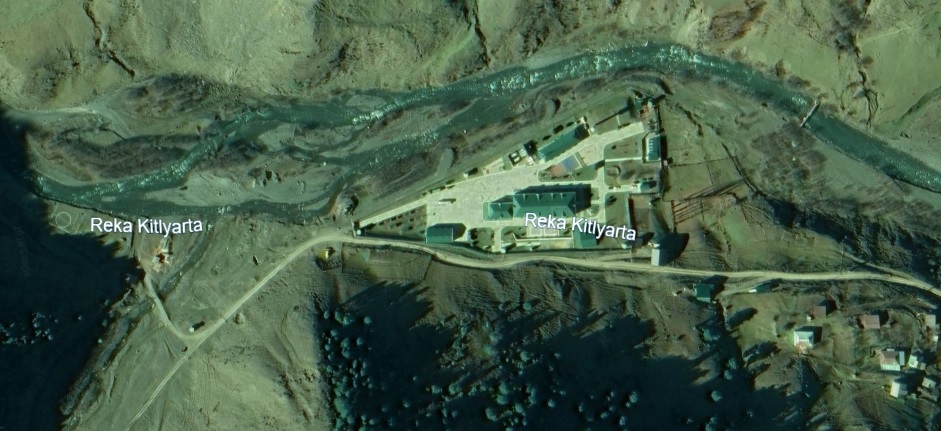
Russian military base in Khupri village, Dagestan.
Coordinates: 42°11’55″N 45°50’43″E
Source: Google Earth
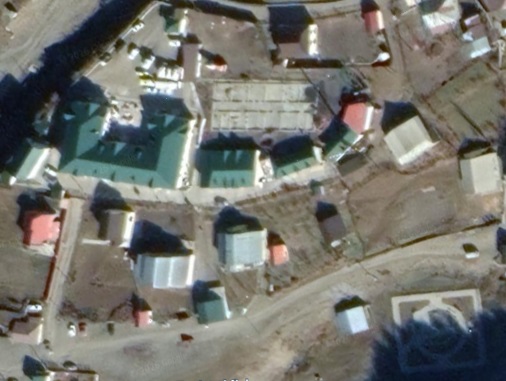
Russian military base in Tsunta village, Dagestan.
Coordinates: 42°12’10″N 45°56’03″E
Source: Google Earth
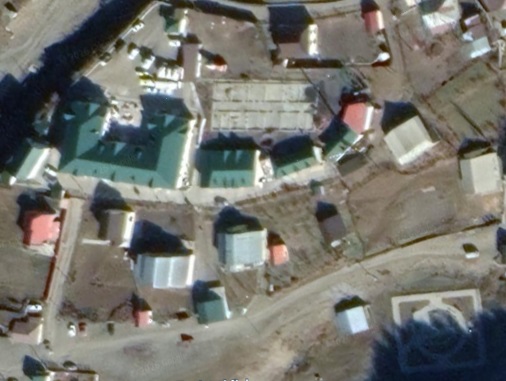
Russian military facility east of Kidero village, Dagestan.
Coordinates: 42°11’24″N 45°57’53″E
Source: Google Earth
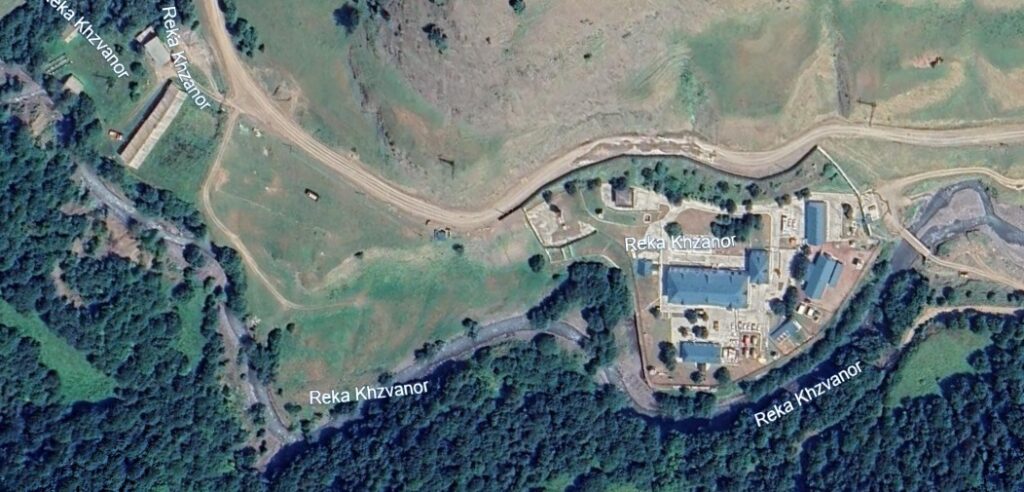
Russian military base east of Khasharkhota village, Dagestan.
Coordinates: 42°06’53″N 46°10’45″E
Source: Google Earth
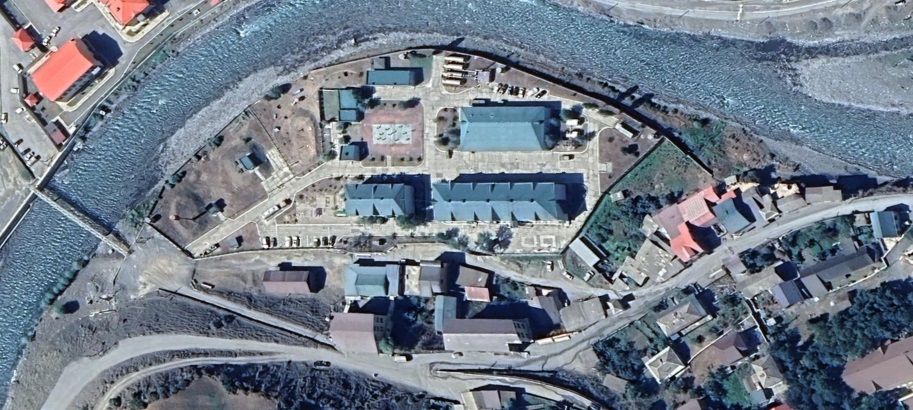
Russian military base in Tlyarta village, Dagestan.
Coordinates: 42°06’08″N 46°21’13″E
Source: Google Earth
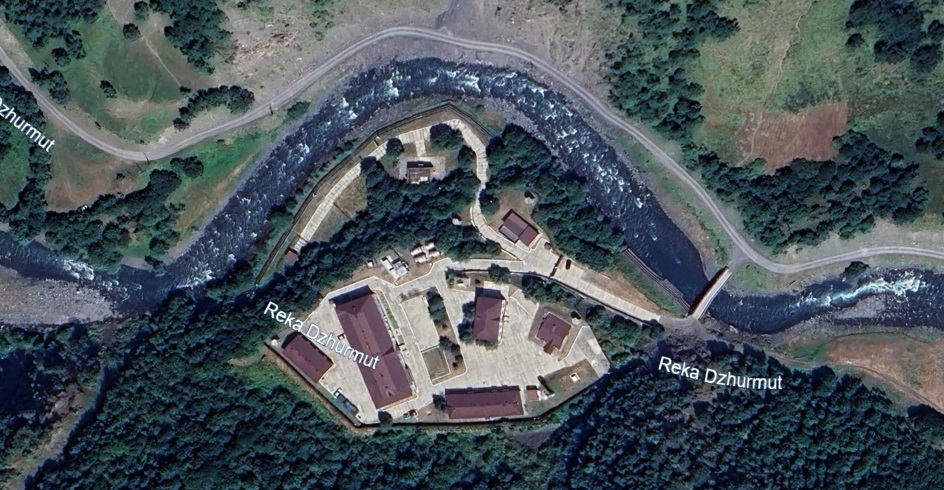
Russian military base in Salda village, Dagestan.
Coordinates: 41°58’21″N 46°30’18″E
Source: Google Earth
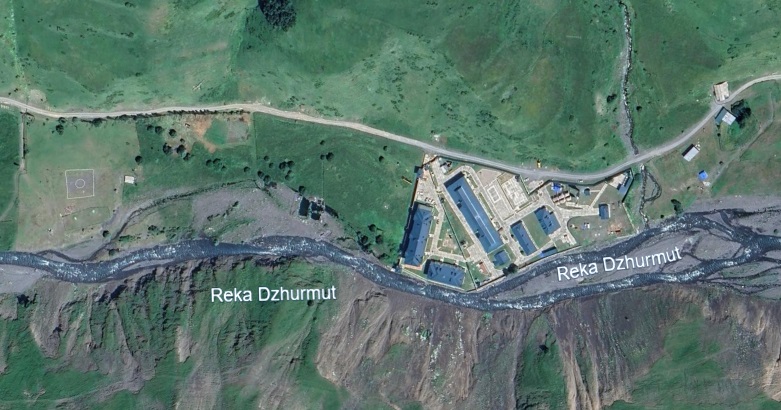
Russian military base in Kamilukh village, Dagestan.
Coordinates: 41°54’44″N 46°37’05″E
Source: Google Earth
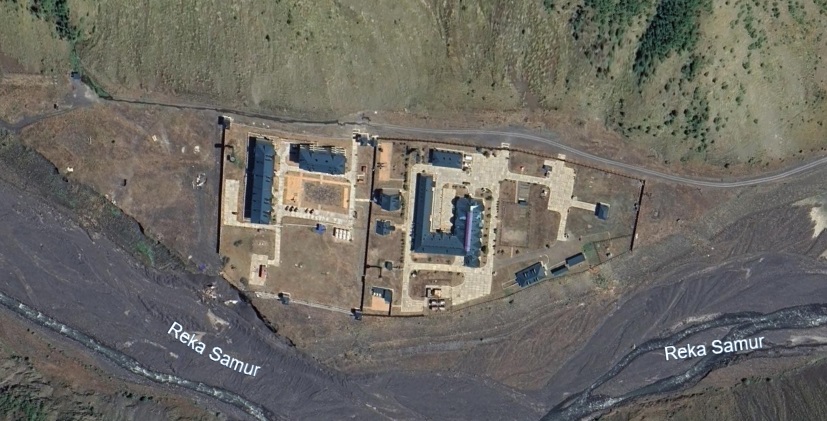
Russian military base in Dzinikh village, Dagestan.
Coordinates: 41°40’57″N 47°01’57″E
Source: Google Earth
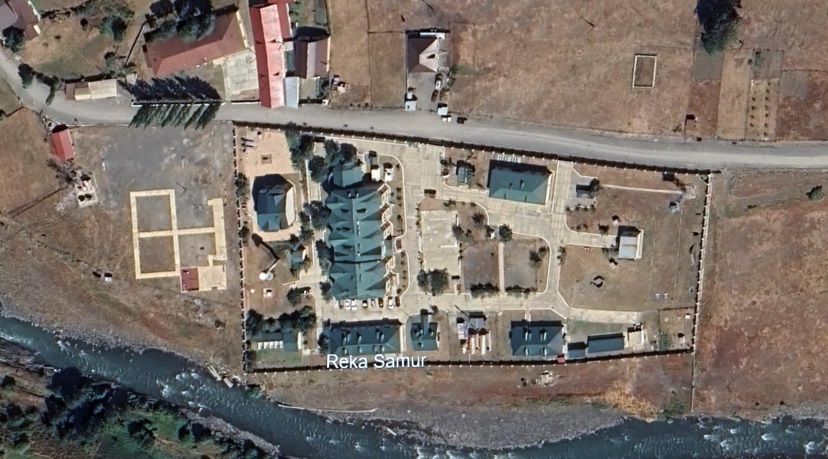
Russian military base in Mishlesh village, Dagestan.
Coordinates: 41°39’35″N 47°05’46″E
Source: Google Earth
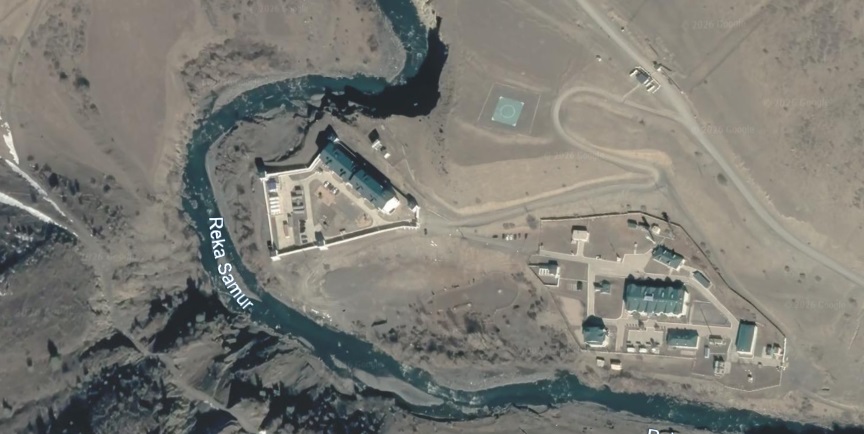
Russian military base west of Luchek village, Dagestan.
Coordinates: 41°36’58″N 47°17’16″E
Source: Google Earth
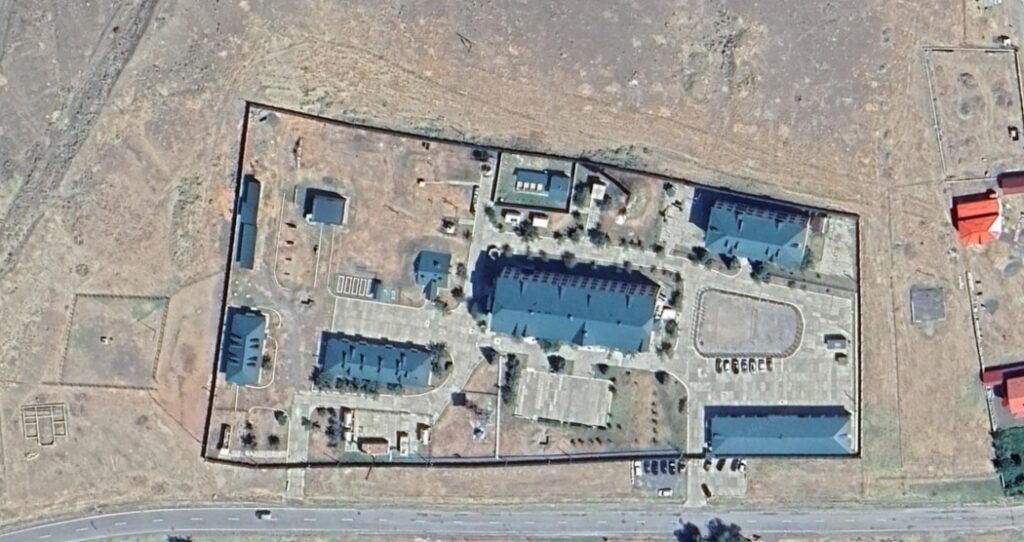
Russian military base in Rutul village, Dagestan.
Coordinates: 41°32’10″N 47°27’19″E
Source: Google Earth
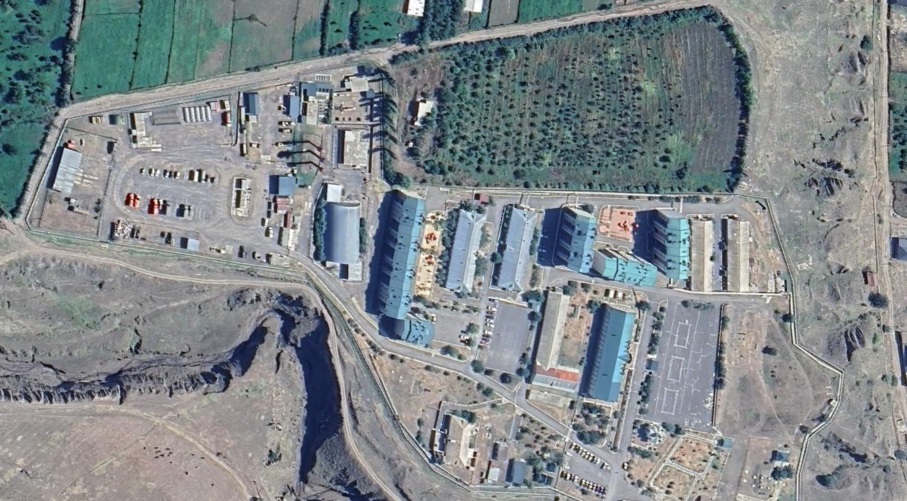
Russian military base Akhty town, Dagestan.
Coordinates: 41°28’35″N 47°42’53″E
Source: Google Earth
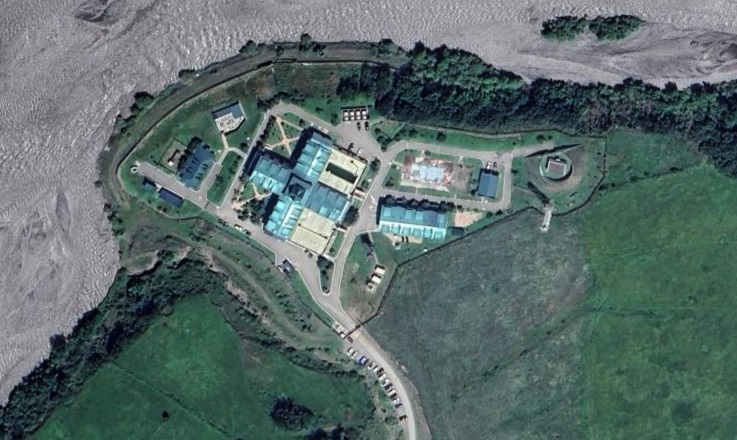
Russian military base in Garakh village, Dagestan.
Coordinates: 41°29’09″N 48°02’25″E
Source: Google Earth
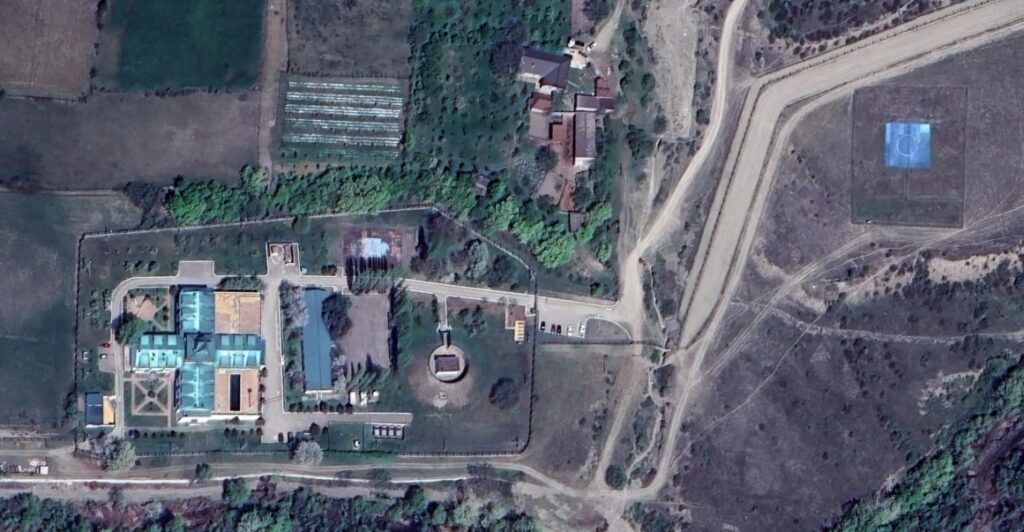
Russian military base north of Yukhari Gelenhur village, Dagestan.
Coordinates: 41°30’30″N 48°07’42″E
Source: Google Earth
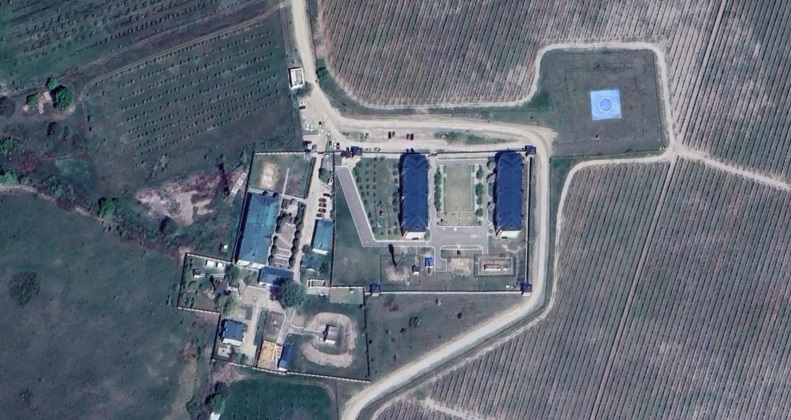
Russian military base in Dzhepel village, Dagestan.
Coordinates: 41°32’09″N 48°13’22″E
Source: Google Earth
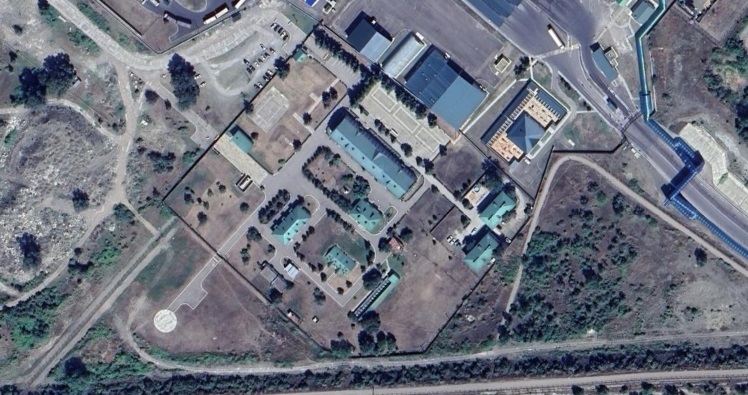
Russian military base at the Azerbaijani-Russian Samur border crossing. There is another military base west of Samur crossing.
Coordinates: 41°38’18″N 48°24’28″E
Source: Google Earth